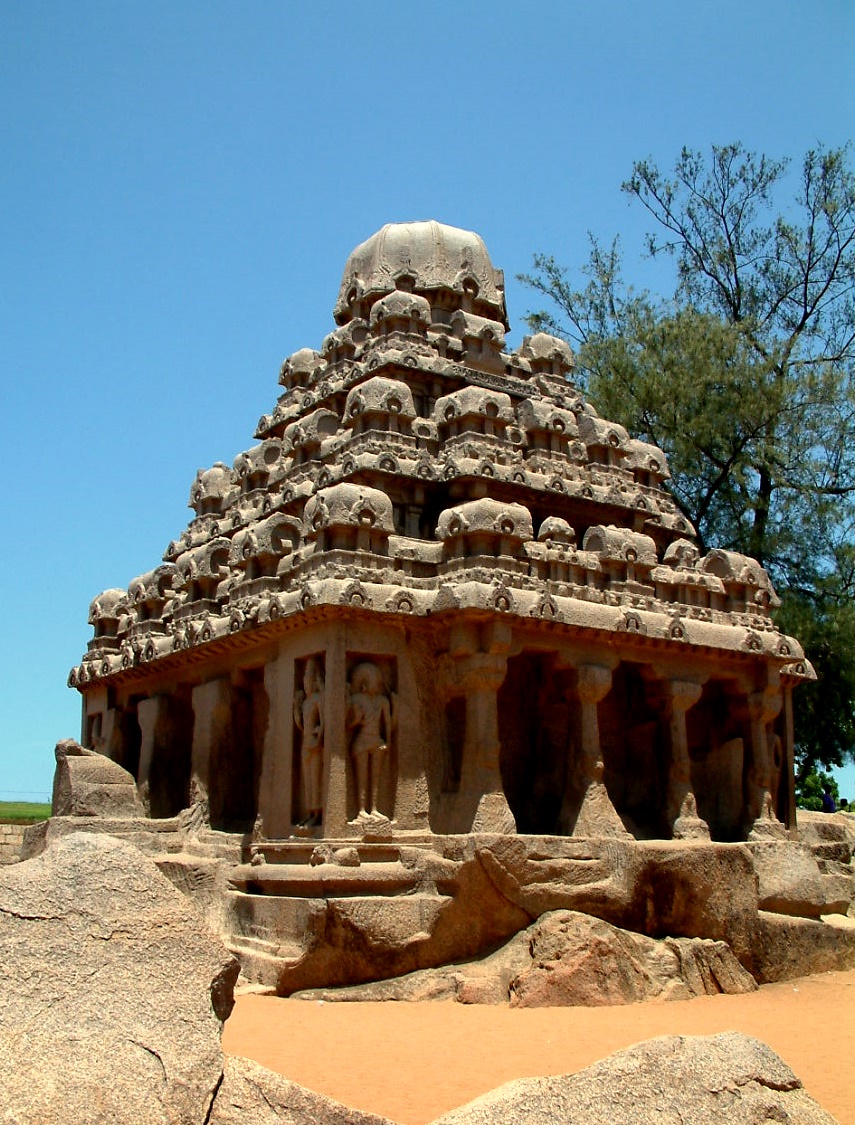
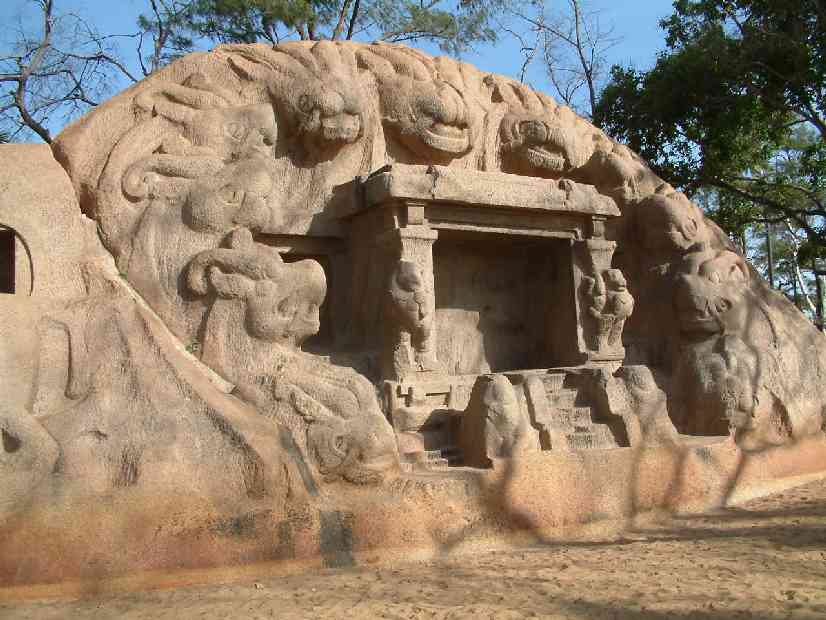
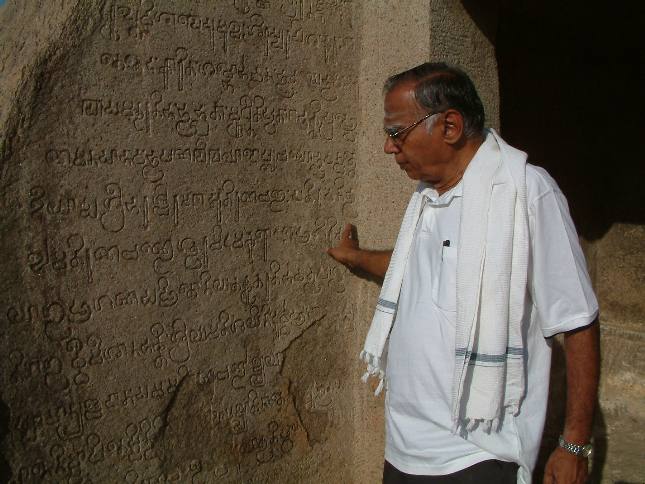
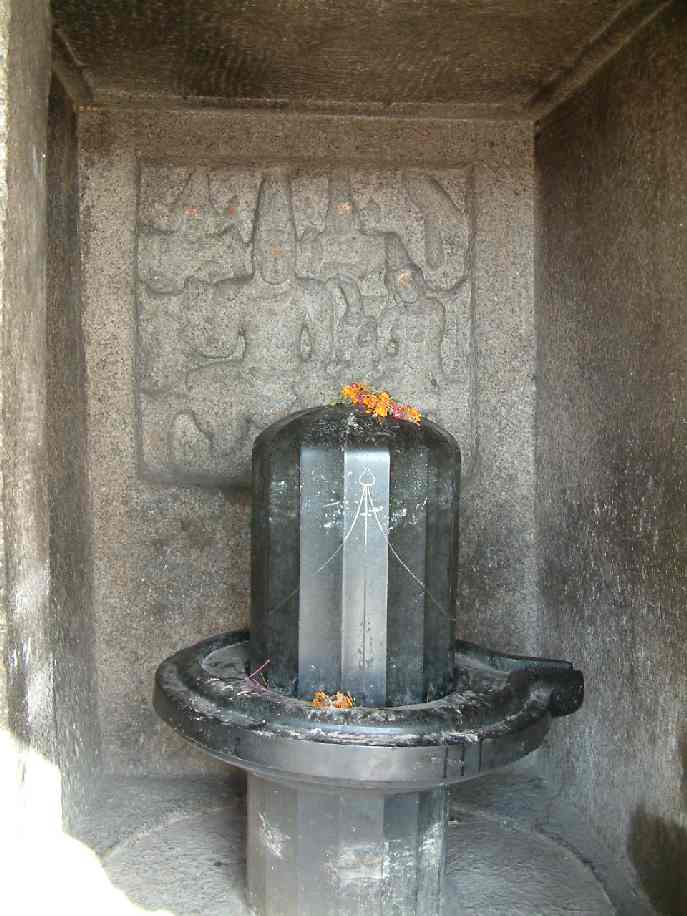
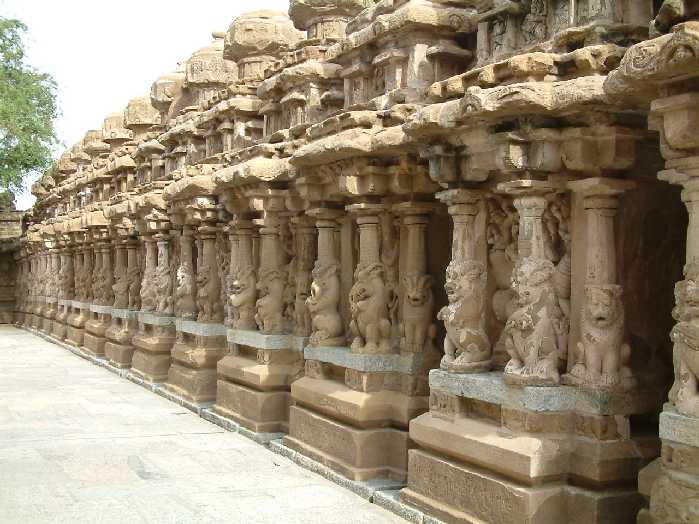
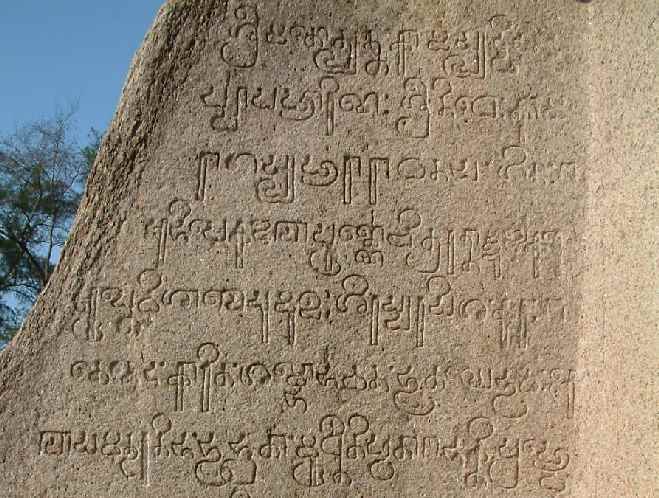
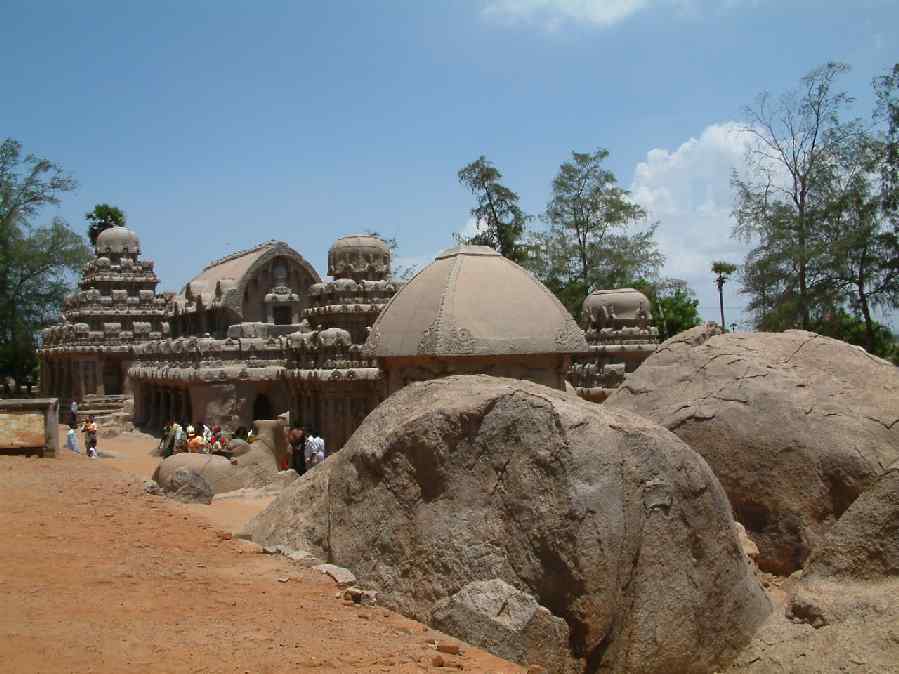
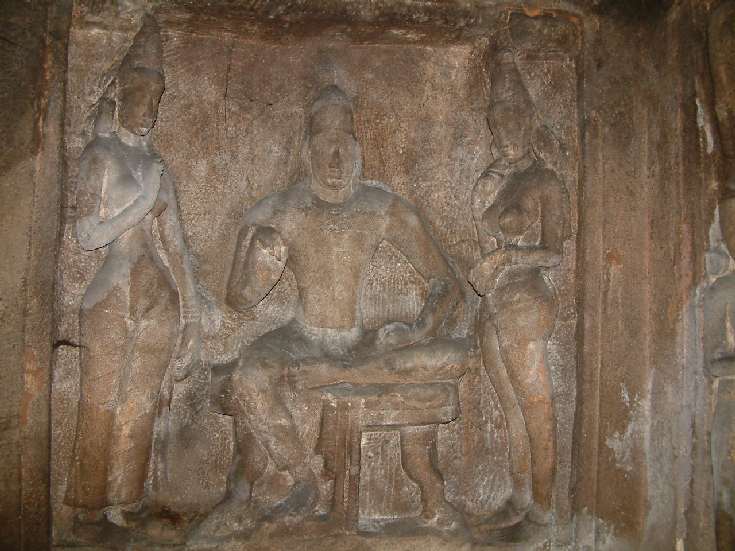
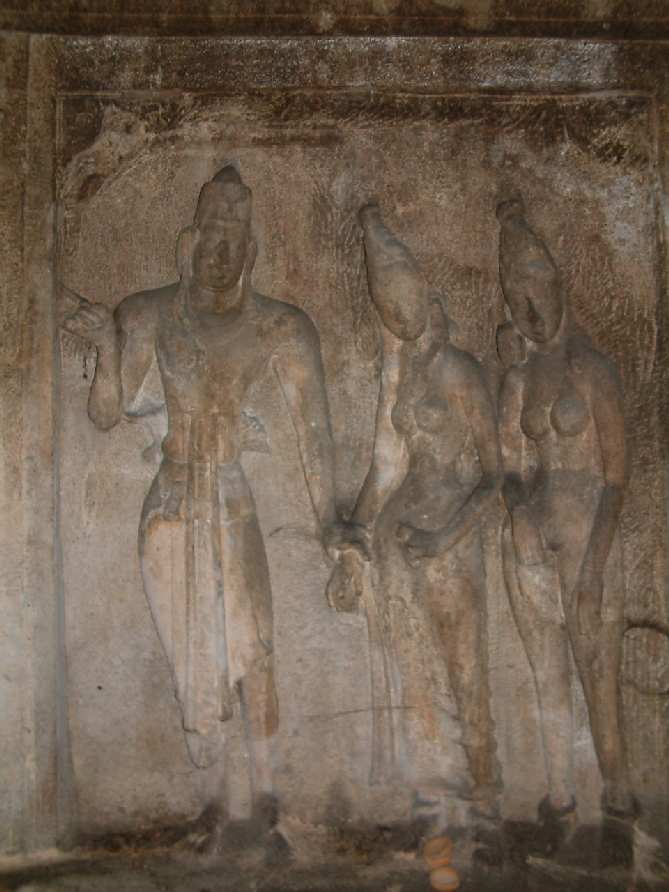
New Light on Māmallapuram (1962 Paper)Paper read by Dr. R. Nagaswamy before the Archaeological Society of South India on 6 February 1962.Atyantakāma Pallaveśvara GṛhamIntroductionThe stately monuments of Māmallapuram, standing almost on the sea-shore, have been the great source of inspiration and joy for travellers, both from India and abroad. With its unique monolithic temples called rathas, with the two little towers standing on the shore of the sea, set against the background of the vast ocean and the expansive open air sculptures of Arjuna’s penance, Māmallapuram is indeed the greatest centre of attraction in India, for artists, philosophers, poets, scientists and others alike. And hence it is very often visited, studied and illustrated by scholars from all parts of the world. Yet these monuments posed certain problems as to why such elegant monuments were left unfinished. An attempt will be made in this article to solve one such problem, though this was never a problem for any. Yet it poses itself as a problem to me and I believe if this is solved others are likely to vanish. And that is whether the great Māmalla, the son and successor of the great Mahendra and who inflicted crushing defeats on the great Satyāśraya Pulakeśin II and who probably established this town as a seaport after his own title Māmalla, and sent a naval fleet to Ceylon to help his friend Mānavarman, has anything to do with the monuments of Māmallapuram? My answer would be that he had little to do with the monuments. In saying so I am aware that I have to set myself against many problems and to a certain extent, severe criticism both from scholars and public and I am afraid that I have sufficient reasons to justify my statement.Views of ScholarsBefore proceeding further, it would be better if we could understand briefly the views held by scholars on the history of art and architecture of the Pallavas1. Both European and Indian scholars, basing their conclusions on the Maṇḍagapaṭṭu inscription of Vicitracitta2 (Mahendra), decided that Mahendra introduced the rock cut technique to South India for the first time and that before him, all the temples were built of brick, mortar and other perishable materials. His caves were characterised by simplicity in plan and in the treatment of pillars which were square at the top and bottom and octagonal at the middle. His son Narasiṃha also known as Māmalla continued the rock cut caves and for the first time conceived the idea of cutting the huge boulders into monolithic temples, familiarly known as rathas. He also introduced the sedent lion at the base of the pillars and bulbous capitals with palaka at the top. Parameśvaravarman-I who succeeded Narasiṃha-I, continued the monoliths. He for the first time introduced the structural temples built of granite slabs and since he had to fight with the Cālukyan adversary, Vikramāditya-I, also known as Raṇarasika, the work at the monoliths abruptly ended. Rājasiṃha who succeeded Parameśvara-I was a great builder of structural shrines as evidenced from the Kailāsanātha temple of Kāñci and the Sea-shore temple of Māmallapuram. Except the stray example of Śāluvaṅkuppam cave, excavated by Rājasiṃha, there are no other caves, which could be ascribed to him. Rājasiṃha for the first time introduced the rampant lions at the base of the pillars. After Rājasiṃha, the rock cut technique ceased and only structural temples predominated as evidenced by the Vaikuṇṭhaperumāḷ temple of Kāñci, built by Nandivarman **. The above is the conclusion generally accepted by scholars now. The scholars also believed, that the rathas exhibit architectural details like the pavilions, etc. which were the copies of Buddhist Vihāras3.The conclusions mentioned above are far from satisfactory. Let us examine the Buddhist influence of architecture. Did the sculptors of Māmalla’s reign copy the Buddhist structures already in existence in South India or did the inspiration come from Northern India? If it is from South, then is there any structure which could be cited as an example, which was the source of inspiration? If it is from North then which is the structural example for such an inspiration? Further why did not these rows of pavilions etc. found on the stories of rathas, and which are stated to have become reduced architectural motifs in the structural temples, like the shore temple, show the design of a Buddhist stūpa which was much more prevalent in northern India and particularly so in the Kṛṣṇa valley, from where the pallava art is said to have received its inspiration. So the theory that these pavilions etc. were after some Buddhist structures, is absolutely unsatisfactory.And again when we examine the main point, namely Māmalla started cutting the monoliths and his grandson Parameśvara continued it for sometime and abruptly stopped it afterwards, we are unable to appreciate the abrupt end of the work4.Since Parameśvara boasts5 himself of having invaded the very capital of Vikramāditya, he was certainly powerful enough in his own kingdom. It does not explain why he suddenly stopped the work.There is no record from where we can gather that Parameśvara-I introduced structural temples of granite slabs. There is one copper plate grant from Kūram6, issued by the same king Parameśvara, recording the gift of a land for erecting a temple, at the request of a chieftain called Vidyāvinīta Pallava. It was this chieftain who built the temple and named it after his own name and also after the name of his ruler as Vidyāvinīta Pallava Parameśvaragṛham. Further the inscription states a portion of land was meant of burning tiles, which are to be used in building the temple (தளி எடுப்பதற்கு ஓடு சுடக்கொண்ட இடம் (taḷi eḍuppadarku ōḍu suḍakkoṇḍa iḍam)). The temple was perhaps built of brick and mortar and covered with tiled roof. There is nothing in the inscription to suggest that it was first introduced into this part of the country.Tiger Cave at ŚāluvaṅkuppamAll the lithic records and copper plate grants of the pallavas, referring to Rājasiṃha, fortunately we have a good number of them, tell us that he was a great temple-builder and was a great devotee of Śiva. It is substantiated by atleast three of his monumental structures, viz. the Kailāsanātha temple, the Sea-shore temple and the Paṉamalai temple, where he was shown his capacity to erect, equally great monuments like the monoliths.It is not clear why such a prolific temple builder like Rājasiṃha did not continue the monoliths and complete the same and why he should have favoured only the structural temples. Further we are sure that he was equally interested in excavating rocks and that rock cut technique continued during his reign, as proved by the Śāluvaṅkuppam caves which are his creations. The explanation is again far from satisfactory.If it is suggested that Māmalla started and Parameśvara and Rājasiṃha both continued it and that after them it ceased, again the explanation falls short of reasons. We know that Narasiṃha-I ruled for about thirty years and Parameśvara-I twenty five years. We also know that Rājasiṃha had comparatively a peaceful rule for a long period of about forty years. This will lead us to another problem, namely that since the beginning of the monoliths, the work continued on them for over hundred years and still the work could not be completed!Is name of the town the only clue?Thus we find ourselves in very unsteady grounds, in our conclusions regarding the authorship and date of these monuments. Hence I raised a new problem namely whether the name of the town Māmallapuram gives us the only clue to identify the author of these monuments with Māmalla. The name of Māmalla and Māmallapuram are so intimately connected, that we hesitate to raise the question whether Māmalla was the author of these monuments. In my opinion all our problems lie in the mystic word Māmalla. There are certainly other clues which will help us in arriving at some solutions and hence before attempting to answer the connection between Māmalla and Māmallapuram we shall examine the other evidences which may be divided into (a) Literature; (b) Paleography; (c) Evolution of Architecture; and (d) Epigraphy.From LiteratureNo light is thrown on the subject by literature, for there are very few references to Māmallapuram. Referring to Toṇḍaimāṉ Iḷantiraiyaṉ, in Perumpāṇāṟṟuppaḍai7Kaḍiyalūr Rudraṅkaṇṇaṉār gives a graphic description of a seaport of Toṇḍaināḍu which was mainly the land of the pallavas in later times. He also refers to a light house which helped as a beacon light for seamen. Late M. Raghava Iyangar in his book8 on Āḻvārgal Kālavaralāru (The Age of Āḻvārs) identifies the town mentioned, with Māmallapuram and in doing so he points out that the intention of the poet was to indicate that Kāñci was very near to this town. From a reference to Lord Viṣṇu of the Seashore temple, in Avantisundarīkathā9, by Daṇḍin. Late M. Raghava Iyengar concludes, that the Viṣṇu image was under worship long before Rājasiṃha. The reference of Kaḍalmallai temples of Śiva and Viṣṇu, by Tirumaṅgai Ālvar10, is not much helpful for our present study, (he was later than Rājasiṃha,) since he does not refer to the building of the temples or other monuments. Thus literature does not help us.From PaleographyPaleography has been a very useful source, in determining the age of inscriptions and monuments. We know that the scripts employed by the Cōḻas were different from those employed by the Pallavas and that the Vijayanagar kings employed altogether different scripts. Even amongst the same dynasty of rulers, like the Cōḻas, one could perceive some evolution in the scripts. But with reference to our study of the date of the Māmallapuram monuments, paleography is absolutely of little value. We know that several different alphabets were employed in the Kailāsanātha inscriptions11 of Kāñcipuram which led scholars to think that these inscriptions belonged to successive rulers of Kāñci. The inscription found all around the basement of the main shrine, and which was written in archaic characters were believed to be coeval with the temple. The rest of the inscription of the temple run round the inside of the enclosure, and contain an enumeration of several hundred birudās of Rājasiṃha. They are arranged in four tiers. The first tier is made of hard granite and preserves the inscription intact, while the other tiers are of sand stone and have suffered considerable weathering. It was also found that the inscriptions of the second and third tiers, were word for word identical with the first. In describing the date of the inscriptions, Hultsch remarked that “the third tier is written in the same archaic alphabet as the inscription round the Rājasiṃheśvara shrine and evidently belongs to the time of Rājasiṃha, the founder of the temple himself. The first and second tiers must be considered as later copies of the original inscription of the third tier and were executed by some descendants of Rājasiṃha. The inscriptions of the fourth tier is written in a peculiar ornamental alphabet, which is based on the alphabet of the same type, as that of the first tier. It follows that the engraver of the fourth tier copies from the third and not from the first tier, perhaps the first and fourth tiers were contemporaneous.”12Śāluvaṅkuppam InscriptionsŚāluvaṅkuppam (pic Jul-2004)The rock cut cave at Śāluvaṅkuppam, called Atiraṇacaṇḍa Pallaveśvaragṛham, was excavated by Rājasiṃha himself. It contains some sanskrit verses13, inscribed on the northern and southern wall of the cave, extolling the greatness of Rājasiṃha. The script employed in the northern wall is different from the south and hence it was suggested that the inscription of the southern wall was a later transcript of the north and the author of the inscription of the southern wall was a successor of Rājasiṃha., It was only in later times that the suggestion of successive engravers was discarded and rightly noted, that since the inscriptions on the south and north wall are identical verses, they were written by the same king Rājasiṃha. In the same vein it was concluded that the inscriptions in four different alphabets, found at the Kailāsanātha temple, which were the repetitions of the same titles of the corresponding tiers, were all inscribed by Rājasiṃha himself to exhibit varieties. Thus, since Rājasiṃha himself has left five different varieties of scripts which include the scripts employed by early Pallava kings, the study of paleography certainty fails in determining the age of the monuments of Māmallapuram.From ArchitectureThe scholars, being quite conscious of these defects, therefore turned their attention to the study of architecture, which, it was believed, shed welcome light on the subject. We all owe a great deal to Prof. Joveau Dubreuil for his illuminating study of South Indian architecture14. It was he, who first made a thorough survey of Pallava monuments and brought out his valuable literature on Pallava antiquities. The evolution of pillars as shown by Dubreuil was perhaps the best study from which we were able to arrive at some tangible conclusions. Thus according Dubreuil, the Maṇḍagapaṭṭu cave was the first to be excavated by Mahendra, judging from the inscription, which states that this cave was caused to be made for Brahmā, Viṣṇu and Śiva, by Vicitracitta without the use of brick, mortar, wood and metal. Dubreuil suggested that the proud attainment of excavating rock, for the first time, made Mahendra to mention, that he caused it to be made without the use of brick etc. Further this suggests that all the monuments prior to Mahendra, were built of perishable materials like brick and owing to temperate climate nothing has survived. Further Dubreuil suggested that beginning from the Maṇḍagapaṭṭu cave, the pillars of Mahendra, are plain; Narasiṃha I introduced the sedent lion and Rājasiṃha introduced the rampant lion motif. But I am afraid that Dubreuil made the fundamental mistake and scholars subsequent to him, followed suit without pausing to question the suggestion. In my opinion the evolution of architecture as suggested by Dubreuil is of little help for our study as we shall presently notice.Maṇḍagapaṭṭu inscriptionBefore proceeding further let us pause to think on the first suggestion of Dubreuil on Maṇḍagapaṭṭu inscription. I am sure that Dubreuil’s suggestion, though very fascinating, is not satisfactory. Aśoka Maurya started excavating caves for the Ājīvika ascetics in about 3rd century B.C. as evidenced from Barābar hills. Aśoka’s cave beds were highly polished and carry inscriptions is Brāhmī. Almost at the same time, if not earlier, we have in south, the natural caverns converted into beds, with the polish similar to that of Aśoka and with Brāhmī inscriptions. These inscriptions are ascribed to the middle of 3rd century, B.C., as almost contemporary with Aśoka. Thus we find that the travel of idea or the technique, from north to south is almost spontaneous. The rock cut technique in northern India, assumed greater importance, especially in the west coast, through the centuries, till the beginning of the 7th C.E. There are remains of caves, which were excavated during the first and second centuries before Christ and also during the first, second, third, fourth and fifth centuries C.E. The technique of rock cutting became a highly developed art during this period. But in South India, the same art which travelled almost spontaneously during the Mauryan era, died out immediately and there was no rock cut caves! We wait patiently for almost about thousand long years from 250 B.C. to 600 C.E. for Mahendravikrama Pallava to introduce the rock cut technique! This almost coincides with the period in north, when the rock cut technique has almost died out to be revived by the Rāṣṭrakūṭas for a short period. This is very strange, since the contact between the north and the south during the succeeding centuries of the Christian era was much more easier and greater than the preceding era. We certainly know that Buddhism and Jainism did travel to a great extent during this period. If that be the case why should we wait for Mahendra alone to take up this work?Let us study the inscription itself. What does the inscription say? It says that this temple, dedicated to Brahmā, Viṣṇu and Śiva was caused to be made by Vicitracitta, without the use of brick, mortar, wood or metal. It does not mention that this was being excavated for the first time in South India. Nor in any of his subsequent inscriptions Mahendra assumed a title, commemorating this great achievement of his life. He was certainly fond of titles and could have assumed a title like “the first excavator of cave” Ādyaguhayatanakari or some such thing. We do not come across any such titles in his inscription.None of the epigraphical records, both lithic and copper plates, which were issued after him, refer to Mahendra’s achievement in excavating caves for the first time.As I pointed out earlier, when the technique has reached a high perfection in the Andhra area and especially when Mahendra had great connections with that part of the country as evidenced from his titles, it is not convincing, when it is said that with Mahendra, only simpler forms of architecture were introduced like the pillars, which have plain cubical shape at the top and bottom with an octagonal fluting at the middle.When we look at the Dvārapālakās,15 carved on either side of the very Maṇḍagapaṭṭu cave with an unsurpassing realism and elegance, and when we look at the Gaṅgādhara panel16 at Trichirappalli cave of Mahendra, it is futile to suggest that the granite carvers were still primitive in their conception and technique.Tirukkaḻukuṉṛam inscriptionIn order to justify the Mahendra style theory, the Tirukkaḻukuṉṛam inscription17 of Vātapikoṇḍa Narasiṃha pottarasar I, who confirmed a grant of Skandaśiṣya, who caused the mūlasthāna to be made, was explained in a very unsatisfactory manner. Tirukkaḻukuṉṛam inscription is certainly a pointer to the existence of either the cave or the other shrine, long before the time of Mahendra and that the theory none of them existed prior to him is absolutely untenable. After all a good number of prehistoric rock cut cave burials have come to light from Kerala and that the technique was already known to the south. I am therefore inclined to believe, that to arrive at a conclusion on the basis of the evolution of architecture, beginning with the plain pillars and sedent lion pillars and rampant lion pillars, does not contribute to the proper study of the age.Study of Architecture falls short of expectationI shall now proceed to prove that the study of architecture, falls short of expectation in another direction. If it is proved that during the rule of one and the same king the architectural details exhibit great variety, then the evolutionary theory which is based on the conviction that with one king only one form of architecture prevailed and each king introduced a novel theme will certainly fall short of any satisfactory conclusion. One need not look anywhere for this. We may take the monumental structures of Rājasiṃha, who was left us more temples than any other monarch of South India. The Kailāsanātha temple of Kāñcipuram, the Tālagirīsvara temple of Paṉamalai, the shore temple of Māmallapuram, and the Atiraṇacaṇḍa temple of Śāluvaṅkuppam are undounbtedly the creations of Rājasiṃha, for he was virtually left his inscriptions there.AtiraṇacaṇḍeśvararLet us study some of the features of the architecture of these temples. Śāluvaṅkuppam temple is a rock cave of rectangular plan, which is altogether different from the other three, which are structural examples. The ground plan of each of these temples is different from the other.(a) The sea shore temple has to square garbhagṛha one big and one small placed one behind the other and interspersed with the rectangular shrine in between, which is a peculiar combination not noticed any where. It has a large open court in the front and a balipīṭha. The Kailāsanātha has a square garbhagṛha with a large open court in front, carrying a pillar maṇḍapa. The Paṉamalai temple has also a small square garbhagṛha but has no open court in the front.(b) The shore temple has two outer walls running parallel to each other with an intervening space of about ten feet, which forms itself as a prākara. The Kailāsanātha temple has no two outerwalls, but only one carrying number of small cells with elegant sculptures. There is no outer wall at Paṉamalai.(c) There is a narrow pradakshiṇāpada around the main sanctum, in the Kailāsanātha temple in between the garbhagrha wall and outer wall of the sanctorum whjch is a unique feature. At Paṉamalai there is no pradakshiṇāpada. At the sea shore temple the passage around the Śiva and Viṣṇu temple could be either described as a pradakshiṇāpada or as not.(d) There are no side cells around the wall of the sanctum at the shore temple. At the Kailāsanātha temple there are seven cells placed at equal distance in all the quarters. There are only three small cells at the Paṉamalai temple.(e) The outer walls of the sea shore temple are exquisitely carved, with sculptures. The outer walls of garbhagṛha at the Kailāsanātha temple are also carved. At the Paṉamalai temple, the outer walls are plain.(f) At the Kailāsanātha temple the inner walls of the side cells contain colossal sculptures of Śiva but does not contain liṅga in the centre. At Paṉamalai the inner walls of the side cells are severely plain, and in the centre prismatic liṅgas are placed. In place of sculptures, Rājasiṃha covered the inner walls of the side cells with paintings of exquisite beauty, resembling exactly the sculptures of Kailāsanātha temple of Kāñci.(g) The superstructure of the Vimāna of the shore temple is swift and sharp in its up-ward movement and is slender in appearance. The Vimāna of the Kailāsanātha temples is slow and steady in its upward move and is solid and majestic in appearance. The Vimāna of the Paṉamalai temple shows a peculiar combination with its sharpely recessed corners, taken up to the stūpi. It blends in itself the horizontal and vertical lines of the structure and is stately in appearance.(h) The outer walls of the Kailāsanātha exhibit rampant lions with riders at regular intervals. The Paṉamalai temple show only rampant lions. The sea shore temple show a series of Nāgarājās in anjali pose.Thus these four temples exhibit bewildering variety in their architectural details in almost all respects. Has Rājasiṃha not left his inscriptions in these temples, certainly these monuments would have been ascribed to various monarchs and would have been ascribed to various centuries. That it was the case we know with reference to the shore temple. Till the discovery of Rājasiṃha’s inscription18 in the plinth of the balipītha, scholars were divided as to the author of the Sea shore temple.Factor against the evolutionary theoryI shall cite another important factor against the evolutionary theory. The rock cut cave of Śāluvaṅkuppam excavated by Rājasiṃha has very simple and plain pillars very much like the Mahendra’s pillars. Therefore Śāluvaṅkuppam cave posed a great problem for scholars19 in placing it in the evolutionary cadre. It may be noted here that the inscription of Rājasiṃha is found outside the cave on the north and south wall. But let us take the case of Vāyalūr inscription20 of the same king. The inscription is engraved on a pillar itself, which is plain and is in the so called Mahendra style.Kailāsanātha Temple KāñciThe huge Nandi Maṇḍapa in front of the Kailāsanātha temple of Kāñciuram has four pillars with sedent lions at the base. The small cells running along the outer walls of the same temple, also have pillars with sedent lions at the base. According to the prevalent view this is a motiff of Māmalla, but we know certainly that the Kailāsanātha temple is the magnificent creation of Rājasiṃha. The Konerimaṇḍapa at Mahābalipuram contains two rows of pillars. The outer row carries series of pillars with seated lions at the base end bulbous capital which may be termed as the Māmalla pillar. The inner row of pillars are slender and fluted without any motiff at the base and is termed the Parameśvara pillar. It was therefore explained that the outer portion which was necessarily the first to be excavated was by Māmalla Narasiṃha - I, and the inner portion was excavated by Parameśvara. This explanation is quite convincing. But it fails with reference to the Ādivarāha cave where the outer pillars are plain, slender and fluted, while the inner row of pillars carry seated lion at the base and bulbous capital. The explanation will have to be reversed here and will totally ail since it will amount to saying that Narasiṃha - I succeeded his grandson Parameśvara. Thus the theory that with one king only from of architecture prevailed will not hold good. So also the theory that each king brought in a new innovation will fail. Thus it is quite evident, the evolution of architectural motiff fails with reference to our present study.Thus either literature or paleography or for that matter architecture help us in determining the age. We found ourselves in no better ground when we turn to the inscriptions. It may be mentioned that many kings are said to have assumed same names and titles and with Māmallapuram monuments, where we have only titles the difficulty is all the more greater.When thus, all our tangible sources fail how are we to arrive at a conclusion? My answer will be that the clue to our problem lie in the very failure of all these sources. Paradoxical it may seem, when I say that all these evidences do ot ail us when we reverse our process of enquiry by first taking inscriptions, applying it to architecture and applying both to paleography. We arrive at a solution which is quite convincing.Inscriptions of RājasiṃhaLet us take the inscriptions of Rājasiṃha about whom we are absolutely on safe grounds. Rājasiṃha was a great monarch, an ambious king and was a prolific builder. In his celebrated Kailāsanātha21 temple he has left us about three hundred titles, ever assumed by any monarch of India. His titles are very valuable in understanding his personality. Of his birth, Rājasiṃha says that “He took birth from Parameśvara, the destroyer of the city of Raṇarasika just as Guha took birth from Parameśvara”. He was proud of his race and of his noble birth and hence assumed such titles as pallavādityaḥ, kulatilakaḥ, kuladhvajaḥ, jātigambīraḥ, adhbhutacaritaḥ, kshatracūlamaṇiḥ. He was a prince of great beauty and elegance and was conscious of it when he assumed such title as ekasundaraḥ, nayanamanoharaḥ, parjjanyarūpaḥ, udayacandraḥ, vilāsaḥ, abhirāmaḥ, cāruvilāsaḥ, lalitāvilāsaḥ, sārvabhaumaḥ, etc. His great love for Vaidika mārga, viz. śruti, smṛti and purāṇa is reflected in his titles, as āgamapramāṇaḥ, āgamānusāri, śāstradṛṣṭiḥ, nayānusari, ācāraparaḥ, tattvavedī, etc. His devotion to Śiva and Śaivasiddhānta is unparalleled in the history of South India. All his inscriptions and the inscriptions of his successors, speak of him as a great Śiva-bhakta. He was Śivacūdāmaṇi and styled himself as īshvarabhaktaḥ, devadevabhaktaḥ, śaṅkarabhaktaḥ, īshānasharaṇaḥ, etc. We could only compare Raja Raja-I as an equal in his devotion to Śiva and who rightly assumed the title of Śivapādaśekhara. Rājasiṃha himself had the title of Raiaraja. He was the very abode of dharma. He was dharmasetuḥ, dharmakavacaḥ. He was afraid of only unrighteousness adharmabhīruḥ. He had unlimited desires atyantakāmaḥ and his ideals were lofty unnatecchaḥ. His ideals were mostly fulfiled, icchāpūraḥ, pūritecchaḥ, tṛṣṇāpūraḥ, etc. He had great love for all the fine arts, and was himself a great master of all arts, kalasamudraḥ, ātodhyatumburuḥ, vīṇanāradaḥ. In fact he was the very ocean of all fine arts kalasamudraḥ. Such a king was never moved to anger and once roused he was terrible, tīvrakopaḥ, avandhyakopaḥ; but his angers were always reasonable kāraṇakopaḥ. He was severe in inflicting punishments and upholding justice, agradaṇḍaḥ, caṇḍadaṇḍḥ. He was a great statesman, and was the only Pallava monarch who could maintain friendly relations with his neighbours and give some peace to his subjects. dūradarśī, carucakṣuḥ, abhayarāśi, caṛvarti He was not at the same time weak. He was a great warrior raṇajayaḥ, aparājitaḥ, akutobhayaḥ, ugrapratāpaḥ, amitaprabhāvaḥ, etc. He was very fond of his subjects rakṣāmaṇiḥ, āśritavatsalaḥ. The very idea of poverty made him shiver, daridrānukampī, khinnānukampī and hence poured forth gifts and presents dānavarṣaḥ, aviratadāna. In short he is a true Hindu monarch, in whom we find all the qualities of warrior, statesman, poet and above all a lover of peace as described in our nitisastras.Śāluvaṅkuppam InscriptionIt is no wonder that such a great monarch has left us his temples as monumental structures, unsurpassed in their variety and beauty. The same king Atiraṇacaṇḍa has excavated the Śāluvaṅkuppam cave and left his inscriptions. The verses are fascinating poetry. But strange indeed, the same verses are found in Dharmarājamaṇḍapa, Rāmānujamaṇḍapa and Gaṇeśa ratha! Verse for verse, word for word and syllable for syllable they are identical and yet we have been looking elsewhere for the author.Five verses found at Śāluvaṅkuppam, Gaṇeśa Ratha and Dharmarāja maṇḍapa:-अतयनतकामो नृपतिः निर्जितारातिमण्डलः ।ख्यातो रणजयः शूरः तेनेदं वेश्मकारितम् ॥भक्तिप्रह्वेण मनसा भवं भूषणलीलया ।दोष्णा च यो भूवो भारं जीयात् स श्रीभरश्चिरम् ॥श्रीमतोत्यनतकामस्य द्विषद्दर्पापहारिणः ।श्रीनिधेः कामरागस्य हराराधानसंगिनः ॥अभिषेकजलापूर्णे चित्ररत्नाम्बुजाकरे ।आस्ते विशाले सुमुखः शिरः सरसि शङ्करः ॥तेनेदं कारितं शंभोर्भवनं भूतयेभुवः ।कैलासमन्दिरनिभं भृभृतां मूरद्ध्नि तिष्टता ॥atayanatakāmo nṛpatiḥ nirjitārātimaṇḍalaḥ ।khyāto raṇajayaḥ śūraḥ tenedaṁ veśmakāritam । ।bhaktiprahveṇa manasā bhavaṁ bhūṣaṇalīlayā ।doṣṇā ca yo bhūvo bhāraṁ jīyāt sa śrībharaściram । ।śrīmatotyanatakāmasya dviṣaddarpāpahāriṇaḥ ।śrīnidheḥ kāmarāgasya harārādhānasaṁginaḥ । ।abhiṣekajalāpūrṇe citraratnāmbujākare ।āste viśāle sumukhaḥ śiraḥ sarasi śaṅkaraḥ । ।tenedaṁ kāritaṁ śaṁbhorbhavanaṁ bhūtayebhuvaḥ ।kailāsamandiranibhaṁ bhṛbhṛtāṁ mūraddhni tiṣṭatā । ।ATYANTAKĀMA excavated Śāluvaṅkuppam cave. The same ATYANTAKĀMA excavated Gaṇeśa ratha, Rāmānuja maṇḍapa and Dharmarāja maṇḍapa. Yet we differentiate this ATYANTAKĀMA from the other.The Dharmarājaratha, bears the name of Atyantakāma Pallaveśvara gṛham. Of the thirty titles inscribed in Dharmarājaratha, over fifteen titles are found in Kāñci inscriptions of Rājasiṃha.Titles Common to both Kailāsanātha and Dharmarājaratha.Dharmarājaratha KailāsanāthanarasiṃhaśrībharabhuvanabhājanaśrīmeghatrailokyavardhanaatyantakāmakāmalalitanayanamanoharasarvatobhadraśrīnidhiniruttaraparāvararaṇajayaparāparamahāmallaapratihataśāsanarājasiṃhaIn all his inscriptions the Kāñci, the shore temple of Māmallapuram22, (22. A. R. E. 961 of 1913.) the Śāluvaṅkuppam23 (23. S. I. I. Vol. I. 21.) cave, the Vāyalūr inscription24 (24. E. I. XVIII. 145.) and the Tiruppōrūr25 (25. S. I. I. Vol. XII, 27, A. R. E. No. 76 of 1909.) inscription, Rājasiṃha calls himself Atyantakāma. Vainly we have been trying to give the same title to Narasiṃhavarman-I, Parameśvara-I, and even to Nandivarman Pallavamalla26. (26. S. I. I. Vol. I.)Table showing the titles of Rājasiṃha appearing in all the monuments. Note the significant titles of Raṇajayah, Atyantakāma, and Śrībhara.There is no evidence to show that Narasiṃha Varman I, the great Vātāpi-hero started these unique monuments. Strangely enough we have only two inscriptions of him, one at Vātāpi27 the capital of Cālukyas, far away from his own capital. The other is at Tirukkaḻukuṉṛam28. In none of his inscriptions, he records his unique achievement in temple building. Nor does he mention his title as Atyantakāma. The charters issued after him are equally silent on his unique achievement and his title.Let us study the Kūram plates29 of Parameśvara I, who was Rājasiṃha’s father. From line 19 to line 39, where he gives his own attainment, there is no mention of the title Atyantakāma. Nor is there any mention of his attainment at these unique monuments or for that matter temple building. He only boasts of his victory over Vikramāditya - I, his Cālukyan adversary. Let us study all the copper plates issued after him. Vēlūrpāḷaiyam30, Kasakudi31, and Udayēndiram32, speak of him as a vanquisher of Vikramāditya and nothing else. His title as Atyantakāma is not mentioned in any.We know from the inscriptions of Narasiṃhavarman I, that the greatest event in his life was the victory over Pulakesi and the conquest of Vātāpi and Ceylon. It is recorded in all the Pallava charters issued after him also. But this event is not mentioned in any of the Māmallapuram inscriptions which unmistakably suggest, that Narasiṃha did not have anything to do with the monuments of Māmallapuram.तदुदय धरणीधर सोमादित्यस्य अविनत मुखः नृपति मूर्ध्दिनि चूलामणेः प्रत्यर्थ राजगज यूथ सिंहस्य नरसिंहवर्मणः स्वयम् इव भगवतः नृपतिरूप अवतीर्णस्य नरसिंहस्य मुहुर् अवजित चोल केरल कलभ्र पाण्डयस्य सहस्त्रबाहोर् इव समर शत निर्व्बिष्ट सहस्र बाहु कर्मणः परियल । मणिमङ्गल शूरमार प्रभृतिर् अण विदतपुलकेशि पृष्ट पट्ट लिखित विजयक्षरस्य कलश योनेर् इव विमथित वातापेः.............................................. कूरम् ग्रन्त् - स्. इ. इ, वोल्. - इ, प्. १४८tadudaya dharaṇīdhara somādityasya avinata mukhaḥ nṛpati mūrdhdini cūlāmaṇeḥ pratyartha rājagaja yūtha siṁhasya narasiṁhavarmaṇaḥ svayam iva bhagavataḥ nṛpatirūpa avatīrṇasya narasiṁhasya muhur avajita cola kerala kalabhra pāṇḍayasya sahastrabāhor iva samara śata nirvbiṣṭa sahasra bāhu karmaṇaḥ pariyala । maṇimaṅgala śūramāra prabhṛtir aṇa vidatapulakeśi pṛṣṭa paṭṭa likhita vijayakṣarasya kalaśa yoner iva vimathita vātāpeḥ.............................................. Kūram grant - S. I. I, vol. - I, p. 148लङ्काजय अधरित राम पराक्रमश्रीर् उद्वऋत्त शत्रुकुल संक्षय धूमकेतुः ।वातापि निर्ज्जय विलम्बित कुम्भ जन्मावीरस् ततोऽजनि जयि नरसिंह वर्मा ॥.......... कशाक्कुडि - स्. इ. इ. प्. ३४९.laṅkājaya adharita rāma parākramaśrīr udvaṛtta śatrukula saṁkṣaya dhūmaketuḥ ।vātāpi nirjjaya vilambita kumbha janmāvīras tato’jani jayi narasiṁha varmā । ।.......... Kaśākkuḍi - S. I. I. p. 349.तस्मात् अगस्त्य इव विमथित वातापिःपरियल मणिमंगल शूरमार प्रभृतिषु जेताबहुशः वल्लभ राजस्य नरसिंह वर्मा ॥...... उदयेन्दिरम् प्लतेस् - स्. इ. इ, प्. ३६६.tasmāt agastya iva vimathita vātāpiḥpariyala maṇimaṁgala śūramāra prabhṛtiṣu jetābahuśaḥ vallabha rājasya narasiṁha varmā । ।...... Udayēndiram plates - S. I. I, p. 366.तदान्मजात् आविरभूत् महेन्द्राद् उपेन्द्रकीर्तिः नरसिंहवर्मावातापि मध्ये विजितारिवर्गः स्थितं जयस्तम्बम् अलम्बयत् यः..................... वेलूर्पाऌऐयम् प्लतेस् - स्. इ. इ, प्. ५०८.tadānmajāt āvirabhūt mahendrād upendrakīrtiḥ narasiṁhavarmāvātāpi madhye vijitārivargaḥ sthitaṁ jayastambam alambayat yaḥ..................... Vēlūrpāḷaiyam plates - S. I. I, p. 508.नरसिंह वर्मा.... वायलूर् इन्स्च्रिप्तिओन् - ए. इ. xविइइ, प्. १५०.narasiṁha varmā.... Vāyalūr inscription - E. I. XVIII, p. 150.We also know from the Kūram grant of Parameśvara I and the inscriptions issued after him, that the greatest event in the life of Parameśvara I, was the Victory over Vikramāditya I, also known as Raṇarasika, his Cālukyan enemy. This important event is also not noticed in Māmallapuram, though a major portion of these monuments are ascribed to him. The Dharmarājaratha which is said to have been continued by him does not even bear his name Parameśvara-I. It is thus evident that Parameśvara also had little to do with the monuments of Māmallapuram.प्रमेश्वर इव सर्वाधिकदर्शनः परमेश्वरवर्मा भरत इव सगर इव कृतासमञ्जसत्यागः कर्ण्ण इव पुष्कलंगो यः प्रियकाव्यो ययतिरिव अनुपनतानां राजायस्य आज्ञा भवति सर्वदा पीला सैव सुहृदाम्प्रयच्छति मुखशोभा कर्णपूरतयस् चतुरः कलाविलासे नियत्ं य्श्चान्त(कः)भवत्यन्ंगस्य मुक्तागुणस्तु हृदये......... [आयोधनशिरसि विऋमादित्यं कर्पटमात्रपरिच्छदं एकाकीपलायितम्कृतः । ].................... कूरम् प्लते - स्. इ. ल्. वोल्. इ, १४८.prameśvara iva sarvādhikadarśanaḥ parameśvaravarmā bharata iva sagara iva kṛtāsamañjasatyāgaḥ karṇṇa iva puṣkalaṁgo yaḥ priyakāvyo yayatiriva anupanatānāṁ rājāyasya ājñā bhavati sarvadā pīlā saiva suhṛdāmprayacchati mukhaśobhā karṇapūratayas caturaḥ kalāvilāse niyatṁ yścānta(kaḥ)bhavatyanṁgasya muktāguṇastu hṛdaye......... [āyodhanaśirasi viṛmādityaṁ karpaṭamātraparicchadaṁ ekākīpalāyitamkṛtaḥ । ].................... Kūram plate - S. I. L. vol. I, 148.इच्छाधेय सकलावनिय्पाललोकःपश्चाद्बभूव परमेश्वरपोतवर्म्मा ।भूतिपरां वहत भूतपतिः खढ्वांगकेतुःअचलस्थितिरध्भुतो यः ॥.............. कशाक्कुडि - स्. इ. इ - इइ, ३४९.icchādheya sakalāvaniypālalokaḥpaścādbabhūva parameśvarapotavarmmā ।bhūtiparāṁ vahata bhūtapatiḥ khaḍhvāṁgaketuḥacalasthitiradhbhuto yaḥ । ।.............. Kaśākkuḍi - S. I. I - II, 349.ततः पेरुवलनल्लुर्युध्दे विजितःवल्लभलः परमेश्वरवर्म्मा..... उदयेन्दिरम् - स्. इ. इ-इइ, ३६६.tataḥ peruvalanalluryudhde vijitaḥvallabhalaḥ parameśvaravarmmā..... Udayēndiram - S. I. I-II, 366.ततः परम् अतद्वंसी बभूव परमेश्वरःचालुक्य क्शितिभृत् सौन्य ध्वान्त ध्वंस दिवाकरः............... वेलूर्पाऌऐयम् - स्. इ. इ-इइ, ५०८.tataḥ param atadvaṁsī babhūva parameśvaraḥcālukya kśitibhṛt saunya dhvānta dhvaṁsa divākaraḥ............... Vēlūrpāḷaiyam - S. I. I-II, 508.तेषां वंशे प्रसूतात् रणरसिक पुरोन् मर्ध्दनात् अग्रदण्डात्.........कैलासनाथ – स्. इ. इ–इ.teṣāṁ vaṁśe prasūtāt raṇarasika puron mardhdanāt agradaṇḍāt.........Kailāsanātha – S. I. I–I.लोकादित्यात् प्रसूतः रणरसिक चमू पङ्क शोषि प्रतापात्—पनमलै.lokādityāt prasūtaḥ raṇarasika camū paṅka śoṣi pratāpāt—Paṉamalai.It is quiet clear, that the title of Atyantakāma is not noticed either for Narasiṃha-I, or Parameśvara-I, in all the known inscriptions. Nor is there any mention of this unique achievement of temple building, by either of them. Further the significant events in both their life, (the defeat of their Cālukyan rivals) which are mentioned in all inscriptions, are not at all noticed in any of the Māmallapuram inscriptions. It is therefore quite clear that neither of them had anything to do with Māmallapuram monuments.On the contrary, Rājasiṃha calls himself Atyantakāma in all his inscription. All the charters issued after him speak of him as a great temple builder. He did nothing but building temples and donating money.देव ब्राम्हण सात्कृतात्म विभवः यः क्षत्र चूलामणिःचातुर्वैध्यम् अवीविशत् स्ववशगां भूदेवत भक्तितः ।संप्राप्तो नरसिंहतां स्ववपुषा नाम्ना च दिग् व्यापिनाजात श्री परमेश्वरस्य सकलस्य अङ्गावतारस् ततः ॥............. कशाक्कुडि - स्. इ. इ-इइ, ३४९.deva brāmhaṇa sātkṛtātma vibhavaḥ yaḥ kṣatra cūlāmaṇiḥcāturvaidhyam avīviśat svavaśagāṁ bhūdevata bhaktitaḥ ।saṁprāpto narasiṁhatāṁ svavapuṣā nāmnā ca dig vyāpinājāta śrī parameśvarasya sakalasya aṅgāvatāras tataḥ । ।............. Kaśākkuḍi - S. I. I-II, 349.तस्मात् प्रम माहेश्वर परम ब्रम्हण्यः नरसिंह वर्म्मा..................... उदयेन्दिरम् - स्. इ. इ-इइ, ३६६.tasmāt prama māheśvara parama bramhaṇyaḥ narasiṁha varmmā..................... Udayēndiram - S. I. I-II, 366.तत्पुत्र सूनुः नरसिंह वर्मापुनर्व्यधात् यो घटिकं द्विजानां ।शिलामयं वेश्म शाशाङ्क मौलेःकैलास कल्प्ञ्च महेन्द्र कल्पः ॥.... वेलूर्पाऌऐयम् - स्. इ. इ-इइ, ५०८.tatputra sūnuḥ narasiṁha varmāpunarvyadhāt yo ghaṭikaṁ dvijānāṁ ।śilāmayaṁ veśma śāśāṅka mauleḥkailāsa kalpñca mahendra kalpaḥ । ।.... Vēlūrpāḷaiyam - S. I. I-II, 508.Ocean of Art and LiteratureLet us fancy for a moment as Rājasiṃha standing on the sea shore of Māmallapuram. He looks at the vast ocean in front of him. He whispers, that he also is an ocean. Ocean of art and literature. Kalāsamudrah. Wave after wave bring him new ideas, desires and fancies. He styles himself as Atyantakāma, a king of unlimited fancies. He turns and transforms these lofty ideals, into tangible and visual forms by way of art and architecture. He styles himself Icchapūrah, one whose desires a fulfilled. He is ever active Nityotsāha, Utsāhanitya; stands before the boulder; each idea transforms itself. One is a three storied square Dharmarājaratha. The other becomes a rectangular Bhīmaratha. The third becomes two storied Arjunaratha. The fourth becomes a hut shaped Draupadīratha; the fifth a horse-shoe Sahadevaratha. A lion, a bull an elephant. Wherever he turns he conceives new forms and transforms them. Power and force exhibit themselves in Mahiṣāsuramardinī panel. Absolute peace and composure, transform themselves into Viṣṇu as Anantasāyin. A huge vertical slab of 90’, with a fissure in the centre, transforms itself as an open air sculpture of unsurpassing beauty and variety. The elephants, the monkeys, the lion, the cat all are his fancies. A whole boulder is transformed into the heads of yālis and a cave cut into it becomes the tiger cave. He erects a temple on the sea shore, another in the plains of Kāñci and yet another on the top of a hill at Paṉamalai. He leaves painting at one place - Paṉamalai, and sculptures at another place Kāñci. He leaves complete list of geneology at one place - Vāyalur; gives titles at Kāñci and leaves poetry at Māmallapuram. He shows variety in scripts. He introduces prismatic liṅga; compares himself with Subrahmaṇya the son of Lord Parameśvara. It is a Kumara-sambhava. This becomes the Somāskanda motif at the back wall of the sanctum. What has he not fancied, what has he not thought of? He is indeed a great Atyantakāma and no one else.Struggle for powerNow the story is complete. Rājasiṃha, the greatest lover of art on earth dies; his son Parameśvara-II comes to the throne. Immediately he has to fight and his rule was short. Nandivarman, it is stated usurps the throne of Kāñci. He himself is driven out of Kāñci by Vikramāditya-II and runs for his life. Vikramāditya inspects the Kailāsanātha temple of Kāñcipuram. He is wonder stuck with the beauty of the temple and loftiness of the king. He pays tribute to Rājasiṃha by himself donoting gifts to the temple, without destroying it. Catches hold of the great artists, like Sarvasiddhi ācārya33 and removes them to his capital and there at Pattadakkal comes up a temple on the same model of Kailāsanātha temple. Nandivarman struggles throughout his life for the power. Thus with the patronage gone, with the best of artists gone, Māmallapuram stands as it is never to be completed.Great ImaginationA study of the Māmallapuram monuments will reveal that the author, whosoever he may be, had great imagination and delighted in getting monuments carved, according to his desire. The five rathas which are most fascinating, exhibit variety. Every ratha is different from the other and each sculpture (namely an elephant, a lion and a bull) is equally different from the other. All scholars, writing on the rathas have stated that it was the desire of the king to show five different varieties of structures, that were in vogue at the period. The other monoliths namely Gaṇeśa ratha, Valayaṅkuṭṭai ratha and Piḍāri ratha are also different from each other. The same may be said of the caves of Māmallapuram.Each cave is different from the other in plan, as could be noticed from the Trimūrti cave, the Mahiṣāsuramardinī cave, the varāha cave, the Rāmānujamaṇḍapa, the Dharmarāja maṇḍapa, and the Pañcapāṇḍavamaṇḍapa, the mention only the well known ones. The open air sculptures which are again the unique contributions of Māmallapuram exhibit variety. There are two Arjuna’s penance carved, each being different from the other. By the side is Kṛṣṇa as Govardhanadhārī. The monkey group is yet another interesting creation and also the elephant-peacock monkey group near the Trimūrti cave. A little to the North of the Sea-shore temple is a Durgā cave, which has a colossal Mahiṣa carved on the northern side. In the south of the Shore temple, are again free monolithic sculptures, which are but small replicas of the Tiger cave of Śāluvaṅkuppam. The seated lion, with a little Durgā cut inside its stomach, within the outer walls of the shore temple, is again another interesting specimen. The cave with a series of Yalis, familiarly known as the Tiger cave at Śāluvaṅkuppam, is a unique monument of grandeur. Apart from these, there are also the rock cut tanks like Gopī’s churn.Urge to Express Multitudious FormsUnderlying all these monuments, of rock cut caves, monoliths, open air sculptures and miscellaneous cuttings, on could clearly perceive that there was a great desire on the author, to be possessed of unlimited imaginations and to translate them into the living rocks. Each rock presenting a novel idea or theme got itself transformed, in the hands of the king. In fact, what we have at Māmallapuram is only a fraction of the king’s fancies for many of his desires, as could be noticed from attempts to cut every rock, never attained even the state of outlines. This urge to express multitudious forms, is the underlying current of Māmallapuram monuments. This aspect of variety in the expression of art, in all the rocks and at the same place, gives Māmallapuam a unique place, unparalleled by any in the world. It will not be an exageration, when it is said that Māmallapuram will ever be supreme in the art history of the world. As I have proved earlier this king who was the author of these monuments and who very appropriately assumed the title of Atyantakāma, a king of unlimited fancies, is none other than, the celebrated builder of the Kailāsanātha temple of Kāñcipuram, and the Sea shore temple of Māmallapuram.General AgreementThere is a general agreement that the Śāluvaṅkuppam cave was undoubtedly the creation of Rājasiṃha. It is also accepted that the inscriptions at Śāluvaṅkuppam are that of Rājasiṃha, who also bore the title of Atyantakāma, Raṇajaya etc. I have stated earlier, that five verses found at, Śāluvaṅkuppam are found verbatin at the Gaṇeśaratha and the Dharmarāja maṇḍapa of Māmallapuram. But the same verses which are ascribed of Rājasiṃha at Śāluvaṅkuppam are ascribed to Parameśvara-I at Māmallapuram without much justification. After all not only the verses are repeated verbatin, but also the titles of the king are repeated. Prof. Joveau Dubreuil contends, that the verses at the Dharmarājamaṇḍapa, and the Gaṇeśaratha refer to a king called Parameśvara.Inscriptions of Gaṇeśaratha and the Dharmarāja maṇḍapaIt is therefore necessary to consider the inscriptions of the Gaṇeśaratha and the Dharmarāja maṇḍapa in some detail. The first three verses are imprecatary verses, refering to Śiva. The general tenor of these verses is to state the great qualities of Lord, as having apparent contradiction, by a clever use of Sabdalankara. Thus Amāya - Chitramāya; Aguṇa - Guṇabhājana; Anīsa - Parameśvara - (One Without as Lord - The Lord of all the universe.) In the second verse, there are two words Anīsa and Parameśvara, which are enunciated as the essential natures of Śiva. The primary connotation of the word, Parameśvara, is to refer to lord Śiva. It does not refer to a king called Parameśvara as hitherto contended. In a subsequent verse, the name of the king is specifically mentioned as King Atyantakāma.अतयनतकामो नृपतिः निर्जिताराति मण्डलः ।ख्यातो रणजयः शूरः तेनेदं वेश्मकारितम् ॥atayanatakāmo nṛpatiḥ nirjitārāti maṇḍalaḥ ।khyāto raṇajayaḥ śūraḥ tenedaṁ veśmakāritam । ।“The king Atyantakāma, who was conquered all his foes and also known as Raṇajaya, has caused this temple to be made.” It is significant to mention that Rājasiṃha in his Kailāsanātha inscription of Kāñci states that he was Atyantakāma, the son of Agradaṇḍa.तेषामं वंशे प्रसूतात् रणरसिकपुरोन् मर्दनाद् अग्रदण्डात् ।सुब्रह्मण्यः कुमारो गुहैव परमाद् ईश्वरादत्त् अमजन्मा ॥शक्तिः क्षुन्नारि वर्गः विदित बहुनयः शैवसिद्धान्त मार्गे ।श्रीमान् अत्यन्तकामः क्षतसकलमलः धूरधरः पल्लवानाम् ॥teṣāmaṁ vaṁśe prasūtāt raṇarasikapuron mardanād agradaṇḍāt ।subrahmaṇyaḥ kumāro guhaiva paramād īśvarādatt amajanmā । ।śaktiḥ kṣunnāri vargaḥ vidita bahunayaḥ śaivasiddhānta mārge ।śrīmān atyantakāmaḥ kṣatasakalamalaḥ dhūradharaḥ pallavānām । ।His title as Rājasiṃha appears only at a subsequent verse. In the same way, Rājasiṃha delights in calling himself as king Atyantakāma, in all his inscriptions.However the imprecatory verse in the Gaṇeśaratha, also seem to imply a reference to the king. Thus the first verse which reads asसम्भव स्थिति संहार कारणं वीतकारणः ।भूयात् अत्यन्तकामाय जगतां काममर्दनः ॥sambhava sthiti saṁhāra kāraṇaṁ vītakāraṇaḥ ।bhūyāt atyantakāmāya jagatāṁ kāmamardanaḥ । ।means - “May the destroyer of life, who is the cause of creation, sustenance and destruction, (but is himself) without cause fulfill the boundless desires of men.” Here the word Atyantakāma is primarily employed to denote boundless desires, but also implies a reference to the King Atyantakāma (whose prosperity Śiva may fulfil). It is in the same context the word Parameśvara in the second verse must be taken to refer to Śiva primarily. It also implies a reference to a title of the King as Parameśvara. The title Parameśvara was borne by Rājasiṃha also is seen from his Kāñci inscriptions as ĪḶĀ PARAMEŚVARA. In Rangapatāka inscription he is refered to as PARAMEŚVARA.भर्तुः पुरोन्मथनदृष्टधनुर्बलस्य शैलाधिराजतनयेव वृषध्वजस्य ।यः कालकाल इति विश्रुत पुण्यकीर्तेः कान्ता नितान्तदयिता परामेश्वरस्य ॥bhartuḥ puronmathanadṛṣṭadhanurbalasya śailādhirājatanayeva vṛṣadhvajasya ।yaḥ kālakāla iti viśruta puṇyakīrteḥ kāntā nitāntadayitā parāmeśvarasya । ।That the Rangapatāka inscriptions is the one of Rājasiṃha, is beyond doubt and the title PARAMEŚVARA is also noticed there. Thus the secondary reference to the title of Parameśvara in the second verse of the Gaṇeśaratha and the Dharmarāja maṇḍapa is only a reference to Rājasiṃha. I have already stated that five verses found here are identical with the inscriptions of Rājasiṃha at Śāluvaṅkuppam. Further out of the nine verses inscribed at the Gaṇeśaratha and the Dharmarājamaṇḍapa, the word Atyantakāma is repeated three times. The inscription specifically mentions that the temple was caused to be made by the king Atyantakāma. I have proved that the title Atyantakāma is the exclusive title of Rājasiṃha. It is therefore evident that the monolith called Gaṇeśaratha and the Dharmarāja maṇḍapa are the creations of Rājasiṃha.The last verse noticed at the Gaṇeśaratha and the Dharmarājamaṇḍapaधिक्तेषां धिक्तेषां पुनरपि धिक् धिक् धिगस्तु धिक्तेषां ।येषां वसति हृदये कुपथगतिविमोक्षको रुद्रः ॥dhikteṣāṁ dhikteṣāṁ punarapi dhik dhik dhigastu dhikteṣāṁ ।yeṣāṁ vasati hṛdaye kupathagativimokṣako rudraḥ । ।is found repeated at the Rāmānuja maṇḍapa and the Ādivarāha cave. The alphabet employed is also the same as that of the other monuments. It is also accepted by all, that the author of the Rāmānuja maṇḍapa and the Ādivarāha cave, is the same who created the Gaṇeśaratha and the Dharmarāja maṇḍapa. It follows that the Rāmānuja maṇḍapa and the Ādivarāha cave are also Rājasiṃha’s creations.Authorship of the group of Five MonolithsFive RathasAs we now turn to the consideration of the authorship of the group of five monoliths, familiarly known as Pañcapāṇḍavaratha (The Dharmarāja ratha, the Bhīma ratha, the Arjuna ratha, the Draupadī ratha and the Sahadeva ratha) the answer is all the more clear. Of the five monoliths, only one, namely the Dharmarājaratha bears inscription. But it is accepted that the author of all these five monoliths, is the same king who evidently wanted to show five different kinds of architecture, that were prevalent at the time. It is also held that they were started by Māmalla Narasiṃha-I and continued by Parameśvara-I. Regarding the authorship Prof. Dubreuil states “we shall therefore conclude by saying that the tenor of the inscriptions, the form of letters and the style of the sculptures are fully in accord to show that the caves and rathas of Mahābalipuram were cut in the rock, during the reign of Narasiṃha-I and that they were finished and consecrated during the reign of Parameśvara I.” The view that the monuments were consecrated by Parameśvara-I is untenable since most of the monuments at Māmallapuram are unfinished and were never consecrated.We shall examine the inscription of the Dharmarājaratha in detail. There are no verses but only titles of a King, inscribed in this ratha. But there are two label inscriptions which give the name of the Dharmarājaratha as ATYANTAKĀMAPALLAVEŚVARA GṚHAM. Both the lables are in the third story, one on the eastern side and the other on the western side. Basing the conclusion on the inscription of the Gaṇeśaratha, it was hitherto considered that Parameśvara-I is identical with Atyantakāma and that the Dharmarājaratha was consecrated by him. There are titles which mention Narasiṃha. It was therefore contended that Māmalla Narasiṃha-I started these monoliths and that Parameśvara-I, continued and consecrated them. But the name Narasiṃha occurs twice in the Dharmarāja-ratha, once at the first story and secondly at the second story. Since the mode of cutting a monolith is from the top, the third story will be the first to be excavated and the work continued downwards to the second story and the first story will be the last to be excavated. Thus when the title Narasiṃha is found in the second and bottom story it is evident that Narasiṃha has carved the monolith to the present stage. Under the circumsstances it will be difficult to state the contribution of Parameśvara-I, to this monument and it may be mentioned that the Dharmarājaratha is still unfinished. It may also be mentioned that the name Parameśvara never occurs on the Dharmarājaratha. It must therefore be sstated that Parameśvara’s contribution was nothing and that he caused only the name Atyantakāma Pallavesara gṛham engraved. This explanation is not satisfactory.But as I have stated earlier, the title Atyantakāma is the exclusive title of Rājasiṃha and the name of the temple as Atyantakāma Pallaveśvara Gṛham is after the well known title of Rājasiṃha. This is fully supported by other inscriptions as well. It is well known that Rājasiṃha is also known as Narasiṃha-II. In fact Narasiṃha seems to be the surname of Rājasiṃha, as gleaned from the copper plate charters issued after him. Hence the name NARASIṂHA appearing twice at the Dharmarājaratha is in fact the name of Rājasiṃha. (c) There are altogether thirty two titles mentioned in the Dharmarājaratha of which sixteen of them are noticed in the Kailāsanātha inscription of Rājasiṃha, which can not be taken as a mere coincidence (refer page 15). Of them, some are very significant titles mentioned by Rājasiṃha in all his inscriptions (Raṇajayah, Śrībhara, etc.) (d) There is a title, recently discovered by Sri K. R. Srinivasan, in the eastern face of the third story, on the parapet wall of the steps which reads as MAHĀMALLA. This title was held by Narasiṃha-I as seen from his Vātāpi inscription. However the same title was assumed by Rājasiṃha also, as noticed in his Kailāsanātha inscription. That this seems to have been a very significant title of Rājasiṃha is known from the Vāyalūr inscription, where he specifically states that he was well known to his subjects as MAHĀMALLA.शंभोः पादरविन्दद्वयपरिचरणे नित्यमत्यन्तकामःश्रीमेघो विप्रसस्याकरविभवकरो व्योमरत्नौघचण्डः ।रज्यान्तारावागाहो विदित महामल्लशब्दः प्रजानाम्रक्षादीक्षाधिकारं वहतु रणजयः श्रीनिधिः द्वीपलक्षम् ॥ ॥śaṁbhoḥ pādaravindadvayaparicaraṇe nityamatyantakāmaḥśrīmegho viprasasyākaravibhavakaro vyomaratnaughacaṇḍaḥ ।rajyāntārāvāgāho vidita mahāmallaśabdaḥ prajānāmrakṣādīkṣādhikāraṁ vahatu raṇajayaḥ śrīnidhiḥ dvīpalakṣam । । । ।Thus it is evident that the Dharmarājaratha is the creation of Rājasiṃha; so also the other monoliths. It is also evident that Rājasiṃha is the author of the whole group of five rathas. It is also generally accepted that all the monuments, the Arjuna’s penance, the Goverdhanadhāri the Ādivarāha cave, the Mahiṣāsuramardinī cave, the varāha cave, the Trimūrti cave etc. were the creations of the same king, who created the five rathas.From the epigraphical records, and the Mahāvamsa, it is learned, that Narasiṃha-I, invaded Ceylon, twice during his victorious reign and his second assault was successful and that he esstablished his friend Mānavarman on the throne. Therefore it is possible that he established the present Māmallapuram as a seaport, from where he sent naval fleets and the village was renamed Māmallapuram after his title.It is also possible that the present Māmallapuram was already a seaport of the Toṇḍaināḍu before Narasiṃha-I. This is likely, since we have reference to a seaport of Toṇḍaināḍu in Saṅgam literature which certainly ante-dates Narasiṃha-I. But because of the constant presence of Rājasiṃha at this village, commanding and supervising his creations, the village received the name MĀMALLAPURAM, after the well known title of Rājasiṃha. The word MĀMALLA appear as a title of Narasiṃha I, only once, in a fragmentary record at Vātāpi. But it appears as a title of Rājasiṃha thrice and that Rājasiṃha specifically mentions that he was well known to his subjects as MAHĀMALLA. Be that as it may, the mere name, Māmallapuram can not be taken as a conclusive evidence, to ascribe the monuments to Narasiṃha-I.As I have stated earlier from the well known monuments and inscriptions of Rājasiṃha, we understand, that he is a king who is fond of variety and new innovations. Thus he has shown five different alphabets at the Kailāsanātha temple itself. He has shown novel ideas at every monument. The monuments at Kāñci, Seashore, Paṉamalai, Tiger cave and Śāluvaṅkuppam well prove that there is great variety in his architecture. The inscriptions at Vāyalūr, Tiruppōrūr, Kāñci, Seashore, Śāluvaṅkuppam etc. give new form of expression at every place, which is different from the other. At Tiruppōrūr Rājasiṃha gives his titles. At Vāyalūr he gives a list of geneology of the Pallavas, which is a unique record in the history of India and which proves beyond doubts, the historic leanings of Rājasiṃha. At Seashore he exhorts all kings to obey him. At Paṉamalai, he speaks of the Aśvamedha sacrifices performed by his ancestors. At Śāluvaṅkuppam he speaks of his Prowess as Atiraṇacaṇḍa and his attainment in music. At Kailāsanātha, he gives his great parentage and speaks of his magnificent creation. At Gaṇeśaratha he gives his Vedantic leaning. In all these monuments he shows his devotion to Śiva. He gives new names to his monuments. Thus Kailāsanātha temple is known as Rājasiṃha Pallaveśvaragṛham. Of the two towers of the seashore temple one is called Kṣatriyasiṃha Pallaveśvaragṛham and the other is called Rājasiṃha Pallaveśvaragṛham. The third is called Talāśayana Perumāl Temple. The Śāluvaṅkuppam bears the title of Adiraṇacaṇḍa Pallaveśvaragṛham. Thus every aspect, the palaeography the architecture, and the inscription point to the fact that these monuments could be ascribed to only one king and that is ATYANTAKĀMA RĀJASIṂHA and no one else.This also explains why these monuments were left unfinished. If it is stated that Narasiṃha-I started and Parameśvara-I continued and consecrated, it does not explain why all these monuments are left unfinished. The question also arises, why Rājasiṃha who had a long and peaceful life and who was a lover of art, did not complete the magnificent creation of his ancestors? But when it is taken that Rājasiṃha is the author of them it is evident that due to the set back in the regular line of the Pallavas after him and since Kāñci was captured thrice by Cālukya Vikramāditya-II and since the best of the artists were transported to Paṭṭadakkal to erect the Virūpākṣa temple, the work at Māmallapuram ended abruptly.It is accepted by common consent that all the other monuments are the creations of the same king, who created the monoliths. THUS IT IS PROVED BEYOND ALL REASONABLE DOUBTS THAT MĀMALLAPURAM MONUMENTS ARE THE CREATIONS OF KING ATYANTAKĀMA RĀJASIṂHA. It is also wrong to suggest that Rājasiṃha misappropriated the monuments of his ancestors and caused his titles to be inscribed. A study of his character will prove the calumny of the suggestion. Further there is no evidence to show that these were started by other kings.Ādivarāha CaveSiṃhaviṣṇu-PotrādhirājarYet there is one more point which needs clarification. The Ādivarāha cave at Māmallapuram, bears the title of Parameśvara Mahāvarāha Viṣṇu gṛha according to Cōḻa inscription. This cave is therefore ascribed to Parameśvaravarman-I. It contains with other sculptures two portraits of kings, one standing and the other seated with label inscriptions. The label on the top of the seated king with his consort, mentions Siṃhaviṣṇu-potrādhirājar and the one over the standing king mentions Mahendra Potrādhirājar. Since all these monuments are ascribed to Narasiṃhavarman-I. earlier scholars identified the standing king with Mahendravarman-I, the father of Narasiṃha-I. Since Narasiṃha-I, also had the title of Narasiṃhaviṣṇu in his Vātāpi inscription, the seated figure was identified with Narasiṃha-I. But it is almost impossible to believe that the great Pallavas could depict the father standing and the son seated, which is against tradition and culture. Therefore some scholars identified the seated Siṃhaviṣṇu with that of Siṃhaviṣṇu, the father of Mahendra and the celebrated founder of the Pallava dynasty at Kāñci. But from the inscription we learn that the cave was named Parameśvara Mahavarāha Viṣṇugṛha. On this basis some scholars ascribe the excavation of the cave to Parameśvaravarman-I and identify the portraits as that of Narasiṃha-I and his son Mahendra-II. Since Mahendra-II was the father of Parameśvara-I this explanation was logica. But according to the present study, a better explanation becomes possible. One of the favourite verse of Rājasiṃha found at Gaṇeśa ratha, Dharmarāja maṇḍapa and Rāmānuja maṇḍapa, is also found here inscribed in which he exhorts the praise of Śiva. Though Rājasiṃha was a great Śivabhakta, he was no bigot of Viṣṇu as is proved by the Varāha cave, the Mahiṣāsuramardinī cave, the Govardhandhari sculpture and the shore temple. In Reyuru Copper plate grant of the same king, we find that Rājasiṃha calls himself Paramamāheśvara, Paramabrahamaṇya, and Paramabhāgavata. Since one of his inscription mentioned above is repeated here also, the Ādivarāha cave must also be ascribed to him. The very fact that the praise of Śiva is inscribed in the Viṣṇu cave clearly indicates, that it was excavated by Rājasiṃha. Therefore the seated Siṃhaviṣṇu is none other than Rājasiṃha himself. His title as Narasiṃha-Viṣṇu is well known in the Rangapatāka inscription.देवे जगद्वलयरक्षणबद्धदीक्षे निर्भिन्नशत्रुहृदये नरसिंहविष्णौ ।वाल्लभ्यमूर्ज्जितमवाप्य विराजिते या निर्जित्य गर्वमिव पुष्करादेवतायाः ॥deve jagadvalayarakṣaṇabaddhadīkṣe nirbhinnaśatruhṛdaye narasiṁhaviṣṇau ।vāllabhyamūrjjitamavāpya virājite yā nirjitya garvamiva puṣkarādevatāyāḥ । ।Mahendra PotrādhirājarThe other standing figure is therefore the portrait of Mahendravarman-III, the son of Rājasiṃha. It is well known that Rājasiṃha had a son Mahendra who erected the Mahendra varmeśvaragṛham at Kāñci at the entrance of the Kailāsanātha temple. Judging from the inscription engraved in Mahendravarmeśvaragṛha it is understopod that Rājasiṃha was still ruling when the temple was erected. The plan, the entrance and the rows of small shrines in line with the entrance suggest, Mahendra’s shrine was an integral part of the master plan of the Kailāsanātha temple of Rājasiṃha. It is therefore evident that Rājasiṃha associated his son Mahendra in this temple building activity. The portrait of the seated king at the back of the Mahendra’s shrine has been identified as Mahendra III the builder of the temple. But a careful study of the inscription will reveal that Rājasiṃha gives his own attainment and simply mentions Mahendra as his son and that the temple was erected by Mahendra. It is therefore certain that the portrait at the back wall, is that of Rājasiṃha, shown as facing his favourite diety Rājasiṃheśvara.Therefore the standing portrait at Ādivarāha cave is Mahendra III, the son of Rājasiṃha. As I have pointed out earlier Rājasiṃha himself had the title of Parameśvara and hence there is no difficulty with reference to the name of the temple as Parameśvara Mahāvaradha Viṣṇugṛha.On the basis of the above conclusion and on the basis of a re-examination of the historic inscription of Vaikuṇṭhaperumāḷ temple of Kāñci, which seems to be a doubtful one, I am inclined to believe that even the Vaikuṇṭhaperumāḷ temple was the creation of Rājasiṃha. Rājasiṃha has built a shore temple for Anantaśāyī and also Varāha, and Ādivarāha caves, dedicating to Viṣṇu. This ambitious king would have naturally thought of a Viṣṇu temple in his own capital Kāñci, on the lines of Kailāsanātha temple and such a shrine could naturally be only VAIKUṆTHANĀTHA and that we have in Kāñcipuram.Conclusions
That structural temples of stone existed prior to Mahendra in Tamilnād.
Though rock cut cave was known to the Tamils, Mahendra had a great fancy for it and was responsible for popularising it.
Māmallapuram was probably established as a seaport by Narasiṃhavarman-I, but the monuments did not come into existence during his reign.
The monuments of Māmallapuram were the creations of Rājasiṃha a king of unlimited fancies.
The view that these monuments were started by Narasiṃha-I and were continued by Mahendra-II and by Parameśvara-I when the work stopped because of the emphasis on structural temple, is therefore untenable.
a) The greatest event in the life of Narasiṃha-I is the conquest of Vātāpi which is not mentioned in any of the Māmallapuram inscriptions.
b) The greatest event in the life of Parameśvara-I is the conquest of Raṇarasika Vikramāditya which is also not mentioned in any of the Māmallapuram monuments.
c) The inscriptions found at Gaṇeśaratha, Rāmānuja maṇḍapa and Dharmarāja maṇḍapa are in fact repetitioins of Rājasiṃha’s inscriptions o Śāluvaṅkuppam.
d) Therefore there is no inscription of either Narasiṃhavarman - I or Mahendra - II or Parameśvara -I at Māmallapuram
The title Atyantakāma appearing on many of the monuments of Māmallapuram is the exclusive title of Rājasiṃha as is proved from his other inscriptions.
Out of 32 titles inscribed at Dharmarāja ratha, 16 of them are repetitions of Rājasiṃha’s titles found at Kāñcipuram.
A study of Rājasiṃha’s character proves that he was a peace loving king and lover of Art and literature. He was a king of unlimited imagination. That is perhaps the reason why a number of monuments carved here, do not correspond to any Āgamic discriptions.
That Rājasiṃha was a lover of great variety is proved from his
a) Employment of five varieties of scripts,
b) Varieties of inscriptions;
c) Varieties of Architecture; and
d) Varieties of sculptures.
While all the other kings were torn between wars, Rājasiṃha alone was free from war and had a peaceful reign.
Soon after him the Pallava rule received a set back and Nandivarman is said to have usurped the throne. Nandi was also driven out of Kāñci by Vikramāditya-II. Vikramāditya probably removed the best artists to Paṭṭadakkal for building the Virūpākṣa temple. After the death of Parameśvara II, the Pallava Kingdom, witnessed general confusion and war, through out the reign of Nandivarman. This explains why most of the monuments were left unfinished.
The Ādivarāha cave was also excavated by Rājasiṃha and that the portraits there are of Rājasiṃha and his son Mahendra-III;
Vaikuṇṭhaperumāḷ temple of Kāñci was also probably built by Rājasiṃha, since the inscription in the temple is a doubtful one.
APPENDIX I.The title of Atyantakāma being found in monuments that are definitely attributed to Rājasiṃha by all scholars.For others:- NilVātāpi and Tirukkaḻukuṉram inscriptions which are the only inscriptions of Māmalla Narasiṃha-I, do not mention this title of him.Kūram plate of Parameśvara-I does not mention this title of the king.There is no record by which this title of Atyantakāma could be attributed to either Narasiṃha-I or Parameśvara-I.APPENDIX 2.EXPRESSION OF VARIETY BY RĀJASIṂHAVariety in script:- 5 varieties at Kāñci and2 varieties at Śāluvaṅkuppam.Variety in structures:- Śāluvaṅkuppam caves.Sea shore temple.Kailāsanātha temple in the plain.Paṉamalai temple in the hills.Mukundanāyaṉār temple.Variety in inscription:- Vāyalūr, Kāñci, Paṉamalai, Tiruppōrūr and Māmallapuram.Compare varities in Māmallapuram:- (a) Rock cut caves. (b) Monoliths. (c) Open air sculptures. (d) Structural temples. (e) Misc. cuttings.APPENDIX 3SOME SIGNIFICANT TITLES OF RĀJASIṂHA:- Compare with this his title AtyantakāmaAPPENDIX 4.MONUMENTS OF MĀMALLAPURAM:- Each is different from the other.(Compare with this his titles. Atyantakāma, Anekopāyaḥ and Upayanipuṇah)From the foregoing conclusions, it is evident that Atyantakāma Rājasiṃha, the author of all the Māmallapuram monuments and inscriptions, is the noblest king that the Tamil country has ever produced. He is indeed one of the greatest sons of Mother India, who delighted in art, music, literature, valour and above all in peace and dprosperity of his people. Rājasiṃha’s attainment in the field of art is unparalleled in the history of India. It is indeed a pity that this noble Hindu monarch, has not been given an honoured place in the history of India. Let us do him justice by giving him, an exalted place in the history of the nation. (* The above forms part of a monograph on this greatest Pallava prince, to be published shortly by the author.)Inscription on the Southern Wall of the Atiraṇacaṇḍeśvara Temple Śāluvaṅkuppam.श्रीमातो त्यनत कामस्य द्विषद्दर् पापहारिणः ।श्रीनिधेः काम रागस्य हराराधन संगिनः ॥ १अभिषेक जलापूर्णे चित्र रत्नाम्बुजाकरे ।आस्ते विशाले सुमुखः शिरः सरसि शङ्करः ॥ २तेनेदं कारितं शंभोर् भवनं भूतये भुवः ।कैलास मन्दरनिभं भृभृतां मूर्ध्नि तिष्टता ॥ ३भक्ति प्रह्वेण मनसा भवं भूषण लीलया ।दोष्णा च यो भुवन्धत्ते जीयात्स श्रीभरश्चिरम् ॥ ४अतिरणचण्डः पतिरवानिभुजाम् अतिरणचण्डेश्वरम् इदम् अकरोत् ।इह गिरितनयागुहगणसहितो नियतकृतरतिर्भवतु पशुपतिः ॥ ५गुर्व्वाम् ईशान भक्तिं श्रियमति शयिनीं दुर्व्वहं भारमुर्व्व्यानिस्सामान्यञ्च दानं सममति र णचण्डाख्यया यो बिभार्ति ।स्थाने निर्म्मापितेस्मिन्विदि तरण जयख्यातिना तेन भ र्त्ताभूतानाम् अष्टमूर्त्तिश् चिरम् अतिरणचण्डेश्चरे यातु निष्टाम् ॥ ६अ नुग्र शीलः ॥यदि न विधाता भरतो यदि न हरिर्न् नारदो न वा स्कन्दः ।बोद्धुं क इवसमर्त्थस् संगीतं कालकालस्य ॥ ७ओम् ॥ समरधनञ्जयः संग्रमधीरः ॥ ओम्śrīmāto tyanata kāmasya dviṣaddar pāpahāriṇaḥ ।śrīnidheḥ kāma rāgasya harārādhana saṁginaḥ । । 1abhiṣeka jalāpūrṇe citra ratnāmbujākare ।āste viśāle sumukhaḥ śiraḥ sarasi śaṅkaraḥ । । 2tenedaṁ kāritaṁ śaṁbhor bhavanaṁ bhūtaye bhuvaḥ ।kailāsa mandaranibhaṁ bhṛbhṛtāṁ mūrdhni tiṣṭatā । । 3bhakti prahveṇa manasā bhavaṁ bhūṣaṇa līlayā ।doṣṇā ca yo bhuvandhatte jīyātsa śrībharaściram । । 4atiraṇacaṇḍaḥ patiravānibhujām atiraṇacaṇḍeśvaram idam akarot ।iha giritanayāguhagaṇasahito niyatakṛtaratirbhavatu paśupatiḥ । । 5gurvvām īśāna bhaktiṁ śriyamati śayinīṁ durvvahaṁ bhāramurvvyānissāmānyañca dānaṁ samamati ra ṇacaṇḍākhyayā yo bibhārti ।sthāne nirmmāpitesminvidi taraṇa jayakhyātinā tena bha rttābhūtānām aṣṭamūrttiś ciram atiraṇacaṇḍeścare yātu niṣṭām । । 6a nugra śīlaḥ । ।yadi na vidhātā bharato yadi na harirn nārado na vā skandaḥ ।boddhuṁ ka ivasamartthas saṁgītaṁ kālakālasya । । 7om । । samaradhanañjayaḥ saṁgramadhīraḥ । । omTRANSLATION(Verses 1 and 2) Just as in a large lake filled with water which is fit for bathing, and covered with various lotus flowers, handsome Śaṅkara (Śiva) abides on the large head-sprinkled with the water of coronation and covered with bright jewels—of the illustrious Atyantakāma, who deprives his enemies of their pride, who is a receptacle of wealth, who possesses the charm of Cupid and who assiduously worships Hara (Śiva).3. For the welfare of the earth, he who stands at the head of the lords of the earth, caused to be made this house of Śambhu (Śiva), which resembles Kailāsa and Mandara.4. May Śrībhara be victorious for a long time, who bears Bhava (Śiva) in his mind which is filled with devotion, and bears the earth on his arm like a coquettish embellishment!5.Atiraṇacaṇḍa, the lord of the rulers of the earth, made this (temple called) Atiraṇacaṇḍeśvara. May Paśupati (Śiva), attended by the mountain-daughter (Pārvatī) and troop of Guhas, always take delight (in residing here!6. May the eight-formed lord of beings (Śiva) for a long time take up his abode in this temple called Atiraṇacaṇḍeśvara which was caused to be built by him, who together with the name of Atiraṇacaṇḍa bears deep devotion to Īśāna (Śiva), abundant prosperity, the heavy burden of the earth and unequalled liberality, and who is famed by the name of Raṇajaya!Anugraśīla (the gentle-minded)7. Who will be able to understand the music of Kālakāla, if it were not Vidhātṛ (Brahman) Bharata, Hari, Nārada or Skanda?Samaradhanañjaya (the conqueror of wealth in battle) Saṅgrāmadhīra (the firm in war.)Inscription on the Northern Wall of the Atiraṇacaṇḍeśvara Temple, Śāluvaṅkuppam.श्रीमातोत्यनतकामस्यद्विषद्दर्प्पाफारिणः । श्रीनि-धेः कामरागस्य हराराधनसंगि-नः ॥ १अभिषेकजलापूर्णे चित्ररत्नां-बुजाकरे । आस्तेविशाले सुमुखः शिरस्सर-सि शङ्करः ॥ २तेनेदं कारितं शंभोर्भव-नं भूतये भुवः । कैलासमन्दरनिभं भूभृतांमूर्ध्नि तिष्टता ॥ ३भक्ति प्रह्वेण मनसा भवं भूषण-लीलया । दोष्णा च यो भुवन्धत्ते जीयात्सश्रीभरश्चि-रम् ॥ ४अतिरणचण्डः पतिरवानिभुजामतिर-णचण्डेश्वरमिदमकरोत् । इह गिरितनयागु-हगणसहितो नियतकृतरतिर्भवतु पशुपतिः ॥ ५गुर्व्वामीशानभक्तिं श्रियमतिशयिनीं दुर्व्वहं भारमुर्व्व्यानिस्सामान्यञ्च दानं सममतिरणचण्डा ख्य या यो बि भार्ति । स्थानेनिर्म्मापितेस्मिन्विदितरणजय ख्यातिना तेन भर्त्ता भूताना-मष्टमूर्त्तिश्चिरम तिरणचण्डे श्चरे यातु निष्टाम् ॥ ६--स्वस्तिśrīmātotyanatakāmasyadviṣaddarppāphāriṇaḥ । śrīni-dheḥ kāmarāgasya harārādhanasaṁgi-naḥ । । 1abhiṣekajalāpūrṇe citraratnāṁ-bujākare । āsteviśāle sumukhaḥ śirassara-si śaṅkaraḥ । । 2tenedaṁ kāritaṁ śaṁbhorbhava-naṁ bhūtaye bhuvaḥ । kailāsamandaranibhaṁ bhūbhṛtāṁmūrdhni tiṣṭatā । । 3bhakti prahveṇa manasā bhavaṁ bhūṣaṇa-līlayā । doṣṇā ca yo bhuvandhatte jīyātsaśrībharaści-ram । । 4atiraṇacaṇḍaḥ patiravānibhujāmatira-ṇacaṇḍeśvaramidamakarot । iha giritanayāgu-hagaṇasahito niyatakṛtaratirbhavatu paśupatiḥ । । 5gurvvāmīśānabhaktiṁ śriyamatiśayinīṁ durvvahaṁ bhāramurvvyānissāmānyañca dānaṁ samamatiraṇacaṇḍā khya yā yo bi bhārti । sthānenirmmāpitesminviditaraṇajaya khyātinā tena bharttā bhūtānā-maṣṭamūrttiścirama tiraṇacaṇḍe ścare yātu niṣṭām । । 6--svastiInscription at the Dharmarāja maṇḍapa, Māmallapuram.सम्भवस्थितिसंहारकारणंवितकारणः ।भूयादत्यन्तकामायजगतां काममर्द्दनः ॥अमायश्चित्रमायोसावगुणो गुणभाजनः ।स्वस्थो निरुत्तरो जीयादनिशः ॥यस्याङ्गुष्ठभराक्रानतः कैलासस्सदशाननः ।पातालम् अगमद् भूर्ध्ना श्रीनिधिस्तम्भिभर्त्यजम् ॥भक्तिप्रह्वेण मनसा भवं भूषणलीलया ।दोषण च यो भूवो भारं जीयातसश्रीभरश्चिरम् ॥अत्यन्तकामो नृपतिर्न्निर्जितारातिमणडलः ।ख्यातो रणजयः शम्भोस्तेनेदं वेश्म कारितम् ॥ञ्जः स्थाणुर्न्निष्कलः सोमः पावकात्मा वियद्वपुः ।भीमः शिवो विजयतां शङ्करः कामसूदनः ॥राजराजो न विरसश्चक्रभृन्न जनार्द्दनः ।तारकाधिपतिः स्वस्थो जयतात्तरुणाङ्कुरः ॥श्रीमतोत्यन्तकामस्य द्विषद्दर्प्पापहारिणः ।श्रीनिधेः कामरागास्य हराराधनसङ्गिनः ॥अभिषेक जलापूर्ण्णे चित्ररत्नाम्बुजाकरे ।आस्ते विशाले सुमुखः शिरस्सरसि शङ्करः ॥तेनेदंकारितन्तुङ्गन्धूर्ज्जटेर्म्मन्दिर गृह ।प्रजानाम् इष्ट सिद्धयर्त्थे शङ्करीं भूतिमिच्छता ॥॥ ओं ॥॥ अत्यनतकामपल्लवेश्वरगृहम् ॥धिक्तेषान्धिक्तेषाम्पुनरपि धिग्धिग्धिगस्तु धिक्तेषाम् ।येषान्नवसति हृदये कुपथगतिविमोक्षको रुद्रः ॥sambhavasthitisaṁhārakāraṇaṁvitakāraṇaḥ ।bhūyādatyantakāmāyajagatāṁ kāmamarddanaḥ । ।amāyaścitramāyosāvaguṇo guṇabhājanaḥ ।svastho niruttaro jīyādaniśaḥ । ।yasyāṅguṣṭhabharākrānataḥ kailāsassadaśānanaḥ ।pātālam agamad bhūrdhnā śrīnidhistambhibhartyajam । ।bhaktiprahveṇa manasā bhavaṁ bhūṣaṇalīlayā ।doṣaṇa ca yo bhūvo bhāraṁ jīyātasaśrībharaściram । ।atyantakāmo nṛpatirnnirjitārātimaṇaḍalaḥ ।khyāto raṇajayaḥ śambhostenedaṁ veśma kāritam । ।ñjaḥ sthāṇurnniṣkalaḥ somaḥ pāvakātmā viyadvapuḥ ।bhīmaḥ śivo vijayatāṁ śaṅkaraḥ kāmasūdanaḥ । ।rājarājo na virasaścakrabhṛnna janārddanaḥ ।tārakādhipatiḥ svastho jayatāttaruṇāṅkuraḥ । ।śrīmatotyantakāmasya dviṣaddarppāpahāriṇaḥ ।śrīnidheḥ kāmarāgāsya harārādhanasaṅginaḥ । ।abhiṣeka jalāpūrṇṇe citraratnāmbujākare ।āste viśāle sumukhaḥ śirassarasi śaṅkaraḥ । ।tenedaṁkāritantuṅgandhūrjjaṭermmandira gṛha ।prajānām iṣṭa siddhayartthe śaṅkarīṁ bhūtimicchatā । ।। । oṁ । ।। । atyanatakāmapallaveśvaragṛham । ।dhikteṣāndhikteṣāmpunarapi dhigdhigdhigastu dhikteṣām ।yeṣānnavasati hṛdaye kupathagativimokṣako rudraḥ । ।TRANSLATION(Verse 1) May (Śiva) the destroyer of Love, who is the cause of production, existence and destruction (but is himself) without cause, fulfil the boundless desires of men!2. May he (Śiva) be victorious, who is without illusion and possessed of manifold illusion, who is without qualities and endowed with qualities, who is existing by himself and is without superior, who is without lord and the highest lord!3. Śrīnidhi bears on his head the unborn (Śiva), by the weight of whose great toe Kailāsa together with the ten faced (Rāvaṇa) sank down into Pātāla.4. May Śrībhara be victorious for a long time, who bears Bhava (Śiva) in his mind which is filled with devotion, and bears the earth on his arm like a coquettish embellishment!5. King Atyantakāma, who has subdued the territories of his foes, is famed (by the name of) Raṇajaya:—he caused to be made this house of Śambhu (Śiva)6. May he be victorious, who is both sentient and motionless (Sthāṇu), who is both undivided and the moon, who is both fire and air, who is both terrible (Bhīma) and kind (Śiva), who is both the cause of prosperity (Śaṅkara and the destroyer of Love!7. May Taruṇāṅkura be victorious, who is a king of kings, but is not ugly (like Kubera) who is an emperor, but does not distress people (while Viṣṇu as both Cakrabhṛt and Janārdana) who is the lord of protectors, but healthy (while the moon is the lord of stars, but is subject to eclipses)!(8 and 9) Just as in a large lake filled with water which is fit for bathing, and covered with various lotus-flowers, handsome Śaṅkara (Śiva) abides on the large head sprinkled with the water of coronation and covered with bright jewels—of the illustrious Atyantakāma who deprives his enemies of their pride, who is a receptacle of wealth, who possesses the charm of Cupid, and who assiduously worships Hara (Śiva.)10. He, desiring to attain the glory of Śaṅkara (Śiva), caused to be made this lofty dwelling of Dhūrjaṭi (Śiva) in order to procure the fulfilment of their desires to his subjects.11. Six times cursed be those, in whose hearts does not dwell Rudra (Śiva), the deliverer from the walking on the evil path! The temple of Atyantakāma Pallaveśvara.Inscription of the Gaṇeśa Temple, Māmallapuram.सम्भवस्थितिसंहारकारणं वीतकारणः ।भूयाद् अत्यन्तकामाय जगतां काममर्दनः ॥ १ ॥अमायश्चित्रमायोसावगुणो गुणभाजनः ।स्वस्थो निरुत्तरो जीयादनीशः परमेश्वरः ॥ २ ॥यस्याङ्गुष्ठभराक्रानतः कैलासः सदशाननः ।पातालम् अगमद् भूर्ध्ना श्रीनिधिस्तम्भिभर्त्यजम् ॥ ३ ॥भक्तिप्रह्वेण मनसा भवं भूषणलीलया ।दोषण च यो भूवो भारंजीयातस श्रीभरश्चिरम् ॥ ४ ॥अत्यन्तकामोन् ऋपतिर्न्निर्जितारातिमणडलः ।ख्यातो रणजयः शम्भोस्तेनेदं वेश्म कारितम् ॥ ५ ॥ञ्जः स्थाणुर्न्निष्कलः सोमः पावकात्मा वियद्वपुः ।भीमः शिवो विजयतां शङ्करः कामसूदनः ॥ ६ ॥राजराजो न विरसश्चक्रभृन्न जनार्द्दनः ।तारकाधिपतिः स्वस्थो जयतात्तरुणाङ्कुरः ॥ ७ ॥श्रीमतोत्यन्तकामस्य द्विषद्दर्प्पापहारिणः ।श्रीनिधेः कामरागास्य हराराधनसङ्गिनः ॥ ८ ॥अभिषेक जलापूर्ण्णे चित्ररत्नाम्बुजाकरे ।आस्ते विशाले सुमुखः शिरस्सरसि शङ्करः ॥ ९ ॥तेनेदङ्कारितन्तुङ्गन्धूर्ज्जटेर्म्मन्दिरगृहम् ।प्रजानामिष्टसिद्धयर्त्थे शङ्करींभूतिमिच्छता ॥ १० ॥धिक्तेषान्धिक्तेषाम्पुनरपि धिग्धिग्धिगस्तु धिक्तेषाम् ।येषान्न वसति हृदयेकुपथगतिविमोक्षकोरुद्रः ॥ ११॥ अत्यनतकामपल्लवेश्वरगृहम् ॥sambhavasthitisaṁhārakāraṇaṁ vītakāraṇaḥ ।bhūyād atyantakāmāya jagatāṁ kāmamardanaḥ । । 1 । ।amāyaścitramāyosāvaguṇo guṇabhājanaḥ ।svastho niruttaro jīyādanīśaḥ parameśvaraḥ । । 2 । ।yasyāṅguṣṭhabharākrānataḥ kailāsaḥ sadaśānanaḥ ।pātālam agamad bhūrdhnā śrīnidhistambhibhartyajam । । 3 । ।bhaktiprahveṇa manasā bhavaṁ bhūṣaṇalīlayā ।doṣaṇa ca yo bhūvo bhāraṁjīyātasa śrībharaściram । । 4 । ।atyantakāmon ṛpatirnnirjitārātimaṇaḍalaḥ ।khyāto raṇajayaḥ śambhostenedaṁ veśma kāritam । । 5 । ।ñjaḥ sthāṇurnniṣkalaḥ somaḥ pāvakātmā viyadvapuḥ ।bhīmaḥ śivo vijayatāṁ śaṅkaraḥ kāmasūdanaḥ । । 6 । ।rājarājo na virasaścakrabhṛnna janārddanaḥ ।tārakādhipatiḥ svastho jayatāttaruṇāṅkuraḥ । । 7 । ।śrīmatotyantakāmasya dviṣaddarppāpahāriṇaḥ ।śrīnidheḥ kāmarāgāsya harārādhanasaṅginaḥ । । 8 । ।abhiṣeka jalāpūrṇṇe citraratnāmbujākare ।āste viśāle sumukhaḥ śirassarasi śaṅkaraḥ । । 9 । ।tenedaṅkāritantuṅgandhūrjjaṭermmandiragṛham ।prajānāmiṣṭasiddhayartthe śaṅkarīṁbhūtimicchatā । । 10 । ।dhikteṣāndhikteṣāmpunarapi dhigdhigdhigastu dhikteṣām ।yeṣānna vasati hṛdayekupathagativimokṣakorudraḥ । । 11। । atyanatakāmapallaveśvaragṛham । ।Fragment of an inscription at the Rāmānuja maṇḍapa, Māmallapuram.धिक्तेषान्धिक्तेषाम्पुनरपि धिग्धिग्धिगस्तु धिक्तेषाम् ।येषान्न वसति हृदयेकुपथगतिविमोक्षकोरुद्रः ॥dhikteṣāndhikteṣāmpunarapi dhigdhigdhigastu dhikteṣām ।yeṣānna vasati hṛdayekupathagativimokṣakorudraḥ । ।Inscription at the Ādivarāha cave at Māmallapuram.धिक्तेषान्धिक्तेषाम्पुनरपि धिग्धिग्धिगस्तु धिक्तेषाम् ।येषान्न वसति हृदयेकुपथगतिविमोक्षकोरुद्रः ॥dhikteṣāndhikteṣāmpunarapi dhigdhigdhigastu dhikteṣām ।yeṣānna vasati hṛdayekupathagativimokṣakorudraḥ । ।1. Percy Brown, Indian Architecture (Buddhist and Hindu), 3rd ed. (Bombay, 1956). 2. O. C. Gangoly, J. Goswamy and N. Ramakrishna The Art of the Pallavas (Calcutta, 1957). 3. G. Jouveau-Dubreuil, The Pallavas (Madras 1907). 4. G. Jouveau-Dubreuil, Dravidian Architecture (Madras, 1917). 5. G. Jouveau-Dubreuil, Pallava Antiquities, 2 vols. (Pondicherry, 1916 and 1918). 6. G. Jouveau-Dubreuil, Archéologie du sud de I’lnde (Paris, 1924). 7. St Kramrisch, The Hindu Temple, 2 vols. (Calcutta, 1946). 8. H Kṛṣṇa Sastri, The Statues of Pallava Kings and five Inscriptions in a rock temple at Mahābalipuram, Mem. Arch. Surv. Ind., No. 26 (Calcutta, 1926). 9. A. H. Longhurst, Pallava Architecture, 3 pts., Men. Arch. Surv. Ind., Nos. 17, 33 and 40 (Simla, 1924, Calcutta, 1928 and 1930). 10. C. Minakshi, The Historical Sculptures of the Vaikuṇṭhaperumāḷ Temple, Kāñci. Mem. Arch. Surv. Ind., No. 63 Delhi, 1941). 11. T. N. Ramachandran, ‘The royal artist Mahendravarman I’, Jour. Oriental Research, Madras, VII (1933), pp. 219–46. 12. A. Rea, Pallava Architecture Arch. Surv. Ind., New Imperial Series, XXXIV (Madras, 1909). 13. H. Zimmer, The Art of Indian Asia, 2 vols. (New York 1955). 14. Fergusson History of Indian and Eastern Architecture. 15. Hultsch, South Indian Inscription. Vol. I. 16. K. R. Srinivasan, Ancient India No. 14. 17. C. Śivarāmamūrti, Mahābalipuram.2. Epigraphia India, Vol. XVII. Page 17.3. Fergusson, Op. cit.4. Dubreuil, Pallava Antiquities. Vol. I. Page. 76.5. S.I.I. Vol. I. No. 24.6. S.I.I. Vol. 1.7. Perumbānaṛṛuppadai. Line. 319.)8. Pandit Raghava Ayangar, Āḻvārgal Kālavaralaru.9. Avantisundarīkathā.10. Tirumaṅgai Āḻvār, Divya Prabandham. (1088-1107, 1995, 1551, 2050, 2060.)11. S. I. I. Vol. I.12. Ibid.13. Ibid No. 2114. Dubreuil. Op. cit.15. Ibid. plate. XXVIII.16. K. R. Srinivasan. Ancient India, No. 14. pl. XLIX.17. Annual Report on Epigraphy. 65 of 1907 pt. II para 5.18. A. R. E. 961 of 1913.19. C. Śivarāmamūrti. Mahābalipuram.20. Epigraphia Indica, Vol. XVIII - 145.21. S. I. I. Vol. I. 24.22. A. R. E. 961 of 1913.23. S. I. I. Vol. I. 21.24. E. I. XVIII. 145.25. S. I. I. Vol. XII, 27, A. R. E. No. 76 of 1909.26. S. I. I. Vol. I.27. Indian Antiquary. Vol. IX. P. 100.28. E. I. Vol. III. Pp. 277 - 280.29. S. I. I. Vol. I. No. 151.30. S. I. I. Vol. II. NO. 98.31. Ibid. No. 73.32. Ibid. No. 74.33. F. H. Gravely and T. N. Ramachandra The three main styles of Indian temple Architecture. Page 18 - 19.** A. H. Longhurst in his Pallava Architecture divides the Māmallapuram monuments into four periods as (1) Mahendra style (610-640 C.E.), (2) Māmalla style (640-670 C.E.), (3) Rājasiṃha style (674-800 C.E.) and (4) Nandivarman style (800-900 C.E.) But Sri K.R. Srinivasan in his recent studies divides the periods into three as (1) Mahendra style; (2) Māmalla style; and (3) Parameśvara-I’s style.