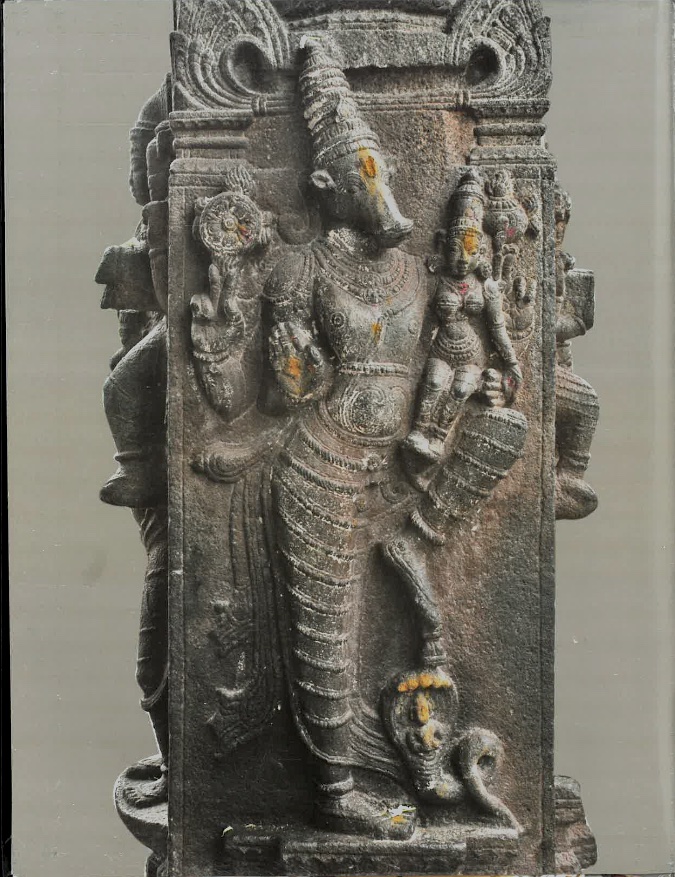
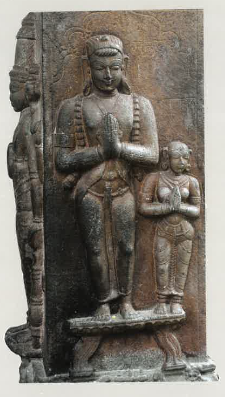
This work is mainly a history of the Vaiṣṇavite temples of Kāñchipuram with an emphasis more on factual history than religious life. Different building activities in each temple are brought out, with the help of epigraphic records that trace from the beginning to the end of the recent historical period. Even the history of rituals in each temple culminates in the philosophy of the respective temples. These are not generally available, but only myths and legends are found portrayed as real history. A study of available published literature shows that the histories of some religious people are generally depicted as the history of these temples. This work concentrates on men who made solid contributions to art, architecture, rituals, festivals, and so on, that made each temple to grow into its present state. In short, the present work may be said to be the real life of these temples. The reader is invited to refer to other books on the legendary movements and myths connected with them.
There are 108 temples dedicated to Viṣṇu in Tamil Nadu sung by the great Vaiṣṇava Āḻvārs that are called sacred centres — divya deśas. As many as fourteen out of these 108 divya deśas are situated in Kāñchipuram. Four divya deśas are in one temple complex, namely the Ūraham (Ulakaḷanda-Perumāḷ) temple which incidentally is one of the oldest temples of Kāñchipuram. Two of them interestingly are inside two Śivakṣetras, one Nilattiṅgaḷ Tuṇḍam is in Ekāmranātha temple and the other, Ādi-Varāha is inside the famous Kāmākṣi temple.
It is also important to mention that the development of Kāñchipuram city is intimately connected with the history of the merchant community in the city for the past 2000 years. The kings who took personal interest in the temples appointed the merchant guilds, particularly the weavers, to take care of the day-to-day administration of the temples and gave them privileges for their services. A study shows that Varadarāja, the most important Viṣṇu temple now in Kāñchi, was not included in the city till almost twelfth century when enormous building activities by the Cōḻas and their contributions got that temple integrated into the city. There is so much material, the history of each temple could be enlarged into a big book but here a balance is struck to present an overview of all the temples. As these temples have enough art material like sculpture, painting, bronzes, architecture, and so on, a considerable number of illustrations are included to present the ethos of these edifices. Hope this will give enough insight into the main Viṣṇu temples of Kāñchipuram and stimulate a similar work on the Śiva temples and other temples of Kāñchi. All the photographs were taken by the author.
I am thankful to Mrs. Malathy Sundaram, for helping me to check the text, illustrations and other bibliographical material.
I wish to thank Mr. Susheel Mittal for taking great interest in this work and bringing it out neatly and beautifully.
January 1, 2011.R. Nagaswamy