📖 Vishnu Temples of Kanchi Dr. R. Nagaswamy
Page 1 / 720
100%
‹
›
× Close

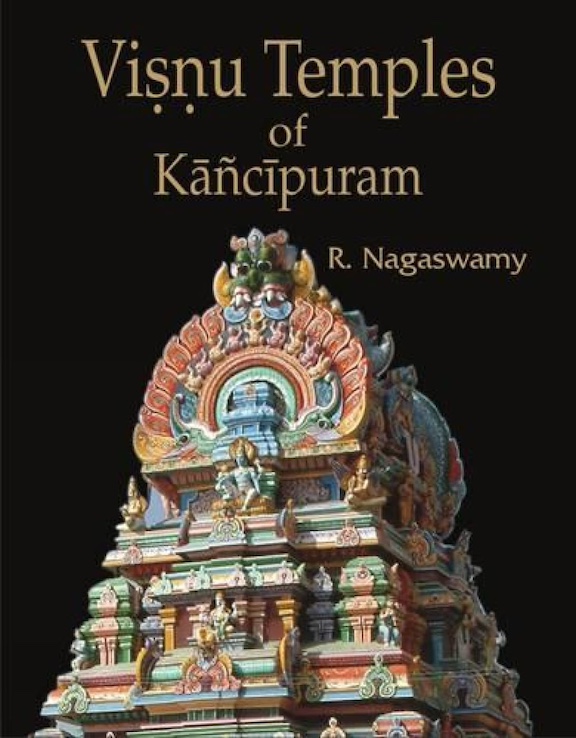
Viṣṇu Temples of Kāñcipuram

Kāñchipuram was the important capital of north Tamiḻnāḍu for a long period — from the first-second century CE to the end of the 17th century. It was a beautiful city laid out in the form of a lotus, according to the poem Perumpāṇaṟṟupaṭai. It was admired by the world as a place famous for its festivals and noted for its temples. Through the ages, it has been the abode of many religious leaders who devoted their lives to the religious uplift of the people. This well-illustrated work presents a history of the Vaiṣṇavite temples of Kāñchi, focusing on the history of the ancient temples from the Saṅgam Age onwards, the many legends, myths and other accounts that refer to it, and its location and building.
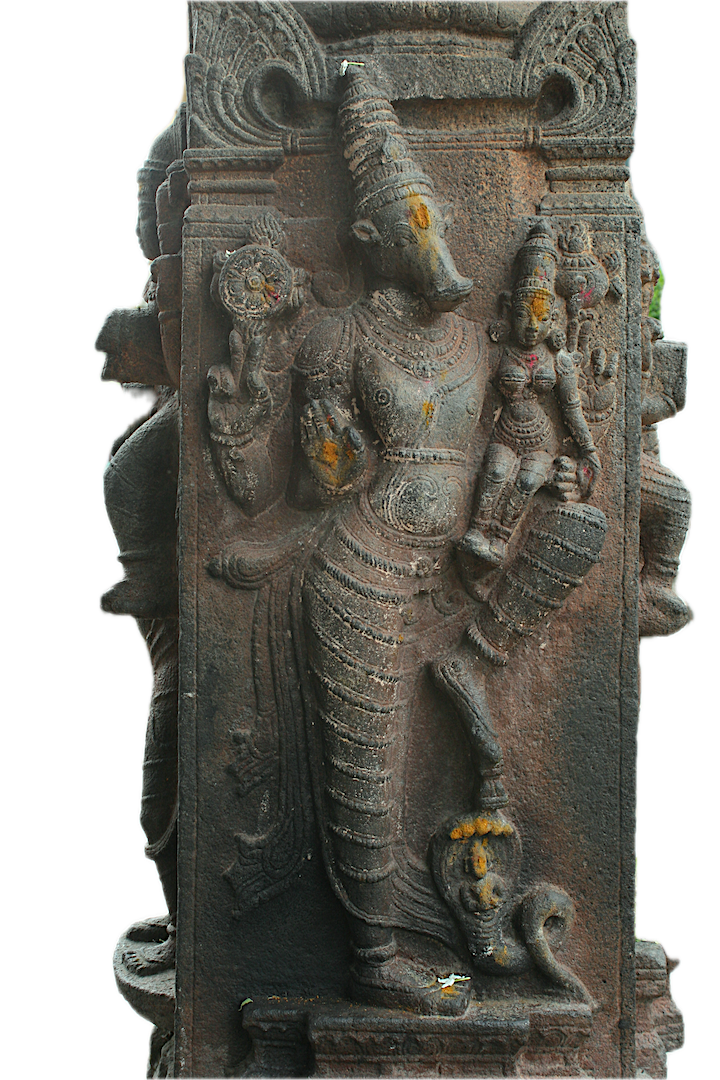
It provides a detailed account of some major temples of the city supported by numerous pictures of the temples that cover various aspects of each — the entrance and other parts of each temple structure, its architecture, and its artistic engravings particularly its sculptural beauty. It delves into the Vaiṣṇava tradition for concepts and ideas underlying the construction of the sanctum and the sub-shrines, and portrayal of divine forms on the walls, pillars and other parts of the temple. There is a detailed study of the sculptures in the main walls of the temples and the main deities in the shrines. It also examines the many inscriptions found in the temples to offer insights into the historical, religious, social and cultural value of the temples. The volume is bound to interest a host of readers, particularly scholars and students of Indology involved in the study of the cultural traditions of south India and its religious art and architecture.

The Hindu

Updated - July 14, 2011 04:18 pm IST Published - July 14, 2011 03:59 pm IST
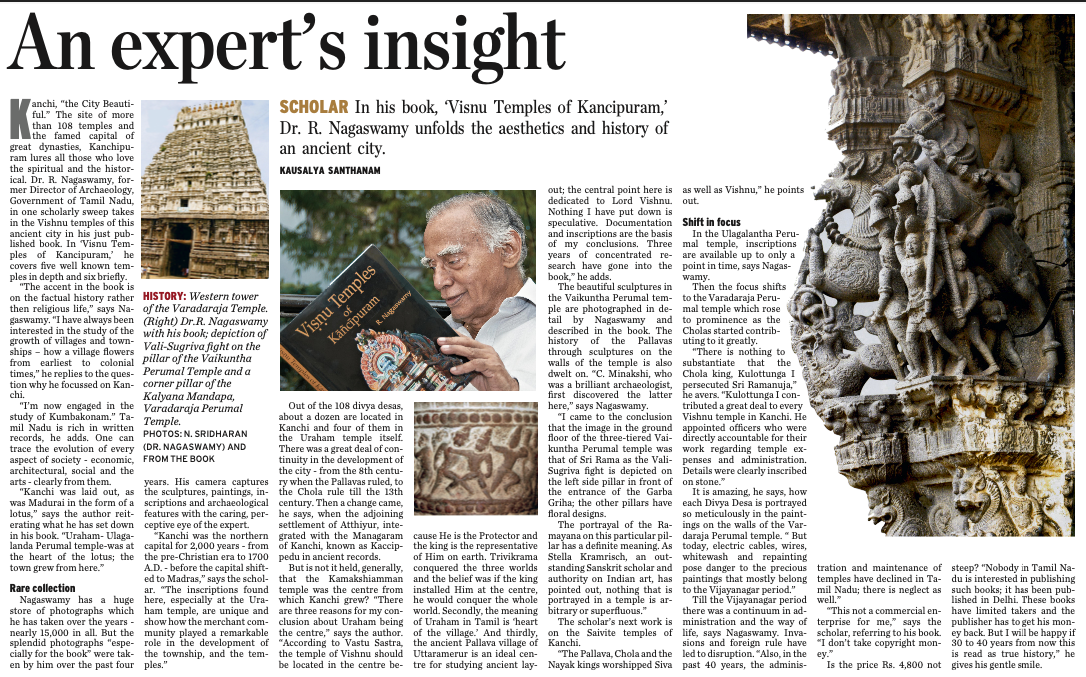
In his book, ‘Visnu Temples of Kancipuram,’ Dr. R. Nagaswamy unfolds the aesthetics and history of an ancient city.
by Kausalya Santhanam

Publishers Note

Tamil Arts Academy is delighted to present the second edition “Viṣṇu Temples of Kāñchipuram” authored by our father Dr. Nagaswamy originally published in 2011. Owing to the huge popularity of the first edition, we are releasing the second edition in EPUB format. We have included additional original content that was left out in the original book due to page constraints. We are thankful to many readers who encouraged us to republish it. In this book we have used Tamiḻ verses from Saṅgam and Bhakti poems provided by Professor Thomas Malten, who, even a two decades ago, dedicated himself to the Tamiḻ language by digitizing the entire corpus of Tamiḻ literature. In 2002, when our father visited Cologne, Germany, Professor Malten generously gave him a complete set of CDs containing his computerized Saṅgam Tamiḻ works.
Later, he kindly visited our home in Madras and demonstrated how to use these digital texts for reading. We deeply appreciate Professor Malten's tireless contributions to the Tamiḻ language and his kindness. The Tamiḻ citations in this work are from the CDs he provided. In this edition, we have incorporated pertinent references and included Tamiḻ and Sanskrit verses within the text to enhance the content. Additionally, some compound Tamiḻ and Sanskrit words have been hyphenated in English for better clarity.

Editing

Book Chapters:
  • Savita Narayan, Writer and Editor / narayan.savita@gmail.com / Blog and Website: Women in Indian History savitanarayan.blogspot.com / Twitter: @savitanarayan
  • Uma Nagaswamy, Researcher and Editor / Website: Tamil Arts Academy https://www.tamilartsacademy.com / Twitter: @unagaswamy)
Digital Compilation (Epub and PDF formats)
  • Mohan Nagaswamy
  • Uma Nagaswamy
Tamil Arts Academy (U.N. Ramachandran, Shyamala Ramachandran, Mohan Nagaswamy, Vishnu Mohan, Kala Baskar, Baskar Kailasam, Uma Nagaswamy, and Suresh Ganapathy)

Preface

This work is mainly a history of the Vaiṣṇavite temples of Kāñchipuram with an emphasis more on factual history than religious life. Different building activities in each temple are brought out, with the help of epigraphic records that trace from the beginning to the end of the recent historical period. Even the history of rituals in each temple culminates in the philosophy of the respective temples. These are not generally available, but only myths and legends are found portrayed as real history. A study of available published literature shows that the histories of some religious people are generally depicted as the history of these temples. This work concentrates on men who made solid contributions to art, architecture, rituals, festivals, and so on, that made each temple to grow into its present state. In short, the present work may be said to be the real life of these temples. The reader is invited to refer to other books on the legendary movements and myths connected with them.
There are 108 temples dedicated to Viṣṇu in Tamiḻnāḍu, sung by the great Vaiṣṇava Āḻvārs, that are called sacred centres — divya deśas. As many as fourteen out of these 108 divya deśas are situated in Kāñchipuram. Four divya deśas are in one temple complex, namely the Ūraham (Ulakaḷanda-Perumāḷ) temple, which incidentally is one of the oldest temples of Kāñchipuram. Interestingly, two of them are inside two Śivakṣetras: one, Nilattiṅgaḷ Tuṇḍam, is in the Ekāmranātha temple, and the other, Ādi-Varāha, is inside the famous Kāmākṣi temple. It is also important to mention that the development of Kāñchipuram city is intimately connected with the history of the merchant community in the city for the past 2000 years. The kings who took personal interest in the temples appointed the merchant guilds, particularly the weavers, to take care of the day-to-day administration of the temples and gave them privileges for their services.
A study shows that Varadarāja, the most important Viṣṇu temple now in Kāñchi, was not included in the city until almost the twelfth century, when enormous building activities by the Cōḻas and their contributions got that temple integrated into the city. There is so much material that the history of each temple could be enlarged into a big book, but here a balance is struck to present an overview of all the temples. As these temples have enough art material like sculpture, painting, bronzes, architecture, and so on, a considerable number of illustrations are included to present the ethos of these edifices. I hope this will give enough insight into the main Viṣṇu temples of Kāñchipuram and stimulate a similar work on the Śiva temples and other temples of Kāñchi. All the photographs were taken by the author. I am thankful to Mrs. Malathy Sundaram, for helping me to check the text, illustrations and other bibliographical material.
I wish to thank Mr. Susheel Mittal for taking great interest in this work and bringing it out neatly and beautifully. January 1, 2011. R. Nagaswamy

KEY TO TRANSLITERATION

Tamiḻ: Vowels

VowelsTransliterationExample
அaஅவன் - avaṉ
ஆ āஆதவன் - ātavaṉ
இ iஇவன் - ivaṉ
ஈīஈகை - īkai
உu உண்மை - uṇmai
ஊ ūஊர் - ūr
எe எவன் - evaṉ
ஏēஏவல் - ēval
ஐaiஐய்யம் - aiyyam
ஒoஒரு- oru
ஓōஓது- ōtu
ஔōஒளவை - auvai

Tamiḻ: Consonants

ValliṉamTransliterationExample
கkகடல் - kaṭal
காkāகாடு- kāṭu
கிkiகிடை - kiṭai
கீkī கீற்று- kīṟṟu
குkuகுடம் - kuṭam
கூkūகூட்டு- kūṭṭu
கெkeகெட்ட - keṭṭa
கேkēகேடை - kēṭai
சcaசட்டை - caṭṭai
சாcāசாட்டை - cāṭṭai
சிciசிகை - cikai
சீcīசீற்றம் - cīṟṟam
ValliṉamTransliterationExample
சுcu சுதை - cutai
சூcū சூடு- cūṭu
செce செயல் - ceyal
சேcē சேரன் - cēraṉ
சை caiஇசை - icai
டṭபடம்
டாṭā கடாரம் - kaṭāram
டிṭiதொட்டி- toṭṭi
டீṭīபட்டீச்வரம் - paṭṭīcvaram
டுṭu கடுமை - kaṭumai
டூṭū கிடூ- kiṭu
டெ ṭe வெட்டெனல் - veṭṭenal
ValliṉamTransliterationExample
டே ṭē விட்டேல் - viṭṭēl
டை ṭaiபுடை - puṭai
த ta தடம் - taṭam
தா tāதாமரை - tāmaṟai
தி tiதிடல் - tiṭal
தீ tīதீ - tī
து tuதுளை - tuḷai
தூ tūதூபம் - tūpam
தெ teதெய்வம் - teivam
தே tēதேடல் - teṭal
தை taiதையல் - taiyal
ப pa படம் - paṭam
ValliṉamTransliterationExample
பா pā பாடம் - pāṭam
பி pi பிழை - piḻai
பீ pī பீடம் - pīṭam
புpu புதை - putai
பூ pū பூதம் - pūtam
பெ pe பெடை - peṭai
பே pē பேதம் - pētam
பை paiபை - pai
றṟவிற - viṟa
றாṟāபுறா - puṟā
றிṟiவெற்றி- veṟṟi
றீṟīசுறீரெனல் - suṟīreṉal
ValliṉamTransliterationExample
றுṟuவேறு- veṟu
றூ ṟūசீறூர் - sīṟūr
றெ ṟeவிற்றென - viṟṟeṉa
றே ṟē வருகிறேன்
றை raiகறை - kaṟai
IdaiyiṉamTransliterationExample
ய ya தயக்கம் - tayakkam
யா yā தயார் - tayār
யி yi தயிர் - tayir
யீ yī அயீராவணம் - apīrāvaṇ
யு yu யுத்தம் - yuttam
யூ yū யூகம் - yūgam
யெ yē பையெனல் - paiyeṉal
யே ye தன்னந்தனியே - taṉṉanthaṉiye
யை yaiவையை - vaiyai
ர ra கரம்- karam
ரா rā அகராதி- akarāthi
ரி riசரி- cari
IdaiyiṉamTransliterationExample
ரீ rīசரீரம் - carīram
ரு ru குரு- kuru
ரூ rū குரூரம் - kurūram
ரெு re ரெம்பு - rembu
ரே rē நேரே - nērē
ரை raiகரை - karai
லlaமெல்ல -mella
லாlāபலா - palā
லிliபலி- pali
லீ līகொல்லீ - kolli
லுluவலு- valu
லூlūகல்லூரி- kallūri
IdaiyiṉamTransliterationExample
லெleலெப்பை - leppai
லேlēமேலே - m ēlē
லை laiகாலை - kālai
வvaவட்டம் - vaṭṭam
வvaவாழை - vāḻai
விviவிடை - viṭai
வீvīவீரர் - vīrar
வvuகதவு- katavu
வூvūகடவூ- kaṭavū
வெ ve வெப்பம் - veppam
வேvē வேப்பம் - vēppam
யை vaiவையை - vaiyai
IdaiyiṉamTransliterationExample
ழḻaகிழமை - kiḻamai
ழா ḻāவிழா - viḻā
ழிḻiவீழி- vīḻi
ழீ ḻīதொழீஇ - toḻīi
ழுḻuகழுகு- kaḻuku
ழூḻūவழூ- vaḻū
ழெ ḻeவிழுவிழென - viḻuviḻeṉa
ழே ḻēபுகழேந்தி- pukaḻēnti
ழை ḻaiபிழை - piḻai
ளḷaபுரள - puraḷa
ளாḷāவேளான்மை - vēḷāṉmai
ளிḷiவள்ளி-vaḷḷi
IdaiyiṉamTransliterationExample
ளீ ḷīவள்ளீஸ்வரர் - vaḷḷīswarar
ளுḷuமுள்ளு - muḷḷu
ளூḷūவள்ளூரம் - vaḷḷūram
ளெ ḷeவெள்ளென - veḷḷaṉa
ளே ḷēஉள்ளே - uḷḷē
ளை ḷaiதுளை
MelliṉamTransliterationExample
ங ṅஙானா - ṅanā
ஙா ṅāஙாவன்னா - ṅāvaṉṉā
ஙி ṅiஙீனா - ṅiṉa
ஙீ ṅīஙீயன்னா - ṅivaṉṉā
ஙு ṅuஙூனா - ṅuṉā
ஙூ ṅūஙூவன்னா - ṅūvaṉṉā
ஙெ ṅeஙேனா - ṅeṉā
ஙே ṅēஙேயன்னா - ṅēvaṉṉā
ஙை ṅaiஙையன்னா - ṅaiyaṉṉā
ஙொ ṅoஙோனா - ṅoṉā
ஙோ ṅōஙோவன்னா - ṅōvaṉṉā
ஔ ṅauஙௌவன்னா - ṅauvaṉṉā
MelliṉamTransliterationExample
ஞாjñāஞானம் - jñāṉam
ஞேjñē ஞேயா - jñēya
ஞிுjñi ஞிமிறு- jñimiṟu
ஞீ jñī பைஞ்ஞீலி - paiññīli
ண் ṇவேண்டும் - vēṇṭum
ணா ṇāவண்ணான் - vaṇṇāṉ
ணிṇiமணி - maṇi
ணீṇīதண்ணீர் - taṇṇīr
ணுṇuகண்ணுதல் - kaṇṇutal
ணூṇūதொண்ணூறு - toṇṇūṟu
ணைṇaiஅணை - aṇai
ம maதாமரை - tāmaṟai
MelliṉamTransliterationExample
மாmāமாதம் - mātam
மிmiமித்தம் - mittam
மீmīமீண்டும் - mīṇdum
முmuமுதல் - mutal
மூmūமூன்று - mūṉṟu
மெmeமென்மை - meṉmai
மேmēமேல் - mēl
மை maiமென்மை - meṉmai
னṉaஞானம் - jñāṉam
னாṉāஅன்னார் - aṉṉār
னிṉiஞானி-jñāṉi
னிṉiஞானி-jñāṉi
MelliṉamTransliterationExample
னீṉīதேனீ - tēṉī
னுṉuதேனும் - tēṉum
னூṉūதேனூறும் - tēṉūrum
னெṉeபதினெட்டு- patiṉeṭṭu
னேṉēஉடனே - uṭṉē
னைṉaiமனை - maṉai

Sanskrit: Vowels

SvarasTransliterationExample
अ a अक्षर - akṣara - Alphabets
आ ā आदित्य - āditya - Sun
इ i इदम् - idham - Location
ई ī ईश्वर - īśvara - Supreme
उ u उत्तरम् - uttaram - Conclusion
ऊ ū ऊर्ध्व - ūrdhva - Upward
ऋ ṛ ऋषि - ṛṣi - Sage
ॠ ṝ ॠकार - ṝkāra - Eighth Vowel
ऌ ḷ ऌकार - ḷkāra - Ninth Vowel
ॡ ḹ ॡकार - ḹkāra - Tenth Vowel
ए e एकं - Ekam - One
ऐ ai ऐकार - aikāra - Twelfth Vowel
SvarasTransliterationExample
ओ o ओषम् - oṣam - Eager
औ au औषधम् - auṣdham - Herbal Medicine

Sanskrit: Consonants

VyañjanaTransliterationExample
क k कला - kalā - Art
च c चन्दनम् - candanam - Sandlewood
ट ṭ पटल - paṭala - Chapter
त t लता- latā - Creeper
प p पत्रम् - patram - Document
ख kh खेल - khela - Sport
छ ch छन्न - channa - Covered
ठ ṭh ज्येष्ठ - jyeṣṭha - Senior
थ th अथवा - athava - Or
फ ph फलं - phalam - Fruit
ग g गङ्गा- Gaṅga - Ganges
ज j जाती- jāti - Caste
VyañjanaTransliterationExample
ड ḍ डमरू - damaru - Drum
द d दसकं - dasakam - Decade
ब b बुद्ध - bhudhdha - Bhudhdha
घ gh घाटा- gh āṭa - Deficit
झ jh झङ्कार - jhaṅkāra - Murmur
ढ ḍh ढकार - ḍhakāra - Consonant
ध dh धरु - dharu - Hold
भ bh भाव - bhāva - Expression
ङ ṅ पङ्क - paṅka - Clay
ञ ñ पञ्च - pañca - Five
ण ṇ गणेश - gaṇeṣa - Gaṇapathi
न n नामं - nāmam - Name
VyañjanaTransliterationExample
म m मन्त्र - mantra - Mantra
ह h हिमवान - himavān - Snow
य y भयानकम् - bhayānakam - Terrible
र r परमं - paramam - Ultimate
ल l लयं - layam - Rythm
व v वरुण - varuṇa - Rain God
श ś शिव - śiva - Shiva
ष ṣ विषम् - viṣam - Poison
स s सनातनम् - sanātanam - The eternal
ळ ḻ ळकार - ḷkāra - Consonant

Introduction To Kāñchipuram

Kāñcipuram, known as the beautiful city of India in ancient times, was the most important capital of north Tamiḻnāḍu from its known history to the end of seventeenth century for nearly 2000 years. This was captured by the famous Cōḻa ruler Karikālaṉ and passed on to his son Kiḷḷivaḷavaṉ in the Saṅgam Age, first-second century CE. Kiḷḷivaḷavaṉ’s son through a Nāgā princess was Toṇḍaimaṉ Iḷamtiṟaiyaṉ who ruled the northern Tamiḻnāḍu with Kāñci as his capital. A long poem named Perumpāṇāṟṟupaṭai on Iḷamtiṟaiyaṉ, by a poet, Kaḍiyalūr Rudram Kaṇṇaṉār gives the description of Kāñci. The poem mentions the place as paḻa-viral-mūdūr kacci, admired by the world as a place of festivals. It mentions that the city was laid out in the form of a lotus with Iḷamtiṟaiyaṉ’s palace, “poṉ-tuñcu-viyaṉ nagar”, in the centre, built of brick and its superstructure covered with gold.
The tower could be seen from a long distance. Such lotus layouts are called padmākara plan in Vāstu Śāstra (Traditional Architectural texts). The city of ancient Madurai was laid out in the same lotus plan. pal-idaḻ tāmarai pokuṭṭiṉ kāṇvarat-tōṉṟic cuṭumaṉ ōṅgiya neṭunagar பல் இதழ்த் தாமரைப் பொகுட்டின் காண்வரத் தோன்றிச் சுடுமண் ஓங்கிய நெடுநகர் The Vāstu texts also specify that a Viṣṇu temple should be built in its central part since Viṣṇu is the protector of the Universe. As the king was the protector of the country and likened to Viṣṇu in ancient times, his palace should also be in the centre. In Gaṅgai-koṇḍa-cōḻa-puram is a fine example of such a capital with a temple of Viṣṇu and also the king’s palace in the centre of the layout with other temples distributed in appropriate directions.
In the ancient city of Kāñci, there existed a temple dedicated to Viṣṇu as Trivikrama, called Ūraham, i.e., “The heart or centre of the city”. The temple continues to exist to this day as Ūraham or Ulakaḷanta-Perumāḷ temple near Kāmākṣi temple. A study of the inscriptions, literature, and also the existing monuments shows that the ancient city was centred around this temple. All the great and well-known temples of Śiva, Viṣṇu, Śakti, Kumāra, etc., of Kāñci are located in this region which was called in ancient times Kaccippēṭu. The present Kāñcipuram city is divided mainly into three parts called:
  1. Śiva Kāñci, with Ēkamranātha temple,
  1. Viṣṇu Kāñci with Varadarāja temple, and
  1. Jīna Kāñci with Jaina temples.
There was also a Buddhist temple here up to the thirteenth century. The temple of Varadarāja which is now the most famous Viṣṇu temple was not originally part of the ancient city, but situated beyond its eastern borders and was known as Attiyūr. Important temples in the ancient part of the city are as follows:
  1. Ēkamranātha
  1. Kāmakkōṭṭam
  1. Kumārakkōṭṭam
  1. Kailāsanātha
  1. Ūraham
  1. Vaikuntha-Perumāḷ
  1. Muktēśvara
  1. Matangēśvara
  1. Tiru-vehha (Coṉṉavaṇṇam-ceyda-perumāḷ)
  1. Aṣṭhabhujākaram
  1. Pāṭakam alias Pāṇḍava-Perumāḷ
  1. Jvaraharēśvara
  1. Kaccapēśvara
  1. Dīpa Prakāśa (Viḷakkoḷi)
  1. Paccai-vaṇṇar
  1. Pavaḻa-vaṇṇar and so on.
The Vaikuntha-Perumāḷ temple, originally called Paramēśvara Viṇṇagaram, was built by the Pallava Nandivarman II in around CE 750, was renovated by Kulōttuṅga Cōḻa I and came to be called Kulōttuṅga-cōḻa-viṇṇagaram. The ancient Kāñci extended from Kailāsanātha in the west to Tiru-vehha in the east.
There were many merchant colonies that existed up to thirteenth century, within this area mainly centred around Ūraham temple. A good number of inscriptions and royal charters speak about the temple of Ūraham, mainly placed under the control of these merchants, financially, administratively and religiously that helped the city to prosper. Around CE 700 when the great Pallava ruler Rājasimha built the Kailāsanātha temple he established four merchant colonies around the centre of the city named after his titles as: These were active for more than 300 years. There were merchants supplying clothes to the royal household who resided in settlements at the same time named These were made in-charge of the administration of the temple by the ruling kings. The merchants who lived in the area were called Tantuvayas in Sanskrit and Paṭasālis in Tamiḻ portion of the record who were supplying cloth to the royal families.
The merchants had received orders from the following kings to regulate the services of the Ūraham temple: The earliest inscription in the temple of Ūraham is that of the Pallava Teḷḷāṟṟerinda Nandivarmaṉ CE 845-60. At the request of his officer, the Pallava ruler granted permission to the merchants attached to the “viṭēl-viṭugu-kutiraic-cēri” to sell all commodities in their shops without paying any tax. It means that instead of paying the tax to the king it should be paid to the temple. Thus, it is seen from the earliest known period, the merchants were associated with the temple.

Uttama Cōḻa’s Order, CE 955

Uttama Cōḻa, the immediate predecessor of Rājarāja I, issued a royal order in CE 985, inscribed on copper plates, that have survived to this date, now known as Madras Museum Plates of Uttama Cōḻa. It gives a clear picture of the interest of the rulers in this royal temple of Ūraham and detailed information of administration of this temple by the merchants. Uttama ordered the merchants firsti, to verify the existing sources of income of the temple, granted by earlier kings, recorded in stone inscriptions and copper plates. The earlier grants of the kings Vijayālaya Cōḻa, Pallava Kampavarmaṉ, and Parāntaka Cōḻa were mentioned in the records as a result of verification. It was found that the temple received incomes from three sources:
  1. Lands purchased by the temple from its own funds.
  1. Taxes paid to the temple as ordered by the rulers.
  1. Interests paid by the merchants and villagers who had taken gold from the temple treasury on loan.
Uttama Cōḻa ordered division of expenditure into two major heads:
  1. The daily pūja services in the temple, its expenditure and administration.
  1. The utsava (festivals), their expenditure and administration.
Two merchant colonies were given the responsibility of collecting the respective revenue, and administer the daily services. They should also audit the account every year. Other colonies (pāḍis) should collect the revenue relating to festivals, conduct the seven days festivals, enrol special musicians, lamp holders, flower suppliers, etc.
They should audit the accounts of expenditure immediately after the festival was over. The quantity of proceeds and the revenue to be collected are detailed in the record. Similarly, the annual interest on the gold taken on loan was to be calculated at the rate of 12 percent and collected. An interesting stipulation was that some of these arrangements were in existence from the time of the earlier kings and that should continue. There was one another merchant colony named “Cōḻa Niyamam,” in which lived some merchants named “Tolāc-ceviyar,” and “Elak-kaiyar.” Their population had dwindled and those who were still there were reduced to poverty. The king ordered that they should not be taxed at all. Instead, new immigrant merchants were to be taxed at the rate of one nāḻi of rice and oil per month. No other tax should be levied.
The administration was in the hands of tānattars in most of the other temples. However, here we find the merchants responsible for the administration which shows the city was primarily a commercial settlement and its prosperity depended on trade. The merchants were co-opted in the administration of the central temple for the economic wealth of the city. The merchants were to carry lamps, flags, parasols and other paraphernalia of the temple in front of the deity during festivals in lieu of their wages. One of the inscriptions says “nam ur grāma dēvataiyākiya ūrahattup-pērumāṉ”, the “deity (Viṣṇu of Graham), the presiding god of the town”, which shows that the god of Graham was worshipped as the central presiding deity of the city. Rājarāja Cōḻa I, who succeeded Uttama Cōḻa, added more merchant colonies increasing the commercial nature of the city. He established three more great merchant markets called peruntheru:
  1. Rājarāja Perun-theru,
  1. Mummuḍi Cōḻa Perun-theru, and
  1. Ravikula-Māṇikka Perun-theru.
Rājarāja Cōḻa I and Rājēndra Cōḻa I (Ce 985-1044) added more constructions to the Graham Viṣṇu temple. Under the reign of Rājēndra Cōḻa, a new shrine was built inside the Graham temple by his Senāpati, Rāmaṉ Kṛṣṇaṉ and this temple was dedicated to Kṛṣṇa. Their inscriptions are found in fragments built into the enclosure. The age of Kulōttuṅga I who ascended the throne in CE 1070 and ruled up to CE 1125 was the golden age of Kāñci. He built the present stone structure of the main tower and gilded the finial with gold. He found that a considerable area of cultivable lands belonging to the temple was lying fallow without cultivation.
The merchants of the region of Kaccippēṭu took these lands and were cultivating and using their produce. At the request of his queens, the king invited the merchants and persuaded them to return the lands to the temple which they readily agreed. Kulōttuṅga himself went to the temple and standing in the sanctum with his queens gifted these lands back to the temple for its expenses. Kulōttuṅga rebuilt the sanctum towers of all the ancient Viṣṇu temples in the city and made gifts which saw a great flowering of Vaiṣṇavism in the city. The temple of Śrī Kṛṣṇa called Pāṭakam, presently known as Pāṇḍava-dūtar was a great centre of architects who built temples at other places like Uttaramērūr. Kulōttuṅga’s inscription is found in this temple. Another famous Viṣṇu temple in the city called Tiru-vehha (Yatotkāri-Coṉṉavaṇṇam-ceyda-perumāḷ) temple was the eastern boundary of ancient Kāñci. Kulōttuṅga I built the temple of Varadarāja with stone encasing the hillock and built the enclosure and gopura
with the result the village temple of Varadarāja became a great temple. Kulōttuṅga’s son built more shrines, kitchen, etc. The Varadarāja has emerged into the limelight. One of the late Cōḻa inscriptions gives the boundaries of the city which still retained the old status from Tiru-vehha in the east to Kailāsanātha in the west and calls it Mānagaram. Up to the middle fourteenth century we find this situation continued. The latter half of the fourteenth century saw the establishment of Vijayanagara rule. The Vijayanagara rulers patronised every religion alike. Suddenly, we find enormous activity of buildings and inscriptions shifted to Varadarāja temple in the east. There is practically no inscription in the Ūraham temple after fourteenth century till the end of nineteenth century.
More or less the same condition is noticed in other temples and where found, they are nothing compared to the enormous activity in Varadarāja. The great Krishṇadēvarāya and his brother Acyutarāya who succeeded him contributed enormously to the enrichment of the Varadarāja temple and also Ēkamranātha temple. The merchants who were found around the Ūraham temple (the centre of the ancient city) have now moved towards the Varadarāja temple and its surroundings. The Varadarāja temple is now integrated with the ancient city of Kāñci. A portrait of Kṛṣṇadēvarāya in metal is found in the Tāyar shrine. The Kalyāṇa Maṇḍapa in the enclosure known for its beauty was built by Acyutarāya. The temple car of Varadarāja was made in the Vijayanagara Age. Kāñci went through some disturbance in the seventeenth and eighteenth centuries. From its known history it was a great commercial town with merchants playing a vital role in its development.
It continues to this day as a leading weaving centre and silk trade. It has been the abode of many religious leaders who were responsible for the religious upliftment of the people.

1. Ūraham/Ulakaḷanda Perumāḷ Temple of Kāñcipuram

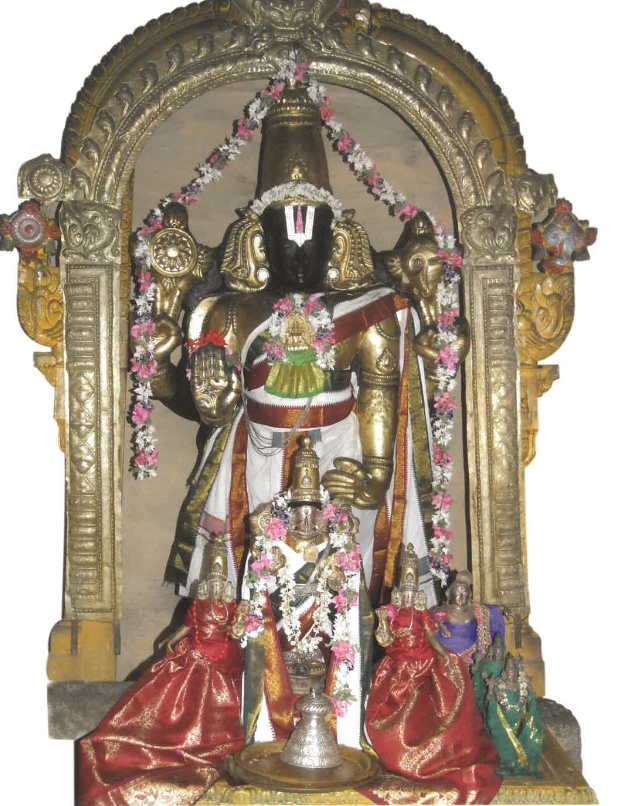
The temple of Trivikrama at Ūraham called Ulakaḷanta Perumāḷ in Kāñcipuram is a venerated Viṣṇu kṣetra in the south, included among the 108 centres called divya-deśas. The god measuring the three worlds with his lifted foot faces west in this temple. Inside the temple there are three more divya-deśas namely Nīraham, Kāraham, and Kār-vānṉam. A visitor to this temple can have darśan of four divya-desśa in one temple complex. The area where the temple is located is called Kaccippeḍu in ancient inscriptions.

1.1. Early History

The very name Ūraham (Ūr + aham) i.e., “heart of the village” indicates that it served as the centre of Kāñci-puram. It was founded when Kāñcipuram was only a small village. It is a tradition that in any village or township, the temple of Viṣṇu should be located in the centre or somewhat west of the centre of the village layout. The name Ūraham suggests that originally the city of Kāñci was laid according to ancient traditional architectural treatise with the temple of Viṣṇu in the centre. There are also suggestions in the hymns of Vaiṣhṇavite Āḻvārs that three forms of Viṣṇu, namely seated, standing, and reclining, were enshrined in separate temples at Kāñcipuram from time immemorial.
The standing form refers to this Trivikrama temple (known as Ulakaḷanda Perumāḷ at Ūraham), the seated form to Pāṭakam (the Pāṇḍava-dūta-perumāḷ), and the reclining form of Viṣṇu at Tiru-Vehhā (Conna-vaṇṇam-ceyda Perumāḷ - Yatotkāri temple). While the Ūrahap-Perumāḷ was the protector of the city, the temple of Kāmākṣi was the city's personified Devatā. While the village or city may be classified as Viṣṇu-pura or Śiva-pura, the entire village or city is personified as the goddess Durgā Parameśvari, such as Kāñci-purī-devatā, Kāśi-purī-devatā, Mathurā-purī-devatā, or Puṣkalāvatī-devatā. The form of Viṣṇu is the protective power, while the goddess is the personified Śakti of the settlement. Thus, the Goddess is generally called the “Grāma-devatā”. However, the principal god of the village or city is also called Grāma-devatā, the god of that village. One of the 12th-century inscriptions of Ūraham names Viṣṇu as the Grāma-devatā (nam ūr grāma dēvataiyāṉa ūrakattu ulakaḷanta perumāḷ), which would indicate that the settlers considered Viṣṇu to be the main deity of the city.
The Trivikrama image should be installed and worshipped by the settlers who desire victory in all their undertakings, just as Viṣṇu conquered the three worlds in three strides. We may conclude that around these two temples, Ulakaḷanda Perumāḷ and the temple of Kāmākṣī, which are close to each other in the center of the city, the people of the city lived for over one thousand years or more. However, the city seems to have expanded, encompassing the Varadarājā temple, changing the character of the city later.
There is a reference to the reclining form of Viṣṇu at Kāñci in a two thousand year old Saṅgam Tamiḻ literary work. This part of Tiru-vehhā (Yatotkāri temple) almost certainly served as the eastern boundary of the original city. The Saṅgam Tamiḻ work, Perumpāṇ-āṟṟupaḍai, sung by the poet Rudram-kaṇṇanār, mentions Tiru-Vehhā in which Viṣṇu is described as reclining on his serpent couch (pāmpaṇaip paḷḷi amarntōṉ āṅkaṇ - பாம்பணைப் பள்ளி அமர்ந்தோன் ஆங்கண் ). The early ruler of Kāñci was called Tiraiyaṉ (tirai - wave) “the gift of sea waves” and claimed to have descended from Lord Viṣṇu.

1.2. Ūraham in Āḻvār Pācurams

The earliest Vaiṣhṇava Āḻvār to sing Ulakaḷanta Perumāḷ was Tirumaḻisai Āḻvār who was a contemporary of Pallava Mahendra-varman in 7th century.
He describes Viṣṇu of Ūraham as standing, the Viṣṇu of Pāṭakam as seated and the Viṣṇu of Tiru-Vehhā as reclining, and names him as the God of Gods, the Devadeva who protected his devotees1. These devotees practiced āsana, prāṇāyāma etc., and followed the path of yoga-mārga in order to achieve communion with Viṣṇu. Viṣṇu is seated in Pāṭakam that had lofty mansions like mountains. While he stood on the lofty mountain (Tiru-veṅkaṭam) and sat in Pāṭakam which are great abodes, but is it known what made him sleep on waters of the river at Tiru-Vehhā?” This is a poetic way of praising all the three temples together.
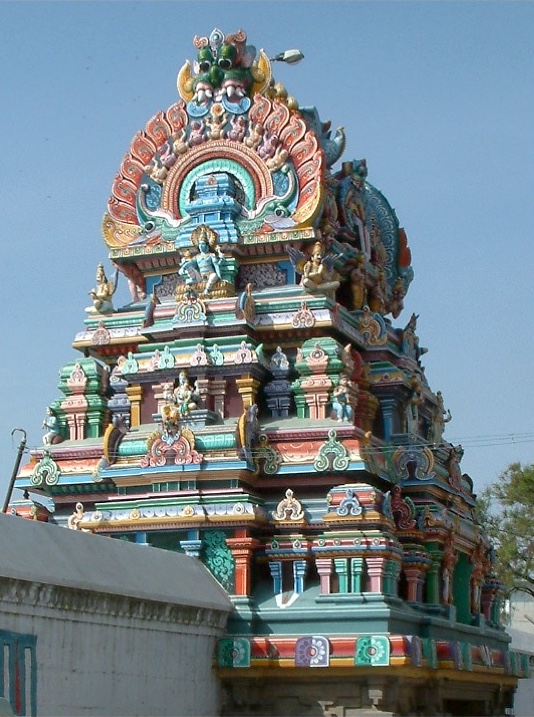
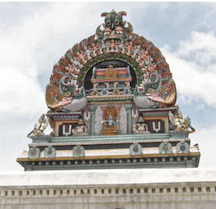
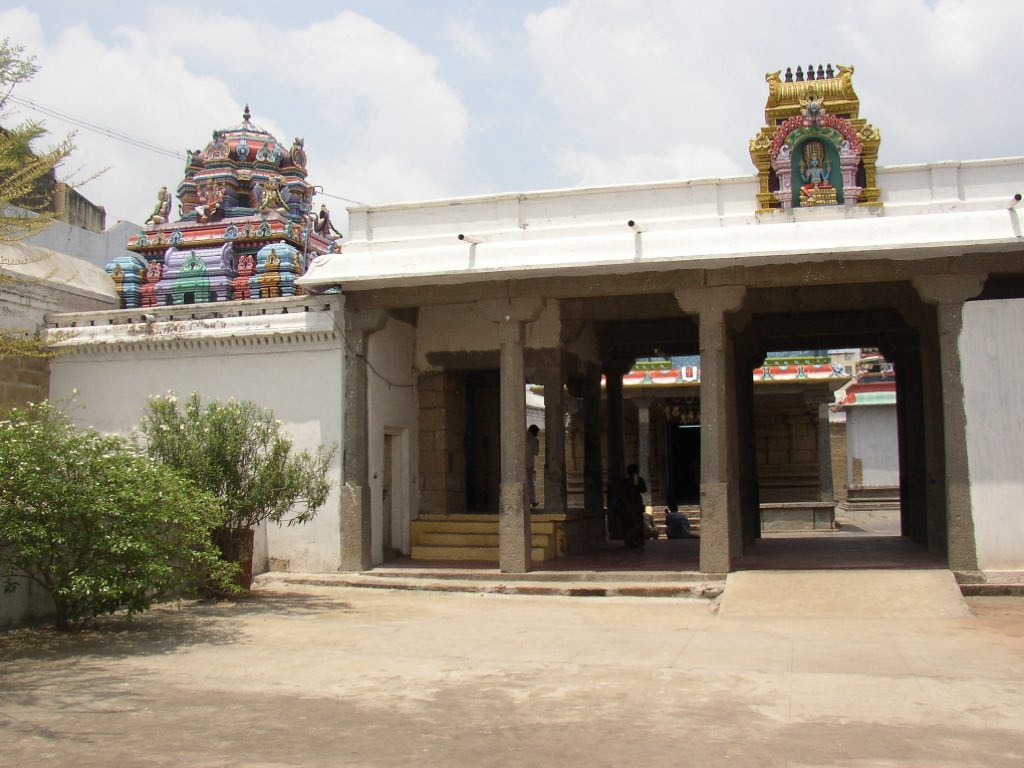
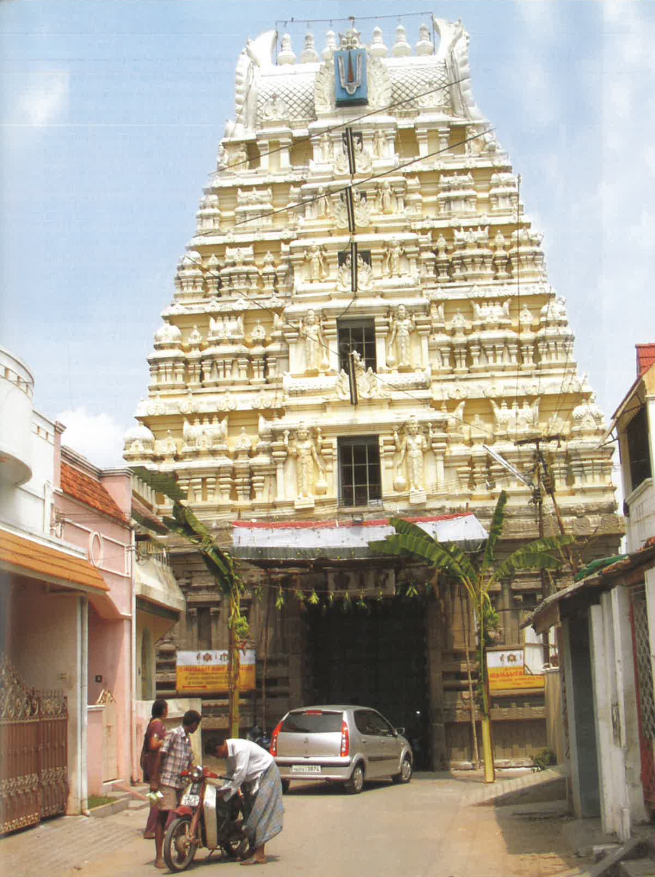
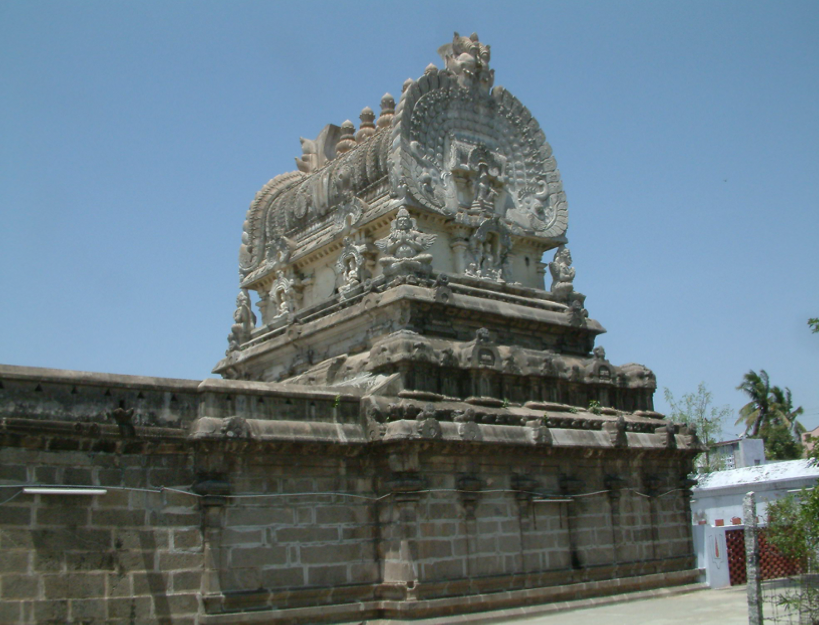
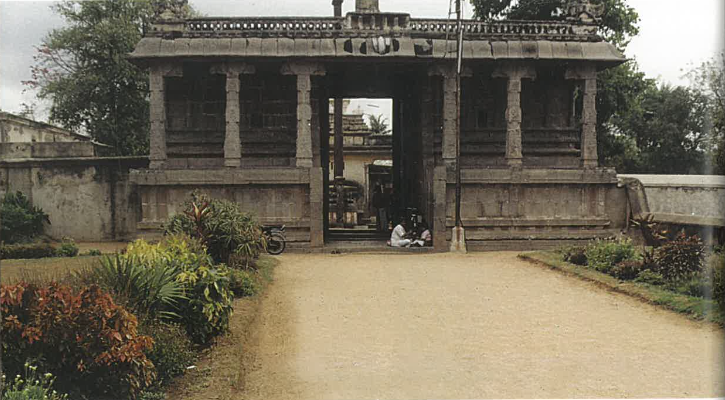
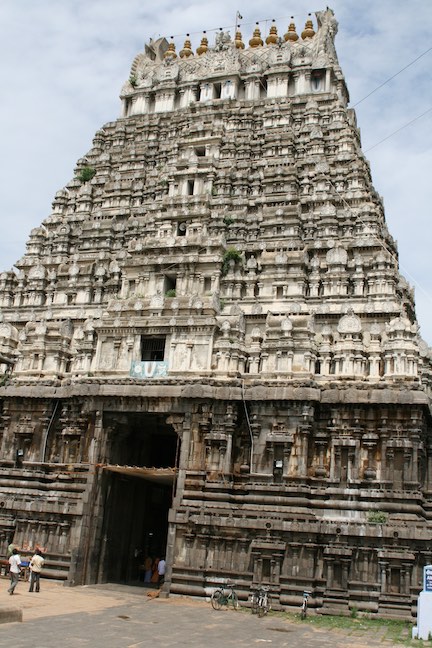
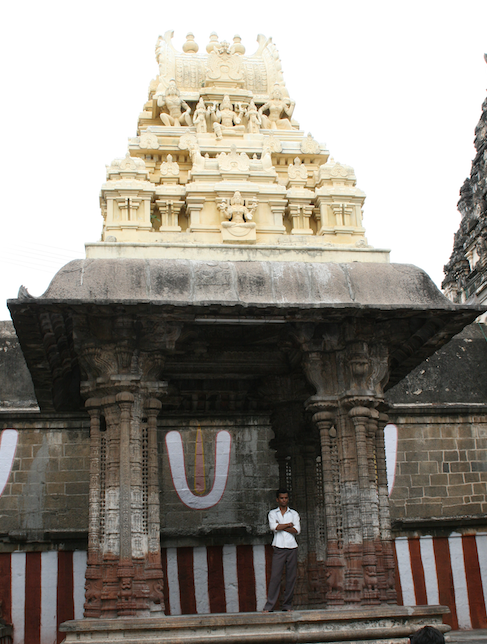
fig. 1.1: The outermost gopura in the west of the Ūraham Temple, Kāñcipuram, Cōḻa Age, 12th-13th century.
In another verse2 (815) the Āḻvār says:
“The lord stood in Ūraham, remained seated in Pāṭakam, and reclined in Tiru-Vehhā. All these events took place aeons ago i.e., innumerable years earlier. The Āḻvār was not born then, but ever since his birth the lord stands, sits and sleeps in his mind. He never forgot the lord even for a moment and hence the place of the lord is his mind.”
This fine poetic expression suggests that all the three places, Ūraham, Pāṭaham and Vehhā, were always in the Āḻvār's mind. Evidently, these three places remained greatly celebrated from days of yore. The next Āḻvār to sing of Ūraham was Tiru-maṅgai Āḻvār in the 8th century. The Āḻvār sings about a number of temples like Nīraham (one of the sub-shrines within Ūraham), the lord of Vēṅkaṭam, the lord of Nilātiṅgaḷ-tuṇḍam (now within the Ekāmranātha temple), Ūraham in the dense city of Kāñci, the lord of Tiru-Vehhā on the banks of Vegavati river, the lord of Kāraham, adored by the three worlds, the lord of Kār-vāṉam, the lord who resides on the southern side of Kaveri in the south (Tiru-araṅgam) and the lord who remains in his mind without moving out even for a fraction of a second3. In a poem couched in erotic emotion, the Āḻvār sings as an infatuated girl, pining for union with the lord.4 The Āḻvār says,
“This girl is exhausted, with tears trickling and falling on her breasts, and coaches her parrot to sing the exploits of her lover. The girl asks her parrot to sing the praises of the Lord of Ūraham of Kāñci, who lifted the mountain to protect the cows from the rains of stones, the Lord of Ūraham in the midst of fragrant flowers of Kāñci. He married the lovely girl, Sītā, by breaking the invincible bow. He who sleeps in Vehhā destroyed the wrestlers (sent by Kaṁsa) by wrestling with them. He tore the horse demon Kesi by tearing his mouth. This girl coaches her parrot to sing the glory of her lord and is virtually exhausted. She knows that he is capable of doing extraordinary exploits. For him, it is not difficult to satisfy the love of this tender girl. She feels her lord is yet to arrive.”
In a long poem the Āḻvār sings about all the Vaiṣṇava-kṣetras or pilgrims centres. In this list, he sings of Ūraham as situated in Kāñci encircled by high fortification.
In another poem he includes Ūraham, Pāṭakam, and Vehhā.5 In most cases, the temples of Kāñci mainly Ūraham, Pāṭakam, and Vehhā are mentioned together showing that for the Āḻvārs these three temples were Kāñci’s great temples. It may be mentioned that the Varadarājā temple of Kāñci was not as famous as these three temples, at that time. It is sung by only one Āḻvār, Bhutattāḻvār. In some editions of Divya-prabandham the editors say that there are seven patikams on Varadarājā, but in the original poems there is no reference to this temple except in the poems of Bhutattāḻvār. Some schoḻars hold that Attiyūr mentioned by the Āḻvār refers to the Narasiṁha shrine below the present Varadarājā shrine and not the Varadarājā. The modern Varadarājā temple mentioned as Attiyũr was then only a small village temple that sprang into prominence later.

1.3. The Temple

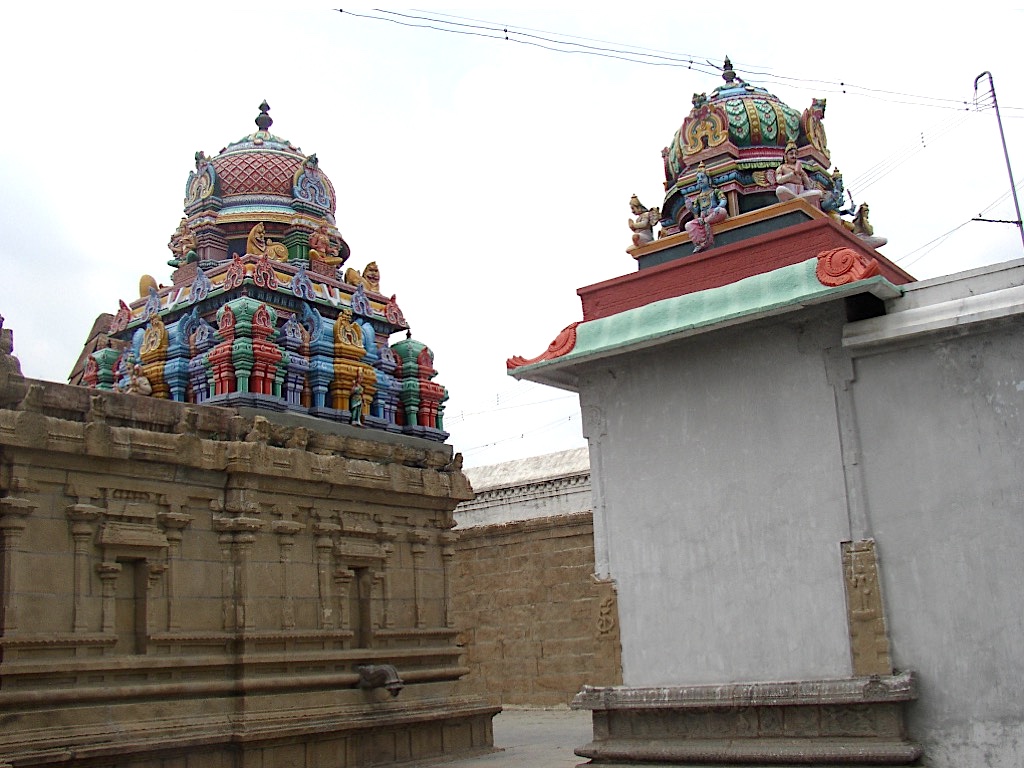
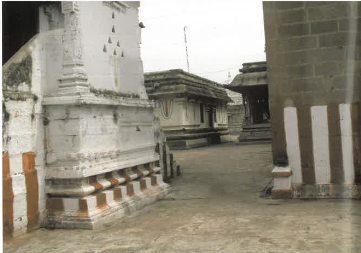
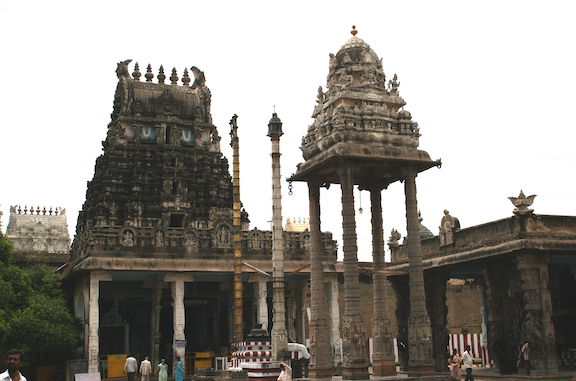
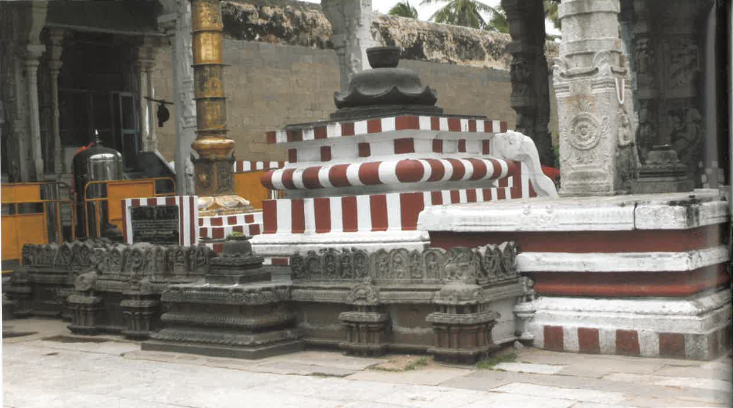
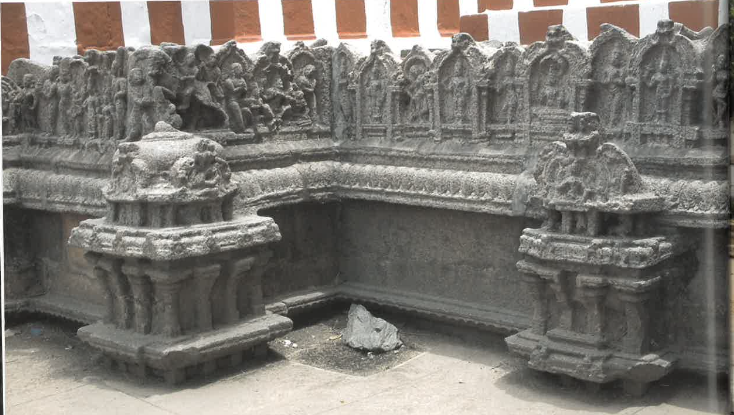
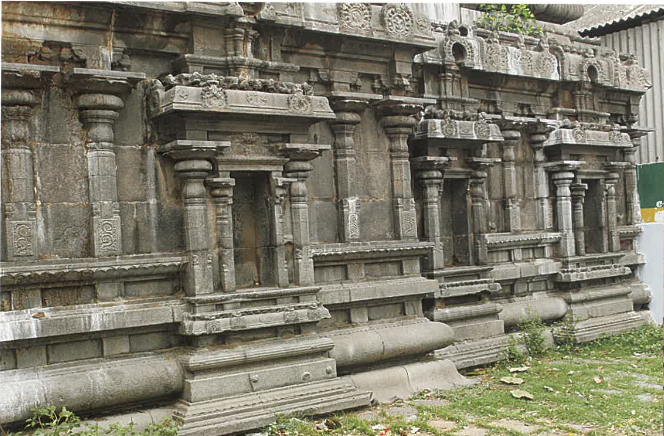
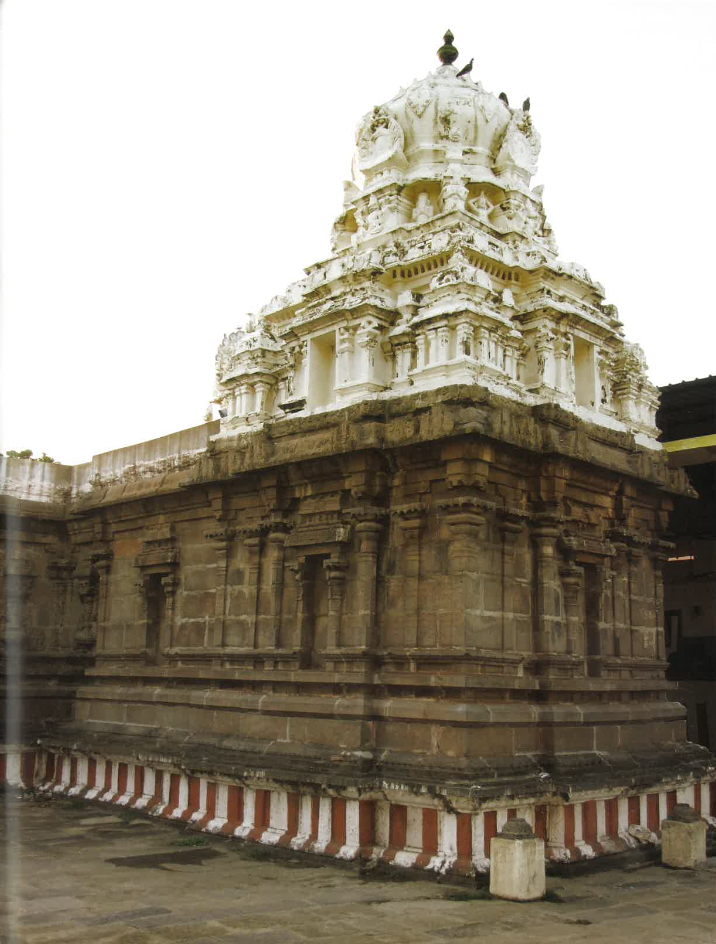
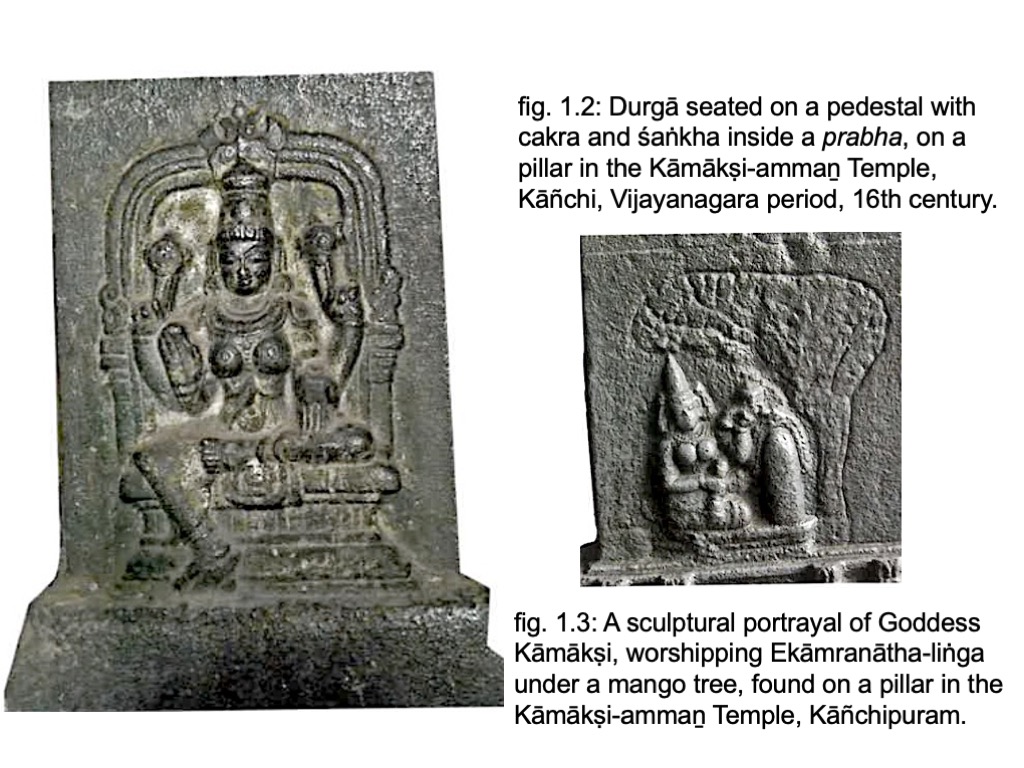
The Ūraham temple faces west and is situated near the Kāmākṣi Ammaṉ temple (figs. 1.2-1.6). It has a puṣkariṇī (temple tank) in front. There is one outer gopura, two enclosures (prākāras), one main shrine and three other subsidiary shrines and a maṇḍapa with three shrines housing, Āṇḍāḷ, Maṇavāḷa-māmuni and Nammāḻvār.
The main temple was built of black granite in the time of Kulōttuṅga I, with a pillared enclosure that might be somewhat later. The original outer prākāra with a preceding porch at the entrance now forms the second prākāra. An outer gopura is built abutting the outer wall of the second prākāra. Inside the second prākāra are three more shrines dedicated to Nīraha Perumāḷ situated in the north, facing south, Kāraha Perumāḷ in the south (facing north) and Kārvāna Perumāḷ also known as (Veṇṇaik-kūttaṉ – Navanīta-cora) also on the southwest of the prākāra, (facing north).
These three shrines are also included among the 108 divya-deśa which along with the main Ulakaḷanta Perumāḷ represent four divya-deśa’s in this temple complex. In the southwest corner of the prākāra, there is also a Tāyār shrine.
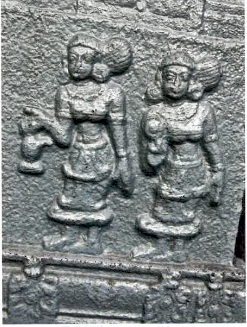
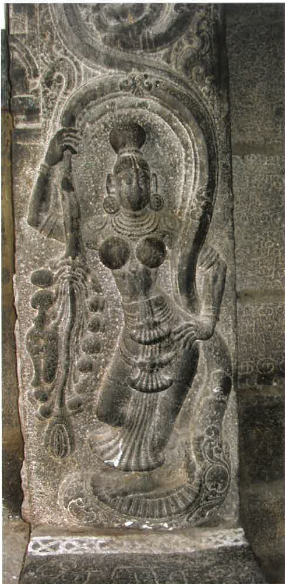
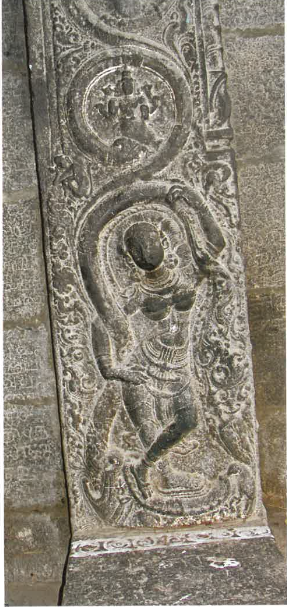
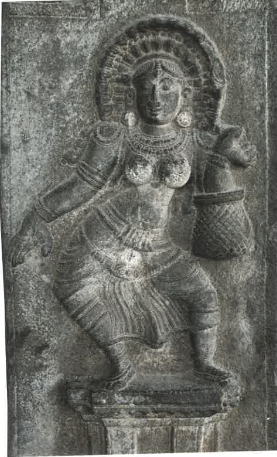
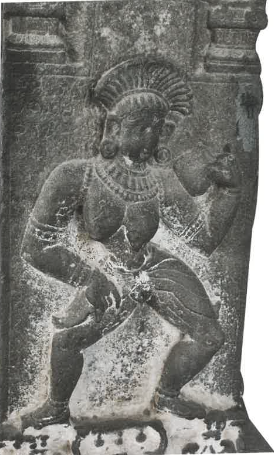
fig. 1.6: Two dancing girls bringing water and flowers portrayed on a pillar in the Kāmākṣī-ammaṉ Temple, Kāñcipuram.
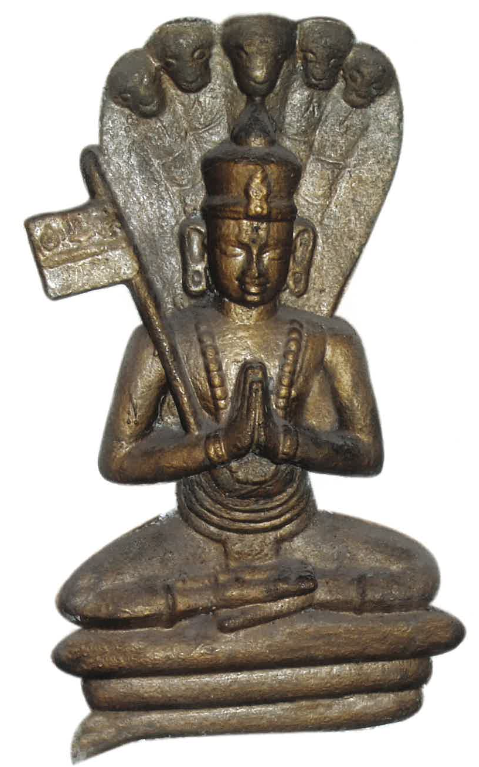
The mũlasthāna of the main Ulakaḷanta Perumāḷ is rectangular (figs. 1.7-1.8) in shape and the deity inside is made of stucco. It is one of the tallest mūla-mūrtis, rising to about 20 feet in height. Twice a year, the stucco figure is given tailak-kāppu (application of scented oil) as a protective coat for the stucco image. The Trivikrama form shows the right leg planted on the head of Mahābali while the left leg is lifted up. The main deity is two armed. All the bronzes of the divine images are inside the sanctum, while the images of the Āḻvārs are in the preceding maṇḍapa. An image of five hooded Ananta is seen in a subshrine facing south in the preceding maṇḍapa. It is covered with sandal powder and is called Anantāḻvāṉ. It is fairly a big image with a separate sub-shrine. It is possible that the image represents veḷḷai nāgar - “white serpent” who is identical with Balarama in ancient literature. It probably represents the early temple relic. An early temple is mentioned in the inscription of Kulōttuṅga.
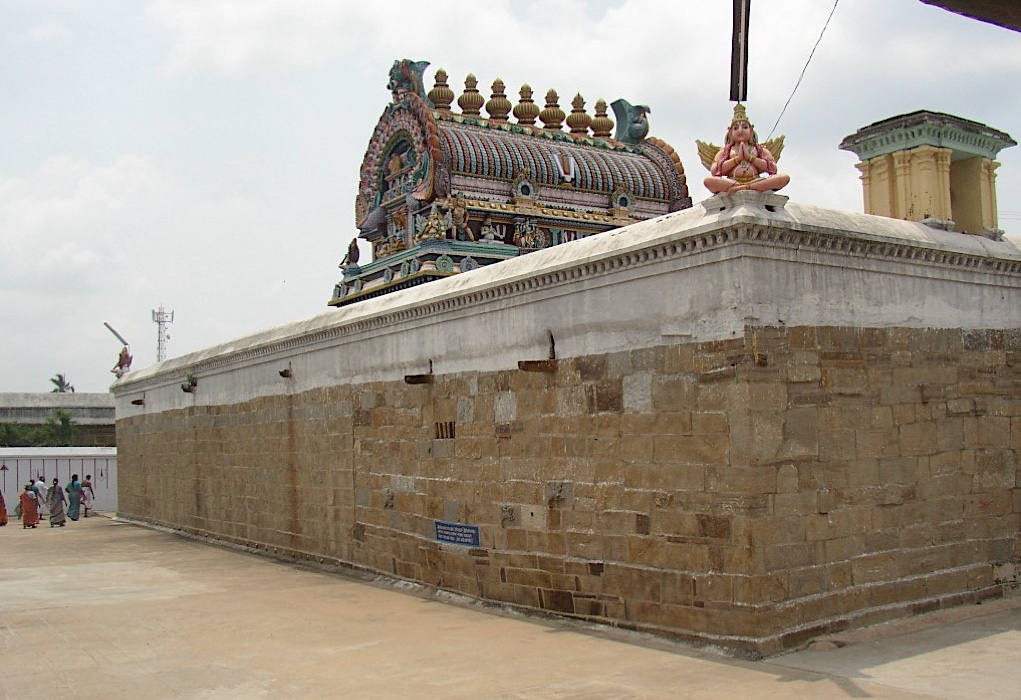
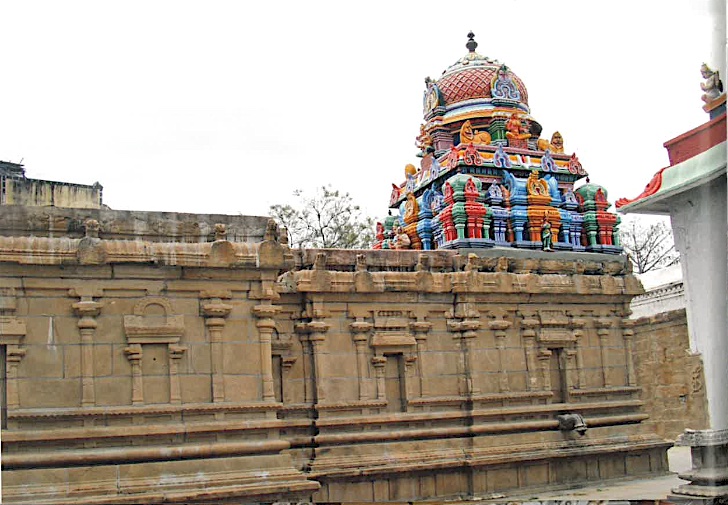
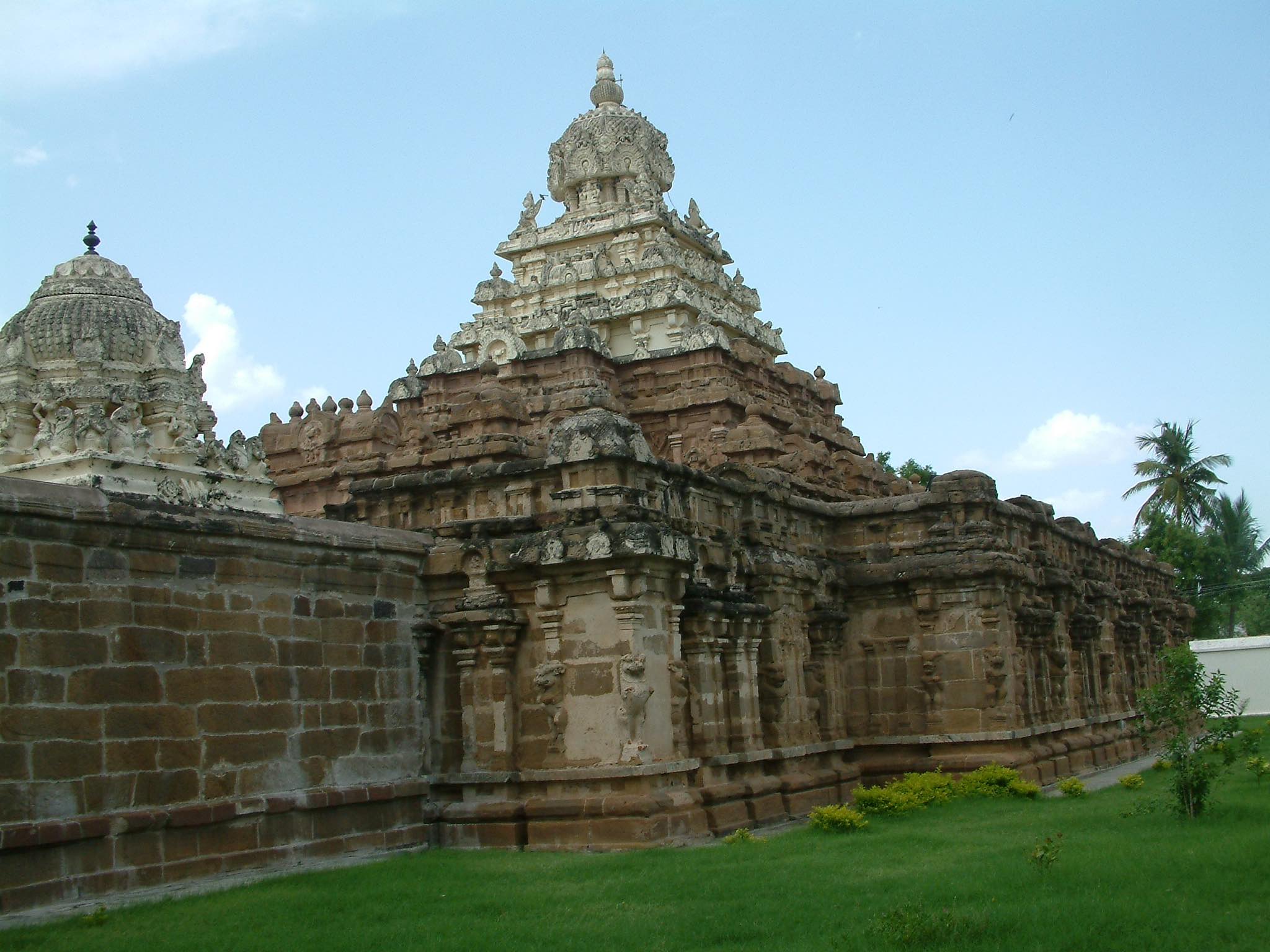
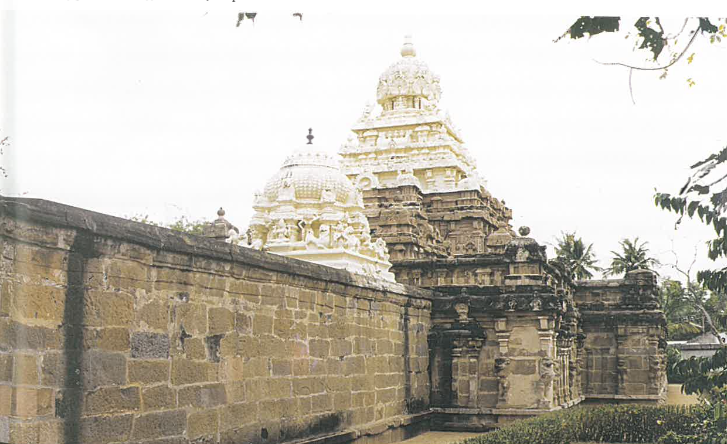
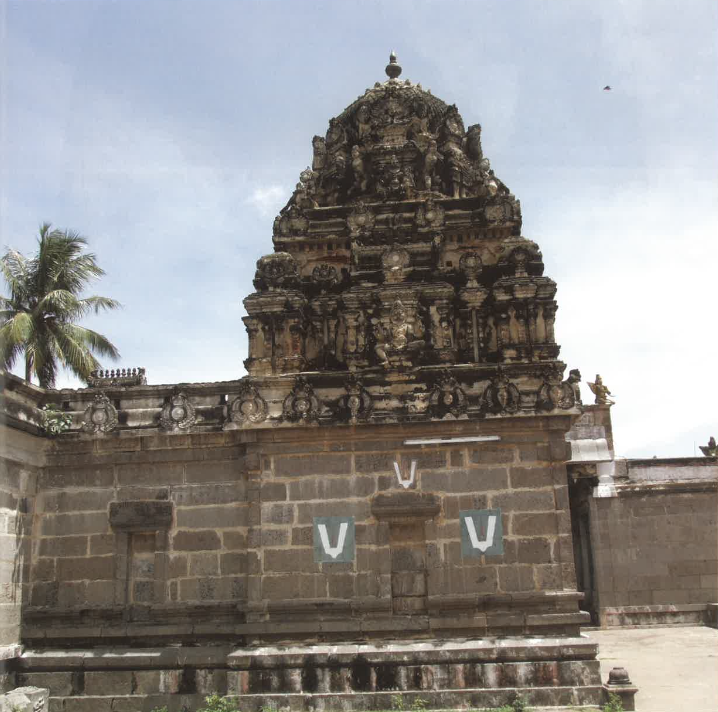
fig. 1.7: The vimāna and the enclosure of the Ūraham Temple, Kāñchipuram, Cōḻa period, 12th century.
fig.1.8. The śāla vimāna of the Ūraham Temple, (Ulakaḷanda Perumāḷ Temple) the centre of ancient Kaccippēḍu (Kāñcipuram), built of stone by Kulōttuṅga I, 12th century.
It is known from the copper plate charter of Uttama Cōḻa that there were three stone inscriptions during the reigns of Vijayālaya Cōḻa, Pallava Vijaya Kampavikrama Varman (9th century), and Parāntaka Cōḻa I (10th century). These inscriptions described the approved list of expenditures for daily worship (nitya Pũjā) and the annual festival in the month of Chitra (Brahmotsava). Unfortunately, these inscriptions are no longer available.
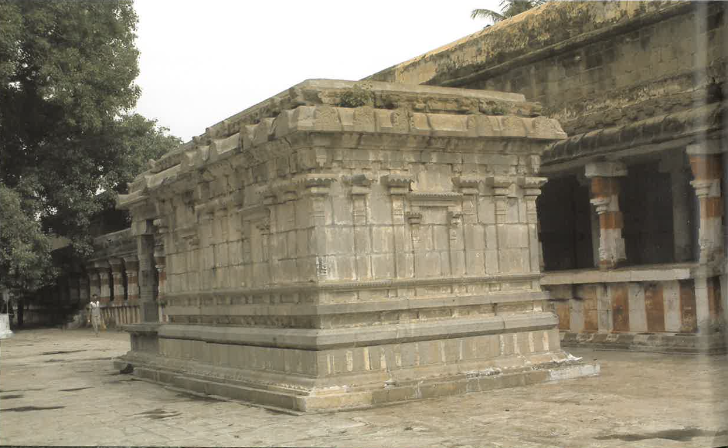
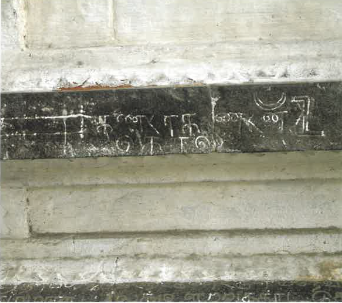
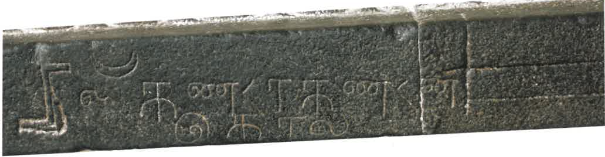
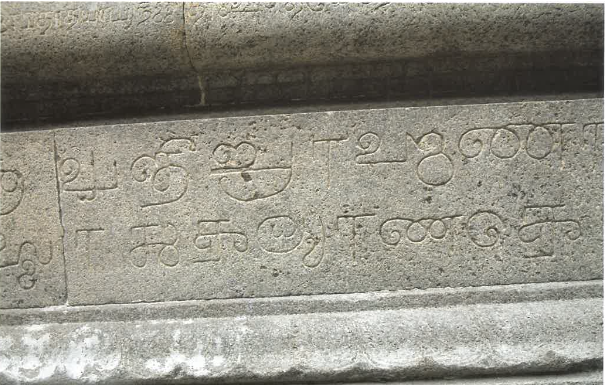
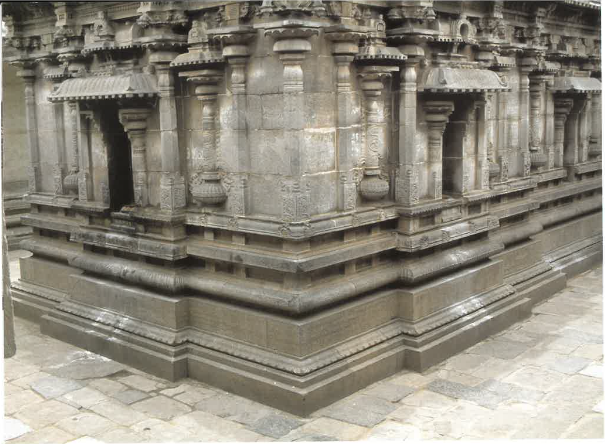
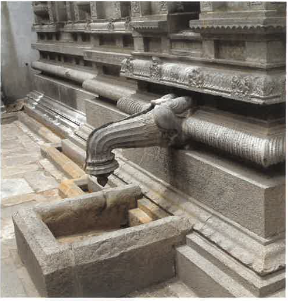
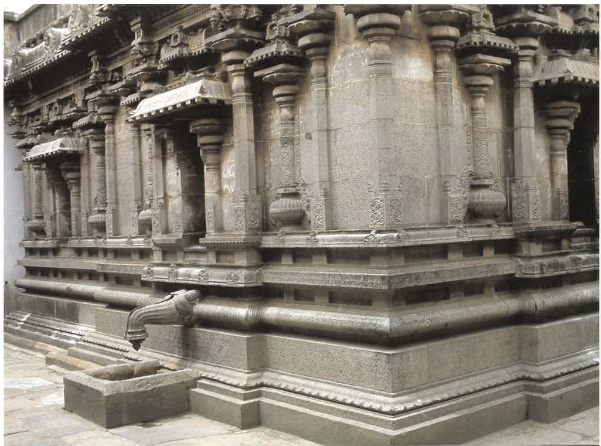
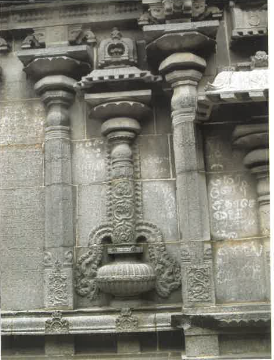
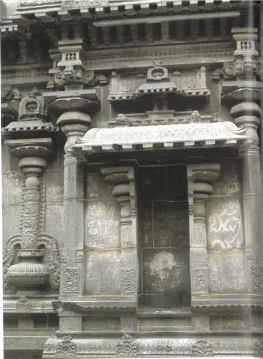
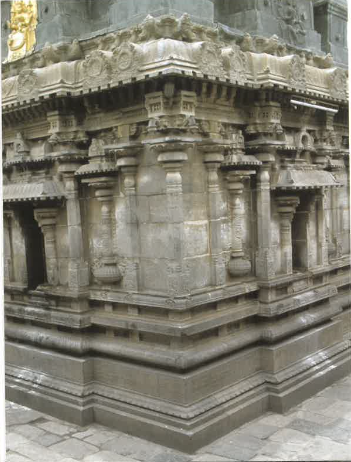
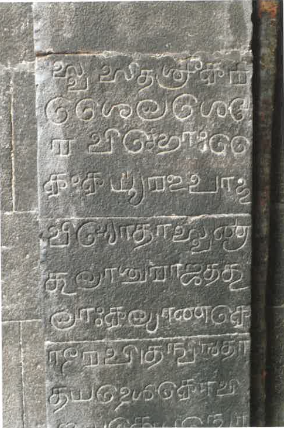
On the south side of the inner prākāra, there is an inscription from the 9th century of Pallava Teḷḷāru-eṟinda Nandi embedded into the floor. The base of the main temple is a simple pāda-bandha variety with jagati, tripaṭṭa kumuda, and paṭṭika. There are no niches in the nearly seventy plain outer walls of the main temple. The earliest inscription on the wall is that of Kulōttuṅga I. Evidently, the temple was built in his time before his 40th year of rule (1110 CE). The style of the structure and the veneration with which the king made gifts to this temple confirm that the shrine should belong to his time. The main temple has a number of pilasters dividing the otherwise plain walls with a preceding maṇḍapa of equal length. The vimāna superstructure is rectangular in shape. The main temple shrine on the inner side seems to have been built retaining the older outer prākāra, on the walls of which inscriptions of Rājarājā and Rājēndra are found (figs. 1.9, 1.10).
The original main shrine was probably made of brick, which was converted into stone during the time of Kulōttuṅga I. An inscription at the entrance to the inner prākāra on the southern side of the base of the small gopura is dated to the time of Rājarājā-Rājendra. The kumuda carries the beginning part of the first part of Rājendra’s praśasti. However, this part is missing on the northern side. It is likely that this side was used to carry the blocks of stones for building the inner shrine and maṇḍapa in the time of Kulōttuṅga I. Immediately upon entering the inner prākāra, one finds a front part built with cylindrical pillars of considerable height. One of the pillars in alignment with the sannindi carries a sculpture of Veṇugopāla Kṛṣṇa. Another pillar on the southern side shows elaborate carvings. They indicate that these pillars belonged to a maṇḍapa of the age of Rājēndra Cōḻa, later built into this position. They also seem to recall a similar maṇḍapa of Rājēndra’s time in the Sundaravarada Perumāḷ temple at nearby Uttaramērūr.
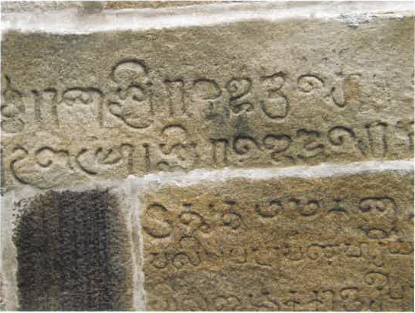
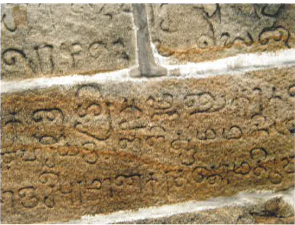
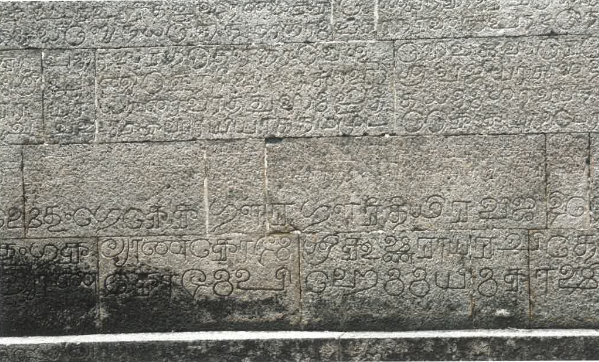
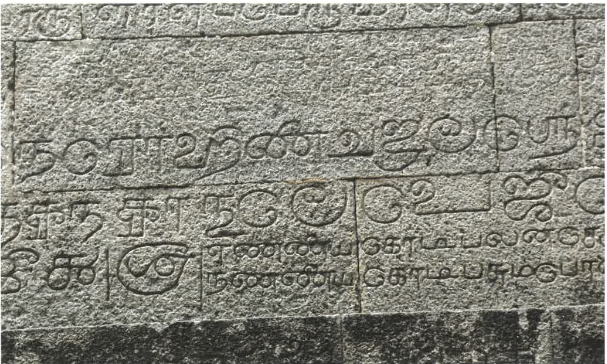
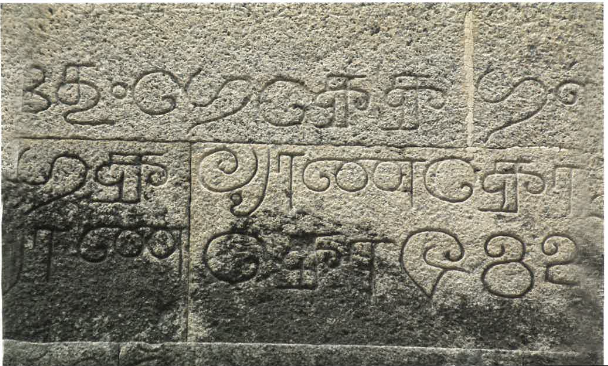
fig. 1.9. An inscription of Rājēndra Cōḻa on the wall of the second prākāra of this temple.
fig. 1.10. An inscription of Rājēndra Cōḻa referring to the temple of Kṛṣṇa and also mentioning Kāñci-māṉagaram.
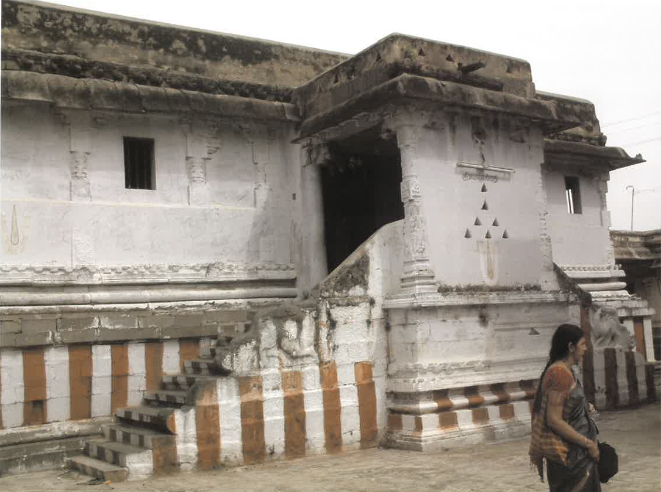
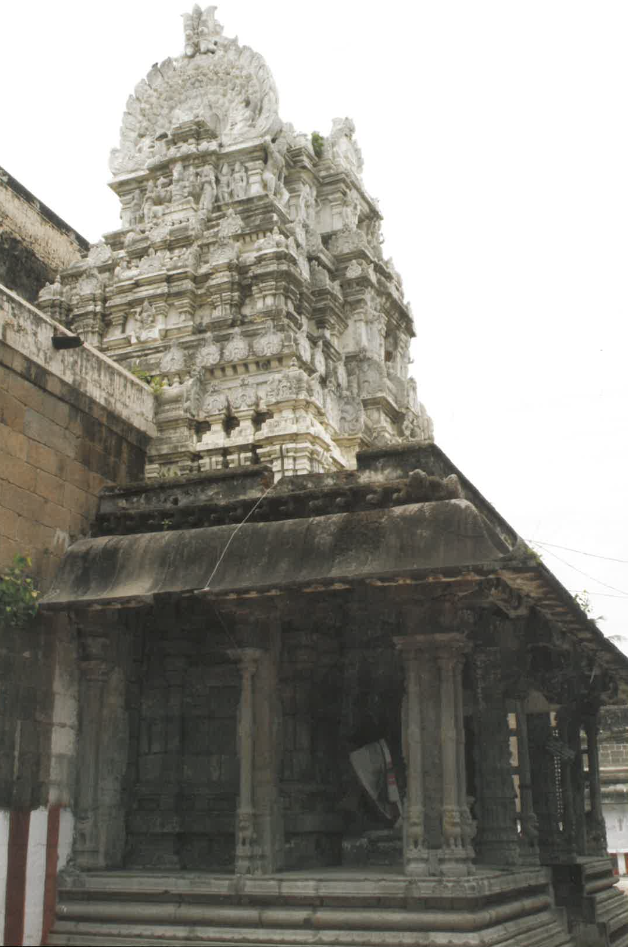
The structures of the other three divya-deśa namely the Nīraham (fig. 1.11), Kāraham (fig. 1.12), and Kārvānam were all rebuilt in the beginning of 20th century and recently have been repainted. The Tāyār shrine seems to indicate an early date around 14th century but was also recently renovated and painted (fig. 1.13, 1.14).
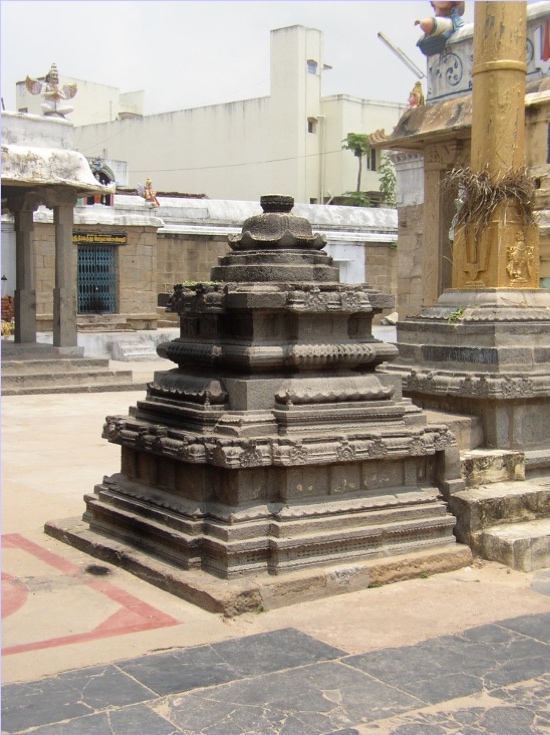
fig. 1.11: At the far end of the enclosure, behind the grill gate is the Nīraham Temple with bali-piṭha (altar) of the main temple in front.
fig. 1.12: The Kāraham Temple (sub temple) on the south side of the main temple complex of Ūraham, Kāñcipuram.
fig. 1.13: The temple of the goddess (Tāyār shrine) located on the south-west of the Ūraham Temple complex, view from the south-east, 16th century, renovated recently.
fig. 1.14: The temple of the Goddess (Tāyār shrine), in the Ūraham Temple complex, Kāñcipuram, 16th century, view from the south-east.
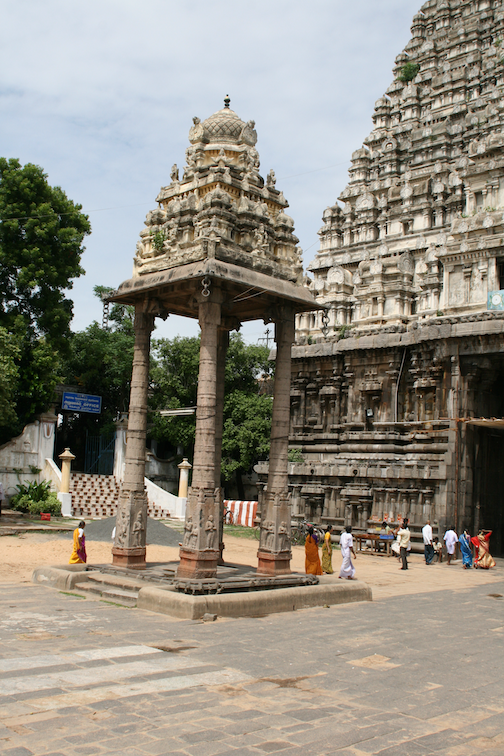
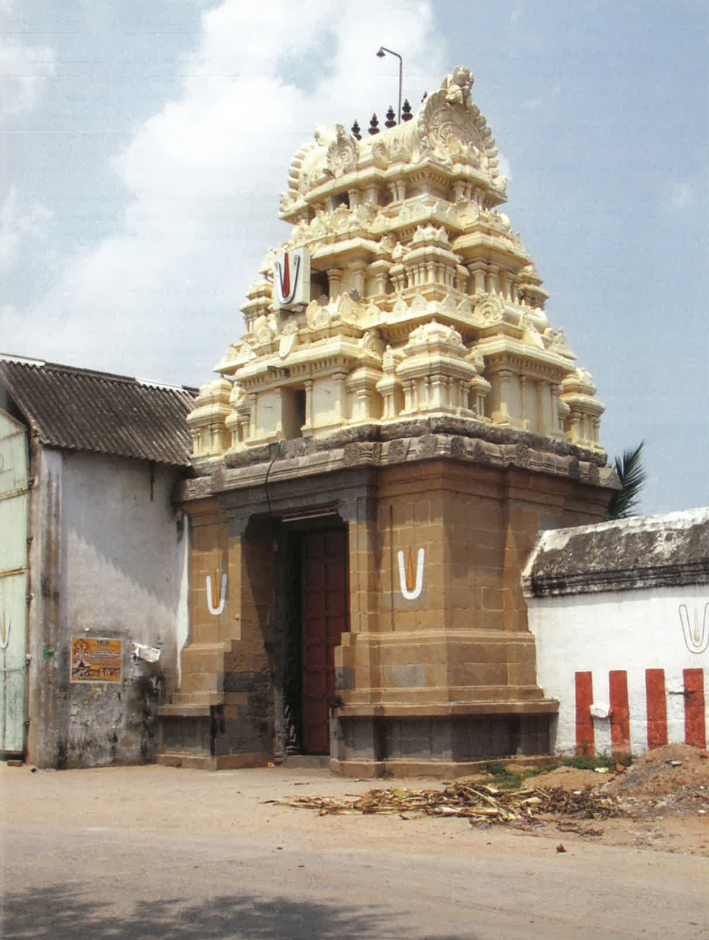
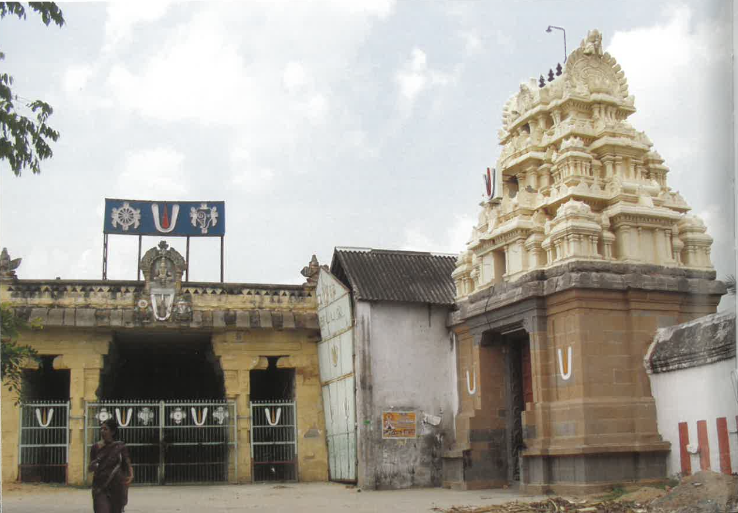
The outer gopura of the temple bears an inscription of Rājanārāyaṇa Sambhuvarāya dated in 1346 CE, recording a gift of lands and a house site for a Vedic institution to teach Vedic recitation. The gopura is certainly earlier than that date and might have been built at the end of the 13th century (See fig. 1.1). No inscriptional record is available to give a precise date.
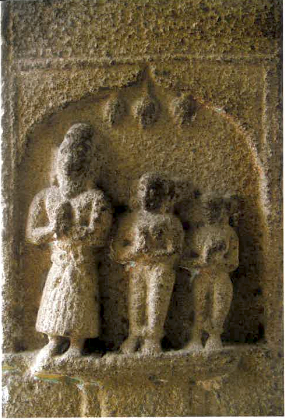
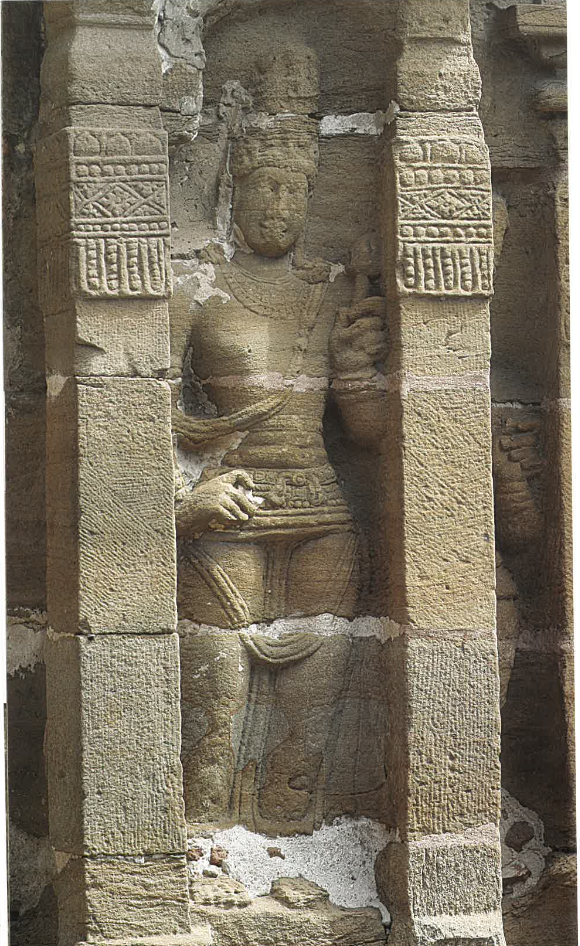
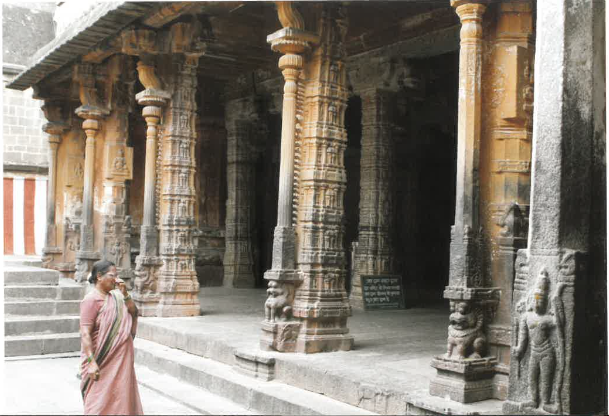
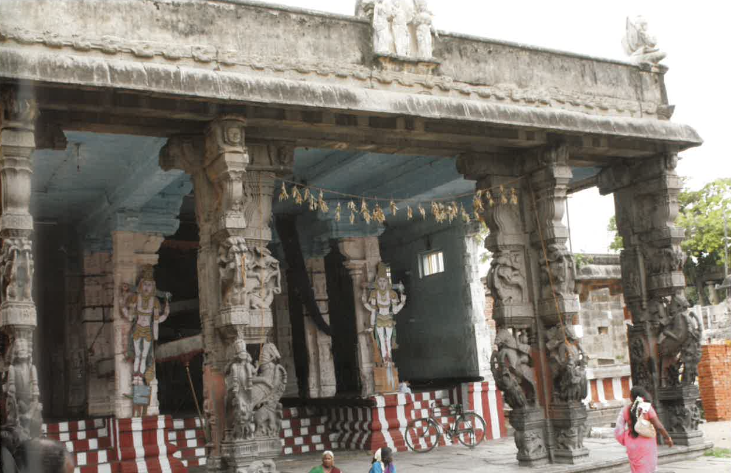
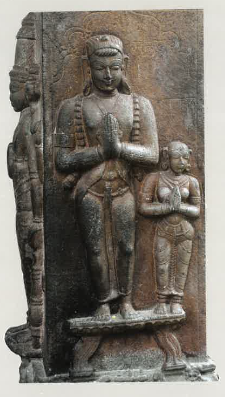
The entrance to the inner shrine through a gopura like structure did have a gopura of the age of Rājēndra Cōḻa but was rebuilt. In front of it is a pillared porch bearing a number of portraits of its builders (fig. 1.15). As there is no inscription we cannot date them with certainty, but stylistically the sculptures and pillars appear to be from the 17th century. Some activity had gone on there in the 17th century. Until further records are brought to light it is not possible to trace the authentic history of this portion.
fig. 1.15: A portrait of a devotee with his consorts, probably the builders of the maṇḍapa, on a pillar in the maṇḍapa in front of the inner entrance, 17th century.
Although the earliest inscription on the outer gopura is that of Veṉṟumaṇkoṇḍa Sambhuvarāyar, (18th year 1340 CE) the gopura is obviously earlier and may be from the age of the later Cōḻas – (13th century). The surrounding area in front of the temple has risen considerably due to accumulation of earth. Consequently the floor of the prākāra is at a lower level. The lower part of the gopura is of granite and the superstructure is made of brick and mortar the later has undergone renovations in subsequent periods. The saṉṉidhi street in also in formation with the temple which received some house sites in the beginning of the 20th century. The traditional rules which could not be violated in ancient times, required that the streets should have had orderly layout. These rules have been thrown to the wind in modern times and haphazard buildings now that mar the environment’s beauty.
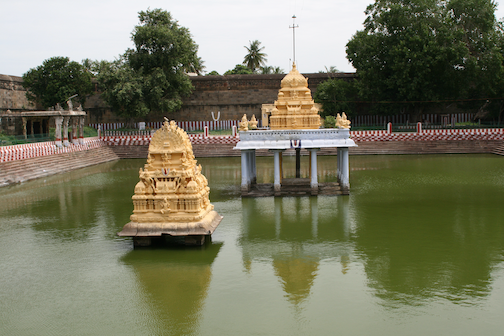
The tank in front is a part of the temple complex and is called Vāmana Puṣkariṇī. It seems to have existed earlier, which was dug in the year 1901 as a new foundation (nūtana śrī vāmana puṣkariṇi kaiṅkaryam) by one Munuswami Nāyudu, of Chennai (Rāyapuram – Madras) who belonged to Padma Veḷḷāḷa caste (agriculturist) but who was engaged in trading wood.

1.4. Kārvāṉam

The image of Kāraham (Viṣṇu in seated pose ) and Nīraham (Viṣṇu in reclining pose) and also another image of Viṣṇu in standing pose called Kārvāṇaṉ (Kṛṣṇa) are three more divya-deśas located within the temple premises (fig. 1.16). The first two are mentioned by the Āḻvārs and are therefore venerated. The last one appears to have been a temple rebuilt in the time of Rājēndra Cōḻa in the 11th century and was included in the 108 divya-deśas list when the concept of divya-deśa came into vogue.
A fragmentary inscription of Rājēndra Cōḻa found on the wall of the first enclosure outside mentions the building of a temple Veṇṇai-kūttaṉ (Navanīta Kṛṣṇa) by Rāmaṉ Kṛṣṇaṉ, the commander-in-chief of Rājēndra. He was the illustrious son of Kṛṣṇaṉ Rāmaṉ, the commander-in-chief of Rājarājā I who built the outer enclosure of the Great temple of Tanjore. It seems his son Rāmaṉ Kṛṣṇaṉ succeded his father as the commander of the Cōḻa army and built this temple in his name. A number of fragmentary inscriptions of Rājarājā and his son Rājēndra are now found on the enclosure wall written in bold characters suggesting the temple should have been of considerable size in the 11th century.
fig. 1.16: The temple of Kārvāṉam, in the Ūraham Temple complex with the temple of the Goddess at the back, Kāñcīpuram, 16th-century construction, renovated recently.

1.5. Historical Records – Stone Inscriptions

It is interesting to note that the name of the Ūraham temple occurs as the ‘God pleased to stand at Ūraham’ (ūrakattu niṉṟa perumāḷ) in Āḻvārs’ poems and the temple inscriptions.
However, from the time of Vikrama Cōḻa, the son of Kulōttuṅga, it came to be known as Ulakaḷanda Perumāḷ. Kulōttuṅga paid great attention to this temple, covering it with gold and gifting a village and a large portion of land for worship. As a result, he was gratefully remembered for his contribution. During his 38th year, he carried out an extensive land survey and acquired the title Ulakaḷanda Perumāḷ. This is possibly the reason why Trivikrama in the Ūraham Temple came to be known as Ulakaḷanta Perumāḷ. Besides the copper plates of Uttama Cōḻa, there are twenty-one stone inscriptions on the walls of this temple ranging from the 9th to the 14th centuries. These inscriptions have been copied and published, and more are yet to be published. There are also several from the 20th century. They provide great insight into the history of the temple, recording how it was sustained through the centuries and played a role in the history of Kāñcipuram. These inscriptions serve as the only verifiable evidence that sheds light on its true history.
Interestingly, there are no inscriptions after the 14th century until the 20th century, suggesting that this temple, which was once the central temple of Kāñcipuram, gradually lost its prominence. This fact emerges from a study of the inscriptions, which we will discuss here. The following kings are represented in inscriptions:
  1. Pallava Teḷḷāṟeṟinda Nandivarman 846-870
  1. Vijayālaya Cōḻa 850- 875
  1. Pallava Kampavikrama varman 870- 896?
  1. Parāntaka Cōḻa I 906 - 946
  1. Uttama Cōḻa 970- 985 (who issued a copper plate on Ūrham temple)
  1. Rājarājā Cōḻa I ( 985 - 1015)
  1. Rājendra Cōḻa I (1012 - 1044)
  1. Kulōttuṅga Cōḻa I (1070 – 1125)
  1. Rājādhirāja I (1163-1179)
  1. Rājarājā III (1216-1246)
  1. Sundara Pāṇḍyaṉ (1256-1266)
  1. Vijaya Gaṇḍa-gopāla (1250-1291)
  1. Sambhuvarāyar (1222)
These rulers are mentioned in the copper plates as well as their stone inscriptions. However, after the last mentioned ruler, no further inscriptions are found in the temple.

1.6. Under the Pallavas

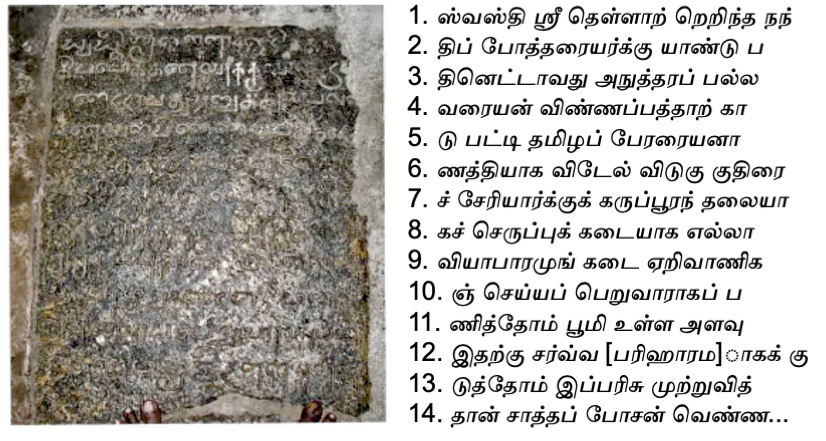
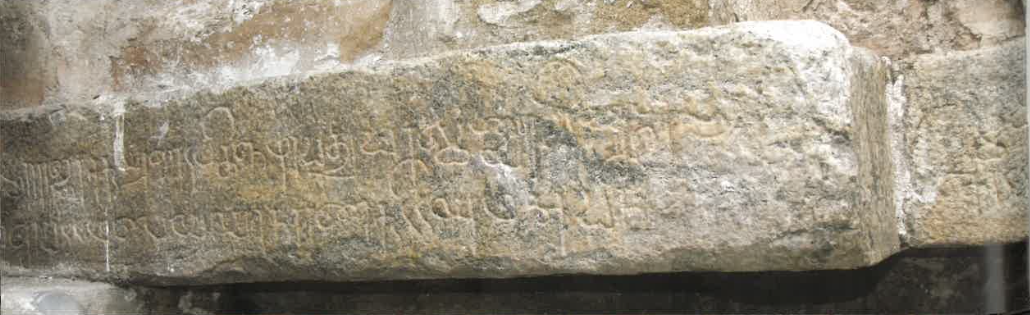
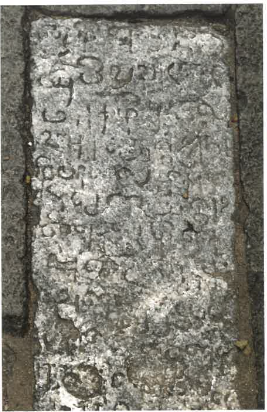
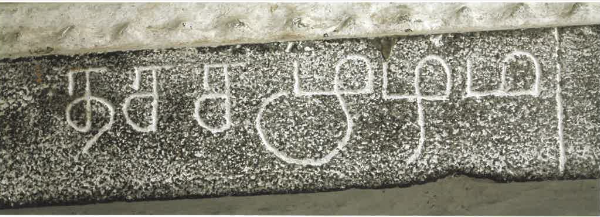
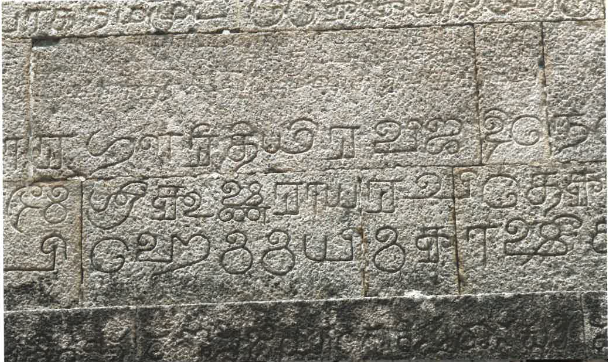
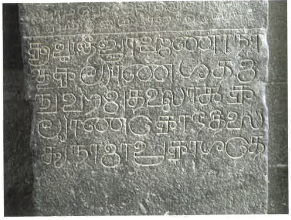
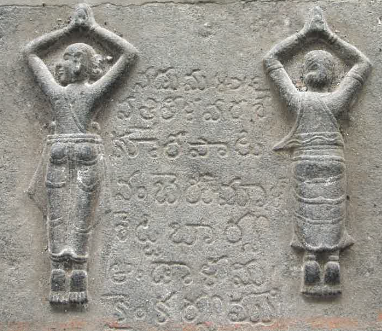
A stone inscription on a neatly polished granite stone (fig. 1.17) carrying a record of the Pallava ruler Nandivarmaṉ III, the Victor at Teḷḷāṟu, dated in his 18th year (about 864 CE) is embedded in the floor on the southern side of the inner prākāra. This stone should have been a separately inscribed slab placed in front of the original brick shrine, as is the case of documents of this period. One Aṉuttara-pallavarāiyaṉ appealed to the king that the merchants of the quarters of Viṭēl-viṭuku-kutiraiccēri should be exempted from paying taxes, to the royal treasury. King Nandivarmaṉ agreed to the request and declared that the merchants of the Kutiraiccēri (quarters of Horse stables) were permitted to sell all commodities, from camphor to sandals (ceruppu - செருப்பு), without paying any tax (sarva parihāram) (kaḍai eṟi vāṇikam ceyya peruvārāka paṇittōm).
The inscription is brief but suggests that the merchants were looking after the expenses of the temple. The order was executed by one Saṭṭaṭṭa-bhōjaṉ Peṇṇaṉ. The merchants’ shops were located in the quarters of Viṭēl-viṭuku-kutiraic-cēri, Viṭēl-viṭuku was a title of the Pallava and the name Kutiraic-cēri shows that the King maintained a cavalry unit which probably distinguished itself in a battle fought by the king. However, there is no mention in the record that it related to the temple, as in the case of iṟaiyili devatāṉa lands of the later Cōḻa records. The merchants would then be expected to pay amounts equal to all the taxes to the temple for its maintenance.
fig. 1.17: The inscription of Pallava ruler, Teḷḷāṟeṟinda Nandivarmaṉ granting permission ot merchants (living in the streets of Kutiraicceri - colony of cavaliers) to sell commodities.
A 9th century record found embedded on the floor records the resolution of the mahā-sabhā, (the great assembly), to renovate the temple with 1500 kāḍi of paddy received from the temple lands (deva–bhogam ) irrigated by lift irrigation. It also refers to income from a village Nallūr Iḷappākkam to be managed by the assembly. As the beginning of the record is not available, the name of the ruler in whose time the transaction took place is not known. Hoever, as the record is in 9th century characters, it may be taken as a Pallava record. Mention has already been made about the arrangements made in the reign of Kampavarma Pallava to regulate the ex,penditure on incomes from interests deposited with some village assemblies from out of the income of the temple. For more details the next part dealing with the temple under the Cōḻas may be seen in which a comprehensive arrangement was recorded in the time of Uttama Cōḻa.

1.7. Uttama Cōḻa’s Contribution

1.7.1. King’s Order

There is an important copper plate royal charter issued by Uttama Cōḻa (970-985) preserved in the Madras Government Museum known as “Madras Museum plates of Uttama Cōḻa”. It records an important order of the King relating to the Ūraham Trivikrama temple. The copper plate was specifically meant for the Ūraham temple and issued by the king in 985, the year in which Rājarājā Cōḻa ascended the throne. It gives elaborate details about Kāñcipuram, the Ūraham temple, its worship and festivals. Incidentally, it is an early royal plate to mention the history of the temple, taking it back to the Pallava and perhaps even earlier.
These plates are fastened to a ring which carries the royal seal of Uttama Cōḻa. There are altogether five plates, but some plates from the beginning and end are missing. These plates were first noticed in 1881, nearly one hundred and twenty-five years ago. The plates are written in both Sanskrit and Tamiḻ languages. One part of the Sanskrit portion is available only at the end, but the Tamiḻ portions are nearly fully preserved. The Sanskrit portion says that King Uttama Cōḻa himself appointed inhabitants of two cēris of Kaccippēḍu to verify the accounts of the Ūraham temple. The Tamiḻ portion states that the king ordered his officer to decide the details of the order. Obviously, the king issued the general orders while his officer was directed to draft the details of the arrangement.
The available Sanskrit part gives some interesting details not noticed in the Tamiḻ part. For example, it mentions that there were two castes among the Paṭṭasālis of Kaccippēḍu who are called tantuvāyas, i.e., weavers. It also mentions that residents of four cēris of Kaccippēḍu were engaged in weaving cloth for the royal household. These cēris were called Atimāṉap-pāḍi, Kampulāṉp-pāḍi, Eṟṟuvalac-cēṟi, and Kañcahap-pāḍi. Another quarter, called Cōḻa Niyamam, was directed to examine the administration of the temple every month. Merchants of Kañcahap-pāḍi and Eṟṟuvalic-cēṟu were directed to examine the expenditure incurred by the temple for the festival, immediately after the festival was over. The merchants of the nagara should appoint the administrator for the temple, a watchman, and accountant to serve in the temple, and their wages and allowances should be paid from the Temple treasury.
Three other merchant quarters mentioned were Raṇajayap-pāḍiyār, Ekavīrap-pāḍiyār, and Vāmaṉac-cēriyār and were said to belong to the denomination of Saṅkarap-pāḍiyār. The Tamiḻ part gives full details, showing how thorough the Cōḻa administration was. We see the following merchants’ localities mentioned in this part of the record.
  1. Kampuḻām-pāḍi
  1. Eṛṛuvalac-cēri
  1. Kañcahāp-pāḍi
  1. Atimānap-pāḍi
  1. Raṇjayp-pāḍi
  1. Ekavīrap-pāḍi
  1. Vāmaṇac-cēri
It is not known what the term Kampuḻām-cēri means but may some thing to do with kampu grains. Eṟṟuvalac-ceri may be a reference to Śiva who is called “eṟṟuvalaṉ uyariya maṇimiḍaṟṟōṉ” (ஏற்று வலன் உயரிய எரிமருள் அவிர் சடை, மாற்றருங் கணிச்சி மணிமிடற்றோன் - புறம் 56) one who has the bull standard in a Saṅgam poem (Puṟam 56). Ekamranātha temple in this locality was an ancient temple and that might have given the name. Kañcahap-pāḍi probably was named after Kṛṣṇa who killed Kaṁsa (referred to Kañca in Tamiḻ literature). The temple of Paṭakam Pāṇḍava-dūtar in located in this locality. The other four names Atimāṉa, Raṇajaya, Ekavīra, and Vāmaṇa are the well known titles of Rājasiṁha Pallava, the builder of the Kailāsanātha temple. This temple also was also located in the Kaccippēḍu area. These four Merchant streets were obviously established by Rājasimha around 700 CE and were involved in the maintenance of the Ūraham temple then.

1.7.2. Income of the Temple

Uttama Cōḻa was seated in the chitra-maṇḍapa of his golden palace at Kāñcipuram (Kacchip-pēḍu), when his officer Muvēndavēlāṉ requested him to issue orders creating nibandhas that approved various expenditure heads for the income of the temple. His officer told the king that the temple of Ūraham derived its income mainly from three sources.
  1. The tax levied on weighing measures and grain measures (kōl-niṟai-kūli and kāl-aḷavu-kūli) in commercial transactions.
  1. The proceeds from the lands purchased at Kacchippēḍu and Tuṇḍunuk-kac-cēri.
  1. A number of Village assemblies near Kāñcipuram had taken gold on loan from the temple and the interest received on these amounts.
Appropriate apportionment was ordered for various expenses related to daily worship and festivals. The king personally directed the officer to allocate funds as needed and issued an order recorded on a copper plate. Subsequently, the officer provided clear-cut specifications for various expenses and the corresponding amounts required. Thus, the copper plate delineates the nature of daily worship in the temple, including the quantity of materials needed. Additionally, it contains instructions on how to conduct the annual festival in the month of Chittirai, forming the second part of the record. Finally, administrative guidelines for overseeing the temple’s maintenance forms the final part the document.

1.7.3. Verification of Earlier Deeds

The order of Uttama Cōḻa specified that the various incomes of the temple were to be verified from the earlier deeds inscribed on stone, including deeds issued in the reign of two earlier kings: one a Cōḻa and the other Pallava. The first deed is related to the time of Kō-Parakēsarivarmaṉ in his 22nd year, identical with Vijayālaya Cōḻa, the founder of the Imperial Cōḻa dynasty and the second to the reign of the Pallava king Vijaya Kampa-vikrama-varmaṉ in his 9th year (circa 890). The following incomes are documented in the records two villages, Kūram and Araiyaṉ-perumpākkam received 250 kaḻañju of gold on loan from the temple, on an interest of five hundred kāḍi of paddy per year, to be paid by a standard measure of their village. Another village assembly of Uḻaiyūr received fifty kaḻañju
on loan from the temple in the same year of the king Parakēsarivarmaṉ and in return measure to the temple 150 kāḍi of paddy per annum. A third village assembly at Oḻukkai-pākkam, received 24 kaḻañju of gold on loan from the temple in the 9th reign of the Pallava Vijaya Kampavarmaṉ, and was obliged to pay one kaḻañju and 4 manajāḍi of gold per year as interest.

1.7_4. Approved Expenditure for Daily Worship

The incomes received from the above mentioned villages the taxes on weighing and measuring commodities in Kacchippēḍu, and the proceeds from the lands purchased by the temple were to be used only for daily worship in the temple. The following were the approved expenditure. Provisions for daily food offerings to the God and payment of daily wages to temple servants and their annual clothing allowances.
The servants included the priests and an assistant, nine instrumental musicians, gardeners for rearing flower gardens, watchmen, and cleaners of the premises. The provisions also included the priest’s fee (ācārya dakṣiṇā) for the special worship on Saṁkrānti days.

1.7.5. Two More Deities in the Same Temple

The record also mention that there were two more deities (iruvar dēvarakaḷ) in the temple in a portion called “karikāla-teṟṟi” – a verandah probably like the enclosure named after Karikāla Cōḻa. Provisions were made for the daily worship of these two additional deities – food offerings, burning lamps, and use of scented sandal paste and incense. These two additional deities were probably the “Nīraham” and “Kāraham” shrines which are now included in the 108 divya-deśas. These two deities are even now housed in the enclosure of Ūraham.
Also they show that they existed in the temple from the time of the Pallavas along with the Ūrahattu-ninṟa-dēvar (Trivikrama). The fourth one in the Ūraham complex is the Kārvāṉam temple which was built in the time of Rājēndra Cōḻa I. The details of the provisions are given below.

1.7.6. Food Offerings

The food consisted of simple cooked rice, two vegetables, including what is called in other records as poṟikkaṟi amudu, some form of cooked vegetables kūṭṭu, ghee, curd, betel leaf and nuts. The details are as follows:-
  1. tiru-amudu for three sandhis - paddy three kuṟuṇi and six nāḻi.
  1. kaṟi-amudu - two per sandhi (vegetable boiled or fried), four nāḻi of paddy per day.
  1. ney-amudu (ghee) - one uḻakku per day, five nāḻi of paddy per day.
  1. tayir-amudu (curd) - one uri per sandhi, 3 sandhi per day one, 3 nāḻi of paddy per day.
  1. aḍaikkā-amudu (betel leaf and nut) - three sandhis, three nāli of paddy.

1.7.7. Temple Servants

  1. One Veda Brāhmaṇa priest who performs worship (ārādippāṉ), one padakku paddy per day and five kaḻañju as clothing allowance per annum.
  1. An assistant for the priest (paricāraka-māṇi) six nāḻi of paddy per day and one kaḻañju of gold as clothing allowance.
  1. One meykāppu (watchman) , one kuṟuṇi of paddy per day and two kaḻañju of gold per annum
  1. Two gardeners to rear flower gardens (naṉdavaṉam uḻappāṉ) one kuṟuṇi and four nāḻi of paddy daily and one kaḻañju per annum
  1. Cleaners (meḻugu iduvars), three nāḻi of paddy daily
  1. Uvacchars nine persons (Instrument players)
  1. talaip-paṟai 1person
  1. mattalli 2 persons
  1. karaḍikai one
  1. tāḷam one
  1. cekaṇḍikai one
  1. kāḷam two
  1. kaimaṇi one

1.7.8. Income for Festivals

Similarly provisions were also made for two other deities. The second part of the record deals with seperate provisions required for conducting a seven day annual festival in the month of Chittirai. Four quarters in Kaccippēḍu received money from the temple of Ūraham on loan as follows:-
  1. Kampuḻāmpāḍi - 73 ½ kaḻañju of gold
  1. Atimāṉap-pāḍi - 73 ½ kaḻañju of gold
  1. Kañcagapāḍi - 35 kaḻañju of gold
  1. Eṟṟuvaḻiccēri - 18 kaḻañju

1.7.9. Approved Expenditure for Festivals

For the 200 kaḻañju of gold taken as loan, a sum of 30 kaḻañju received as interest at the rate of one piḷavu per kaḻañju, was apportioned for the seven day festival of Chittirai. The following expenses were approved out of this interest. Oil for seven days, flowers and scented sandal paste, Devaraḍiyār conducting koṭṭi (ghoṣṭi), food and presents for those who perform ghoṣṭi, for feeding the Brāhmaṇas, palanquin bearers, for special musicians, and for miscellaneous expenditure at the following rates:
  1. Oil -7 kaḻañju of gold
  1. Flowers and scented sandal- 2 kaḻañjus
  1. Ghoṣṭi devotees - 5 kaḻañjus for food and presents
  1. Brahmin feeding -10 kaḻañju
  1. Palanquin bearer and special musicians - total one kaḻañju
  1. along with 5 kaḻañju which could be utilized for unforeseen expenses.
The residents of Kampuḻāmp-pāḍi, Atimāṉap-pāḍi, Kañcahap-pāḍi, and Eṟṟuvaḻic-cēri would themselves carry lamps and flags in lieu of wages that was equal to the taxes to be paid by them to Lord Viṣṇu. There was another cēri named “cōḻa-niyamam” where a group of people called Toḷāc-ceviyar, also named Ēlāk-kaiyar resided. Their number had diminished and had become poor. So, it was now ordered that they need not pay any tax or perform any service. Instead, the new immigrants to this colony would be levied one nāḻi and uḻakku of oil and two nāḻi of rice per house per month as tax. They would pay only this tax and nothing else to anyone. Those who demanded anything from them would incur sins. This apportionment had been made almost one hundred years earlier in the 18th year of Parāntaka Cōḻa I (who was the victor of Madurai and Śri Lanka - maturaiyum īḻamum koṇḍa śri kō-parakēsari) and it was decided that the same should continue.

1.7.10. Administrative Orders

The accountant for the temple would be paid one kuṟuṇi of paddy per day and two kaḻañju of gold per annum from the temple treasury. The Saṅkarap-pāḍiyar of the three quarters, Raṇajayap-pāḍi, Ekavīrap-pāḍi, and Vāmaṉap-pāḍi of this township who had received 20 kaḻañju of gold on loan would burn a perpetual lamp, which they had agreed. The residents of Cōḻa-Niyamam would burn a lamp by regularly supplying oil. The lamp bearers and flag carriers were given one tūṇi of rice for bathing the god on two special occasions in a year namely Uttarāyaṇa Sankrānti and Chittirai Viṣu. Provision was also made for chiefs of the assembly who (enters the courtyard of the temple) supervised the functions. For the person organizing the ghosṭi, one tūṇi and one padakku of rice and half a kaḻañju
of gold were provided as honorarium. Other petty expenses not specifically provided for could be met from the miscellaneous fund provided. If any dispute arose regarding the management of the temple, the Vaiṣhṇavas of the 18 nāḍus alone should supervise and settle the matter. The chief manager of the guild (Nagaram Āḷvār), the members of the Eṟṟuvaḻic-ceri, and Kañcahap-pāḍi would examine the accounts soon after the festival was celebrated every year. The residents of the above cēris alone provided for the watchman (tiru-meikāppāṉ) of the sacred images, as per the settlement deposited in the temple treasury. The merchant guild alone selected the superintendent for the sacred images, the watchman, and the accountant and they should not levy tax on them. If a fully knowledgeable priest was not available, a Vedic Brāhmaṇa alone should be appointed to do worship.

1.8. Under the Cōḻas

Besides the copper plate of Uttama Cōḻa discussed above, there are twenty one inscriptions, somewhat worn out, found on the outer side of the inner prākāra wall. The prākāra walls are built of sandstone as found in Pallava temples. In the 7th regnal year (992 CE) of Rājarāja Cōḻa, some gold was deposited as a gift for burning a perpetual lamp. The interest was to be utilized to measure 3 uri per day (of ghee). Another inscription describes a gift of gold for burning a perpetual lamp. The gold is said to be 15 kaḻañju of urumaṇi poṉ - gold like a bead. Another record in Rājarājā Cōḻa’s 3rd year, (988 CE) mentions Rājarājā as Mummuḍi Cōḻa. It refers to “Parāntaka-dēvar”. It is not clear whether it refers to Sundara Cōḻa, the father of Rājarājā, who had the title Parāntaka Cōḻa (II), or the first Parāntaka who ruled in the first half of the 10th century. In all probability it refers to Rājarājā’s father.
Some gift was made in his time for offering sacred food to the Lord of Ūraham, “who was pleased to stand” i.e., Trivikrama. Another fragment of the same period refers to a land gift, the proceeds from which were to be utilized for meeting the required expenses. In the time of Rājēndra Cōḻa I, a shrine of Kṛṣṇa is said to have been built in the temple complex by the Sēnāpati Ramaṉ Kṛṣṇaṉ. It is possible that it is the Veṇṇaik-kūttaṉ temple mentioned earlier and also recorded in later records. The praśasti of Rājēndra I is found on the base of the entrance gopura to the inner enclosure. A record of Rājēndra Cōḻa dated in his 5th year (1007) says that provisions were made for food offerings and other expenses to Veṇṇaik-kūtta-āḻvār within the temple of Ūraham by the decree of Rājēndra Cōḻa Brahmādhirajar. Thus, the Ulakaḷanda Perumāḷ temple seems to have received considerable royal attention in the time of Rājarājā and Rājēndra I.
That the Ūraham temple continued to play a central role in the city of Kāñcipuram in its transactions in the beginning of 11th century is evident from two records of the Kailāsanātha temple of Kāñci. Both the records are dated in the 3rd year of first Rājarājā’s regin. In both the cases, the village assemblies of nearby villages received from the Kaccippēṭṭu-peṟiay-tirukkaṟṟaḷi (Kailāsanātha temple of Kaccippēḍu) and agreed to pay interest of one uḻakku of oil per day for burning a perpetual lamp in lieu of the money they had borrowed and that the liquid measure used should be equal to that of the Ūraham temple. Evidently, Ūraham temple was considered the standard verifiable point for economic transactions of Kāñcipuram Township. (No 84 and 146 of SII I ). The translators have missed this stipulation. (ūraham uḍaiyār kāloḍu okkum uḻakkālē aṭṭuvom). That Ūraham was the name of the Ulakaḷanda Perumāḷ-koil is well known. Further, these inscriptions show that the Kailāsanātha temple was situated within the boundaries of Kaccippēḍu.
It shows that Kaccippēḍu extended from Tiru-vehhā on the banks of Vēgavati river in the west, to the Kailāsanātha temple in the east. Kulōttuṅga I (1070-1125) contributed immensely to the temple by building the main temple with black granite, paying personal visit to the temple, covering the finial on top of the vimāna with gold, worshipping the lord, gifting considerable landed property and even constituting a separate village and gifting it to the temple in the name of his queen by pouring water in the hands of thr main deity in the sanctum. These contributions form a golden chapter in the history of the temple. Two of his inscriptions are found on the wall of the main temple. The details on them are given below.

1.9. The Golden Age of Kulōttuṅga I

Two queens of this king, who were sisters, were great devotees of this temple God and were responsible for a great revival of the activity in the temple. Both jointly requested Kulōttuṅga to bestow gifts and revive many festivals in the temple. The first queen was named Tribhuvana-mahādevi alias Kampadevi, daughter of one Ādittaṉ and her sister was called Cōḻa-kula-valli who was also a daughter of Ādittaṉ. Kulōttuṅga came to Kāñcipuram during his 40th year (1110 CE) and was staying in the Cōḻa palace named Jayamkonḍa-cōḻa-māḷikai. There was a golden palace in the time of Rājarājā’s father Sundara Cōḻa who died there and so was known as Poṉmāḷikai-tuñciya-dēvar. The name Jayamkoṇḍa Cōḻa was the title assumed by Rājarājā I, when he conquered Toṇḍai-maṇḍaḷam.
When Rājarājā reorganized his kingdom by demarcating the various territories after a detailed survey and renamed the Toṇḍai-maṇḍaḷam as Jayaṁkoṇḍa-cōḻa-maṇḍaḷam and he built the Jayaṁkoṇḍa-cōḻa-māḷikai at Kāñci. When Kulōttuṅga stayed in this palace, he sat in a portion of the palace named Rājādhirājaṉ, situated to the north of the main palace. The two queens requested him to gift a village tax free in the name of Tribhuvana-mahādevi to the temple for offering sacred food to the deity, after a special bath on the day of her natal star (full moon day). The proceeds should also be used for meeting expenses in connection with Pavitrarohana, in the first fortnight, 12th day (dvādasi day) in the month of Āvaṇi and during the monthly festivals of the god of Ūraham during Tirup-pūcam, the natal star of the god.
Upon their request, Kulōttuṅga gifted lands in the Brahmadeya village Ciṟṟīñcapākkam in Vēḷūr-nāḍu in the subdivision Ūṟṟukkaṭṭu-koṭṭam in Jayaṁkoṇḍa-cōḻa-maṇḍaḷam. The village measured 80 ½ vēli of land. Out of this, 13 ½ vēli was excluded as they formed the residential area. The remaining 61 ½ vēli of land produced one crop annually. Each vēli of this land was ordered to pay 30 kalam of paddy annually, totaling 1850 kalams of paddy. The remining five vēli and 6 mā of land were ordered to pay one kalam per vēli as they were dry lands. A total of 1855 kalams should be paid. Of these Brahma-deya lands, the king ordered the separation of ten vēli of land renamed it as Kampadevi-nallūr and stipulated that 30 kalams of paddy should be paid to the temple per vēli a total of 300 kalams from the 41st year to meet the expenses of the festivals mentioned above.
This order of the king issued as an oral order was drafted in detail by two officers, Kāñcik-kuṟi-uḍaiyāṉ, a mukha veṭṭi of puravu-vari tiṇaik-kaḷam (officer in charge of drafting royal order on Government taxes) and the superintending officer of the local taxes, Perunāgaṉ Kunṟaṉ-kilāṉ, another officer of Puravu scribe and Nallāṟṟūr-uḍaiyāṉ, a superintendent of the above service. The village Kampadevi-nallūr was separated from the original village and the above tax of 300 kalams of paddy were included in the treasury account of the god for meeting the expenses of the festivals and also āchārya dakṣiṇā (priest’s fees) and for worship of Śri Vaiṣṇavas, so long as the sun and the moon lasted. The record detailing these transactions starts with the king’s praśasti: pukaḻ-mādu viḷaṅka jaya-mādu virumba. Kāñcipuram is mentioned as a nagaram (merchant town) in Eyir-koṭṭam in the Jayamkoṇḍa-cōḻa-maṇḍaḷam. The record also reveals two aspects of Royal revenue administration. When the king gifted devatāna iraiyili
land, first it was to be removed from the register of royal treasury accounts and the same had to be added to the village temple-treasury accounts. The respective functions were mentioned as written draft received (eḻuttu iṭṭu vanda) and the second eḻuttu iṭṭu puhunta i.e., written draft entered. Each function was drafted by one officer and compared by the supervisor. The one who drafted the royal order was called mukha-veṭṭi and the supervisor called tiṇaik-kaḷattu-nāyakam. One such function was performed at the royal accounts at the headquarters and the other was at the village local treasury. Mukha-veṭṭi is one who commits to writing the King’s oral order, tiruvāy-keḷvi. In the inscription, the word mukham is rendered as vāy. At the end of this record there is a beautiful Tamil poem which says: “I have provided a property for charity and made it a common property of all people. I salute the people who take up the responsibility of protecting it. It is the duty of those who are in charge at that time to protect.”
ஆக்கிவைத்தேன் அறத்தின் பொருளைஅப் பொருளை ஓக்கிவைத்தேன் உயிர்க்கெல்லாம் பொதுவாக இதனைக் காக்கலுற்றுக் கடன்பூண்டவர் தம்மடிஎன் தலைமேல் ஓக்கிவைத்தேன் அவ்வவ்காலத் துள்ளீர்உம் அடக்கிமேய். ākkivaittēṉ aṟattiṉ poruḷai'ap poruḷai ōkkivaittēṉ uyirkkellām potuvāka itaṉaik kākkaluṟṟuk kaṭaṉpūṇṭavar tam'maṭi'eṉ talaimēl ōkkivaittēṉ avvavkālat tuḷḷīr'um aṭakkimēy. This is an excellent example of how any charity made during Cōḻa times was considered a common public property and was called public charitable trust. This inscription is on the southern wall of the front maṇḍapa and is the first inscription to be incised on the main temple.

1.9.1. Kulōttuṅga Covers the Temple Kalasa with Gold

The second important event in the life of Kulōttuṅga happened here and is mentioned in another inscription in the same temple. Forty days later, Kulōttuṅga was still near Kāñcipuram, but this time he was camping at Takkolam, a town near Kāñcipuram. Takkolam was also called Kulōttuṅga-cōḻapuram in the inscription. Obviously, a new township had come up in the name of Kulōttuṅga, and he was probably seated in his palace there. On the northern side of this new palace, Kulōttuṅga had a palace shrine where he performed his pūjā. He was seated on the royal seat when his queen, Tribhuvana-mahādevi, daughter of Ādittaṉ, a devotee of Ūraham Temple, along with her sister Cōḻakulavalli, daughter of the same Ādittaṉ and the other queen of Kulōttuṅga, made the following request to the King.
The God of Ūraham had previously purchased some lands by paying their price to the Nagarattār of Kāñcipuram and Tuṇḍduṇukkañcēri. These lands were irrigated by waters from the sluices of Kōnērimeḍu and recorded in copper plates and stone inscriptions on the walls of the old temple. As these lands were lying fallow, the Sāliya-nagarattār of Kāñcipuram were enjoying them. The two queens now requested that these lands should be restored to the God as before, preceded by an approval announced by beating the drums. The four boundaries should be demarcated, and the lands returned to the temple to meet the required expenses of the midnight services (tiru-attacāmattukkum - ārādhana), morning awakening services (tirup-paḷḷi eḻucci), offering of sweet porridge (tiruk-kaṇṇamudu), and other needs. The king was requested to make this gift by pouring water in the hands of the God of Ūraham (tirukkaiyilē nīrvārttaruḷi - திருக்கையிலே நீர்வார்த்தருளி) and to order the gift to be incised on stone.
The king readily agreed to the request of his queens, called the Sāliya-nagarattārs, and persuaded them to relinquish their rights to the lands voluntarily. He then ordered the return of the lands to the temple and issued orders to his officer Munaiyadi-araiyaṉ, the commander of Jayaṁkoṇḍa-cōḻa-maṇḍaḷam (the northern part of Tamil land). The order repeats the circumstances and events leading to the restoration and states the order of the king returning the lands back to the temple by pouring waters. The orders were issued and committed to writing by Mārāyaṉ Pallavaraiyaṉ, who was an official holding the post of tirumandira ōlai. The king had the pūrṇa kumbhas of the temple covered with silver and gold (silver coated with gold) entered the temple, worshipped the god by falling at his feet, and presented golden flowers as pāda puṣpa, and stood inside the sanctum with his queens.
The queen Tribhuvana-mudaiyāḷ requested the king to pour water in the hands of the god declaring that he was gifting the lands back to him and also make the gift of a village in her name for regular services of the god. She took the kalasa of water and gave it to the king. Kulōttuṅga received the kalasa in his hand and poured waters in the hands of the supreme god who stood in the Ūraham saying, “I, Kulōttuṅga myself make this gift for use of the god so long as sun and moon lasted”. The king poured the waters into the hands of the temple priest, Kēsava-bhaṯṯaṉ on behalf of the god. The priest belonged to Rājēndra-cōḻa-caturvedi-maṅgalam in Kāliyūr-koṭṭam, a Vedic Brāhmaṇa, son of cītaracēri kuṇtūrppaḷḷikoṇḍāṉ bhaṭṭaṉ and who came in the family that was worshipping the God (Ulagaḷanda Perumāḷ) as per the text “pāñcarātra āgama” from time immemorial. Having made the gift, the king ordered that the same be inscribed on stone.

1.10. Connected to Uttaramērūr

The Village Rājēndra-cōḻa-caturvedi-maṅgalam from where the priest came is identical with the famous Uttaramērūr which is near Kāñcipuram. The mighty Cōḻa emperor Rājēndra Cōḻa visited that village, performed mahādāna there, rebuilt the Sundarvarada Perumāḷ temple, and established a Caturvedi-maṅgalam after his name Rājēndra-cōḻa-caturvedi-maṅgalam. Besides this establishment, he also established a Vedic college where different śastras were taught. It is interesting to see that the priest of the Ulakaḷanda Perumāḷ temple came from that village for it is said to be in Kaliyūr-koṭṭam in Jayamkoṇḍa-cōḻa-maṇḍaḷam. All the Cōḻa and other inscriptions of Uttaramerur give the same revenue divisions for Uttaramērūr and there is no doubt it refers to Uttaramērūr. It is seen from the Ulakaḷanda Perumāḷ temple inscription that pāñcarātra āgama was also practiced.
Uttaramērūr was a great Vaiṣhṇava settlement having more than 1200 families of Vaiṣhṇavas living there. Though it was the vaikhānasa āgama of the Vaiṣhṇava branch that was active, there seems to have been great schoḻars of pāñcarātra system also studying there. The following were the lands so gifted:
  1. Chitravalli peruñceṟu 1000 kuḻi
  1. Śrī-devi 1000 kuḻi
  1. Koraikkuḍi taḍi 916 kuḻi
  1. kuḻi which is located east of tirukkālī-curamutaiyār tevatāṉam, south of vaṭapārkellai tevatāṉam, north of a garden pond of tenpārkkellai tiru-kañcī-curamutaiyār, west of kīḻppārkellai pond 250 kuḻi
  1. Valaicceri kuṇḍu 250 kuḻi
  1. Kādaṉ-ceṟu 950 kuḻi
  1. Kal-māḍai-kuḻi 1245 kuḻi
  1. Karumāṇikka peruñceṟu 1322 kuḻi
  1. Lokamārāyaṉ kuṇḍu 1455 kuḻi
  1. Rājarājāṉ ceṟu taḍi 1600 kuḻi
  1. Poṉ-iyakki 982 kuḻi
  1. Nakkappirāniṉ 1100 kuḻi
  1. Siṅga-karuman-ceṟu 1200 kuḻi
  1. ... 2000 kuḻi
  1. ... 2408 kuḻi
  1. ... 2408 kuḻi
The record gives valuable information on other aspects of Kāñci while mentioning the details of these lands and their boundaries. The land measures were divided into vēli, paṭṭi, mā, and kuḻi. The basic units of measurement was one kuḻi
which was measured by taḍi (kōl). One kuḻi measured one square of taḍi 16 span measure. One mā of land consisted of 500 kuḻis and 1000 kuḻis consisted of one paṭṭi. The kōl measured sixteen span and named 16 sāṇ-kōl. The feeder canal was kaṇṇāṟṟu and under it each land was divided into a number of caturams (squares) of which each caturam consisted of 8 mā of land. Some more information of interest: A flower garden of the Ulakaḷanta Perumāḷ was called parakula-kālaṉ. Within the Kāñcipuram nagaram there were the following markets:
  1. Rājarājāp-perun-teru (named after Rājarājā I)
  1. Muḍikoṇḍa-cōḻa-perun-teru ( Also after another title of Rājarājā I)
  1. Ravi-kulamāṇikka-perun-teru (Named after Rājarājā’s sister Kundavai)
The following temples are also mentioned:
  1. Vānavaṉ-mādevi-īśvaram (After the name of Rājarājā’s mother)
  1. Nagarīśvaram-uḍaiyār (Śiva temple)
  1. Tirukkālīśvarm-uḍaiyār (Śiva temple)
  1. Tirukkaṇḍīśvaram-uḍaiya mahādeva (Śiva temple)
  1. Tiru-ēkampam-udaiyār-devakulam (Śiva temple)
  1. Nakkappirāṉ (Śiva temple)
  1. Kañcanadi-viṣṇugraham (Viṣṇu temple)
  1. Kāma-koppuli-piḍāri (Temple of Goddess)
  1. Vira-Rājendraṉ-turgāiyār (set up by Vira Rājendra)
  1. Kampulāṉ-parama-māmaṇi Durgā
  1. Poṉ-yakki (Temple of Jaina Yakṣi)
  1. Mānakara-perumpaḷḷi (Jain temple)
  1. Pulavar-talaivaṉ-jinālaya-perumapalli (Jain temple maintained by the nagarattār)
  1. Amaṇ-candam (Jaina land)
Other points of interest:
  1. Vaikāvūr-ēri (tank)
  1. Vaiyacavūr-ēri (tank)
  1. Vāniyaṉ-ēri (tank)
  1. Satthuvāy-ēri (tank)
  1. Tiraiyaṉ-ēri (tank)
  1. Vaḷḷuvan-ciṟṟēri (small tank)
  1. Vīrarājēndra-vāykkāl (canal)
  1. Ulakamārāyaṉ-kuṇṭu (tank)
  1. Teṉ-koyilāṉ-paṭṭi (tank)
  1. Tiruvaraṅga-devaṉ-paṭṭi (tank)
  1. Kalippakai-paṭṭi (tank)
  1. Rājarājāṉ-peruvaḻi (Highway named after Rājarāja I)
  1. Pakal-adaippāṉa mummuḍi-cōḻaṉ tiruvāsal (A gate named after Rājarāja which remained closed during day times.)
  1. Suddhamali-vati - Pathway
This fascinating inscription is a classic one as it shows two ladies persuading the king to accede to their request. The procedure by which the wife authorizes the man to make the gift as per the dharma śāstra has been recorded here by the queen handing the kalaśa. The king made the gift in the hands of the deity which is conceived as a living entity.
While this is symbolic, the gift was legalized by pouring water in the hands of the worshipping priest. In temple festivals many divine sports are enacted in Tamilnāḍu temples, where the priest officiates on behalf of the deity and this gives him an exalted position in the society. It also makes it incumbent on the administrators to appoint only men of character and respect to do pũjā and conduct festivals in temples. The Āgamas prescribe such a course as well. That this was the practice is brought out by this record. That the king had the right to enter the sanctum and perform the rites is also shown this record. When the king entered the temple, he is said to have worshipped the deity by falling at its feet and offering śrī-pāda-puṣpa, golden flowers. In the Great temple of Tanjore Rājarājā Cōḻa is also said to have worshipped the lord by offering golden flowers as pāda-puṣpas. Kulōttuṅga got the stūpi (finial) of the Ūraham temple made of silver and covered it with gold, which shows that he was a great devotee of Viṣṇu. In the nearby village of Uttaramērūr when the central sabhā maṇḍapa
of the village probably fell into repairs, he built it as a Viṣṇu temple and named it Rājanārāyaṇa Viṇṇagar after himself. Also, Kulōttuṅga made several significant contributions at the Atti Varada temple. It was during his reign the Śrīraṅgam temple received maximum attention and he himself made many personal gifts and arrangements for worship on his birth star etc. All these would show that he was not a bigot. It also shows that accurate documents were made not only of the gift deed but also the circumstances under which such gifts were made. Another point of interest is the kings married sisters as his queens. This record is an illustrious example of early drafting of a royal act.

1.11. Under Rājādhirāja II - 12th Century

The next inscription is that of Rājādhirāja II. A certain Sālikaṉ named Attiyūr Āḻvār Nyāpālaṉ, a merchant living in the merchant street named Ravikula-māṇikka-perun-teru of Kāñcipuram gifted a land to this god. The land gifted was to be cultivated and the proceeds used for offering tiru-pōṉakam to this god. For this purpose, the merchant gifted two hundred new coins, pudukkācu. This probably refers to a series of new coin issued by Rājarāja II. The record also mentions veṇṇai-kūtta-viḷākam a piece of land gifted to Kṛṣṇa of this temple. The four demarcated boundaries within which the paṭṭiṉam of Kāñcipuram was located is mentioned in one record. The place was called nagaram of nārpat-teṇṇāyiravar-kuḍi (48,000). The nagarattār of this paṭṭiṉam made the following arrangements for the god of the township.
They set apart the following levies for the festival of Chittirai month of this god. viz nagaraṟkāraṉ vākkiyam, āyam, vari-kuḻi, nirai-kūḻi, kūḻi of kāl measure (grain measure) etc., these were to be used for the daily expenses of worship, perpetual lamp, requirements for the three sandhis, offering of tatyotiram (curd rice), poṅgal, tiruk-kaṇṇamudu, tiru-vatsa-saram-sambāṭi, the food offerings of Tiru-anantāḻvār’s monthly expenses etc., besides the Chittirai festival. They also stipulated that the nagarattār should perform the following services in rotation for each house: carry flags (koṭi), umbrella (kuṭai), and palanquin (civikai) in the Chittirai festival. They should also do in turn the services of carrying umbrella, kalaśam, etc., on one day festivals. Also, they were bound to do manual services as required on the 8th day festival of Tiru-ēkāmram-uḍaiyār, Tiru-pañcāḍi festival, Tiru-mañjaṉam and also the age old services they were doing like Tiru-paḷḷi-civikai, the festival of feeding , Tiru-adhyāyana festival, Tiru-ūḍal
festival and other festivals, the festival of flower garden and monthly festival and Sankrānti and other seasonal festivals (paṟuvaṅgaḷ). The nārpat-teṇṇāyirak-kuḍi, the palanquin bearers and other miscellaneous services of Kāraham, evening worshippers and nagarattār of this Kaccippēḍu should perform as per their turn duty. These services should be considered as the command of Senai-mudali (Viśvaka-sēṉar). In case of any impediments the nagarattār of this Kaccippēḍu, Brahmins, Kṣattiryas, Vaisyas, Śudras and others belonging the nārpat-teṇṇāyirak-kuḍi should assemble and settle the same. This record is a binding order on all the inhabitants of the kuḍis of Kāñcipurap-paṭṭinam living within the four boundaries, to do service in turns in festivals of the Ūraham temple. This is further made explicit in the record which says that the God is their “grama dēvatā” god of the settlement and all are obliged to serve him. It also shows that not only the nagarattār
but all sections of the society living with in the four boundaries of this settlement were called nārapat-teṇṇāyiravar-kuḍi and live within the boundaries as the subject of this lord and are bound to provide both physical and materials contribution. This inscription is an illustrious example of community service, found on the kumuda part of the base. It abruptly starts without mention of the king or date etc., and appeals to be contemporaneous with the above inscription of Rājādhirāja. The boundaries of the town of Kāñci-paṭṭanam described are as follows: To the east was the Pēraruḷāḷar temple (Varadarājā temple), river Vēgavati was the southern boundary, the eastern Kāvērippākkam was the western boundary, and Kōnerikkāl-tōppu formed the northern boundary. The record also shows that Kāvērippākkam and Kāñchipura were the twin cities existing side by side.

1.12. Under Rājādhirāja III - 13th Century

In the time of the last of the Cōḻa Kings, Rājarājā III, dated 1241, a donor (paiyūrkōṭṭattu ciruvāṉpēṭṭu māppūtaṅk-kiḻavaṉ villi-āḻvāṉ tēvā-perumāḷ) endowed two māḍai gold coins to the temple priests who received the coins and agreed to bind themselves to burn perpetual lamps. As there were no banks then, the endowed money was entrusted to the priests who were to carry out the charity, as per stipulation using their interest. The temple priests thus played a crucial role in the village economy, functioning like modern banks. As they were the priests known to all communities, strict accountability was maintained. While the money was entrusted with the priests, the right to keep watch on the utility of the endowment was vested with all devotees. Any devotee had the right to question its proper utilization, a system that worked well.
The quantum of interest on the money deposited was fixed and so was the amount for each service. It was easy for the temple priests to administer the endowment since they were constantly in the temple. There are two records of this period both referring to similar donations, and in both instances we find the same priest undertaking the service, whose name is recorded as Siṅgapirāṉ-bhaṭṭaṉ, who is mentioned as the priest worshipping in this temple (ikkōyil ārādaṉai pannum siṅga pirāṉ bhaṭṭaṉ). In the time of Sundara Pāṇḍya (13th century), the shepherds supplying ghee to the temple for lamps were exempted from paying two taxes, sāta-vari and pul-vari (tax on grass and dry grass ) to the king, instead they were directed to continue supplying ghee to the temple as they had been doing earlier. The order was issued by the Pāṇḍya king himself, who declared that the shepherds may hold this order itself as the final authorization and have it inscribed on stone and copper plates.
From the later half of the 13th century, the Telugu Cōḻas were holding sway over Kāñcipuram among whom Vijaya Gaṇḍa-gopālan was the most famous. Two of his inscriptions are found in the Ulagalanda Perumāḷ temple, on the main wall. The first one is dated in his 13th year. Three Brahmins from Kalattūr in Dāmar-koṭṭam gifted three hundred kuḻis of land to this temple for the services of sankramana. The three names of the Brahmins are given as Dāmodara Bhaṭṭan, Pārthasārathi Bhaṭṭan, and another Dāmodara Bhaṭṭan. The land was owned by them as their service share. The other record mentions the endowment of a sandhi lamp for which a merchant Perumkāda-piḷḷai gifted 15 palam guḷikaip paṇam (silver coin). The amount was entrusted in the hands of the priests of the temple who agreed to burn the lamps daily. The merchant is said to belong to Rājarājāp-perumteru of this town. The market was obviously established in the time of Rājarājā Cōḻa whose name it bears, and was active in the time of Kulottuṅga Cōḻa, and later for nearly 300 years.
The proceeds of this gift should be utilized for burning an evening lamp. It appears that the temple lost its importance gradually from the 12th century onwards when Varadarājā temple started to gain importance and wealth, endowed by Kulottunga I. When compared to the wealth of inscriptions found in the Varadarājā temple from this time onwards, it seems that the Vaiṣhṇavites of kāñci-nagaram migrated towards Varadarājā. The Ūraham temple did not receive a single Vijayanagara gift, but the temples of Kāmākṣhi, and Ekāmranātha which are nearby, got frequent grants under the Vijayanagar and Nāyak rulers. It must be attributed to the migration further west of the Vaiṣhṇavites and rich merchants, thereby diminishing the importance of this temple.

1.13. Under the Sambuvarāyars

After the Telugu Cōḻas, we find Sambhuvarāyars holding the reign of Kāñci for some time. In the reign of the Sambhuvarāyar, the king passed an interesting order (fig. 1.18) . As was the practice in Cōḻamaṇḍaḷam, the Śālas or feeding houses in Kāñcipuram and Toṇḍaimaṇḍalam would stage dramas and dance in all their villages where the variyilārs (exempted from paying taxes) lived, and the order was to be inscribed on stones in all their villages. Kāñcipuram is mentioned as nagaram in Eyir-koṭṭam in Jayaṁkoṇḍa-cōḻa-maṇḍalam. The order was issued in the 17th year of the king Sambhuvarāyar. Obviously, the order was issued to the variyilārs of the śālais - feeding houses. It means that the amount paid to the king as tax need not be paid to the royal treasury, but should be paid to the śālais for feeding purposes. It also points out that such a procedure was prevalent among the feeding houses of Cōḻam-maṇḍaḷam.
The śālais were free to arrange for nāṭakas and kūttus during festivals and witness the same utilizing the amount set apart for them. It is thus an interesting order for royal encouragement of dance and drama at village level in the beginning of 14th century. That is the reason why the order included permission to have it inscribed in all the villages where there was śālai. The king in whose time the order was issued is identified with Venṟumankoṇḍa Sambhuvarāyar, though the title is not found in the record. However, the astronomical details furnished in the record show that the order was issued on 18th February, 1339 which falls under his rule.
fig. 1.18: An inscription of Sambuvarāyar king ordering the permission to all the villages in Toṇḍai-maṇḍalam and in the city of Kāñcipuram to arrange for dance and dramas on festivals as were prevalent in Cōḻa-maṇḍalam villages.
There are four inscriptions on the outer gopura all belonging to the 14th century Sambhuvarāya rulers. The earliest is that of Venṟu-maṇ-koṇḍa Sambuvarāyar found on the north wall of the entry way.
It mentions that in the 18th year (June, Sunday, 1354, pūrvapakṣattu veḷḷikiḻamai daśamiyum) of this king Venṟu-maṇ-koṇḍa Sambuvarāyar, the donor from Ārpakkam, who figures in a number of inscription here, named Kāliṅganāyaṉ, alias Tirui-veṅkaṭam-uḍaiyāṉ, Perum-karuṇaiyāḷan of Ārpākkam, purchased some lands and gifted them for the maintenance of a Brahmin, for supplying drinking water regularly to the watershed he endowed. The gift also included a house site in the Sannidi Street (in front of the Ūraham temple). The land purchased was situated in Sevilmēdu, alias Naharīśvara-caturvedi-maṅgalam. Beneath the record are found the signatures of accountants of this temple Nalla Perumāḷ of Poygainallūr, and another, Sāranārāyaṉ. When this king Venṟu-maṇ-koṇḍa Sambhuvarāyar died, his bones were carried to the Ganges by a Ahambaḍi-mudali, elumboḍu gaṅgaiyāḍi mādhavayyaṉ and consigned to the sacred river.
The other record, found on the south wall of the same entrance of the gopura is, dated to the 7th regnal year of, Rājanārāyaṇa Sambhuvarāyar, a successor of the King mentioned above. This record mentions the earlier grant for the watershed and provisions for a Brāhmaṇa supplying water to the sālai, made by the Kālingarāyaṉ of Ārappākkam in the 18th year of Venṟu-maṇ-koṇḍa Sambhuvarāyar. It also mentions, additional lands purchased by the same donor, which he endowed for a grove and watershed. This land was also situated in the same locality, Sevaṉ-mēḍu, alias Nagarīśvaramuḍaya-caturvēdi-maṅgalam. Above this record is inscribed the preamble of the order: svasti śrī etad sakala rājanya janasekhara sekharam śrī mad jamburājasya jayadevasya sāsanam
In 1346, during the rule of Rājanārāyaṇa Sambuvaraiyar in Kāñcipuram, a certain Tiru-veṅkaṭam-uḍaiyaṉ Kālingarāyaṉ, a native of Ārpākkam near Kāñcipuram, purchased some lands in Sevaṉ-mēḍu (also known as Nagarīśvara-caturvedi-maṅgalam) and gifted them for the maintenance of a Vedic teacher in that village. He also included a house site in the central street of the village. These properties were acquired from the village assembly, which was an Agaram, and donated for the upkeep of a teacher teaching Vedic recitation (veda-vṛtti). In that village (ivvakarattile vedādhyayanam paṇṇuvikkum upādhyāya), the same donor had previously gifted a water shed. For this purpose, he purchased lands in the village and transferred them to the village assembly for supplying free drinking water. The donor's full name is given as Ārpāk-kiḻaṉ Perum-karuṇaiāḷaṉ Tiru-veṅkaṭam-uḍaiyāṉ Kāliṅgarāyaṉ.
The village Ārpakkam was situated in Eyil-nāḍu within Eyir-koṭṭam, part of the Jayaṁkoṇḍa-cōḻa-maṇḍalam. His name suggests his Vaiṣhṇava leanings. The village where the Vedic teaching was instituted was Sevaṉ-mēḍu (also known as Nagaīśvaramuḍaiya-caturvedi-maṅgalam), an Agaram and a Brahmin settlement. A sub-division of Kāliyūr-koṭṭam in this maṇḍalam is a well-known division where the famous Uttaramērūr is situated. Therefore, the gifted village was situated en route to Uttaramērūr. The donor, Kāliṅgarāyaṉ, signed the deed at the end. Several Brahmins who were signatories and mentioned as mahājanas of the Agaram (members of the village assembly) included Narasiṅga-mūrti-bhaṭṭaṉ, Siṅgappirāṉ-bhaṭṭaṉ, Śri Raṅganātha-bhaṭṭaṉ, and Tirthahara-bhaṭṭaṉ. The inscription is found on the walls of the outer gopura of Ūrahattu Ulakaḷanta Perumāḷ temple. Although it does not explicitly mention the temple or its connection, all the Mahājanas were Vaiṣhṇavas, as indicated by their names. Similarly, Tiruveṅgaḍam-uḍaiyāṉ was also a Vaiṣhṇavite, as seen from his name.
Evidently, the Vedic institute functioned in relation to the Ūraham temple, likely during festivals and other occasions. The record inscribed on the walls of this temple indicates that the gopura had been constructed prior to 1300. A number of such Vedic institutions were functioning those days in close association with temples. Such an institute was operating in the Varadarājā temple in the year 1378, during the rule of the Vijayanagara king Harihara. It was headed by a sanyasin “Vedendra sāgara Śrī pādaṅgaḷ” who was called Śrīmad-paramahaṁsa-parivrājakāchāryar mentioned as the head of the Vedic maṭha in the Aruaḷāḷap Perumāḷ temple in whose hand some lands were gifted. Vedic institutions functioning under temples were called Devatāna Brahmādeyas technically.
There is a measuring rod incised on the base of the main shrine with the name Kandara-kaṇḍaṉ inscribed by its side. The rod measures about 16 span and was used for measuring the cultivable lands under the jurisdiction of the Nagarattār of this temple. The measuring rod belongs probably to 14th century. A similar rod with the same name is found in Varadarājā temple of Kāñci.

1.14. The Eclipse and Revival

Strangely no inscription is found for nearly six hundred years from 1350 to 1900 in this temple. It shows complete loss of popularity of this temple, which was once central to the city of Kāñcipuram. From this point on, most of the inscriptions of Viṣṇu temple are concentrated in the Varadarājā temple.
It seems the merchant settlement which was originally around the Ūraham temple shifted to the Varadarājā temple, towards the east and the two great divisions of Kāñcipuram as Śiva Kāñci and Viṣṇu Kāñci were established. As Ūraham fell within the boundaries of Śiva Kāñci, the Vaiṣhṇavite concentration was lost.

1.14.1. 20th Century Revival

In the year 1899 one Venkatāchala Chetty, son of Nārāyaṇa Chettiyār of Rāsi-chattram gifted five acres of land for conducting Garuḍa-utsavam in the Vaikuṇṭa-ekādasi of Mākali month every year. The gift stipulated that the donor’s descendents, men and women, should use the income from the land after paying all tax dues, to conduct the festival without fail. In the event there was no descendent alive, the Dharmakartā of the temple should take over the land and arrange for the festival. This Chettiyar is said to have belonged to Komaṭṭi caste and Vaiṣhṇava-matam sect. Another grant was made later in 1908 by a lady Amirtavalli Ammāḷ, wife of one Kuppuswāmi Ayyangār, a resident of sannidhi street of Ulakaḷanta Perumāḷ who built the shrines of Viṣvaksena, Āṇḍāḷ and Manavāla Māmunikaḷ and had their images consecrated and the front maṇḍapa erected.
The present temple of Kārvaṇṇattup-perumāṉ was built and the image consecrated by Śrīnivasa Aiyyangar, the Dharmakartā of the temple. He also arranged for the special worship of the god on his natal star chitra every month and also on the date of his birth in the month of Āni for which a land was gifted. At the instance of the same Dharmakartā, Śrīnivāsa ayyangār, a certain Munuswami Naidu belonging to Vaiṣhṇava-matam and Padma-veḷḷāḷa caste got the sacred tank in front of the temple dug in the year 1901 as dedication to Āraṇavalli-sameta Trivikrama-swami. The same Ayyangar continued as trustee upto 1914. The donor Munuswami Naidu died and another devotee, Rājasikhāmani Mudaliyār, also died. The trustee received house sites on the south bank of the tank Pushkarini as a gift.
The wife of Munuswami Naidu gave some money and the trustee had the six houses built at the sites and stipulated that from the rent received from the houses, the expenses connected with repairs and maintenance of the houses should be attended to first. The rest of the revenue should be used for meeting the expenses of elephant vāhana in the great annual festival, the first floating festival and during adhyayana day of Naidu, special curd rice food offerings should be arranged. No one had the right to alienate the property and the proceeds should be used only for the purpose of those services. The record is dated 14th Janiuary, 1914.

1.15. Processional Images

The Following bronzes are under worship in the temple.
  1. MahaViṣṇu with Śrī devi and Bhūdevi
  1. Āṇḍāḷ
  1. Narttana Kṛṣṇa
  1. Śri Rama Lakshmana, Hanumān, and Sītā
  1. Nammāḻvār
  1. Manavāla māmunikaḷ
  1. Uḍaiyavar
  1. Tirukkacchi nambi
  1. Pillai Lokāchārya
  1. Periyāḻvār
  1. Tirumangai mannan
The festivals conducted in the temple make use of attractive wooden vahanas, some of which could be seen in the enclosures. (figs. 1.19, 1.20) The temple attracts considerable number of pilgrims (fig. 1.21) throughout the year, as it is situated in the centre of the city.
fig. 1.19: A yāḷi-vāhana made of wood covered with cloth and painted.
fig. 1.20: Ādiśeṣa-vāhana in the Ūraham Temple.
fig. 1.21: A group of pilgrims from Āndhra-deśa with tonsured heads as an offering at the Ūraham Temple.

1.16. Endnotes and References

1. Divya Prabhandam, Mutal Āyiram, Tiru-canda-viruttam sung by Tirumangai Āḻvār, verse 814.
நன்று இருந்து யோக நீதி நண்ணுவார்கள் சிந்தையுள் சென்று இருந்து தீவினைகள் தீர்த்த தேவதேவனே குன்று இருந்த மாடம் நீடு பாடகத்தும் ஊரகத்தும் நின்று இருந்து வெஃகணைக் கிடந்தது என்ன நீர்மையே? naṉṟu iruntu yōka nīti naṇṇuvārkaḷ cintaiyuḷ ceṉṟu iruntu tīviṉaikaḷ tīrtta tēvatēvaṉē kuṉṟu irunta māṭam nīṭu pāṭakattum ūrakattum niṉṟu iruntu veḥkaṇaik kiṭantatu eṉṉa nīrmaiyē? 2. Divya Prabhandam, Mutal Āyiram sung by Tirumangai Āḻvār, verse 815. நின்றது எந்தை ஊரகத்துஇருந்தது எந்தை பாடகத்து, அன்று வெஃகணைக் கிடந்தது என்னிலாத முன்னெலாம், அன்று நான் பிறந்திலேன் பிறந்த பின் மறந்திலேன், நின்றதும் இருந்ததும் கிடந்ததும் என் நெஞ்சுளே.
niṉṟatu entai ūrakattu iruntatu entai pāṭakattu aṉṟu veḥkaṇaik kiṭantatu eṉṉilāta muṉṉelām aṉṟu nāṉ piṟantilēṉ piṟanta piṉ maṟantilēṉ niṉṟatum iruntatum kiṭantatum eṉ neñcuḷē 3. Divya Prabhandam, Tiru-neṭum-tāṇṭakam sung by Tiru-maṅgai Āḻvār, 2059. நீரகத்தாய் நெடுவரையின் உச்சி மேலாய் நிலாத்திங்கள் துண்டத்தாய் நிறைந்த கச்சி ஊரகத்தாய் ஒண் துறை நீர் வெஃகா உள்ளாய் உள்ளுவார் உள்ளத்தாய் உலகம் ஏத்தும் காரகத்தாய் கார்வானத்து உள்ளாய் கள்வா காமரு பூங் காவிரியின் தென்பால் மன்னு பேரகத்தாய் பேராது என் நெஞ்சின் உள்ளாய் பெருமான் உன் திருவடியே பேணினேனே
nīrakattāy neṭuvaraiyiṉ ucci mēlāy nilāttiṅkaḷ tuṇṭattāy niṟainta kacci ūrakattāy oṇ tuṟai nīr veḥkā uḷḷāy uḷḷuvār uḷḷattāy ulakam ēttum kārakattāy kārvāṉattu uḷḷāy kaḷvā kāmaru pūṅ kāviriyiṉ teṉpāl maṉṉu pērakattāy pērātu eṉ neñciṉ uḷḷāy perumāṉ uṉ tiruvaṭiyē pēṇiṉēṉē 4. Divya Prabhandam, Tiru-neṭum-tāṇṭakam sung by Tiru-maṅgai Āḻvār, 2064.
கல் எடுத்துக் கல்-மாரி காத்தாய் என்னும் காமரு பூங் கச்சி ஊரகத்தாய் என்னும் வில் இறுத்து மெல்லியல் தோள் தோய்ந்தாய் என்னும் வெஃகாவில் துயில் அமர்ந்த வேந்தே என்னும் மல் அடர்த்து மல்லரை அன்று அட்டாய் என்னும் மா கீண்ட கைத்தலத்து என் மைந்தா என்னும் சொல் எடுத்துத் தன் கிளியைச் சொல்லே என்று துணை முலைமேல் துளி சோர சோர்கின்றாளே
kal eṭuttuk kal-māri kāttāy eṉṉum kāmaru pūṅ kacci ūrakattāy eṉṉum vil iṟuttu melliyal tōḷ tōyntāy eṉṉum veḥkāvil tuyil amarnta vēntē eṉṉum mal aṭarttu mallarai aṉṟu aṭṭāy eṉṉum mā kīṇṭa kaittalattu eṉ maintā eṉṉum col eṭuttut taṉ kiḷiyaic collē eṉṟu tuṇai mulaimēl tuḷi cōra cōrkiṉṟāḷē 5. Divya Prabhandam, Tiru-neṭum-tāṇṭakam sung by Tiru-maṅgai Āḻvār, 2060.
வங்கத்தால் மா மணி வந்து உந்து முந்நீர் மல்லையாய் மதிள் கச்சியூராய் பேராய் கொங்குத் தார் வளங் கொன்றை அலங்கல் மார்வன் குலவரையன் மடப் பாவை இடப்பால் கொண்டான் பங்கத்தாய் பாற்கடலாய் பாரின் மேலாய் பனி வரையின் உச்சியாய் பவள வண்ணா எங்கு உற்றாய்? எம் பெருமான் உன்னை நாடி ஏழையேன் இங்ஙனமே உழிதர்கேனே
vaṅkattāl mā maṇi vantu untu munnīr mallaiyāy matiḷ kacciyūrāy pērāy koṅkut tār vaḷaṅ koṉṟai alaṅkal mārvaṉ kulavaraiyaṉ maṭap pāvai iṭappāl koṇṭāṉ paṅkattāy pāṟkaṭalāy pāriṉ mēlāy paṉi varaiyiṉ ucciyāy pavaḷa vaṇṇā eṅku uṟṟāy? Em perumāṉ uṉṉai nāṭi ēḻaiyēṉ iṅṅaṉamē uḻitarkēṉē

2.Tiru-Vehhā

2.1. Location

Tiru-vehhā is another ancient temple of Kāñcipuram. It is now called Coṉṉavaṇṇam-ceyda-perumāḷ in Tamiḻ and Yatodkāri temple in Sanskrit. This deity also faces west. The Goddess is named Kōmaḷavalli Nācciyār and the temple tank called Poykai Puṣkariṇī.

2.2. In the Saṅgam Age

Kaḍiyalūr Rudraṉ kaṇṇaṉār, a Saṅgam poet, sings about Kāñcipuram in his Saṅgam work, which is assigned to the beginning of the current era. The hero, Toṇḍaimāṉ Iḷam-tiṟaiyaṉ, was the ruler of Kāñci. As such, the poet was conversant with the deities adored in Kāñci.
From the very beginning, he speaks of Viṣṇu as Trivikrama and the originator of the Tiṟaiyaṉ family. The mention of Trivikrama certainly suggests the god of Ūraham, the Ulakaḷandār – Trivikrama, who is the central deity of Kāñci.1 It also suggests that the adoration of Trivikrama is mainly to achieve fame in all three worlds. Another point of interest is the name ‘Kacci’, by which the poet refers to Kāñcipuram. This name is also used in inscriptions as ‘Kaccippēḍu’. Furthermore, the poet refers to Kacci as ‘Kacci-mūdūr’, which means an ancient village. The name ‘Ūraham’ for the ancient temple remained when Kāñci was still considered a big village, even though it was later referred to as either nagaram or mānagaram. கச்சியோனே கைவண் தோன்றல்! 420 kacciyōṉē kaivaṇ tōṉṟal! 420
விழவு மேம்பட்ட பழவிறல் மூதூர்; viḻavu mēmpaṭṭa paḻaviṟal mūtūr; The same poem speaks about Tiru-Vehhā temple where Viṣṇu remained reclining on a serpent couch. There is another line in the same poem that suggests the existence of Kārvāṉam temple. பாம்பணைப் பள்ளி அமர்ந்தோன் ஆங்கண், pāmpaṇaip paḷḷi amarntōṉ āṅkaṇ kārvaṇṇaṉ ganaṇgaḷ eṉa karuvi vantaruḷ corintānku Tiraiyaṉ, the chieftain of Kacci is a descendent of Viṣṇu referred to as:
muṉṉīr vaṇṇaṉ piṟaṅkaṭai, annīrt tiraitaru marapiṉ uravōṉ umpal
Tiraiyaṉ, who was wafted by the sea waves was born in the family of Viṣṇu who sleeps on the sea as “nīrvaṇṇaṉ” the Lord of ocean. It reminds us of the Nīr-vaṇṇap-perumāḷ temple in the Ūraham temple complex. The three other deities besides the main deity of Ūraham temple are Kārvāṉam, Nīraham (Nīrvaṇṇaṉ), and Kāraham (Kārvaṇṇaṉ). We have also seen the four temples are generally praised together by the Āḻvārs. We are therefore convinced that these four temples existed from first or second century BCE. We have noted earlier that two temple shrines existed on Karikālaṉ Teṟṟi within the Ūraham temple complex noticed from inscription. This reference is confirmed by the Saṅgam poem Perum-pānāṟṟṟup-paḍai. It must also be remembered that Toṇḍaimāṉ Iḷam-tiraiyaṉ was the grandson of Karikāla through his son Kiḷḷi-vaḷavaṉ. Thus, the antiquity of these temples of Viṣṇu could be traced to first – second century BCE.
This temple Tiru-vehhā of Viṣṇu as Anantasāyi, was well known as mentioned earlier from the poem Perum-pāṇaṟṟup-paḍai of Pattu Pāṭṭu anthology. A bard who visited Kāñcipuram and met the ruler Toṇḍaimāṉ Iḷam-tiraiyaṉ, was rewarded sumptuously. He advised another bard who was in search of a patron, to go to Kāñcipuram where he could visit first the temple of Viṣṇu reclining on serpent on the banks of a river. The place was beautiful with blooming flowers and was a sandy mound like the slopes of a hill in which elephants slept. On the banks of this perennial river with full of flowers, he should worship that invincible God singing with his great yāḻ (lute).2 The poem clearly indicates that the temple was situated on a sandy slope by the side of the river (Vegavati). Evidently, this part of Kāñci was called Vehhā. This is further confirmed by the poem of Tirumaṅgai-Āḻvār who points out that the lord was at Tiru-vehhā on the sparkling banks of the river.
All the Āḻvārs sing of the place as Vehhā and there is no hint that Viṣṇu placed himself across the river to block it. An epigraphical record found in the Ulakaḷanta Perumāḷ temple specifically mentions that Tiru-vehhā temple was the eastern boundary of Kaccippēḍu and does not say that part was out of Kaccippēḍu (Kāñcipuram).

2.3. Ehhā

The name “vehhā” is derived from the Tamiḻ word “ehhā” meaning “sandy slope” which with the preposition tiru becomes tiru-v-ehhā, “Sacred Vehhā”. This is what was meant by the poet when he specifically referred to it in the same poem.
fig. 2. 1.: The outer gopura of the Thiru-Vehhã Temple (Coṉṉavaṇṇam-ceyda-perumāḷ) of the age of Kṛṣṇadeva-rāya, 16th century.
The poem further says that the river was perennial – “poyyā marapir pūmali peru tuṟai”. There was continuous flow of water in the river and there were ponds and sandy accumulation here and there. The ponds as well as sandy patches were formed when there were floods in the river. Even now, there is a place called Tiru-vīthip-paḷḷam behind this temple. Further, the poem clearly suggests that this area was within the boundaries of Kāñci. It also clearly suggests that the name “Kāñci” for this town was derived from the name of “Kāñci” tree that abounded in this place.3 Neither in this ancient literature, nor in the poems of Āḻvārs, do we have this suggestion of Viṣṇu reclining across the river as a dam.

2.4. Legends

However, there is a myth evolved now, that Viṣṇu acted as a dam here for preventing the flow of the river Vehhā. The legend is narrated to give the origin of the name Tiru-vehhā to this place. According to the legend, Brahmā the creator, performed a Vedic sacrifice here in order to behold Lord Viṣṇu. He came to this place where the Tiru-atti hill (the temple of Varadarājā) is found as the northern Vēdi, Uttaravēdi. Brahmā asked the divine architect, Visvakarmā, to create a great city with lofty palaces, and a yāgaśāla here. Brahmā’s consort goddess Sarasvati was doing penance at that time on the banks of river Sarasvati in the north.
fig. 2. 2.: The river Goddess Gaṅga, standing on a crocodile and holding a creeper, depicted on the doorjamb of the gopura of the Tiru-vehhā, Kāñcipuram.
On an earlier occasion there had been a dispute between the devotees of goddess Lakṣhmī and goddess Sarasvati about who was superior among them. Brahmā was asked to adjudicate on the dispute. The Creator gave the verdict that Lakṣhmi was certainly superior. At this his consort Sarasvatī got angry, and refused to come down to south and officiate with Brahmā in the Vedic sacrifice. Brahmā thereupon started performing the sacrifice with other consorts.
The Asuras who were supposed to receive some offerings in that sacrifice, were denied their dues as Sarasvati was not present. They approached Sarasvati and requested her to prevent the fulfillment of Brahmā’s sacrifice. Goddess Sarasvati took the form of Vegavati river and came with tremendous force to wipe out the sacrifice. Those who were in the yāga-śāla saw the tremendous force and so requested Brahmā to do something to prevent the river spoiling the yajña. Brahmā saw this as the work of the Asura-demons and prayed to Viṣṇu for help who appeared as a dam, lying across the river, preventing her force. Sarasvati was ashamed and went underground, and reached the ocean as a hidden underground river. The sages went and prayed to the Goddess who finally agreed to come out and join Brahmā to fulfill the Vedic sacrifice. Thus, when the sacrifice was completed, Varadarājā appeared on the sacrificial fire and blessed all those assembled.
fig. 2. 3: The river Goddess (entrance deity), standing on a turtle (kūrma) and holding a creeper, depicted on the doorjamb of the gopura of Tiru-Vehhã, 16" century.
As Viṣṇu appeared as a dam across the river Vehhā to stop the river, he is called “The one who slept across the river as a dam”. This legend is trying to impart a meaning to the Tamiḻ term aṇai - “vehh-aṇai-kiḍanta perumāḷ” – i.e., “The God who slept on a couch on the river Vehhā”. Aṇai means also a couch which is its contextual meaning here.
This legend bereft any historical value or relevance, is a clever allegory depicting victory of “action” (karma) over “knowledge” (jñana). This legend was also invented to suggest the superiority of the Visiṣṭtādvaita doctrine against Advaita doctrine of jñāna over ritual action and devotion. The second segment of the story points to the parallel between Śiva stopping the river Gaṅgā, and Viṣṇu, the river Sarasvati here. The third segment highlights the superiority of Varadarājā, over all other forms of Viṣṇu in Kāñcipuram for at the end it was He who appeared as a flame from the sacrificial fire of Brahmā. We need not comment on the first two segments of the story, as they are evidently fictions sans even imaginative excellence. The third segment was obviously created after the Varadarājā temple achieved popularity in the Vijayanagara period, by which time – Ūraham, Pāṭakam and Tiruvehhā, had lost their importance.
The legend therefore cannot claim any antiquity as well. We should abandon the legend, to pure legendary sphere.

2.5. Kanikaṇṇaṉ

According to another legend, a Tamiḻ poet Kanikaṇṇaṉ was so mystical that God granted him what ever he wished. A queen of the Pallava King, is said to have requested the poet to transform her into a young lady. But the poet refused. The king who got angry and banished him from the city. The poet and his ācārya, addressed the God saying they were leaving the city and he should also leave winding up his serpent couch. The God did as requested by the poet and as a result the whole city of Kāñci was immersed in darkness. The relenting king approached the poet and sought forgiveness. The poet forgave the king and returned to Kāñci, requesting the God to do likewise. The God obliged. Two Tamiḻ poems with a play on words are cited as to the historicity of this episode.
As the God functioned as told by the poet, the local tradition calls the God “one who acted as told” – Connavaṇṇam Ceyda Perumāḷ. Such myths are many and may be sent to the sphere of miracles and myths and not treated as history.

2.6. Poykai Āḻvār

There is another historically more relevant story which says that Poykaiyār was born in a tank “poykai” near this temple and came to be called Poykaiyār or Poykaiyāḻvār. According to the legend, he was born as an incarnation of the conch pāñcajanya held in Viṣṇu’s hand, on a golden lotus in the poygai puṣkariṇi tank in the month of aippasi when the star was tiruvōṇam. There is a village near this place which is called Poykaiyūr which seems to be an ancient agricultural settlement and it is not unlikely that the saint hailed from that village and called after his native village.
The legend that he was born in the tank is to give sanctity to the great saint. The earlier records do not ascribe the star tiruvōṇam as his natal star. The date of early Āḻvārs is lost in antiquity and no definite information is available about their history. The earliest version needs to be accepted as more authentic in preference to what is given five hundred years later. Also, the three stars given to the first three Āḻvārs as tiruvoṇam, aviṭṭam and satayam in later period are the order of the nakṣhatras that sounds clearly artificial. However, it is possible that after the violent disturbances to worship eclipsed early records, a new calendar was to be drawn up for festivals and those who scheduled them found the three consecutive stars convenient to remember and celebrate.

2.7. The Temple

The main deity in this temple (figs. 2.1-2.5), two-armed, is sleeping on his left on the coiled snake, Ananta, which, though rare, is not unknown (In general, the Anantasāyi form is shown lying on his right side). By the side of his feet is a seated Goddess slightly in the front with her hands in añjali pose, and she is identified with Goddess Sarasvati in the guidebook. When this author asked the priest whether she represented Goddess Prithvi or Sarasvati, he angrily retorted that they have nothing to do with Sarasvati, but she represented the river Vegavati. He is not aware of the fact that in the Pāñcarātra system itself, Sarasvati is included in the entourage of Viṣṇu in the sanctum in some instances. Sarasvati is portrayed in sculpture on the ground floor and in painting in front of the reclining form of Viṣṇu on the upper floor in the Sundara-varada Perumāḷ temple at Uttaramērūr.
The painting dates back to the age of Kṛṣṇadevarāya at the beginning of the 16th century. So, the claim that “the image is not Saraswati” is not correct and need not be taken very seriously. But, it seems to us that the Goddess seated in front of the reclining Viṣṇu is Goddess Bhūmidevi, as prescribed in texts and seen in many Anantasāyi forms.
fig. 2.4: A creeper design in the same place, showing inside the circles, Hanuman, Vibhiṣaṇa and other Purāṇic deities. fg. 2.5: A view of the stone wall of the gopura of Tiru-Vehhã, showing the niches, now empty.
The garbha graha is rectangular in shape and houses the deity made of stucco and covered with fragrant oil (taila kāppu). The vimāna is called vedasāra vimāna i.e., essence of the Vedas. The garbha graha is preceded by two or three maṇḍapas; the last one seems to be of the Cōḻa period. One of the pillars of the maṇḍapa in alignment with the sannidhi, figures a portrait.

2.8. Tirumalai Nāyak

To the south of this entrance is a shrine of the Goddess Komaḷavalli Tāyār. The pillars on front of the Goddess Sannidhi, carry portraits. The one closer to the entrance carries the portrait of a well built Nāyak king, standing in adoration, and a portrait of a woman facing him who is his queen. The close proximity of this portrait to the entrance to the sanctum shows that he was the builder of the Tāyār shrine.
The next pillar carries on the right a portrait of a Nāyak, whose form, dress and head gear suggest Tirumalai Nāyak of Madurai who ruled in mid 17th century, while in front of him is a portrait of his queen also in Nāyak attire. One may wonder what Tirumalai Nāyak of Madurai had to do with this temple. The Nāyak rulers of Madurai originally hailed from Kāñcipuram and always prefixed Kāñci before their names. Kṛṣṇappa Nāyak of Madurai was called Kāñci Kṛṣṇappa Bhūpati. Tirumalai Nāyak was called Kācci Tirumalai Bhūpati. Tirumalai Nāyak was in the habit of installing his portrait in front of the deity, to which he added some construction as seen at Madurai, Aḻagarkoyil, Śrīraṅgam, Śrī-villiputtūr and other places. The one in the Tiru-vehhā temple bears close resemblance to his portrait found in all these places. The other Nāyak portrait was probably that of his father indicating that the Tāyār shrine at Tiru-vehhā was built in the first half of the 17th century.
Also in the Tiru-vehhā temple there is a fine group of icons in metal of Rāma, Lakṣmaṇa, Sītā and Hanumāṉ in a separate sannidhi.

2.9. Inscriptions

The structure could be dated to the 10th century, to the time of Parāntaka Cōḻa, as the earliest inscription found on the base is that of him – 944. It refers to the God as “Anantanārāyaṇa Paramaswāmi” of Kaccippēḍu, who was pleased to recline on a (serpent) bed, on the sandy bank of the river Tiru-vehhā (tiru-vehhaṇai mel paḷḷikoṇḍa anantamārāyṇa paramaswāmy). Some have taken it to refer to “who was pleased to lie as a dam to Tiru-vehhā” which is incorrect, and which imposes the recent legend on an early record. I have mentioned earlier how the term Tiru-v-ehhā was seen by early poets.
The inscription of Parāntaka registers a sale of land in Kannamaṅgalam, a village in Eḻilnāḍu, a sub-division of Eyirkoṭṭam, to the temple of Anantanārāyaṇa Paramaswami of Kaccippēḍu, by a certain individual for a sum of 367 kaḻañju of gold. It may be seen that the record says Kaccippēḍu, that is the main Kāñci. The modern interpretation that it was outside the city of Kāñci, found in the temple guide book is untenable. Second point that requires attention is the name Anantanārāyaṇa Paramaswami, referring to Anantasāyi Viṣṇu and not a dam. It is pertinent to point out that the Lord Śrī Raṅganāta of Śrīraṅgam was also called Anantanārāyaṇa Paramaswāmi in early inscriptions. The next inscription found on the south base of the main shrine is dated in the time of Rājēndra Cōḻa I records a sale of land by a merchant of Kāñcipuram, of one kuḻi of land as a tax free devatāna for 127 kaḻañju of gold to the temple of Tiru-vehaṇai-kiḍantaruḷina-paramaswāmi of Kāñcipuram (It is not known whether the original reads Kaccippēḍu or Kāñcipuram).
We have seen that Rājēndra’s inscriptions are found in the Ulakaḷanda Perumāḷ temple as well. The earliest inscription so far found in the Varadarājā Perumāḷ temple is that of Rājādhirāja I, nearly one hundred years later than Parāntaka Cōḻa that then shows the Viṣṇu temples in the Kaccippēḍu region attracted more attention than, Attiyūr – Aruḷaḷa temple which was still a small village temple (Annual Report on Epigraphy 23/1921). There are two inscriptions of Kulōttuṅga Cōḻa III, one is found (Annual Report on Epigraphy 22/1921) on the base of the east wall of the same shrine, recording a certain house, in the Sannidhi street to “cēraṉai-venṟa-cōḻa-kumāra”, and “mānaṉkāttar amudāḻvāṉ”, who had to provide for certain offerings to the god and for burning a lamp in the temple of Ananta-nārāyaṇaswāmi at Kāñcipuram. The emphasis on the name of Ananta-nārāyaṇa may be noted.
Another record of the same period found on the same wall, records a gift by Ātkoṇḍa Chediyarāya of Kāritaduttūr, in Hastivāraṇa-caturvēdi-maṅgalam in Virpeṭṭu-nāḍu, a sub division of Kāliyūr Kūṟṟam a district of Jayaṁkoṇḍa-choḻa maṇḍaḷam, to 32 Brahmins. It also shows that the main deity was called Ananta-nārāyaṇa upto the end of 13th Century. The other inscription, found mostly in the second prākāra and gopura, records late 16th and early 17th century events. Most of them relate to transactions in which Eṭṭur Tirumalai Kumāra Tattāchārya figures prominently. Prof. Raman, writing in this context, has given a good account:
“Tattācārya were the descendants of Śrī Śailanātha, or Tirumalainambi, the uncle and teacher of Rāmānuja. Two of the early members were proficient in the exposition of Rāmāyaṇa and are said to have migrated from Tiruppati to Eṭṭūr and from there to Hampi, the capital of Vijayanagar. They were highly respected by the Vijayanagara Emperors. Two scions of this family are said to have defeated the famous Advaita exponent Appayya Dīkṣhitar in scholarly dispute and defended the Viśiṣhṭādvaita philosophy.
Eṭṭur Kumāra Tirumalai Tāttāchārya was the most well-known member of this family and is the earliest mentioned in an inscription of 1574 CE. He is noted in connection with a sale of certain services, such as the conduct of the Tiru Adhyayana festival in the Tamil month of Mārgaḻi, Śrī Jayanti, and other festivals. However, an inscription of 1582 refers to him as the Managing Officer “Śrī Kārya-dhurandara” of the temple. It records an agreement by the Śrī Bhanḍārattār (treasurers) of the Varadarāja temple, with the Tātāchārya Ayyan along with the Dalavāy – military commander of the Vijayanagara king, to provide for worship and offerings to PerAruḷāḷar, Perundeviyār Cherakulavalli Nācciyār, all the Āḻvārs, and Ācāryas. The Ācāryas mentioned were Emperumānār (Rāmānuja), Nāthamuni, and Manavāḷa Mahāmuni.
From another record, it is known that he was the Ācārya of Tirumalai, Kumbakoṇam, and Tirumāliruñcolai. He weighed himself against gold and silver and utilized the amount in constructing the Kalyāṇakoṭi vimāna for Goddess Lakṣhmi in the Varadarājā temple in Kāñci. He also regilded the Puṇyakoṭi vimāna of Varadarājā, built earlier by Kṛṣṇadevarāya. His benedictions include many vāhanas and jewels. He also composed a poem of twenty verses called Hanūmad Stuti, inscribed on the walls of the Varadarājā temple gopura.”
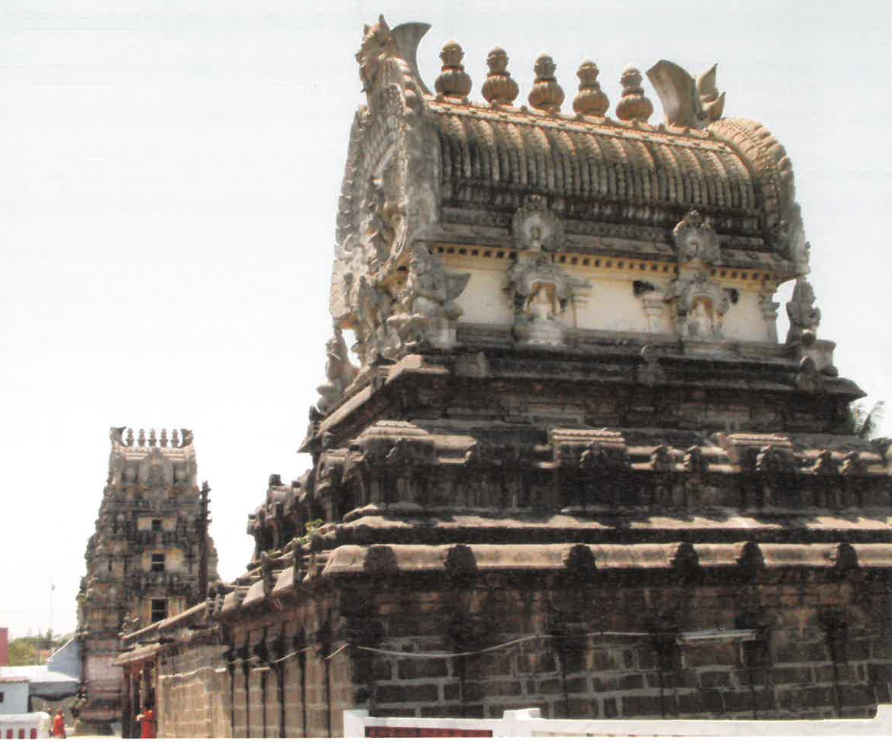
Prof. Raman also notes that Kumāra Tātāchārya was not the sole manager of the Varadarājā temple; there was another manager named Śrī Rama Ayyangar. “Kumāra Tātāchārya was active in Kāñci till about 1614 (pp.83-84).” From this account, the picture emerges that he was a high officer of the king appointed to look after the affairs of the temple, which would indicate that the Varadarājāswami temple was also directly administered by the king through his officers, like the Śrīraṅgam temple.
Eṭṭur Tirumalai Kumāra Tattāchārya also managed the affairs of this Tiru-vehhā temple as Śrī Kāryam officer. Evidently, the royal favour conferred on his family as officers by the King contributed to the popularity of this family. Nearly six inscriptions in the Tiru-Vehhā temple show him as Śrī Kāryam. One inscription records that one Kulaśekhara-tirumalai-nambi obtained from the king a village Salaimaṅgalam, in the presence of Eṭṭūr Kumāra Tirumalai Tātāchārya, and distributed it to Śrī Vaiṣṇavas living near the temple of Coṉṉa-vaṇṇam-ceyda-perumāḷ. The second prākāra of this temple seems to have been built by one Maṇḍaḷaṉ, son of Śrī Raṅgarāja of Nadātūr, who founded a village, erected a maṇḍapa in the temple, and provided a water shed. Another record in the second prākāra of the temple (south wall) mentions that the king seated in the janaki-maṇḍapa, granted to Śrī Parakāla-nambi the title of “Karunākara-dāsa” besides some honours and privileges and a dwelling house.
A gift registered by Eṭṭūr Tirumalai Kumāra-Tātāchārya, the son of Ayyāvayyaṅgār of the ṣaṭamarṣhana gotra and the āpasthamba sūtra, and of the family of Periya Tirumalai-nambi, refers to a gift of house sites to some Brahmins who formed a colony near the temple named Sundarāchārya-puram, and of the village of Vāraṇavāsi for the midday offerings to the God Coṉṉa-vaṇṇam-ceyda-perumāḷ (Annual Report on Epigraphy 29/1921). It clearly shows that Thātacharya belonged to the family of Periya Tirumalai-nambi. The same Kumāra Thātacharya gifted the village of Poliyūr, which was in Virpeḍu-nāḍu in the sub-division of Ūttukkāṭṭuk-koṭṭam in Chandragiri-rājya in Jayamkoṇḍa-cōḻa-maṇḍaḷam (Annual Report on Epigraphy 30/1921), for providing daily offerings, conducting worship and festivals to the God of Coṉṉa-vaṇṇam-ceyda-perumāḷ at Kāñcipuram. Another record registers a sale of land to one Tirumalai Ayyaṅgār for services and worship by one Aāḻagiya-siṅgar, a trustee and agent of Kumāra Tātāchārya.
There are two other records that refer to the conduct of summer festival and floating festival in the temple. Tātāchārya’s management of these two temples received royal patronage which neither Ulakaḷanta Perumāḷ (Ūrakam) nor Pāṇḍavadūta (Pāṭakam) enjoyed particularly in 16th and 17th cent. This temple had a maṇḍapa named Jānaki-maṇḍapa in which the king sat and conferred titles on individual show that the shrine of Rāmā, Sītā, Hanuman and Lakṣhmaṣa found as part of it had assumed importance. The beautiful set of Rāmā, Lakṣhmaṇa, Sīta and Hanūmān now housed in the maṇḍapa perhaps belongs to this age. A large number of festivals being conducted in the temple are perhaps rooted in the 17th century flowering of the temple.

2.10. Festivals

This temple furnishes a good study of Vaiṣṇavite temple festivals. A glance at the calendar of events shows that right through the year a good number of festivals are conducted in the temple. These festivals entail special worship to the god and goddess and processions of the respective deities. They may be divided into two broad categories as:
  1. Āgamic festivals and
  1. Festivals of the southern schools or what may be called the Āḻvārs and Ācārya festivals.
The Āgamic festivals are those that are mainly prescribed in the ritual treatises called Āgamas. According to the temple authorities, the temple follows Pādma-saṁhita. They are generally related to astronomical events like full moon and New moon and so on. They are further subdivided into nityotsavas
(daily festivals), māsotsavas (monthly festivals), and varṣotsavas (annual great festival). The monthly festivals in this temple are pournami (full moon), amāvasya (new moon), ekādasi (eleventh day of the month) and māsap-piṟappu (birth of the month). The other important festivals are Vasanta-utsavam (spring festival) in the month of Vaikāsi (Tune), Koḍai festival (summer festival ) in the month of Āni (July). Pavitrotsavam is an important event in which any shortcoming or blemishes in performing in the worship or festivals are rectified and purified in the month of Āvani (Aug-Sept). This is celebrated for three days and concludes with Pūrṇāhuti, the culminating offering in sacrificial fire praying for the fruition of all festivals. This is an obligatory festival as per the Āgamas.
An important festival is the Brahmotsava, the elaborate annual festival. All great temples conduct this festival annually for an odd number of days, mainly for beginning with the hoisting of the flag and concluding with the lowering of the same. The festival is held when a specific star is in conjuction with the full moon of the month. When we have maka nakṣatra (star) in conjunction with the full moon in the month of Māsi, it is generally called Māsi-makam; the Chittirai star in the month of Cittirai called Cittirai festival; likewise we have Vaikāsi-Viśākam and the star mentioned above is the culminating day of the festival and the processions etc precede that day, for nine, eleven, thirteen or such odd number of days. On the final day, the deity is taken to a nearby water source like a river, tank, sea or well, when the deity or its significant weapon (āyudha) is immersed in the waters as a mark of purification.
On each day from the flag hoisting day, the deity (metal) is decorated and placed on a particular vehicle or mount and taken around the main streets of the village both in the morning and evening. The mounts like horse, elephant, Garuḍa, snake, and so on are in a set order prescribed in the Āgamas and are reflective of the main philosophy of the temple. Each time the mount is different which also includes on the seventh day the Rathotsava - car festival which is considered a very important festival of the temple. In Viṣṇu temples, the Garuḍotsava attracts large crowds whereas in the Śiva temples the Vṛṣabha-vāhana is important. Each temple celebrates the annual festival on a particular month. In the Tiru-vehhā temple the annual festival is held in the month of Paṅguni (March) when the star is Uttaram. The annual festival is at the month of Vaikāsi-visakam in the time of May at the Varadarājā temple.
It is held for ten days. The following list shows the order of vāhanas in procession and the days on which they are carried in the Tiru-vehhā Temple. The order of these vāhanas is common to Tiru-vehhā and Attiyūr Varadarājā, and reflects the philosophy of the temple. For example, the last of the vāhana is the Vedasāra-vimāna, which is the name of the tower in which the Lord of Tiru-vehhā has manifested. The idea is that the Lord who manifests in the vimāna comes down in various vāhanas mentioned and finally takes his abode in the Vedasāra-vimāna. Similarly, the last vāhana of the Varadarājā temple is called Puṇyakoṭi-vimāna. It is known that the name of the vimāna, the sanctum tower in the Varadarājā temple, was called Puṇyakoṭi-vimāna and was built by Kṛṣṇadevarāya.
Another point of interest is that the list does not include a Vṛṣabha (Bull, which is the vāhana of Śiva). That is excluded in the Viṣṇu temple. There is a tradition that the Vṛṣhabha mount, which Śiva rides, is Viṣṇu himself and his four legs are considered the four Vedas. The idea is that Viṣṇu is the base on which Śiva manifests. As this concept is contradictory to Vaiṣṇava faith, it is excluded. Another noteworthy point is that there is a festival on the 8th day in which the deity rides on a horse and that the festival is called Veḍupari. That is, the God appears as a hunter and catches the individual soul; he rides on a horse on this occasion. This festival is also held in Saivite temples and Śiva appears on one day as a hunter and does the same as Viṣṇu. Thus, these festivals are parallels and appear both in Vaiṣṇavite and Śiva temples. In both cases, a local legend is enacted in which the God would appear as a hunter or highway robber to voluntarily take hold of the devotee.
It is also necessary to note that the name of the sanctum tower is Veda-sāra in Tiru-vehhā and Puṇyakoṭi in the Veradarāja temple. While at Tiru-vehhā, the Lord is considered the essence of the Vedas; at Varadarājā, the Lord confers millions of Puṇyas (spiritual merits) upon the devotee. Additionally, in the Varadarājā temple, the Lord is said to manifest as Mohinī, the enchantress who lured and enticed the demons with nectar during the churning of the milky ocean. In contrast, at the Tiru-vehhā temple, the manifestation is that of Nācciyār, that is Āṇḍāḷ.

2.11. Navarātri festival

A nine-day Navaratri festival is held in the month of Puraṭṭāsi, which culminates on the tenth day of “Vijaya-daśami,” the “Victorious Tenth Day.” The Vijayanagara kings were greatly attached to this festival. After worshipping their family deities, they used to hold a grand durbar
where all the feudatories came to the court to receive honors and pay tributes to the king. It is the belief of Hindu kings that anything started on that day would be successfully completed by the blessing of the lord, and the performer would be victorious. In ancient times, children were sent to school for the first time on that day, which was celebrated as a great day in the life of the child. They would be taught reading, writing, and learning. Viṣhu, Ayana, and Sankramaṇa are other days bearing on astronomy when festivals are conducted in the temples.

2.12. Bhaktotsavas

The Āgamas mention that the festivals of bhaktas (the true devotees of the Lord) should be conducted on the day of their natal star in the temple. The image of the consecrated devotee receives special bath, worship food offering and his compostions are recited.
Finally, his portrait is taken out in procession. It is under this classification that the festivals of Āḻvārs and Ācāryas are celebrated in the Viṣṇu temples. The Tiru-vehhā temple celebrates the festivals of all the Āḻvārs and Ācāryas as it follows the southern school of Vaiṣṇava tradition. All the Ācārya of the southern Vaiṣṇva tradition are revered during their natal nakṣatra and month. There is a pond near this temple, which is called Poykai. The early saint Poykaiyār is said to have been born on a golden lotus in the pond, and so got the name Poykaiyār. Poykaiy-āḻvār is thus a part of this temple manifestation and is worshipped right through the year in this temple. According to one inscription found in the Varadarājā temple, dated in the reign of Vikrama Cōḻa, 12th century, Poykaiy-āḻvār was born on Tiruk-kēṭṭai star. For celebrating this, a special gift was made to the temple. However, due to some unknown reason, it has been changed to Tiru-vōṇam star, and his birth star is now celebrated on the Tiru-vōṇam
star each month in Tiru-vehhā temple. It is not known when this change took place. It seems to us that in the first half of the 14th century, there were Islamic invasions and lootings of the Hindu temples when the deity was carried away to safety and was brought back after several years. It is possible that the original star of the Āḻvār was forgotten, and his history was shrouded in myths with the result that the nakṣatram of Lord Viṣṇu himself was given as the Āḻvār’s star and celebrated. The earlier epigraphical reference is dubbed as wrong by the modern Vaiṣṇavites. On all the twelve months of the year, the Tiru-vōṇam star is celebrated as the day of Poykai-ālavār in Tiru-vehhā temple. One of the reasons for this change may be due to the fact that Viṣṇu’s star is Tiru-vōṇam and this Āḻvār was deified as equal to Viṣṇu. Further, it is known that Kēṭṭai is not considered an auspicious star by the modern astrologers, and so the star has been changed.
In addition to the monthly festival, a ten-day festival is also celebrated for the Āḻvār in the month of Aippasi, in which the Āḻvār is said to have been born, and the festival ends on the Tiru-vōṇam day. The revised birthdays of the first three Āḻvārs, Poykaiyār, Bhutat-āḻvār, and Pey-āḻvār are celebrated on consecutive days in the stars of Tiru-vōṇam, Aviṭṭam, and Sadayam respectively. This arrangement is convenient to remember and celebrate, and so modern tradition holds these three stars as the stars of the first three Āḻvārs. As the birth of the three Āḻvārs is wrapped in mystery, modern tradition finds no compulsion to search for the original stars of the early Āḻvārs. However, according to the record of Vikrama Cōḻa, which is the earliest to mention the stars of the Āḻvārs, the natal stars of both Poykaiyār and Bhuatattār are said to be Tiruk-kēṭṭai. The natal stars of all the Āḻvārs are celebrated in this temple in their respective months.
Another unique tradition of the Vaiṣṇavite temples is the recitation festivals called adhyāyanam for twenty days divided into two groups as a) ten days day recitations (pakal-pattu) and b) nighttime recitations (irāp-pattu) for ten days. They are related to what is well known as Vaikuṇṭa-ekadasi festival most sacred to Viṣṇu temples. The “Day-ten” is recited prior to the Vaikuṇṭa-ekādasi and the “night ten” after the Vaikuṇṭa-ekadasi. In the day ten festival the Tirumoḻi recitations of all the Āḻvārs other than Nammāḻvār are recited. In this group the Tiru-empāvai of Nacchiyār Āṇḍāḷ is also be recited. In the “Night ten” group the poems of Nammāḻvār alone (called) Tirui-vāymoli are recited. In some temples like Śrīraṅgam, and Śrī-villiputtūr, a group of special devotees called araiyars used to sing and also dance the poems in front of the deity. They also used to explain the meanings of the poems through gestures, a unique tradition that has survived to this day. This service of the araiyars is called araiyar sēvai. This takes place in the month of Mārkali (Dec-Jan).
The exalted position given to prabandham singing in Vaiṣṇava temples raises the position of the Āḻvārs in the divine hierarchy and hence their deification. Besides these festivals of the Āḻvārs, the Tiru-vehhā temple also celebrates the days of Ācāryas and arranges for the recitation of their works and study of their works in the temple. The following are the Ācāryas whose festivals are held in the Tiru-vehhā temple.
  1. Nāthamuṉikaḷ
  1. Āḷvandār
  1. Rāmānuja
  1. Maṇavāḷa-māmuṉi
  1. Tiruk-kacchi-nambi
  1. Pillai-lōkāchārya and
  1. Kūrattāḻvāṉ
There is also the reading of Kaiśiki-purāṇnam in this temple.

2.13. Endnotes and References

1. Kaḍiyalūr Rudraṉ kaṇṇaṉār in his Saṅgam Poem - Perumpāṇāṟṟupaṭai (பெரும்பாணாற்றுப்படை ).
இருநிலம் கடந்த திருமறு மார்பின் முந்நீர் வண்ணன் பிறங்கடை, அந்நீர்த் திரைதரு மரபின் உரவோன் உம்பல், மலர்தலை உலகத்து மன் உயிர் காக்கும் முரசு முழங்கு தானை மூவருள்ளும் இலங்கு நீர்ப் பரப்பின் வளைமீக் கூறும் வலம்புரி அன்ன வசை நீங்கு சிறப்பின், அல்லது கடிந்த அறம் புரி செங்கோல், பல்வேல் திரையற் படர்குவிர் ஆயின், கேள் அவன் நிலையே கெடுக நின் அவலம்! (28-38)
irunilam kaṭanta tirumaṟu mārpiṉ munnīr vaṇṇaṉ piṟaṅkaṭai, annīrt tiraitaru marapiṉ uravōṉ umpal, malartalai ulakattu maṉ uyir kākkum muracu muḻaṅku tāṉai mūvaruḷḷum ilaṅku nīrp parappiṉ vaḷaimīk kūṟum valampuri aṉṉa vacai nīṅku ciṟappiṉ, allatu kaṭinta aṟam puri ceṅkōl, palvēl tiraiyaṟ paṭarkuvir āyiṉ, kēḷ avaṉ nilaiyē keṭuka niṉ avalam! (28-38) 2. Kaḍiyalūr Rudraṉ kaṇṇaṉār in his Saṅgam Poem - Perum-pāṇāṟṟup-paṭai (பெரும்பாணாற்றுப்படை ).
.........................நீடுகுலைக் காந்தள் அம் சிலம்பில் களிறு படிந்தாங்கு, பாம்பணைப் பள்ளி அமர்ந்தோன் ஆங்கண், .........................nīṭukulaik kāntaḷ am cilampil kaḷiṟu paṭintāṅku, pāmpaṇaip paḷḷi amarntōṉ āṅkaṇ, இடனுடைப் பேரியாழ் முறையுளிக் கழிப்பிக் கடன்அறி மரபின் கைதொழூஉப் பழிச்சி iṭaṉuṭaip pēriyāḻ muṟaiyuḷik kaḻippik kaṭaṉaṟi marapiṉ kaitoḻū'up paḻicci 3. Kaḍiyalūr Rudraṉ kaṇṇaṉār in his Saṅgam Poem - Perum-pāṇāṟṟup-paṭai (பெரும்பாணாற்றுப்படை ).
வெயில் நுழைபு அறியா குயில் நுழை பொதும்பர்க் குறுங்காற் காஞ்சி சுற்றிய நெடுங்கொடிப் (375) veyil nuḻaipu aṟiyā kuyil nuḻai potumpark kuṟuṅkāṟ kāñci cuṟṟiya neṭuṅkoṭip (375)

3. Pāṭakam

3.1. Pāṇḍava Perumāḷ Temple

Pāṭakam, a part of Kaccippēḍu (Kāñcipuram) in ancient times, was the name of the locality and the temple dedicated to Kṛṣṇa here was called Temple of Irundār (now called) Pāṇḍava-dūtar.

3.2. Kṛṣṇa in Tamiḻnaḍu

Pāṭakam temple is one of the earliest temples of Kṛṣṇa in Tamiḻnaḍu. It may be recalled that Madurai, the capital of Pāṇḍyas was Mathura, often called southern Mathura of Kṛṣṇa. Also, the ancient temple of Aḻagarkōyil was originally dedicated to both Kṛṣṇa Vāsudeva and Balarāma found mentioned in Saṅgam literature.
This Kṛṣṇa cult should have become a part of Tamiḻ culture from the beginning of historic times. The Ūraham temple at Kāñci also houses Balarāma (now called Ananta) in the form of a white snake. The cult of Kṛṣṇa and Balarāma flourished in Tamiḻnāḍu after the Mahābharata tradition and is mentioned in the Puṟanāṉūru and Pari-pāḍal poems which points out that Kṛṣṇa was known for his fame and Balarāma was known for his might amd were the two of the protectors of the world, the other two being Śiva and Muruga. The Pāṇḍyas of the south claimed that their ancestors translated the Mahābhārata into Tamiḻ. Kṛṣṇa and his other avatars like Trivikram, Varāha etc were part of Tamiḻ culture all over Tamiḻnāḍu. The Pāṭakam Temple of Kāñci is a symbol of this ancient culture.

3.3. The Temple

The main temple sanctum is a rectangular śāla-vimāna with a pāda bandha variety of adhiṣṭhāṇa built of granite. The vimāna has a very impressive string of karṇa kūṭas, sālās, and pañcaras – parapets going around indicating a form going back to the Pallava period. But the earliest inscription on the wall of the main temple is that of Kulōttuṅga I, dated in his 5th year 1075 CE. It does not refer to the construction which is likely to have been built in the beginning of Rājrāja’s time 1000 CE. The grīva of the sanctum is high, and the vimāna has stucco figures that are reminiscent of the Pallava age though the present stucco work might have been renovated later.
fig. 3.1: A view from the back of the temple of Pāṭakam and its preceding gopura. The rectangular structure is the vimãna of the temple.
fig. 3.2: The view of the ancient Pāṭakam Temple (Pāṇdava-dūta) showing the vimāna of the Cōḻa Age, preceded by an entrance gopura.
There seem to have been three phases of lateral extensions by way of maṇḍapas, in the front. But the main walls are severely plain with no niche or sculpture. Inside the sanctum, abutting the rear wall, the image of Kṛṣṇa in a seated pose can be seen. It is perhaps the tallest sculpture in all of Kāñcipuram, rising to a height of about 35 feet. The face is so high that it is even difficult to see. The lord is shown with only two arms in abhaya
and varada poses. The sculpture is made of stucco but appears black due to a coat of fragrant oil. No image of any Goddess or other deities is shown. In front of this image, on a pedestal, Viṣṇu is depicted with four arms in metal, holding cakra, śankha, abhaya, and varada mudrās. He is identified with Kṛṣṇa, who went as an ambassador on behalf of the Pāṇḍavas to Duryodhana, the Kaurava, asking him to cede at least five villages to the Pāṇḍavas so that the war between them could be averted and they could live in peace. His two consorts, Rukmiṇi and Satyabhāma, are also depicted in metal; all three are in a standing posture. There is also a metal image of Navanīta Kṛṣṇa dancing. The priest told me enthusiastically about the Sthala Purāṇa and how Kṛṣṇa came to appear in this form. However, he was more emotionally attached to the heritage of his family, which should have originally hailed from Vinjamūr in Andhra-deśa, and later came to Kāñcipuram. One of its prominent members, Yajñamūrti, a great scholar and originally a Smārtta Brāhmaṇa
of the Advaita school, met Rāmānuja and challenged him to a debate that lasted for eighteen days. For seventeen days, Yajñamūrti remained victorious, and Rāmānuja couldn’t succeed. On the 18th day, Rāmānuja prayed to Varadarājā, and as a result, Yajñamūrti accepted defeat even without the debate and became a convert to the Visiṣṭhādvaita system
The tradition of an 18-day debate in this temple of Kṛṣṇa is inspired by the 18 days of the Mahābhārata war and the 18 chapters of the Bhagavad Gīta. However, the story is located in the temple of Varadarāja and not in this temple. In fact, there is no reference at all in any of the published accounts about Rāmānuja’s visit to this temple. Nor does the Sthala Purāṇa speak of Rāmānuja’s association with this temple in any way. Obviously, this story is in the general trend of purāṇas, intended to glorify Rāmānuja. The fact that for 17 days he failed with his own masterly ability and even on the 18th day he won the debate only with divine intervention would show that it is not a historical event but fully in the realm of Purāṇa, which we call Rāmānuja Purāṇa. Pāṭakam is one of the earliest shrines and was very popular centuries before Rāmānuja. The fact that Rāmānuja’s visit to any of these well-known Viṣṇu temples in Kāñci receives the least attention shows that the biographers of Rāmānuja were more interested in projecting
the greatness of Rāmānuja and not history. The legends should be understood for the purpose for which they were created and not as historical events. What emerges from the legend is that Rāmānuja himself was originally a Smārtha Brāhmaṇa of the Vedantic school who converted many Smārtha Brāhmaṇas to his system. Even this seems to be far from the truth as Rāmānuja seems to have belonged to the Vaiṣṇava Vedantic school which was active before his time. It also appears that Rāmānuja appointed Yajñamūrti to worship his personal God, Devarāja. It is not clear at what point in time the Yajñamūrti family took over the Pāṭakam temple. However, Yajñamūrti was called “Aruḷaḷa Perumāḷ Emperumānār” which shows that the title Emperumānār was commonly applied to many in the time of Rāmānuja and later claimed only for him.
It is evident from other records that ‘Pāṭakam’ was the name of the colony of Kāñcipuram, where lived many great architects. The famous Sundaravarada temple at Uttaramerūr, built in the 8th century was designed and constructed by an architect named Parameśvara who hailed from Pāṭakam of Kāñcipuram. The gopura in front of the Pāṭakam temple may belong to 15th century.

3.4. Inscriptions

A merchant named Aruḷaḷadāsaṉ, who was a resident of the market street, “Arumoḻideva Perunteru”, in the Nagaram of Kāñcipuram, in Eyilnāḍu, of Eyirkottam, purchased 2000 Kuḻi of lands in the village of Orirukkai, in Kāliyūr-paṟṟu of Kāliyūr-koṭṭam. He endowed it for rearing a flower garden, and also for the maintenance of a gardener to look after the same, along with a clothing allowance for him.
The flower garden, named Aru’laḷadāsan after the donor, was situated at the back of the temple. The land purchased was in the village Orirukkai in Kāliyur Koṭṭam. From the boundaries mentioned, it is seen that the village is the one near Uttaramerūr. It was an agricultural settlement generally called ‘ūr’ and the inhabitants had their own village assembly which sold this land to the merchant of Kāñcipuram, for providing subsistence to the gardener. The donor paid eleven gold kaḻañju, equal in weight to Madhurāntakaṉ-māḍai. The village assembly received this money and sold the land as “devatāna iṟaiyili” which mean that all tax dues would be paid to the temple and not to the royal treasury. The villagers agreed not to levy any local tax for this land. The village also agreed to measure the proceeds from the land to the temple, as per a standard measure of the temple granary. The market street was known as “Aruḷmoḻideva Perunteru” (the big street) named after one of the titles of Rājarājā I.
The other streets names suggests that a new market street came into existence around 1000 CE under Rājarājā at Kaccippēḍu. Another point of interest is that the name Aruḷāḷadāsa, a name of Śrī Varadarājāp-Perumāḷ seems to have become popular by 1075 CE (as it occurs in the 5th year Kulōttuṅga – 1075 CE).
Another record dated 1109 CE in the 39th year of Kulōttuṅga I, reveals that a merchant named Nādan Soman, a resident of the market street Rājāśraya-perunteru, gifted 2½ kaḻañju of gold for worship and special food offerings to the God of Pāṭakam. The money was received by two priests who served the temples and agreed to arrange for offering curd rice daily to this God in lieu of the interest accrued from the capital deposited. They were Ninṟanārāyaṇa Bhaṭṭa, belonging to Bhāradvāja gotra, Dūtakāri Tiruvaraṅga-māṇi-bhaṭṭaṉ. They also assured that in case they were unable to provide the curd rice as stipulated, they would give the gold in the hands of those who would be able to measure. In case of relinquishment of the service, they will deposit the amount in the treasury before leaving. This inscription is important from some angles. The priests of the temple served as reliable bankers, who agreed to pay interest on the capital deposited.
In case they faulted, they had to turn it over to those who would undertake to pay the interest in kind as expected. In the event of their migration or relinquishing this service of priesthood, they had to return this amount to the temple treasury. The record points out that the priests belonged to Bhāradvāja gotra. The name “Ninṟa Nārāyaṇaṉ” is derived from the name of “Ninṟāṉ” for Ulakaḷanta Perumāḷ. The other priest had the name Dūtakāri that gave rise to the name Pāṇḍava-dūta. Kāri is a synonym of Kṛṣṇa. The donor merchant belonged to the market street “Rājāśraya perunteru”. Rājāśraya was another title of Rājarājā I. This suggests that spacious merchant quarters with several markets were established by Rājarājā at Kāñcipuram and they were devoted to the lords of this town.

4. Vaikuṇṭa Perumāḷ temple

4.1. Introduction – The Temple

The Vaikuṇṭa Perumāḷ temple in the main part of the city was one of the few temples built by a well known Pallava King Nandivarmaṉ. After it was sung upon by a Vaiṣhṇava Āḻvār, it got counted as a Vaiṣṇava divya-deśa, one among the 108. Most of the other divya-deśas were already in existence when they were sung upon as those Viṣṇu temples were founded even when those villages were laid originally and their origin is rooted in legends. We have seen that the temple Ulakaḷanta Perumāḷ temple called “Ūraham” probably came into existence when the city of Kāñci was originally laid out. This present Vaikuṇṭa Perumāḷ temple was built by the Pallava who also the name Parameśvara in the eighth century and so was called “Parameśvara Viṇṇagaram”, i.e., Viṣṇu temple of Parameśvara. True to its name it is of historic importance from many angles.
fig. 4.1.: Vaikuṇṭa Perumāḷ Temple Tower, south side view.
fig. 4.2.: A view of the base of the sanctum tower on the north side.
The temple is inline with two other Pallava temples and is located in between them. One is called Muktēśvara temple to the north and the other called Mataṅgēśvara to the south. All these three Pallava temples are situated very close to each other within five minutes walk from each other. They indicate that the region where they are located was very important in ancient times. Similarly, they are also situated very near the temple of goddess Kāmākṣi. The Ulakaḷanta Perumāḷ temple stands very near the central point of the ancient city of Kacchipēḍu (Kāñcipuram).
fig. 4.3: A view of the wall of the sanctum tower, north side.
fig. 4.4: A central opening in the north wall of the sanctum tower, ground floor, flanked by two female guardians; found on the ground floor, Vaikuṇṭa Perumāḷ Temple, Kãñci, 8th century.
fig. 4.5: Base of the main sanctum tower
fig. 4.6:A view of the back of the Vaikuṇṭa Perumāḷ Temple.
fig. 4.7: A view of the Vaikuṇṭa Perumāḷ Temple, Kāñci, from a corner of north-east, Pallava, 8th century.
fig. 4.8: A view of the outside of the prākārā, on the north side showing the shrine like projections in rectangle or square forms alternately; Vaikuṇṭa Perumāl Temple, Kāñci, 8th century.
fig. 4.9: A prancing lion motif acting as pilaster.
fig. 4.10. A view of the Vaikuṇṭa Perumāḷ Temple from outside of the enclosure, showing the main enclosure preceded by another maṇḍapa, both built contemporaneously in the Pallava times, preceded by another front maṇḍapa, built in the time of the Cōḻas.
fig. 4.11. The back view of the enclosure from the south side. Vaikuṇṭa Perumāḷ Temple, built by Nandivarman,c.CE. 750.
fig. 4.12. Outer wall of the prākārā of the temple, showing the sala śikhara.
fig. 4.13. A lion pilaster on the outer side of the enclosure wall, in the Vaikuṇṭa Perumāḷ Temple, Pallava Age, c. CE 750.
fig. 4.14: Close-up view of the lion.
fig. 4.15: The temple priest.
The Vaikuṇṭa Perumāḷ temple is a three storied structure with a sanctum in all the three floors. They are one over the other with a seated image of Viṣṇu in the ground floor, a reclining image of Viṣṇu of the middle, and standing Viṣṇu in the top most floor. In general it is known that the standing form would be in the ground floor, seated in the middle, and reclining on the top.
Such an arrangement also suits well with architectural requirement for stability and articulation. The receding height gives a pyramidal effect that gives strength to the structure. An example is the Sundaravarada Perumāḷ temple at Uttaramērūr built almost at the same time by a sthapati named Parameśvara who hailed from Kāñcipuram (Pāṭakam). There, the standing image is in the ground floor, the seated image is in the middle and the sleeping figure is on top. However, that order is not maintained here and it is not known whether it is due to deliberate planning or due to some disturbance during the course of centuries that has altered this arrangement. There is a broken stone image of Viṣṇu beneath a five hooded cobra, lying in the enclosure. A 16th century sculprture, this seems to have been in one of the sanctum of this temple and has been replaced when it got damaged. What caused the damage we don’t know. What ever the case may be, the temple is one of the rare tritala vimāna - three storied temple of the Pallava period still under worship that deserves notice.

4.2. Parameśvara Viṣṇugraham

As mentioned earlier this temple was built by one Pallava Parameśvara as it is called Parameśvara Viṣṇugraha. This temple was sung by Tirumaṅgai Āḻvār who was a contemporary of the King Nandivarman Pallavamalla who seems to have completed this temple. He also had the name Parameśvara and so is credited with the construction. Also, the earliest inscription on the temple belongs to his time mentioning his name (fig. 4.16). This temple has two sets of Pallava sculptures: one on the main walls of the sanctum and another on the walls of the enclosure. These two sets of sculptures are stylistically different. The former being very close in style to the sculptures of Kāñci Kailāsanātha temple while the later seems to be stylistically inferior when compared to the former.
The later series of sculpture which portray the history of the Pallavas from the very origin of the Pallava dynasty to that of Nandivarman were executed by Nandivarman during his life time. He ruled between 730 and 795 CE. So, the possibility are the early sculptures on the main walls of the sanctum tower might have been carved earlier. We will have more to say about them in the sequence. It has been noted that Tirumaṅgai Āḻvār who lived in the 8th century and a contemporary of Nandivarman calls this Parameśvara Viṇṇagaram and evidently the temple was called by that name when it was built. The inscriptions of the Pallava rulers like Nandi’s son Dantivarmaṉ alo refer to this temple as Parameśvara Viṇṇagaram (fig. 4.17). However, towards the end of 11th century, from the time of Cōḻa Kulōttuṅga I, it came to be called Kulōttuṅga-cōḻa-viṇṇagaram. Obviously, Kulōttuṅga Cōḻa has carried out some major renovations to this temple and renamed it as Kulōttuṅga-cōḻa-viṇṇagaram.
It was not uncommon those days to rename a temple if any major renovation was done by kings. In the nearby village of Uttaramērūr, there are two Viṣṇu temples. The first one was also a Pallava foundation in the 8th century named Śrīvēli Viṣṇugraham (now called Sundaravarada temple). The great Cōḻa, Rājendra I, carried out a major renovation in this temple in the mid 11th century and renamed it as Rājendra-cōḻa-viṇṇagaram. Another was the village assembly hall, which carried on its stone base all the transactions of the village for nearly 500 years, had a brick superstructure which was converted into a regular stone temple by Kulōttuṅga I and renamed after one of his titles as Cōḻa-nārāyaṇa-viṣṇugraham.
fig. 4.16: A Pallava inscription on the base of the sanctum tower, recording a gift to the temple in the time of Nandivarman II, Vaikuṇṭa Perumāḷ Temple, Kãñci, Pallava 8th century.
fig. 4.17: An inscription of Pallava Dantivarman, dated in his 37th regnal year, referring to Paramēśvara Viṣṇugṛham, and making gift of gold for worship in the temple, CE 812.

4.3. Kulōttuṅga Viṇṇagaram

The Parameśvara-Viṣṇugraham of Kāñci became Kulōttuṅga-cōḻa-viṇṇagaram in the eleventh century and later has become Vaikuṇṭa Perumāḷ temple.
We have no information when it came to be called Vaikuṇṭa Perumāḷ, but probably when the new image of seated Viṣṇu beneath the five-hooded cobra was installed in the main sanctum of the ground floor, it assumed this name. The most popular name in modern times is Vaikuṇṭa Perumāḷ and the Goddess is called Vaikuṇṭavalli Tāyār. The vimāna of the temple is now called Mukunda-vimānam. The sculptures on the wall of the main sanctum depict Viṣṇu’s ten incarnations and his other vyūha forms (fig. 4.18). There seems to be some emphasis on the Varāha form (fig. 4.19), and there is also a full standing figure of Viṣṇu in his Kalki form as a teacher of supreme knowledge. These sculptures are the earliest in South India to show more themes from the Purāṇas in relation to the temple layout, making them historically very important. They were heavily plastered in the nineteenth century for preservation.
fig. 4.18: Viṣṇu as Yajña Varāha, on the the north wall of the sanctum tower.
fig. 4.19: Viṣṇu as Hayagrīva, teaching the four Vedas on the main wall of the sanctum tower, north side.

4.4. Iconographic Programme

The Vaiṣṇava tradition accepts three concepts of manifestations called para, vyūha and vibhava forms. The para form is called Vāsudeva, also known as Para-Vāsudeva, the Supreme Viṣṇu who is generally identified with the image in the main sanctum. The vyūha and vibhava forms are portrayed on the walls and sub-shrines in early temples if all the forms are portrayed. It seems the Vaikuṇṭa Perumāḷ temple is the only early temple in Tamiḻnāḍu where both the vyūha and vibhava forms are figured on the main walls of the sanctum. This tradition of portraying all these manifestations on the walls is not found in later temples as the Viṣṇu temples of Tamiḻnāḍu generally limit the portrayal to only the main deity in the sanctum. The Vaikuṇṭa temple is an exception where the outer parts of the main walls are completely covered with sculptural portrayal and is thus a unique edifice to study.
The vyūha forms are Puruṣa, Saṁkarṣana, Pradyumna, and Aniruddha. In addition to these four forms, there is another division called the twelve forms known as (1) Keśava, (2) Nārāyaṇa, (3) Mādhava, (4) Govinda, (5) Viṣṇu, (6) Madhusūdana, (7) Trivikrama, (8) Vāmana, (9) Śrīdhara, (10) Hṛṣikeśa, (11) Padmanābha, and (12) Dāmodara. According to the Āgamic text, these twelve forms are brought under the four vyūha forms. Each vyūha group is formed by three forms: These divisions do not represent different deities, but rather the same deity identified differently through their functions, as discussed in Vaiṣṇava philosophy. The sculptures portrayed on the walls of the main temple should be viewed in a clockwise direction (pradakṣiṇa). However, from the middle of the back, one must start again from the front in an anticlockwise direction to follow the avatāra aspect portrayed. In the first part, beginning from the central sanctum, the clockwise position of the images is described up to the central part of the back.

The sculptures on the main walls (clockwise): The main deity in the sanctum is facing west.

  1. Dvārapāla : On the main wall, of the ground floor, to the south of the main entrance.
  1. Sūrya : Seated with two hands, the right in dhyāna-mudra, and the left holds tarjanī.
  1. Dikpāla : A standing deity with two arms, seems to represent dikpāla, and perhaps vāyu
  1. Kālanemi: The shrine-like structure of the karṇakūṭa wherein is shown Viṣṇu with four hands in flying pose. Viṣṇu holds cakram and śankha in his rear pair of arms. The front hands are in varada and simhakarna poses. There are eight devas in añjali poses. Opposite to the God, is a huge and terrible snake who can be identified with Kālanemi, the asura, who was killed by Viṣṇu (fig. 4.20).
fig. 4.20: Viṣṇu as Kālanemi Nihagna, main wall of Vaikuṇṭa Perumāḷ Temple.
  1. Kalki as Hayagrīva: Facing north in the karṇakūṭa is a four-armed Viṣṇu as Hayagrīva, with cakra and śankha in the rear arms. The front right hand in jñana-mudrã, and the left is in kaṭi-hasta. The God is standing with four figures obviously representing Vedas in front, adoring the God (fig. 4.19).
  1. Viṣṇu with four hands, holding cakra and śankha in the rear arms while the front are in abhaya and kaṭi-hasta poses. On either side of this Viṣṇu are seen dvāra-palaka and a pair of kinnara birds, holding tambura in their hands.
  1. Window: A window flanked by dvarapala-like figures. Originally this seems to have been a niche with a figure, but later converted into a window to provide light to the interior.
  1. Viṣṇu standing with four hands, with cakra and śankha in the rear arms and abhaya and kaṭi in the front. On either side are devotees in the pose of supplication; the one on the right looks like Garuda.
  1. Yajña Varaha: (fig. 4.21) Standing with four hands — cakram and śankha in the rear arms, the right front hand holds cin-mudra, and the left is in kaṭi-hasta. In front of him is another standing figure with four arms, the right one is in pointing pose while the left hand is broken. He seems to be with three heads. Possibly, this figure might represent Śiva to whom the Yajñamürti is imparting knowledge.
fig. 4.21: Clear view of Viṣṇu as Yajña Varãha.

Karṇakūṭa of the Main Prāsāda

  1. Viṣṇu seated: (fig. 4.22) Facing north is Viṣṇu in seated pose, with four hands; rear arms holding cakra and śankha, with the main right arm in jñana-mudra, while the left is in dhyāna-mudra, the right leg is folded and rested on the pedestal, while the left is hanging. On either side at the bottom are two devotees seated adoring the Lord. Sūrya and Candra are in flying poses on either side of Viṣṇu’s head. Above the panel are gandharvas singing.
fig. 4.22: Viṣṇu seated on a lotus seat with four hands holding cakra and śankha on the upper hands while the lower right holds vyākhyāna-mudra, and the left rested in dhyāna-mudra. Two celestials, one on either side, are receiving knowledge, Sūrya and Candra are above one on either side. On the north wall of the sanctum tower, ground floor, Vaikuṇṭa Perumāḷ Temple, Kāñci, Pallava, 8th century.
  1. Viṣṇu in standing posture with four hands, holding cakra and śankha in the rear arms. The right is placed on the thigh while the left shows jñana-mudra. In front of him is shown a bearded sage, playing on a vina with both his arms, obviously representing Nãrada (fig. 4.23).
fig. 4.23: Viṣṇu, standing with sage Nārada by his side. Obviously, Viṣṇu is teaching Āgama to Nārada. The panel is on the north wall of the sanctum tower, Pallava period, 8th century.
  1. Window: A window in the centre flanked by dvarapala-like figures holding lotus in one hand.
  1. Garudārūḍha Viṣṇu : (fig. 4.24) Viṣṇu seated on Garuda with four arms, holding cakra and śankha in the rear arms. The front right leg is rested on the right arm of Garuda, and the left is supported by the left arm of Garuda. Garuda is in flying posture. There are two figures above in dancing posture, while three gandharvas are seen below.
fig. 4.24: Viṣṇu as Garudārūḍha on the lower tier of the main wall of the santum tower, north side.
  1. Window: A window corresponding to the one found at the front is flanked by two dvārapāla-like figures holding lotus in hand. The one on the right is a female with her right hand on her navel with the left in kaṭaka pose. The one on the left corresponds to the right one.
  1. Brahmopādesam: (fig. 4.25) Viṣṇu is in standing pose with four hands, the rear hands holding cakra and śankha, while the other two are in abhaya and kaṭi-hasta. To the right of Viṣṇu is Brahmā with his hands in añjali. Brahmā has his right hand on waist while the left holds kamaṇḍalam. Above these two figures are shown two gaṇas.
fig. 4.25: Viṣṇu teaching Brahmā on the lower tier of the main sanctum wall, north side.
  1. Window: Two dvārapāla flanking a window.
  1. Seated Viṣṇu: The god is seated on a pedestal in utkaṭikāsana with four hands, in the left hand śankha and probably daṇḍa; the lower right hand is in jñana-mudra (fig. 4.26). The lower left hand is broken. In front of him stands a figure with two arms. His left arm is on hip, while the right hand is broken. He might be Indra receiving instruction. Beneath are shown two bearers of the seat. There are two beneath seated with legs crossed. The one on the left streches his hand. The one on the right holds his hand in siṁha-karna pose. Candra and Sūrya are shown above. Gandharvas are seen above the panel.
fig. 4.26: Viṣṇu, seated with vyākhyana-mudra (in teaching pose). A sage is standing by his side receiving the knowledge. Maybe, the representing sage is Sanaka who received instructions from Viṣṇu, Pallava period, 8th century.
  1. Ādinātha Viṣṇu is in karṇa-kūta - facing north. He is seated on Ananta shown as a snake with five hoods. Viṣṇu is seated in mahāraja-līla pose (fig. 4.27). He holds cakra and śankha in the upper arms, the main right hand is planted on the seat. The left is broken. To the left of Viṣṇu stands a woman. To his right are devotees adoring him with añjali-hasta. Above the female figure is seen a flag patākā. Above all the figures are two gandharvas.
fig. 4.27: Viṣṇu seated as Ādinātha, flanked by Sūrya, and Candra on either side and by devotees beneath, Pallava period, 8th century.
  1. Sūrya Nārāyaṇa: (fig. 4.28) The next image shows a great lotus from which Sūrya emanates. He holds two lotuses in his hands as seen generally in Sūrya images. Two male figures are seen emanating from the side and he looks like a trimūrti. Below him on either side are his attendants and below him are two more figures. Below the seat are four devotees adoring the main image of Sūrya.
fig. 4.28: Sūrya emanating from a primordial lotus. Beneath the lotus are four devotees, and on either side of him three pairs of devotees, Pallava period, 8th century.
  1. There is another sculpture at the back (fig 4.29). It shows Viṣṇu seated on a pedestal fastening a flower garland on the head of a devotee who is shown seated in front in supplication. He has the same form as the Candeśvara-prasāda-mūrti generally found in Śiva temples. It is symbolic and portrays the lord conferring the leadership of his retinue over this devotee. It is possibly Viṣṇu conferring senāpatya, commander’s post on Viṣvaksena, the guardian of the Viṣṇu temples. He is also called Sēṉai Mudaliyār.
fig. 4.29: Viṣṇu is seated tying a floral garland on the head of a devotee who is standing before Viṣṇu. The figure looks similar to the Candeśa-anugraha-mūrti images in Śiva temples and might probably be Viṣṇu conferring the post of Senāpatya (commander-in-chief) on Viṣvaksena who is called Senāpati or Seṉai-mudali in Vaiṣṇava tradition, Pallava period, 8th century.

Back to the front and then Anticlock wise:

From here we may have to go back to the front of the santum and come in anticlockwise direction to examine the sculptural sequence. It is known that the ten Avatars (incarnations) of Kṛṣṇa are Matsya, Kũrma, Varāha, Narasiṁha, Vāmana (Trivikrama), Paraśurama, Balarāma, Dāśarati-rāma, Kṛṣṇa and Kalki. These are called the Vibhava forms of Viṣṇu (fig. 4.30).
fig. 4.30: Viṣṇu seated on a lotus with four arms holding śankha and cakra and the other two placed on lap. To his right stands Garuda with añjali pose, and to his left stands a devotee the manifestation seems to be Para Vāsudeva form whom other vyūha and avatāras of Viṣṇu emanated.
Kũrma: Starting from the south-western corner, the wall is carved with the ten avartars of Viṣṇu in sequence in the Vaikuṇṭa Perumāḷ temple. The south-west corner of the main wall figures Viṣṇu in Mohini form (fig.
4.31) as a lovely lady carrying a pot of ambrosia (amṛta) and is seen distributing to the Devas in front of her while at the back are shown the Asuras peeping from behind expecting the lovely lady to give them also the nectar. The episode occurs in the legend of churning the milky ocean by the Devas and Asuras to get the nectar, by drinking which they would become immortals. Viṣṇu cheated the Asuras by pouring all the nectar that came out of the ocean to the Devas. In this legend, the hill Mandara was used as the churning rod and the serpent Vāsuki was used as the rope to churn the ocean. As the churning started it was found that the hill was getting submerged in the waters and the world was not able to bear its weight. Viṣṇu took the form of a turtle Kũrma and served as the base for the hill and supported it which is the origin of Kũrma Avatāra of Viṣṇu. Instead of showing the Kũrma form, the turtle form is shown, the Pallava artist had cleverly introduced the captivating Mohini to suggest the Kũrmavatāra of Viṣṇu.
The Mohini form of Viṣṇu as voluptuous lady (fig. 4.32) standing in a beautiful tri-baṅga is a fine portrayal with bends and moving contours.
fig. 4.31. Viṣṇu as Mohini in front, in a delightful pose bringing ambrosia (amṛta) in a vessel with both hands. In front of her are the devas joyfully receiving the ambrosia while the asuras are standing behind bewildered. On the south wall of the sanctum tower, ground floor.
fig. 4.32: Close-up of Viṣṇu as a voluptuous Mohini; Vaikuṇṭa Perumāḷ Temple, Kāñci, 8th century.
Varāha: (fig. 4.33) The Varāha is shown next as if springing from the depth of the ocean with the right leg kicking up forcefully get to the top of the waters while supporting the Goddess earth with his left leg who is shown seated on his thigh. With his right hand the Varāha is supporting the legs of the goddess while with the left he is embracing her. In this pose he has turned his face towards the goddess with affection. The goddes full of love and facing the God holds her hand in añjali pose.
By the side of the Varāha is shown the Ananta who is shown in añjali hasta in supplication. The Varāha form appears as flying up with the goddess in a dramatic form through the waters.
fig. 4.33: Varāha emerging from the deep oceanic waters lifting Bhūdevi. The multi-hooded snake Ananta is seen below the left leg of Varãha, on the south wall of the sanctum tower, Pallava period, 8th century
Narasiṁha: (fig. 4.34) The next panel shows the standing form of a very powerful Narasiṁha not in his usual destructive form, but, as a giver of benefaction to Prahlada shown in front, wearing a crown as the King of Asuras crowned by the Lord and remains adoring the standing Narasiṁha. Narasiṁha has four hands holding śankha and cakra in the rear arms while the main right arm is teaching pose and the left holding a staff. The Narasiṁha incarnation is shown with the lion face crowned as the lord. The figure is not in static straight standing pose, but full of verve and in beautiful tri-baṅga with well built muscles and power. It is a very unusual figure of Narasiṁha that attracts immediate attention.
fig. 4.34: Narasiṁha standing, with his right hand in teaching mudra and sūci-mudra in the left. It seems to be Kevala Narasiṁha. A figure is seated before him who might represent Prahlāda, Pallava period, 8th century.
Vāmana: (fig. 4.35) Following the Narsiṁha figure is the image of Vāmana shown as Brahmacāri holding an umbrella in the left hand and his Jñānamudrā (teaching pose) with the right. Generally Vāmana is shown as a short man almost like a dwarf, but in this panel he is shown relatively tall which would show that he is not portrayed on his arrival as a dwarf but after receiving the gift of three steps from
Hiraṇya has grown taller suddenly to manifest as Trivikrama. It is again a clever way of the artist suggesting both the manifestations. That he has suddenly assumed a tall form is shown by the figure standing nearby holding his hand in vismaya sign suggesting his wonder. It is obviously Mahābali, the Asura who boasted that he can give anything on earth sought for by the dwarf. Behind him are seen two figures oe representing the Śukra, the guru of the Asura who warned him and the other Garuḍa who punished him for revealing the identity of the lord.
fig. 4.35: Vāmana standing with an umbrella and there stands a devotee probably Mahābali, Pallava period, 8th century.
Paraśurama: (fig. 4.36) The next figure is that of a standing image with four hands holding cakra and śankha in the rear arms. The front left arm is placed on the thigh and the right is in Abhaya pose. In front of him stands a male figure in añjali. If the order of the ten avatārs is considered this figure is that of Paraśurāma. It is interesting to see Paraśurāma also shown with four hands and wielding śankha and cakra to show that he is an emanation of Viṣṇu.
fig. 4.36: Viṣṇu as Paraśurāma, blessing a devotee standing to his right, Pallava period, 8th century.

4.5. Saṁkarṣaṇa-Samhitā

The Saṁkarṣaṇa-Samhita also called Narada-Pāñcarātra-Samhita gives some importance information about various vibhava forms of Viṣṇu. We have seen that the Viṣṇu’s manifestations are divided into two main categories as vyūha and vibhavas. The vibhavas are generally considered the ten avatars, like Matsya, Kūrma, Varāha, Narasiṁha etc.
However, the Saṁkarṣaṇa-Samhita gives as many as 35 forms as vibhava manifestations of Viṣṇu. Th following is the list given by the above text.
  1. Padmanābha
  1. Dhruva
  1. Anantha who is called Halāyudha evidently Balarāma. This also shows wherever the embodiment of Ananta is worshipped as at Ūraham it is Balarama.
  1. Madhusūdana
  1. Vidyādhideva who is said to have four heads like Brahmā
  1. Kapila
  1. Viśvarūpa
  1. Vihangama riding on the bird Garuda or Hamsa
  1. Kroḍātmā
  1. Vaḍavāvaktro
  1. Dharma
  1. Vāgīsvarah
  1. Ekārṇava sāyi
  1. Kāmakeśvara
  1. Varāha
  1. Narasiṁha
  1. Piyuṣa haraṇa
  1. Srīpati
  1. Divyadeha
  1. Kāntātmā
  1. Amṛta Dhāraka
  1. Rāhujit
  1. Kālanemi nihagna
  1. Pārijāta haraka
  1. Lokanātha Sāntātmā
  1. Dattātreya
  1. Nygrodha-sayana
  1. Ekasṛnga-tanu
  1. Vāmana-deha
  1. Trivikrama
  1. Naranārāyaṇa
  1. Hari
  1. Kṛṣṇa
  1. Paraśurama
  1. Kodaṇḍarama
  1. Vedavid
  1. Kalki
  1. Pātāla-śāyana
It is important to note that this exhaustive list is interesting for in the Vaikuṇṭa Perumāḷ temple the ground floor has as many as 35 manifestations of Viṣṇu which sems to confirm this number. Some of the rare forms that are mentioned in this list are seen distributed not only in the ground floor but also in the upper floor. The textual list consists of twice the manifestations of Varāha, Vāmana, and Narasiṁha and we find that the sculptural portrayal in the Vaikuṇṭa Perumāḷ consists of two such portrayal. For example, the Varāha appears as Bhūvarāha in the south of the ground floor and also as Yajña Varāha the teacher in the north wall of the ground floor. Secondly, the Vāmana form also appears twice in the temple once as Kevala Vāmana in south of the ground floor while Vāmana as a part of the Trivkrama episode appears as a separate panel in the upper floor. The third manifestation is Narasiṁha who appears as Nrihari in the south wall of the ground floor standing alone whil in the upper floor he is seen fighting with Hiraṇya in one and ripping him in the second.
The textual list includes Amṛita haraṇa which is portrayed in the ground floor on the south side. In addition the list includes Amrita dhāraka which relates to the manifestation in which the amṛta appeared, Viṣṇu first carried it in human form. This form is also sculpted in this temple. Yet another interesting representation mentioned in the list is Dhruva which is also found on the upper floor in which Dhruva appears as a boy seated on a throne on the south wall. Kalki also called Hayagrīva, Ādinātha, mentioned in the list is also found in the represention in sculptures of this temple. Other sculptures of interest are Rāhujit and a few Viṣṇu sculptures with three heads of which at least one might represent Vidyāhideva. The eight armed Viṣṇu could perhaps be a representation of Viśvarūpa. All these make as believe that the Vaikuṇṭa Perumāḷ temple follow the Pāncarātra school of Saṁkarṣaṇa-samhitā which need to be studied in detail elsewhere. For want of space that is not attempted here.
Prof. Dennis Hudson did a remarkable study of the placement of these sculptures in the Vaikuṇṭa Perumāḷ temple, but he took the Bhāgavata Purāṇa as the basis for these sculptures. As the Bhāgavata Purāṇa is considered later than this temple, there is difficulty in accepting the role of that Purāṇa here. Also, there are some discrepancies in the descriptions of sculptures on the walls. For example, on the east wall of the ground floor, there is a representation of Kṛṣṇa as Govardhanadhāri. However, Dennis took this representation to be Lakṣmī worshipping Kāma. Dennis presented his view in a lecture in the year 2002 at Madras. However, his final work did not come out, and unfortunately, he died before the fruits of his study could see the light (published posthumously as “The Body of God: An Emperor’s Palace for Krishna in Eighth-Century Kanchipuram” in 2008). Whatever the case may be, this is the earliest temple in Tamiḻnāḍu that gives all the manifestations of both the vyūha and vibhava
forms, which furnishes us with early iconographic details of early Viṣṇuism in Tamiḻnāḍu and hence is very important. The sculptures portrayed on the walls of the main temple are to be viewed in the clockwise direction - pradakṣiṇā. However, from the middle of the back, one has to start again from the front in an anticlockwise direction to follow the avatāras portrayed. The position of the images is described up to the central part of the back in a clockwise direction, beginning from the central sanctum.

4.6. Vyūha form of Saṁkarṣaṇa

The last one on the south wall represents three male images seated on a common pedestal. All the images are shown with legs hanging, but the central one seems to be slightly taller. The hanging legs of all three are rested on a dwarf shown seated beneath the pedestal, who seems to hold the añjali pose.
Flanking him is one figure on each side standing in adoration. Above the seated figure on either side are two images who might represent Sūrya and Candra. It is interesting that in this panel we meet with three figures. It has been noted above that each vyūha form of Viṣṇu is grouped into three, and this region is identified with that of Saṁkarṣaṇa. It is also mentioned that the vyūha forms are called Triyyātmā, i.e., three souls. It is possible that this form represents the vyūha form of Saṁkarṣaṇa (fig. 4.37).
fig. 4.37: Three images seated on a common pedestal. Their legs are supported by a dwarf. Three devotees are seen seated besides others. This panel represents probably Saṁkarṣaṇa, Pallava period, 8th century.
Rāghava Rāma and Balarāma (fig. 4.38): On the south end corner of the eastern wall are shown two images in a standing posture, both with four hands. The one on the right holds a śankha and cakra with the rear arms, while the main right arm is held in the kaṭaka pose (Preaching Pose?) and the left is on the thigh. The other holds one pair of arms raised up to the waist, and the other two are probably placed on the thigh.
It is possible that the image on the right represents Rāghava Rāma, and the other with both hands on the waist may represent Balarāma.
fig. 4.38: Kodaṇdarāma and Balarāma on the left and Govardhanadhāri Kṛṣṇa on the right panels, in the Vaikuṇṭa Perumāḷ Temple, ground floor, south-east side. Here ends the dasāvatāra series in the ground level, Pallava period, 8th century.
Kṛṣṇa Govardhanadhāri (fig. 4.38): The next sculpture is that of Kṛṣṇa lifting the Govardhana hill, seen in many similar scenes. He is also shown with four hands, holding a śankha and cakra with the rear arms, and the front right placed on the thigh. With the front left, Kṛṣṇa lifts the Govardhana hill. His right leg is placed firmly on the ground, while the left is slightly bent and lifted up, placed on the head of a human being. This Kṛṣṇa image bears a close resemblance to the same representation in the Māmallapuram Kṛṣṇa Maṇḍapa. The next sculpture at the back near the central opening is a Dvārapāla guarding the central opening (figs. 4.39-4.40). He is two armed and holds a flower with the left arm while the other is placed on his thigh. On the other side of the opening is the other Dvārapāla who forms a pair with the earlier one.
fig. 4.39: Viṣṇu adored by a devotee and flanked by dvārapālās, on the east wall of the sanctum, Vaikuṇṭa Perumāḷ Temple, Kāñcīpuram, Pallava period, 8th century.
fig. 4.40: Viṣṇu standing adored by a kneeling devotee to the left, Vaikuṇṭa Perumāḷ Temple, Kāñcipuram, Pallava period, 8th century.
Beginning from the Kūrmāvatāra, the successive portrayal of the avatāras of Viṣṇu ends here with Kṛṣṇa Govardhanadhāri. Then, we come to the centre of the rear-opening of the sanctum, with two forms of Viṣṇu, flanking the opening, both standing with four arms, holding śankha, cakra, abhaya, and kaṭī-hasta, with kneeling figure each (figs. 4.39-40).
The Āgamic text called Nārada Pāñcarātra Āgama gives an interesting insight into the deities that manifest for worship. It speaks about “Rāhu-jit,” also called “Kālanemi-nighna.” The last image in the Vaikuṇṭa Perumāḷ temple shows Viṣṇu with four hands flying in the air. In front of him is a huge snake with terrifying teeth. Beneath him are a number of figures representing celestials. In describing the iconography of Rāhu-jit, the text also says Viṣṇu should be like the mid-day sun (madhyānha bāskaraḥ) and shine like the flame of knowledge (vijñāna dipti). Thus, in this figure, Viṣṇu is shown in a flying pose. This panel is connected with what appears as Sūrya in the adjacent panel. When one moves in a clockwise direction from the entrance, Rāhu-jit will appear first, followed by Kalki or Hayagrīva. It is thus a unique representation in which Rāhu is shown as a rākṣasa—the snake demon (fig. 4.20).
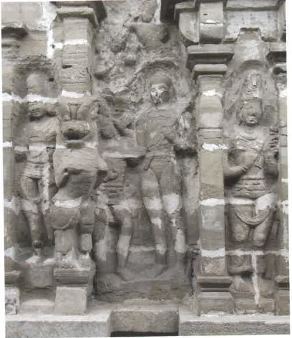
Hayagriva or Kalki: Kalki stands as a tall figure with a horse head and four hands, holding a śankha in the rear arms. The front right arm is in jñana-mudrā, teaching knowledge, while the left is on the thigh in the kaṭi-hasta pose. The four figures represented in front of Hayagrīva might represent the four Veda-puruṣas whom Hayagrīva is said to have taught. The horse-headed incarnation is the last among the ten incarnations of Viṣṇu. We have seen the ninth avatāra of Viṣṇu, that of Kṛṣṇa, depicted on the south-eastern wall of the main sanctum, and this, the tenth one, completes the ten avatāras of Viṣṇu. It is necessary to note that an inscription found in the Ādivarāha cave temple of Māmallapuram, which is not too far removed and may be about 25 years later than this figure, mentions the ten avatārs as Matsya, Kūrma, Varāha, Narasiṁha, Vāmana, Parasurāma, Balarāma, Kodaṇḍarāma, Buddha, and Kalki as the ten incarnations. It omits reference to Kṛṣṇa in the list because Kṛṣṇa is the Supreme Being, who was born as the ten incarnations.
That verse seems to point out the Supreme nature of Kṛṣṇa accepted in South India. It is known that there are many sculptural representations in northern India where Buddha is represented in place of Kṛṣṇa among the ten avatārs. That being the case, it is interesting to see that Kalki here appears as the last in the series of incarnations, and there is no Buddha. Instead, we have Kṛṣṇa himself as Govardhanadhāri. This suggests that both traditions of either Buddha or Kṛṣṇa included among the incarnations were prevalent in the beginning of the 8th century in Tamil Nadu. We do have the Āḻvārs singing Kṛṣṇa among the ten avatārs of Viṣṇu. Kalki is described as Vedarūpi, and the four figures, one of which is badly plastered, represent the four Vedas. As he is yet to manifest, he is different from the other nine avatārs (fig. 4.19). Harihara and Viṣṇu: We then have two manifestations of Viṣṇu. One is that of Harihara, and the other is another Viṣṇu with four hands holding a śankha and a cakra.
The first image on the main sanctum wall is again Varāha, standing majestically with four arms holding a cakra and a śankha. In front of him stands another deity, also with four arms but without any emblem. The front pair of arms seems to be in the añjali pose, while the other two are on the thigh. It seems the Varāha portrayed here is not the Varāha that uplifted the earth, but as the giver of knowledge, in which aspect he is said to teach the sage Sanatkumāra the Purāṇas and the knowledge of the Vaiṣṇava faith. Sanatkumāra occupies a special position in Vaiṣṇava theology, and probably this event is depicted here (fig. 4.21).

4.7. Upper Floor Clockwise

The sculptures on the walls of the upper floor are badly plastered, making it difficult to identify them satisfactorily. However, it seems they represent Kṛṣṇa’s sports. From the distribution of the sculptures, a doubt arises whether the temple originally followed the Pāñcarātra school of Āgama. A point of importance is that from the portrayal of all sculptures, it is clear that all forms of avatārs of Viṣṇu with four arms are shown holding a śaṅkha and a cakra in the upper pair of arms. This portrayal emphasizes the supremacy of Viṣṇu rather than the Purāṇic ideology. Here, Godhood is emphasized over the human aspect of the avatārs. The upper floor depicts Kṛṣṇa Vāsudeva’s sports. We transition from the Āgamic mode to the narrative techniques in this temple.
The following are the manifestations found on the wall of the upper floor, in the order shown in a clockwise direction. West wall–north side
  1. Dvārapālars
  1. Unidentifiable (fig. 4.41)
  1. Unidentifiable
  1. Keśi Vadha
North Wall
  1. Gajendra Mokṣa
  1. Rama Lakṣmaṇa
  1. Amṛta-manthana - churning milky ocean
  1. Window
  1. Narasiṁha Hiraṇya fight
  1. Narasiṁha – Hiraṇya Vadha
  1. Kāliya Mardanam
East wall
  1. Gitopadesam
  1. Window
  1. Malla Yuddham
  1. Window
  1. Rukmāngada ?
  1. Windows
  1. Aśvamedha Yāga
South wall
  1. Garuḍārūḍa – cakra prayoga
  1. Ananta-sāyi
  1. Window
  1. Garuḍārūḍa – Yuddham a fighting scene
  1. Cutting the head of a demon with cakra
West Wall – South Side
  1. Rāvaṇa Saṁhāra
  1. A fighting scene
  1. Vāmana
  1. Trivikrama
  1. Dvārapāla
The figures on the walls of the upper floor of the main sanctum are heavily plastered and do not permit us to see the beauty of the original. Nevertheless, they retain the original contours and overall form, which is of utmost importance to understand the iconographic program and religious ethos. The description of the main figures is given below. As this is the earliest Viṣṇu temple surviving, the sculptures provide Vaiṣṇava iconography of the early Tamiḻ country. One of the significant aspects that catches the attention is the tendency to emphasize the purāṇic episodes rather than present a conventional icon for ritual purposes given in Āgamas. As in the Kalāsanātha temple of Rājasiṁha, all the sculptures are vibrant with the principal events in the depiction, while the accompanying characters also assume importance to exhibit the story. Evidently, purāṇic mythology was predominant in the society with freedom for artistic work.
There are varieties of episodes and a larger coverage of Purāṇas than the ones seen in the Sundaravarada temple at Uttaramērūr, which was built within a few decades of this temple, perhaps by the same artist or his son. The form and general layout are the same in both temples, with three stories with a garbha-gṛha in each story to accommodate the three forms of Viṣṇu: standing, seated, and reclining. But the Uttaramērūr temple emphasizes the Āgamic need in the distribution of sculptures, in which the images in all the niches (subshrines) and the main three subshrines are made of wood and belong to the 16th century, a Vijayanagara replacement. Further, all the images are of the conventional representations. An interesting feature is that the associate figures, as prescribed by the Āgama, are no doubt depicted, but through painting on the walls, especially in the sanctums, also belonging to the 16th century. The figures are straight, stiff, and hardly with any aesthetic sensibility. Possibly, the other walls also carried paintings as seen in some subshrines.
They all are iconic representations and not purāṇic legends. Portrayal at the Vaikuṇṭa Perumāḷ temple differs in the depiction and assumes greater significance for the study of Purāṇas, which were more popular with some of the select stories occurring frequently illustrated.

4.7.1. West Wall – North Side of Entrance

At the beginning of the northern side of the entrance, after the dvārapālas, are two panels, one with a number of figures seated on a common seat. The representation is not identifiable (fig. 4.41). The next panel depicts two-armed Kṛṣṇa killing the horse demon, Keśi (fig. 4.42).
fig. 4.41: Celestials seated on a common pedestal. The sculptures illustrated from 39 to 60 are in the upper floor of the sanctum tower.
fig. 4.42: Kṛṣṇa killing Keśī, the demon in the form of a horse.

4.7.2. North Wall

  1. Viṣṇu seated: (fig 4.43) Viṣṇu seated on an āsana as if seated on Garuḍa. Viṣṇu is shown with eight arms. The right arms hold a cakra, an arrow being pulled out of its quiver, a sword, and a mace. The left arms wield a śankha, a shield, a bow, and a sword. Below, a gaṇa is shown, and to his right is a devotee in an añjali pose. Two devotees are depicted in a flying pose. Seven figures in different poses of adoration are also seen in the group to the north.
fig. 4.43: Viṣṇu holding bow and arrow.
  1. Gajendra mokṣha: (figs 4.44-4.47) Viṣṇu as Garuḍārūḍa, with four arms holding a cakra in prayoga pose and probably a vajra, while the upper left holds a śankha. The left arm is pointing to the crocodile dragging the elephant portrayed beneath. In front are some figures, probably Gandharvas, praising Viṣṇu for his act. Viṣṇu has placed his left leg on Garuḍa, while the right leg is supported by Garuḍa. Below is the crocodile, pulling the leg of the elephant king, which is trying to extricate itself from the grip of the crocodile's sharp teeth. The wife of Gajendra (the she-elephant) stands in human form in front, in an añjali pose.
fig. 4.44: Elephant king being drawn by the crocodile in Gajendra-mokṣa.
fig. 4.45: Gajendra and his queen.
fig. 4.46: Viṣṇu as Garudārūḍha Viṣṇu, seated on Garuḍa in the panel showing Gajendra-mokṣa scene, on the north wall of the sanctum tower, first floor, Vaikuṇṭa Perumāḷ Temple, Pallava, 8th century.
fig. 4.46: Garuḍa carrying Viṣṇu with great enthusiasm, in the Gajendra-mokṣa scene.
  1. Viṣṇu (fig: 4.48) standing with a long bow in his hand. He is shown with only two arms. It is his right arm that carries the bow, while the left is in kaṭaka pose. The quiver is seen on the left shoulder. It represents Śrī Rāma. In front are shown two figures. One holds his right hand in kaṭaka pose, and the left on his thigh. This might probably represent Lakṣmaṇa. A little above is shown a goddess seated on a lotus, probably representing Sīta. This is perhaps one of the earliest representations of the Rāma group in the south.
fig. 4.48: Rāma, Lakṣhmaṇa and Śrīdevi on a lotus.
  1. Amṛtha-manthana: (figs: 4.49-4.52) Viṣṇu is seen standing with four arms. His main left arm steadies the Manthara mountain, while the other is on Garuḍa. Of the two rear arms, the upper one is broken, while the second is on his thigh. Nearby, to his right, stands the horse Uccaiśravas, which emanated from the ocean when it was churned. In front of Viṣṇu is a divine figure bringing the nectar in a vessel (amṛta kalaśa). Beneath are three Devas holding the tail of the snake Vāsuki, and further below is an Asura holding the five hoods of the snake. The Devas and the Asuras are in the pose of vigorously churning the ocean by pulling the snake. The popularity of amṛtha-manthana, i.e., churning the ocean of nectar, is well depicted. A similar scene is also seen in the Kailāsanātha temple of Rājasiṁha.
fig. 4.49: An Asura holding the head of the five-hooded snake while churning the ocean, in the amṛta-manthana scene, portrayed on the north wall of the sanctum tower, Vaikuṇṭa Perumāḷ Temple, Kãñci, 8th century
fig. 4.50: The Devas holding the body of the snake for churning the milky ocean, a celestial; shown above bringing ambrosia in a vessel. (Fig. no. DSCF3519)
fig. 4.51: Viṣṇu is steadying the Mandara mountain in the amṛta-manthana scene, seen on the north wall of the sanctum tower, first floor, Vaikuṇṭa Perumāḷ Temple, Kãñci, Pallava, 8th century. (Fig. no. DSCF3520)
fig. 4.51: Close-up view of Viṣṇu steadying the mount Mandara in the amṛta-manthana scene.
  1. Narasiṁha and Hiraṇya fight: (fig. 4.53) Narasiṁha is shown with eight arms. The emblems in the arms are not properly identifiable. A cakra in one arm and a gada in another are traceable. Hiraṇya is fighting with Narasiṁha with two arms. A woman is seen in front, adoring Narasiṁha. Beneath is shown a dwarfish woman. Narasiṁha is standing on Garuḍa. His right leg is on the right shoulder of Garuḍa, while the other is on his head. Beneath Narasiṁha’s leg is Hiraṇya with a gada, attacking Narasiṁha. Above is a dwarf. On either side are Candra and Sūrya. Further above are three figures witnessing the scene.
fig. 4.52: Fight between Narasiṁha and Hiraṇya on the north wall of the sanctum tower, first floor, Vaikuṇṭa Perumāḷ Temple, Kãñci, Pallava, 8th century.
  1. Hiraṇya-vadham: (fig. 4.54) Narasiṁha, with eight arms and fierce anger, tears the abdomen of Hiraṇya with two of his arms. Hiraṇya is laid on the lap. The sharp nails of the lord pierce the abdomen. Narasiṁha’s leg is on a lotus seat, while the right leg is on the ground. On either side are seen the sun and moon. To the left of Narasiṁha is Lakṣmī.
fig. 4.54: Narasiṁha tearing open the abdomen of the demon Hiraṇya at end of their fight, on the north wall of the sanctum tower, Vaikuṇṭa Perumāḷ Temple, Kãñci, 8th century.
The order of these panels, the first showing the fight in the previous panel and the second killing Hiraṇya also indicate the order in which all the other panels are to be seen, which is clockwise sequence: beginning from the entrance.
  1. Kāliya-mardana: Dancing on the head of Kāliya, the snake. Kṛṣṇa is with two hands. The left leg of Kṛṣṇa is on the head of Kāliya, and the right leg is planted on the ground. With his left hand raised, Kṛṣṇa holds the tail of the snake and points down with the right to the plight of the snake as a result of his dance. Kāliya is figured as a five-hooded snake and human form. He holds his hands in añjali pose, praying for forgiveness. Beneath is another figure seated with añjali hands, extolling Kṛṣṇa. Beneath the leg of Kṛṣṇa is the wife of Kāliya, praying to Kṛṣṇa to spare the life of her husband.

4.7.3. East Wall

  1. Gītopadesam: (figs. 4.55-4.57) In the centre of the chariot is Kṛṣṇa, standing with two arms, assuring abhaya with the right hand while placing his left hand on his thigh. In front, Arjuna is seen with his hands crossed over his chest, standing and attentively listening to Kṛṣṇa, who is also standing on the same chariot. There is a figure that stands behind Kṛṣṇa. Another figure seems to be standing between Kṛṣṇa and Arjuna. The chariot is shown with wheels and a horse. There is a small figure on the driver's seat of the chariot, blowing a śankha. This panel has been identified differently by Dennison.
fig. 4.55: Arjuna, Kṛṣṇa and another person on a chariot drawn by horses, on the east wall of the sanctum tower, Vaikuṇṭa Perumāḷ Temple, Kāñci, Pallava, 8th century.
fig. 4.56: Kṛṣṇa, Arjuna and another person on a chariot drawn by horses, in all probability representing Gītopadesa. If the identification is accepted it would be the earliest sculptural portrayal of Gītopadesa in Tamiḻnāḍu.
fig. 4.57: The chariot drawn by horses on the east wall of the sanctum tower.
  1. Malla Yuddham: One figure is seated on a seat with two hands, with another seated behind him. In front are two wrestlers, one on the right representing Kṛṣṇa, who can be identified by his bun-like headdress. Behind the wrestlers is Balarāma, standing. There are three figures above, among whom one is a woman.
  1. Window: A window appears next flanked by two women one on either side.
  1. Aśvamedha Scene: (Figs: 4.58-4.59). This panel represents the horse sacrifice mentioned in the Mahābhārata. The scene is depicted from the figure of a horse on top. A fire altar is present. Four figures are shown standing. The one in the center has matted hair and a beard. Kṛṣṇā, identifiable by his hairdo, stands behind him. Another person stands in wonder between the horse and the bearded person. His hand is showing the vismaya pose. A woman stands behind him, her hands in the añjali pose. Below, there is a person with three heads. He performing the homa by puring ghee into the altar.
fig. 4.58: Yudhiṣṭhira in Aśvamedha sacrifice on the east wall of the sanctum tower, first floor, Vaikuṇṭa Perumāḷ Temple, Kāñci, Pallava, 8th century.
fig. 4.59: Arjuna, Kṛṣṇā, Yudhiṣṭira and Bhīma in the Aśvamedha sacrifice, on the east wall of the sanctum tower, Vaikuṇṭa Perumāḷ Temple, Kāñci, Pallava, 8th century.
  1. Window: No sculpture.
  1. Kaṁsavadha: (fig. 4.60) One person is shown seated, with another holding the head of the seated person with two hands. The seated person is also two-armed. Below, a person is seen dancing. Beneath the seat is a gaṇa.
fig. 4.60: A dancer performing in front of Viṣṇu, south wall of the sanctum tower, first floor, Vaikuṇṭa Perumāḷ Temple, Kãñci, Pallava, 8th century.

4.7.4. South Wall

  1. Garuḍarūḍa Viṣṇu: Six-armed Viṣṇu riding on Garuḍa, hurling a cakra with the right arm. The other hands hold a gada and a sword, while the left arms hold a śankha, a sword, and the third is thrown across. The god has his right leg planted on the shoulder of Garuḍa, while the left hand hangs. Garuḍa is shown flying. In front is an Asura, wielding a gadā. Beneath is another Asura. They probably represent Madhu and Kaiṭabha.
  1. Viṣṇu in fighting pose: With four hands, Viṣṇu is in a fighting pose with the upper hand holding a prayoga cakra. The left hand holds the shoulder of the Asura, and the other left hand holds a śankha. With the front right arm, the god is punching the Asura, who is retreating. Beneath is a seated figure.
  1. Garuḍarūḍa Viṣṇu: Viṣṇu, adorned with garlands and with six arms, holds a prayoga cakra, a sword, and a gadā in his right arms. In his left hands, he holds a śankha, a shield, and a big bow. The god is seated on Garuḍa, with his right leg placed on Garuḍa’s arm. Garuḍa, lifting the foreleg of the god with his hand, is in a flying pose. Three asuras are shown in front of the god. Two of them carry gadā in their hands and are fleeing from the scene, while the third, holding a sword and shield, also follows the other two.
  1. Window : A window appears flanked by two females, one on either side.
  1. Ananta-śāyi: (fig. 4.61) Viṣṇu is reclining on a bed of a snake with four hoods. The god has only two hands, one holding a kaṭakam, and the other extended sideways. The kirīta on the head is well worked. Above the reclining Viṣṇu are two legs, evidently of Brahma, who emanated from God Viṣṇu. By the side of the feet of the reclining god are seen two Asuras, Madhu and Kaiṭabha. The first holds a gadā in his right hand and points out in sūcī with his left. Above are seen three figures, evidently flying Āyuda-puruṣās.
fig. 4.61: Viṣṇu as Ananta-śayi reclining on a serpent couch. Two demons Madhu and Kaiṭabha attacking Viṣṇu, on the south wall of the sanctum, first floor.
Beneath the reclining Viṣṇu is Bhūdevi, with a flower in her left hand, kneeling on the ground. In between is Garuḍa, flying. Behind Garuḍa is Nārada, playing on a Vīṇa, seated in uttkuṭi-kāsana. He is also shown with a beard, his right hand raised and the left down.
  1. Three-headed god with four hands seated as in the preveouis panel, but the emblmen in the hands are not discernable. Above are seen two female figures seated – may be Bhū and Śridevi.
  1. Three-headed god with four hands holds a sword and a shield in the upper arms. The right hand is on the thigh, while the left is in sūcī, pointing down. The left leg is lifted, while the right is firmly on the ground. The figure in front looks like Garuḍa. He also resembles the image found in the earlier figure. Above are seen two heroes. One is a dwarf, and the other carries a sword and a shield. In the corner above are seen flames of fire.

4.7.5. West Wall

  1. Rāvaṇa: Southern side of the entrance where a person is seen seated (looks like Rāvaṇa) with three heads but with twenty hands. Above is seen the God with three heads. Akṣharmālā (rosary) and kamaṇḍalu are in the upper pair of arms, while the lower ones are in jñāna-mudrā, and the other is on the thigh. The left leg is folded and rested on the seat, while the other is hanging. A goddess is seen, but the figure is mostly damaged. Sūrya is seen above.
  1. Vāmana: (fig. 4.62) The next two panels represent the episode of Vāmana and Trivikrama. The panel shows three figures first, who are big in size. The first is Mahābali Cakravarti, who holds a kalaśa with both hands. Behind him stands the sacrificial horse of the Aśvamedha-yāga, which is shown quite prominently. Mahābali is well bedecked with jewels. Next to Mahābali stands Sukrāchārya, the preceptor of Mahābali. He has his hands raised, warning Mahābali not to make the gift. Behind him stands another figure. On the side is Viṣṇu as a dwarf. He holds an umbrella in the left hand and extends his right hand in the pose of soliciting the gift. Above him is seen a figure holding a sword, falling down upside down. In a corner is found a lotus flower.
fig. 4.62: Cakravarti Mahābali welcoming Viṣṇu as Vāmana, shown with an umbrella below. Sukrācarya, advising Mahābali not to accede to the request, is shown in front. The sacrificial horse of the Aśvamedha sacrifice is shown in the right-hand corner.
  1. Trivikrama: The next panel, related to the previous one, depicts the Trivikrama incarnation of Viṣṇu, who has eight hands. The god has lifted his left leg in the pose of measuring the three worlds. Brahmā is seated nearby, worshipping the lifted foot of Trivikrama. The lord holds a cakra, sword, and gadā in the right hands, while the fourth arm is broken. A śankha, lifted bow, and sūcimudrā are seen in the left arms. Viṣṇu’s mount, Garuḍa, is punching Sukrācārya for preventing Mahābali from making the gift. There is another figure seen behind.
These two panels, depicting Vāmana and Trivikrama, are generally combined in one panel as seen at Māmallapuram. But here, both are shown as two full-scale panels, indicating the importance of this legend. As we have seen earlier, there is a famous temple of Ūraham nearby, where the Trivikrama (Ulakaḷandār) has been in worship and is ritually the central deity of Kāñcipuram.
Viṣṇu, with four hands standing, completes the circle of the upper storey of Viṣṇu’s manifestations. Then, there are a pair of Dvarapālas and a pair of Apsaras.
fig. 4.63. The inner side of the northern enclosure wall showing the portrait sculptures depicting the history of Pallava rulers.
fig. 4.64: The interior view of the front maṇḍapa immediately preceding the sanctum at the ground floor.
fig. 4.65: An interior view of the front maṇḍapa preceding the main sanctum, supported by pillars carved with seated lions and intricate carvings. Built by Nandivarman, c.CE 750.

4.8. Rāma in Sculpture: The Front Maṇḍapa

The main sanctum on the ground floor is preceded by a front maṇḍapa with pillars supported by seated lions at their base.
There are eight pillars in two rows with lovely designs, which are far superior to the lion pillars in the enclosure going around the sanctum (figs. 4.64-4.65, 4.70-4.71). Above the lion goes a band with toraṇa-like hangings, and within its loop are attractive floral designs. However, one of the pillars closer to the sanctum carries remarkable bas-relief figures from the Rāmāyaṇa. The scene selected portrays Hanumān meeting Rāma and Lakṣmaṇa. Rāma is shown standing with his left hand in vyakhyāna pose and the other on his thigh. Behind him stands Lakṣmaṇa, holding a long bow with one hand and the other on his thigh. In front of Rāma stands Hanumān with his hands held in añjali pose. Beneath his arms is seated a monkey (fig. 4.66). It represents Hanumān meeting Rāma for the first time in Kiṣkindhā and Rāma admiring his wisdom.
The second scene represents Vāli and Sugrīva fighting (fig. 4.67) and Rāma aiming an arrow in āliḍha pose. Behind him is Lakṣmaṇa, holding and resting his bow on the ground, with the other hand on his thigh. Vāli is seen attacking Sugrīva ferociously. Sugrīva is shown fighting with his back to Rāma. It is known that the episodes of Rāma and Lakṣmaṇa meeting, leading to the friendship of Rāma-Sugrīva-sākhyam and finally the Vāli-Sugrīva fight (fig. 4.68) that led to the death of Vāli, are very popular among the episodes depicted in the Kiṣkindhā canto of the Rāmāyaṇa. The Vāli-Sugrīva fight is popular not only in Indian art but also in South-East Asian countries.
fig. 4.66: Hanumān meeting Rāma and Lakṣmaṇa, the earliest representation of a Rāmāyaṇa scene in Tamiḻnāḍu, from Kiṣkindha Canto, on a pillar inside the front maṇḍapa in front of the sanctum, Vaikuṇṭa Perumāḷ Temple, Kāñci, 8th century.
fig. 4.67: Vāli-Sugvria fight nad Rāma aiming an arrow of Vāli.
fig. 4.68: The story of the fight between Vāli and Sugvria (the monkey brothers) in the Rāmāyaṇa was most popular in both India and South-East Asia. A pillar in the front maṇḍapa portrays Hanumān meeting Rāma and Lakṣmaṇa, and also the fight between Vāli and Sugrīva. This is the representation of Rāmāyaṇa scene in sculptural form in Tamiḻnāḍu. The portrayal is very powerful and beautifully conceived, built by Nandivarman, c. CE 750.
fig. 4.69: Image of a saint shown in the middle of a pillar in the front maṇḍapa of the Vaikuṇṭa Perumāḷ Temple, .c CE 750.
The pillar that carries the two scenes from the Rāmāyaṇa is in front of the sanctum. There ought to have been a reason for such a choice. It is possible the seated figure of Viṣṇu inside the sanctum on this floor was conceived as Rāmā and worshipped. Such a system is quite common in Kerala temples of the late period.
The main deity inside the sanctum in most Kerala temples is a standing figure with four arms holding a śankha and a cakra like Viṣṇu. It is, in fact, Viṣṇu but is worshipped as Śrī Rāma, as at Kadavallūr.

4.9. History in sculpture - Ground Floor Prākāra

There are two works of outstanding merit on this temple. One was by Dr. C. Minakshi on “The Historical sculptures in the Vaikuṇṭa Perumāḷ temple of Kāñci” published by the Archaeological Survey of India in the year 1941. It is a pioneering and unparalled work on the identification of the historical panels with the help of inscriptions. The second was a deep study of the sculptures on the main walls of the Vaikunṭa peurmāḷ temple by my friend Prof. Dennis Hudson from America. He did extensive work and tried to identify them with Purāṇic and Āgamic texts. Unfortunately he passed away before the results of his study could be published.

4.9.1. Pallava history in Sculpture

“The sculptural representation of Viṣṇu in his different aspects and incarnations on the walls and niches of the central shrine are as important to us as the scenes depicting the manifestations of Śiva on the walls of the great Pallava temple at Kāñci, the Kailāsanātha. But historically the most valuable sculpture in the Vaikuṇṭa Perumāḷ temple are the series of secular panels depicting the chief stages in the history of the Pallavas”.
“Each of the four walls of the raised verandah running around the central shrine are adorned with two rows of sculptures. They are separated by a small band; this band was evidently meant to carry inscriptions explaining the sculptures above; this we may guess from the analogy, of the sculptures on the southern wall representing the events preceding the coronation of Nandivarman Pallava-malla. The sculptures are also divided vertically into several compartments, each depicting a particular occurrence. Unfortunately, the panels have been covered with thick layer of white wash, with the result that in most of the sculptures the figures have been rendered featureless.”
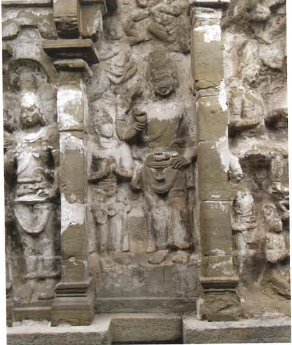
- Minakshi, op. cit
fig. 4.70: A row of seated lion pillars in the front and the panels of historical sculptures at the back wall, in the enclosure north side Vaikuṇṭa Perumāḷ Temple, Kāñcipuram, Pallava period, 8th century.
fig. 4.71: While most of the pillars are made of sandstone some pillars are also made of granite. An example of the granite pillar, in the Vaikuṇṭa Perumāḷ Temple, Kāñcipuram, Pallava period, 8th century.
Epigraphical evidence :
It will not be a wrong assumption if we suppose that the original intention of the executors of the Vaikunṭa Perumāl sculptures was to inscribe under each panel to explain the event depicted above. For some unknown reasons, the idea was abandoned. Today, we see explanatory inscriptions only under those sculptures representing the events leading to the coronation of Nandivarman Pallava-malla. However, the beginning of the first label on the southern wall has much to inform about the preceding panels. It reads: “ivvahagaiye brahman ādiyāga vārāninṛa pallava vamsattuḷ parameśvara pottaraiyar svargasthar āvadu.” That is to say, the death of Parameśvara Pottaraiyar of the Pallava family, which began first with Brahmā.
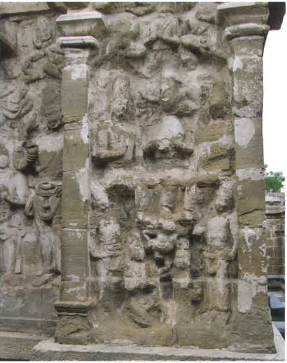
This indicates with sufficient clearness that the immediately preceding sculptures relate to the rule of Parameśvaravarman II, the immediate predecessor of Nandivarman Pallava-malla. The whole series, beginning with Brahmā, narrates the history of the Pallava family.
“We begin our examination of our figures with those on the west wall to the left side of the entrance from left to right in pradakshiṇā. There are two basic difficulties in identifying these panels. The first difficulty is to discover how the rows are related, for it is not easy at first sight to grasp clearly the continuity of the event represented in these panels. The second difficulty is that only a few of the sculptures bear inscriptions and therefore our interpretation of the rest will entirely depend upon our knowledge of the history of the Pallavas.”
Inspite of these difficulties, Dr. Minakshi has done a commendable study by identifying these panels in the best possible manner.
The first eight panels to the left of entrance on the west wall trace the origin of the Pallavas and the traditional; genealogical order which is found in several copper plates maintained in the royal archives. Taking the early contemporary record of the time of Pallava-malla, the Kasākkudi plates, we find following accounts:
“First from the lotus which rose from the navel of Viṣṇu was born the creator whose origin is the Supreme Brahman who is self existent; who fully knows the origin of the meaning of the sacred texts and who is engagrd in creation of the whole world.”
“From him was born at the sacrifice a son of the mind alone, Āṅgiras who was more brilliant than Agni-fire. From Āṅgiras came Brahaspati who was an ocean of speeches and father of politics. From him was born the fortunate and modest Samyu. His son was Bharadvāja who became the founder of the gotra of the glorious Pallavas by the power of his virtues and who mastered the three Vedas which resemble mountains, From him came Droṇā, the preceptor of the Kurūs and Pāṇḍavas, and who was produced from a pitcher, who completely mastered the four branches of the science of archery, which resembles the four oceans. From him came the sage Asvatthāma, who was an incarnation of Śiva , and at the rising of whose anger, Kṛṣṇā, Arjuna and Bhīma became terrified”.
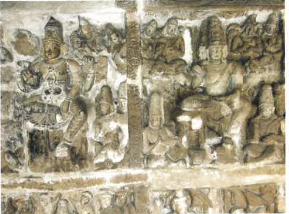
fig. 4.72: The beginning of historical sculptures in the enclosure wall, from the north-west of the entrance to the enclosure,beginning with Viṣṇu followed by Brahmā, Pallava period, 8th century.
fig. 4.73: Brahma who was born from Viṣṇu was second in the line of the Pallava.

4.9.2. Pallava History Begins with Viṣṇu

Thus, we find the Pallavas tracing their history to Viṣṇu. Quite appropriately, Pallava history is started with Viṣṇu in the temple dedicated to Viṣṇu. The first panel that begins the history is Viṣṇu seated on an āsana with four hands holding a śankha and a cakra. Brahmā, with three visible heads and akṣhmālā and kamaṇdalu in hands, is shown in the next panel. Next to Brahmā, a number of figures are shown seated one after the other. These figures are the Ṛṣis, the originators of the Pallava race, and are those mentioned in their stone and copper plate records. All Hindus, irrespective of caste or creed, trace their origin to one or the other Ṛṣis who were great thinkers. They are known as the composers of immortal poetries, referred to as ṛṣayah mantra kartārah.
The names of three Ṛṣis are mentioned. An individual will identify himself as a descendant of them, a term referred to as trayā-ṛṣeyās. Some retain the tradition of five ṛṣis (pañcā-ṛṣeyās), while a few mention seven ṛṣis (saptā-ṛṣeyās). The Pallavas here claimed five Ṛṣis up to Drona. The following are the five ṛṣis found in the sculptures:
  1. Āṅgiras
  1. Brahaspati (a giver of Law code)
  1. Saṁyu (the modest Ṛṣi)
  1. Bharadvāja (well known originator of Gotra name )
  1. Droṇā ( the well known teacher of Kauravas and Pāṇḍavas).
Bhāradvajās, the descendants of Bharadvāja Ṛṣi, are residents of Tamiḻnāḍu for the past two thousand years and more, from the Saṅgam age and perhaps even from earlier. We have a poet, Pāratāyar, among the Saṅgam poets, whose name is a prākṛt form for Bhāradvāja. The five panels that are seen after Brahmā on the west wall are the portraits of these five Ṛṣis. It is for the first time that the portrait of five successive Ṛṣis are portrayed in sculptural form in India, here in the Vaikuṇṭa Perumāḷ temple. The fourth portrait is that of Bharadvāja, whom the Pallavas mention in all their records as the originator of their gotra. Wherever Droṇā has been mentioned in the Pallava plates, he is described as the greatest military strategist, and the Pallavas were proud of his lineage. It may be mentioned here that some groups called themselves Droṇīs, belonging to Droṇa’s lineage.
Droṇī also means a measuring vessel, and so a new legend was created, calling them “born of the vessel of a Ṛṣi.” As if to suggest this tradition, a pitcher is prominently portrayed in the panel beneath Droṇā’s seat. The Tamiḻnāḍu rulers from the Saṅgam age were, in one way or another, connected with the Great Mahābhārata war. Utiyan Ceralātan, a Cera, is said to have fed the armies of both the Kauravas and the Pāṇḍavas in the Bhārata war, till the end of the Kauravas. So, he was called “the king who fed the armies in the Mahābhārata war,” Peruñcōṟṟu Utiyaṉ-ceralātaṉ.

4.9.3. The Birth of Pallava

The Pallavas claimed that they were direct descendants of Droṇā through his son Asvatthāma. The panel after Droṇā in the temple is that of Asvatthāma, the father of the first child named Pallava.
There are two accounts of the birth of the child Pallava. The connection between Asvatthāma and Pallava is known from the time of Parameśvaravarman I, mentioned in his Kūram plates. An early version is mentioned in the stone inscription found at Dharaṇikoṭa near Amarāvati in the Guṇṭūr district of Andhra Pradesh. It says that Madani, a celestial Apsara, was sporting with her friends in an attractive garden full of flowers and cool ponds. She saw swans playing in the ponds and was attracted by them. She noticed two swans, a male and a female, sporting with great love, which kindled her erotic instinct. At that time, Asvatthāma came there as a beautiful young man. He was greatly attracted by the beauty of the girl, and she too fell in love with him. Both were united and begot a child in due course. This child was placed on a spread of tender leaves pallavas, and the child was named Pallava by Asvatthāma.
This is a beautiful poetic portrayal recalling the famous work of Kadambari by Bāṇa, a great poet who lived in the 7th century. तपस्यतस्तस्य किलाप्सरोवृता सुरेन्द्रकन्या मदनीति विश्रुताः । कदाचिदारण्य निवासिमन्दिरं दिदुक्षुरालोकपथ जगाम सा ।। सरः प्रवातांबुजविस्खलप्रिय वियोगभीतं | कलहंसमण्डले || अशोकभूमावुपविशय सस्पृहं | विलोकयन्तीमुपतस्थिवानृषिं ।। उभे व शर्व्वं प्रबभूव नात्मनो निरिक्षितम् काममिवर्षिवेषनं । अथोभयं गाढनिबद्धभावकं सुरांगनाः संगमयांबभूविरे || असूत काले सुर राजकन्या नाथं
भुवस्सागरमेखलायाँ । सपल्लवोघास्तरणे शयनं पिता सुतं पल्ल इत्यावादित् ।।
tapasyatastasya kilāpsarovṛtā surendrakanyā madanīti viśrutāḥ | kadācidāraṇya nivāsimandiraṃ didukṣurālokapatha jagāma sā || saraḥ pravātāṃbujaviskhalapriya viyogabhītaṃ | Kalahaṃsamaṇḍale aśokabhūmāvupaviśaya saspṛhaṃ | vilokayantīmupatasthivānṛṣiṃ || ubhe va śarvvaṃ prababhūva nātmano nirikṣitam kāmamivarṣiveṣanaṃ | athobhayaṃ gāḍhanibaddhabhāvakaṃ surāṃganāḥ saṃgamayāṃbabhūvire || asūta kāle sura rājakanyā nāthaṃ
bhuvassāgaramekhalāy| sapallavoghāstaraṇe śayanaṃ pitā sutaṃ palla ityāvādit || A copper plate charter issued by Nandivarman, the builder of this Vaikuṇṭa Perumāḷ temple, gives the story of the birth of the first Pallava from Asvatthāmā, slightly differently. The celestial nymph Menakā is said to have come down to earth with her friends to enjoy the beauties of earthly pleasures. When she was enjoying a beautiful flower garden and the cool ponds, Asvatthāmā, the most attractive young man, came there. When she saw Asvatthāmā’s beauty, she fell in love with him. Asvatthāmā was equally attracted by her voluptuous beauty and sported with her.
A child was born to Menakā through Asvatthāmā, who was placed on a spread of sprouts when Asvatthāmā named the child “Pallava”. A third account, of a late date, tells us that Asvatthāmā married a Nāga princess and had a child whom he named Pallava. Apart from the legendary nature, it is evident that the Pallavas were descendants of Asvatthāmā, as known through several records. Up to the time of Asvatthāmā, they were Brahmins. From the time of Pallava onwards, they were referred to as brahma-kṣatriyas. This is seen mentioned in many Pallava copper plates.

4.9.4. The Penance to Get the Child Pallava

The Vaikuṇṭa Perumāḷ temple panels show Asvatthāmā doing penance with uplifted arms (fig. 4.74) and twisted jaṭa, and he stands on one leg. By his side is shown a dancing girl, obviously the celestial apsaras whose beauty attracted Asvatthāmā.
She is shown again as a proud mother of a child who is shown prominently by her side. The portrayal confirms the legend mentioned in the copperplate of the builder of this temple, Nandivarman.
fig. 4.74: Asvatthāma, the progenitor of the Pallava race, standing on one leg doing penance. Behind him stands the Apsaras Madani who gave birth ot hte Palava, Palava period, 8th century.
fig. 4.75: Birth of Pallava shown as a baby lying on a spread of leaves. On either side are shown two auspicious lamps on stands to indicate the sanctity of the birth, like Kṛṣṇā lying on a pipal leaf. To his left are shown celestials adoring the new born child, one among them represents Indra. This recalls the portrayal of the birth of Siddhārtha adored by Sakka.
The apsaras mother is shown standing by the side of a litter of sprouts on which is shown very prominently the child and on either side are lamps on stands to indicate auspicious birth of this child, the future Pallava emperor.
The other figures in the panels are the attendants rejoicing at the birth of this child. The birth of the first Pallava is mentioned in several records indicating its importance, so also this panel which shows the child on a large scale, and at the same time in a prominent position that no visitor will miss (fig. 4.75). One of the following panels shows the prince Pallava chasing two deers obviously suggesting he was learning hunting and archery. The role played by the Pallava ruler who came after the first Pallava is narrated in the Kasakkudi plates of Nandivarman, the builder of this temple.
“From him descended the powerful spotless race of the Pallavas, which resembled a partial incarnauion of Viṣṇu as it displayed unbroken courage in conquering the circle of the world as it enforced the special rules of all the castes and orders and which resembled the descend of the Ganges as it purified the whole earth”.
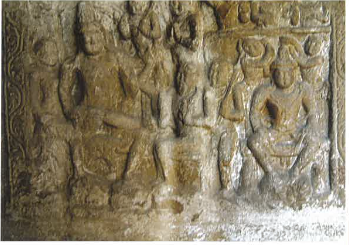
This suggests two important facts about the Pallavas. Firstly, it shows that the Pallava race resembled an incarnation of Viṣṇu in the conquest of the world. Secondly, it purified the world just like the river Ganges. There is thus the allusion to Varāha avatāra in the act of lifting Bhūmidevi (the Goddess of Earth). The other idea is that the Pallava race resembled the descent of the Ganges. Attention may be drawn to the portrayal of the child like the images of Kṛṣṇa lying on a banyan leaf in most sculptures and paintings, known as Vaṭapatrasāyi. The Pallava is likened to Kṛṣṇa as well.

4.9.5. The Coronation Scene

The next panel that attracts our attention is a king seated on the throne with a crown on his head and double breast bands, a characteristic feature of all the kings in their coronation scenes depicted in this series. The Brāhmaṇās and the other officials of the state are surrounding the king, and two men are pouring the abhiṣeka water on the head of the monarch (figs. 4.76-4.79). The present one is the coronation of the first Pallava. There are a number of such scenes in which kings are shown seated in identical poses with two men pouring abhiṣeka water over their heads. The total number of such scenes represents the total number of Pallava kings coronated, and the last one is that of Nandivarman on the south wall. The north wall and the eastern wall carry a number of such scenes.
The exact identification of all the kings who were thus coronated is not possible as there are no identifiable records through which the order of succession can be given. The identification attempted by Minakshi is mainly based on available records, and with them, it is difficult to identify the exact nature of each panel. In some, we do get some mythical figures like a person with a five-headed cobra. By and large, they show battle scenes, court scenes, temples, palaces, and other events in the life of individual kings. In some panels, we find the king holding the hand of his queen, which represents their marriage (figs. 4.80-4.81)..
fig. 4.76: Coronation of a Pallava as crown prince with the king seated with his queen witnessing the scene.
fig. 4.77: Coronation of a Pallava as king.
fig. 4.78: A Pallava prince being coronated. A bearded ācarya and women witness hte scene. Beneath are shown courtiers standing in attendance. Beyond are seen women bringing some material for the coronation rites, while from the balcony are seen royal ladies looking at the events.
fig. 4.79: A coronation scene.
fig. 4.80: Marriage of a Pallava King.
fig. 4.81: Marriage of a Pallava showing the king holding the hand of the bride in the pose called Pāṇigrahaṇa in Hindu marriage.

4.9.6. Aśvamedha

As most of the panels are heavily plastered, many of their aesthetic beauty cannot be discerned. Among the portraits on the north wall, Minakshi identifies one panel that is the second coronation scene as the figure of Viṣṇugopa, who had to fight with the Great Gupta king, Samudrā Gupta, and was defeated. So, Minakshi holds that the third coronation was that of Kumāra Viṣṇu, who reconquered Kāñci. Some beautiful portrayals of elephant riders and a battle scene are related to a vigorous war (figs. 4.82-4.88). There is also a panel that shows a king seated, and a horse and a yūpa sthambha (sacrificial post) are figured in the panel that might represent Aśvamedha yāga performed by the king (fig. 4.89). The Pallavas claimed that they performed Aśvamedha yāgas (Aśvamedha-yāji).
As the events are portrayed in front of a shrine, it seems that the Aśvamedha sacrifice was performed in front of a temple, or the shrine-like structure itself was the sacrificial hall (according to Minakshi).
fig. 4.82: A Pallava king seated witnessing an event in his court portraying the valour of the prince by tearing open the mouth of a lion with hands.
fig. 4.83: Pallava soldiers marching with swords.
fig. 4.84: Elephants, corps and soldiers marching and fighting a fierce battle.
fig. 4.85: Elephant riders are seen clashing on top and at the bottom are seen cavaliers fighting.
fig. 4.86: A battle scene with elephants and horses.
fig. 4.87: A fierce clash of rival royal Elephants in a battle.
fig. 4.88: Elephants and horses on the march.
fig. 4.89: Pallava king seated with his queen with an attendant in front. The panel depicts Aśvamedha sacrifice with the horse at the back and the yūpa stambha behind.
There are a few other panels in which the king is portrayed in front of temples showing that the Pallavas were great temple builders (figs. 4.90-4.94). From almost the beginning of the East wall, the well known Pallava kings have been identified by Minakshi. As these are authenticated and Minakshi has done an admirable study. I follow her identifications.

4.9.7. Temple Dance

Mention has been made of the panel showing a royal person with a five-hooded cobra over his head in a fighting mode. Minakshi identifies this scene with the fight of a Nāga king mentioned in Pallava records, fighting with King Nandivarman I. Three panels later, an important panel shows the king, and in front of him are nine people, men and women dancers, performing a dance. There are others witnessing the scene, even as we see an elephant rider marching majestically. The panel seems to suggest the Pallava witnessing dance, pointing to the Pallava patronage of the art of dance, particularly group dance, that included both men and women.

4.9.8. The Well Known Pallavas

The first panel on the east wall shows a fine temple shrine resembling the Pallava temples but its śikhara is hidden by foliated leaves while visible part of the top shows a circular śikhara. In front of the temple is a dīpa-stambha (lamp mast). A dancing party depicted in front shows a woman and a male dancer with their hands joined. A drummer is seen playing his instrument with a number of onlookers standing by. The panel shows the close relation of dance and music with the temple tradition. The succeeding panel shows a mansion and some horse-riders entering through the gate. A king is shown seated. This king is perhaps Siṁhavarman, the father of the famous Pallava Siṁhaviṣṇu.
The panel next is the first coronation scene on this east wall that represents the Paṭṭābhiṣeka of Siṁhaviṣṇu, the father of Mahendravarman. There are altogether seven coronations shown on this wall that includes:
  1. Siṁhaviṣṇu
  1. Mahendravarman I
  1. Narasiṁha I, Mamalla
  1. Mahendra II
  1. Parameśvara varman I
  1. Rajasiṁha (Narasiṁha II)
  1. Parameśvara II

4.9.9. Parameśvara II

The events that took place during the rule of all these kings find their place in the panels on this east wall (figs. 4.90-4.106). At the end of this wall and beginning from the south wall of the enclosure the life of Nandivarman II Pallava-malla, the builder of this temple is portrayed and the inscriptions begin to explain the panels from the beginning of the south wall. So, it has been possible to trace the kings on the east wall who preceded Nandivarman II with the help of known geneology.
fig. 4.90: A miniature temple of three stories built by a Pallava.
The panel representing the coronation of Siṁhaviṣṇu has the depiction of a fine palace, an illustrious example of the early Pallava times. Siṁhaviṣṇu is seated majestically with his queen, quite prominently. In front is also seen a shrine with worshippers standing by the side. The events are to be seen in both the upper and lower panels. Minakshi identifies another panel of coronation, this time the coronation of his brother Bhīmavarman. This event has meaning as Nandivarman, the builder of this temple, belonged to the family of Bhīmavarman and not a direct descendant of Siṁhaviṣṇu.
fig. 4.91: A Pallava king seated in front of a shrine in which is seen a saint who might be an Ālvār. Beneath him is another saint in yogāsana pose. The bottom panel portrays elephant riders bringing some articles on plates.
fig. 4.92: Pallava king seated in front of the temple he built.
fig. 4.93: Portrayal of another temple built by a Pallava on the wall of the enclosure.
fig. 4.94: The Pallava ruler seated in front of a temple and holding a sword and pointing to something in front.
fig. 4.95: On the upper panel, the Pallava is seated with his child on the lap and two queens seated behind. Below is shown the march of an army.
fig. 4.96: A Pallava king receiving visitors.
This is followed by the coronation of the Pallava emperor Mahendravarman I, the versatile poet and artist who had the title Citrakārapuli (tiger among artists), Vicitracitta (of varied artistic mind), and Cettākāri, etc. He was also the composer of dance dramas like Mattavilāsa Prahasana and Bhagavad Ajjuga. He has left behind immortal monuments like cave temples, sculptures, and inscriptions.
The panel following Mahendravarman is the coronation of his son and successor, the mighty Narasiṁha I, the conqueror of Vātapi. Minakshi identifies the panel as that of Siruttoṇḍar, the commander who invaded Vātapi, the capital of the Cālukyas, on his behalf. The panel next to this represents the king of Sri Lanka, Mānavarman, who sought the assistance of Mamalla to get back his throne. The next panel shows the conquest of Sri Lanka by the Pallava army for Mānavarman, and the scene is Lankā. After the victory, Mānavarman pays a visit to the Pallava court. Befitting his greatness, Narasiṁha’s life is depicted in this series in nine panels. A point of interest is that in none of the panels is he shown with any temple or shrines.
The next panel shows the coronation of Mahendra II, the son and successor of Māmalla. The important event in this scene is the coronation. Mahendra had a short reign and not much activity is known. According to Dr. Minakshi, Mahendra relinquished his throne in favour of his son who is shown being coronated below. Parameśvaran I was the son and successor of Mahendra II. There are two important events in his life. One, he granted a village for worship to a temple built at Kūram near Kāñcipuram by his subordinate Vidyā-vinīta Pallava. The temple still exists at Kūram. The second and perhaps more important event was the war he had waged against his Cālukya adversary Vikramāditya, who had the title Raṇarasika. This battle was the next outstanding event. First, he seems to have met with some failure, with the result that he had to go down south to consolidate his position. At a village called Peruvaḷanallūr near Tiruchi, he engaged Vikramāditya in a severe battle and won a signal victory, which made Vikramāditya run for his life.
Parameśvara pursued him for a long distance right into his capital at Vātāpi, where he fought ferociously, captured the Cālukya capital, and probably killed Raṇarasika Vikramāditya in his own land. Of these events, the Vaikuṇṭa Perumāḷ temple sculptures show first his coronation and the events leading to the Peruvaḷanallūr battle and march to Vātāpi, the capture of the Chalukyan fort and palace, and his victorious audience in the Chalukya palace. As many as fifteen panels depict this terrific battle with elephants and horses marching, clashing, and the onslaught. Finally, the Chālukyan fort and palace are shown where Parameśvara is seen. The battle of Peruvaḷanallūr and Vātāpi are described in great detail both in Parameśvara’s royal charter and also in the Chalukyan records. The next event after Parameśvara shows the great Pallava Rājasiṁha, the builder of the Kailāsanātha temple and also all the Māmallapuram monuments. He was a great lover of art, music, dance, and literature.
As many as 353 titles of his are found inscribed in four different scripts in the Kailāsanātha temple of Kāñci. Rājasiṁha’s coronation and marriage with his queen are portrayed. But, most importantly, the building of the Kailāsanātha temple at Kāñci is shown in his rule. The panel shows a full-scale temple in front of him. It is a very important portrayal, for it is the immediate predecessor of this Vaikuṇṭa Perumāḷ temple. It is interesting to see a temple immediately before the construction of this temple in sculptural portrayal.
fig. 4.96: A Pallava king receiving visitors.

4.10. Pallava inscriptions of Vaikuṇṭa Perumāḷ temple

There are four Pallava inscriptions on the temple walls (No 130, 131, 132 and 135 of South Indian Inscriptions, Vol.IV). They may be divided into two groups one serving as labels giving the details of the sculptured panels of Pallava history beginning from Viṣṇu to the building of this temple by Nandivarman II, carved on the walls of the temple and the second group mentioning the gifts to the temple. The first group of Pallava inscription is found on the south wall of the inner prākāra. They are in Tamiḻ script of the Pallava age, 8th century, and are labels describing the scenes depicted in the sculpture above each. They abruptly start as:-
svasti śrī-ivvakaiye brahmaṉ ādiyāka vārāmiṉra pallava vamsattuḷ paramēśvara pōttaeasar svargasthar āvatu – i.e., - In this manner Parameśvara Pōttarasar of the Pallava dynasty, died (attained heaven). Then each scene is described. First of all, a few points deserve attention at this stage. This series of panels in the enclosure wall begins immediately to the left of the entrance to the main temple, goes all around in a clockwise direction, and ends at the same entrance on the right side. It is the only complete historical sculpture of a dynasty in India, narrated from the beginning to the lifetime of the king, the builder. It shows that the Hindu kings maintained historical registers of their dynasty in ancient times for several centuries, detailing their coronation, period of rule, and important events in their life, which they relied upon when writing their praśasti, or important transactions.
These inscriptions of Vaikuṇṭa Perumāḷ temple are excellent examples of this tradition. The language of these labels is in Manipravāḷa, making use of both Tamiḻ and Sanskrit languages, and also seems to be closer to the Purāṇic literature wherein the dynastic history is narrated.
The inscription in the Vaikuṇṭa Perumāḷ temple begins with the life of Nandivarman, who is associated with this temple. The prior history is portrayed in sculpture but there is no label inscription. As mentioned earlier, the inscription starts with the statement, “In this manner, in the dynasty of the Pallavas beginning with Brahmā the first of the dynasty, Parameśvara Pōtavarman died.” It is evident by the phrase “In this manner” shows that it presupposes the prior history, which probably was available in writing, which the author either intended to inscribe later or allude to in the sculptured series. Again the inscription suddenly stops after giving the life of Nandivarman upto some point. Considerable part of the later events of this king is left untold. It is probable that some serious disturbance has put an end to the writing till the end.
The available part of the inscription gives valuable information about how the king was selected by a circle of ministers and others. This inscription has been discussed by many eminent historians. This inscription was copied for the first time in 1888 and published in 1899 in SII Vol.IV. As some of the words were not intelligible Śrī. Ramanatha Iyer studied the record in situ and published a corrected version. Śrī. K.V. Subrahmanya Iyer, another eminent epigraphist published a brilliant analysis in Epigraphia Indica. But, the most outstanding work on the historical sculptures, the identification of panels one after the other and the content of the inscription, were published by Dr. Minakshi in a manograph, by ASI. Therefore, I am not giving any detailed analysis and suggest those interested in further information, to refer to those works. Here an outline of the events and some new information and conclusions are provided.

4.11. Death of Parameśvarvarman II

Parameśvarvarman died. The mantris (ministers), mūlaprakṛti (the main representatives of the people), the chief commanders, and others went to Hiraṇyavarma Mahārājā (one of the members of the Pallavas who was perhaps the oldest among the Pallava family living far away from Kāñci then). On seeing the important dignitaries who came from Kāñci, Hiraṇyavarman asked them the purpose of their visit. Obviously, he was not aware of the death of Pallava Parameśvarman. They informed him that Parameśvarvarman had died, and the country had plunged into anarchy without a king. As a descendant of the pure Pallava family, Hiraṇyavarman was invited to come and take up the responsibility of Pallava kingship.
Hiraṇyavarman called all the kula-mallas of the Pallava race—probably the living elders among the Pallava family—but all of them declined to go to Kāñci and become kings. Thereupon, he called his own sons Śrīmalla, Raṇamalla, Saṅgramamalla, and Pallavamalla and asked them who was ready to go. The first three sons refused to go, but the last one—Pallavamalla—who was only 12 years of age at that time, agreed to go and shoulder the responsibility. King Hiraṇyavarman was happy that his son agreed but at the same time felt depressed as he had to be separated from his son. He refused to permit his son to go. One Dharaṇikoṇḍa Posaṉ, an aged counsel of the king and a master of polity (āgama-vid), told Hiraṇyavarman that this boy had worshipped Lord Viṣṇu earlier. He would make a famous emperor by the grace of the Lord. So, the king should be pleased to send him. On his advice, Hiraṇyavarman agreed and gave his consent.
At that time the soldiers brought a plate with what looked like an elephant’s head. The king asked why this elephant’s head. Dharaṇikoṇḍa Posar told the king that it was not an elephant’s head but the crown for the boy (probably it symbolised Airāvata, the elephant of the king of celestials, Indra) Hiraṇyavarman was pleased. The boy Pallava-malla descended from sibikā (Palanquin) and saluted his father Hiranyavarman and Dharaṇikoṇḍa posar, and proceeded with the ambassadors of Kāñcipuram.
fig. 4.97: A king in audience with his queen.
fig. 4.98: A Pallava king issuing orders.

4.12. Selection of Pallavamalla

At that time, the soldiers brought a plate with what looked like an elephant’s head. The king asked why this elephant’s head. Dharaṇikoṇḍa Posar told the king that it was not an elephant’s head but the crown for the boy (probably it symbolised airavata, the elephant of the king of celestials, Indra). Hiraṇyavarman was pleased. The boy Pallavamalla descended from sibika
(palanquin) and saluted his father, Hiraṇyavarman and Dharaṇikoṇḍa Posar, and proceeded on horseback with the ambassadors of Kāñcipuram. Pallavamalla crossed many hills, forests, rivers etc. A certain Pallava-adhiyaraiyan of Kāñci who was a chief, heard that Pallavamalla was coming, went with a great army, welcomed him enroute. He presented an elephant on which Pallavamalla ascended and reached Kāñcipuram. One Kāṭṭaka Muttarayar, the Mahāsāmantas and others received him at the entrance to the Fort and conducted him to the palace.
fig. 4.99: A Pallava king with his queen and his son in audience.
fig. 4.100: A Pallava king is seated with his queen while in front is shown his commander seeking permission, apparently for a march. In front of him soldiers are marching with swords in hand, while drummers are portrayed beating the drums seated on elephant, Pallava period, 8th century.
fig. 4.101: A Pallava king seated majestically surrounded by attendants. North side of the enclosure wall.
fig. 4.102: A view of the Pallava in audience.

4.13. The Boy Coronated

Now the mantri-maṇḍaḷa (group of minister), senāpatis (chief commanders), ghaṭikaiyars, mūla-prakritis (the chiefs of territorial assemblies) and others annointed him as Pallava king with the coronation name Nandivarman Pallavamalla, presented him with royal elephants, umbrella, royal conch called samudra ghoṣha, the royal flag with the figure of khaṭvānga, the Pallava royal emblem of Bull, and the crest named Viḍelviḍugu. In this manner Nandivarman and his descendents were ruling the country with great enthusiasm. The portrayal of the sculptures on the south wall which represent the complete history of Nandivarman has to be viewed in the light of this label inscription. The end of the west wall shows the coronation of parameśvarman II who had a short rule.
Then a blank space is shown that the there was a vaccum as the result of the death of the king and there was none in the regular line of the Pallava rulers to occupy the throne. The south wall begins with the portrayal of Hiraṇyavarman who came in the line of Bhīma-varman the son of Siṁhavarman. He is shown on his seat when the mantri-maṇḍala, Dharaṇikoṇḍa-posan and the mūla-prakṛti bring the news from Kāñci that the ruler Parameśvara II is dead with none to succede. The next panels show four persons standing in a row who represent the sons of Hiraṇyavarman who were called Mallas (fig. 4.109). As the elderly sons were unwilling to go to Kāñci and the youngest Pallavamalla was willing the king approves his selection. The visitors bring the crown resembling the head od an elephant which is portrayed in the panel. Following this the young boy who was then only 12 years of age, was placed on a horse and led ceremoniously to Kāñcipuram. In front of this procession is seen a big drummer announcing the march of the young Prince.
Another scene show the party reaching the city of Kāñci and entering the palace. Next we find the young Prince being anointed as King by the paṭṭābhiṣeka rite of pouring auspicious waters and fragrant oils over his head. That represents the coronation of Nandivarman Pallavamalla, the builder of this temple.

4.14. The Beginning of the Struggle

Subsequently, we find Nandivarman seated on his throne and some news being conveyed to him. The young king who had the longest rule (of 65 years) among the Pallava rulers, began his kingship with a terrific news of an invasion from his adversary Chālukya Vikramāditya II. Vikramāditya was a very able young king who came to the throne and he vowed to avenge the defeat of his predecessors in the hands of the Pallavas and the shame his capital was put to during the conquest.
So, his avowed march was to capture the Kāñci, the capital of the Pallava and pulverize it to dust. With well trained army his ably commanded army was coming towards Kāñci. After important consultation with the mantri-maṇḍalas and commanders Nandi decided to escape from Kāñci without offering resistance for it was sure his army would not be able to withstand the onslaught. Nandi escaped, Vikramāditya II occupied Kāñci but did not destroy the city as originally planned, but he was attracted by the beautiful Kailāsanātha temple. At that time this temple Vaikunṭa perumāḷ had not yet been built. Vikramāditya took some Sthapatis (architect) to his capital and built the Lokamahādevi temple there similar to the Kailāsanātha temple architecture. Nandivarman returned to Kāñci but had to struggle again this time with the Tamil kings, who imprisoned him at Paḻaiyāṛai near Kumbakōṇam and was rescued by the Commander Udayachandra. He also faced later a second invasion from Vikramāditya Chālukya.
Through out his rule Nandi faced hostile enemies but managed to rule till the very end. This temple should have been built sometime in the middle of his reign and the enclosure almost at the end of his life. The number of panels portrayed on the south wall portray these events but the exact identification is difficult. Dr Minakshi has given a good description of all these panels and those interested may refer to her work for details. The historical sculptures continue to the end, but only two more sections of the labels are found inscribed but the inscription is very much damaged and nothing could be made out. After these two damaged records, nothing is inscribed, clearly indicating further work has been abandoned. A great number of events are found portrayed, but they have to be assumed from other Pallava copper plates. The reader may refer to Dr. Minakshi’s work on the historical sculptures.
fig. 4.103: Close-up view of the king.
fig. 4.104: A Pallava king seated pointing to his attendant.
fig. 4.105: A Pallava king and queen seated on the throne.
fig. 4.106: A court scene.
fig. 4.107. The history of Nandivarman Pallavamalla with label inscriptions below recording the events on the south enclosure wall.
fig. 4.108: The Pallava king Hiraṇyavarman of the collateral branch, seated receiving the news of happenings of Kāñci at the death of Parameśvaravarman I.
fig. 4.109: The Pallava princes in the historical series on the south wall of the enclosure, Vaikuṇṭa Perumāḷ Temple, Pallava period, 8th century.
fig. 4.110: The Pallava king Hiraṇyavarman in the upper tier and the four Pallava princes in the lower tier portrayed in the historical series, in the south wall of the enclosure, Vaikuṇṭa Perumāḷ Temple, Kãnci, Pallava, 8th century.
fig. 4.111: Nandivarman on horseback.
fig. 4.112: Coronation of Pallava Nandivarman on the south wall in the historical series in enclosure wall of the Vaikuṇṭa Perumāḷ Temple, Kãncipuram. Nandivarman's inscription as a label is found beneath the panel, Palava period, 8th century.
fig. 4.113: A horse rider.
fig. 4.114: Another horse rider.
fig. 4.115. Another cavalier.
fig. 4.116. Dignitaries of Kāñcipuram, receiving the party of Nandivarman.

4.15. The Construction of Parameśvara Viṇṇagaram (Vaikuṇṭa Perumāḷ)

The last section appearing on the western wall leading to the exit at the entrance portrays prominently an image of Viṣṇu, a temple resembling this temple, an entrance arch and a maṇḍapa with seated devotee all certainly portraying this temple and its importance. At the top are seen some skirmishes and Minakshi considers to be a fight between the Pallava army and the Rāṣtrakūṭas. Next comes a standing Viṣṇu which was perhaps an image to be enshrined in the Temple, shown next. The next scene resemble the Parameśvara-viṇṇagaaram (fig. 4.117: the present Vaikuṇṭa Perumāḷ temple built by the king Nandivarman). The Viṣṇu image mentioned earlier is seen in the midst of the scenes depicting a war. Minakshi therefore held that the Viṣṇu is not original but later introduced after chiseling the original panel.
Perhaps, she is right that image has no resemblance to the Pallava sculptures and clearly of recent origin and perhaps when the other panels were plastered this might have been introduced. Minakshi also hesitantly suggested it could alternately be taken as original and considered that it was the main deity installed in the temple. The panel depicting the temple clearly shows that the builder delebrately portrayed the temple to show the king as devotee of this lord. And it does bear close resemblance to the present temple. In front of it is maṇḍapa in which is shown Hanumān seated facing the front in devotion (fig. 4.118). The caste mark on this figure is again a later introduction. Minakshi believed that it was perhaps the early Āḻvārs and she also suggests that the Vaiṣṇava caste mark has come into vogue by the 8th century. But, to us it is clearly a mark introduced late when the sculptures were plastered (fig. 4.119). It is also more likely that the seated image might represent Hanumān seated in front of his god (fig. 4.120). Next to this maṇḍapa is a sthambna like post.
Dr Minakshi thought this as a dvaja-sthambha, flag mast with seven emblems and identified them as Vaiṣṇavite caste marks nāmam. She also gives citations to show that the Vaiṣṇava caste mark nāmam was present even in the 8th century. But, a closer examination shows that these are hanging garland of a festoon tōraṇa. It also seems to us that it might represent a tulābhāra rite and the sthambha like post is the weighing scale and its shaft. Possibly, it represents Nandivarman, who, after building the temple, performed this rite in which he weighed himself against gold and offered it to the Lord of this temple. Here, we may point out Nandivarman’s son Dantivarman gifted 10,000 gold kaḻañju to this temple within fifteen years after Nandi, a fact recorded on the wall of this temple. So, we may not be wrong in holding that this is a tulābhāra rite of Nandivarman.
fig. 4.117: Miniature replica of the Vaikuṇṭa Perumāḷ Temple portrayed at hte end of the historic series.
fig. 4.118: The maṇḍapa with the saint seated.
fig. 4.119: The portrayal of Vaikuṇṭa Perumāḷ Temple in sculpture at the end of the historic panels depicting the temple and a saint seated beneath the maṇḍapa.
fig. 4.120: A Pallava king seated in front of probably an Ālvār shown inside a shrine? Could this be a contemporary portrait of Thirumaṅgai Ālvār who sang of this temple? Historical narrative panel on the enclosure wal, Pallava period, 8th century.
It seems these panels and the label inscriptions suggest that there was an attempt to portray an account of the life of Nandivarman along the lines of a purāṇa. The inscription says in the purāṇic style, “evaṉ brahmaṉ ādiyāka vanta pallava vamsattuḷ,” which is a typical purāṇic style.
Similarly, when Hiraṇyavarman hesitated to send the boy as a king to Kāñcipuram, the learned Dharaṇikoṇḍa Posar says the boy had worshipped Viṣṇu in an earlier birth and on that account would become a famous ruler. It is a clear indication of the purāṇic tradition to glorify the builder and his devotion. This tradition is authenticated by both literature and inscriptions. I have shown earlier that a certain Jīvaka built a temple to his heroic friend, installed his golden image, and arranged his life history to be enacted as a dance drama in the Tamiḻ classics Jīvakacintāmaṇi.1 An inscription from the Great Temple of Tanjore refers to the enactment of Rājarāja-vijayam on the life of Rājarāja Cōḻa at the Great Temple. Takka-yāga-paraṇi, another dance drama on the lord of the Dārāsuram temple, was obviously enacted in the Dārāsuram temple extolling its builder Rājarāja I.
The tradition is well known, and the present Vaikuṇṭa Perumāḷ, built in the 8th century, shows this both in sculptural portrayal and inscriptions. It is not unlikely that a history of the king was composed and meant to be written also as an inscription in the temple, which is a unique example. Thus, we find the series of portrait sculptures begin with Viṣṇu and end with the Viṣṇu temple constructed by Nandivarman, who is figured as a devotee of Viṣṇu in this series. Later illustrations of a similar nature are known; for example, the paintings on the ceilings of the prākāra of the Goddess-Tāyār shrine in Śrīraṅgam begin with Viṣṇu and end with the portrait of King Vijayaranga Chokkanātha Nāyaka of the 18th century, standing as a great devotee of Viṣṇu. The tradition seen at Kāñci has continued at Śrīraṅgam.
Dr. Minakshi has suggested that the standing Viṣṇu is the main deity of the Vaikuṇṭa Perumāḷ temple. The vimāna portrayed is the temple of Vaikuṇṭa Perumāḷ itself. The maṇḍapa with a seated person probably represents a maṇḍapa that originally existed in front of the entrance. It is not unlikely that this suggestion is correct. Minakshi concludes that, as Nandivarman was also called Parameśvara and the temple was called Parameśvara Viṇṇagaram, we may take it that the temple was built by him. He depicts the greatness of this temple in the historical panels (fig. 4.121). However, we may point out that the sculptural quality on the main temple is far superior and closely resembles the sculptures portrayed in the Kailāsanātha temple (figs. 4.122-123). The historical sculptures on the enclosure are decidedly later and somewhat poorer in quality compared to those on the main wall of the temple.
We may also point out that the tradition of portraying the history of the dynasty in a series of panels was initiated by Rājasiṁha at Māmallapuram, in the Shore Temple, where a number of panels are still found. The sculptures in those panels are far superior and are characteristic of Rājasiṁha’s creations. However, in the Vaikuṇṭa Perumāḷ temple, there is a perceptible difference in style between the main temple sculptures and those on the walls of the enclosure. There may be two possibilities for the difference. The first, Nandivarman had a long rule of 65 years from 730 to 795 CE and that the main temple was built in the early years and the enclosure wall erected later towards the end of his reign nearly half a century later which would account for the stylistic difference.
Alternately, we may say that the main temple was built towards the end of Rājasiṁha’s time, and the enclosure was built by Nandivarman, which shows two different styles. Also, the temple vimāna in the sculpture does not feature an enclosure. Further, there are two more Pallava temples near the Vaikuṇṭa Perumāḷ temple - one called Mukteśvara and the other Mataṅgeśvara which also do not have enclosures. It is not unlikely the Vaikuṇṭa Perumāḷ temple originally did not have the enclosure which was perhaps added later by Nandivarman.
fig. 4.121: Vaikuṇṭa Perumāḷ Temple.
fig. 4.122: An attendant deity.
fig. 4.123: Another attendant deity.
fig. 4.124: A devi standing in tribhaṅga on the wall of the main sanctum.

4.16. The Later Pallava Inscriptions in the Temple

Inscriptions 130 and 131 are found on the base of the main temple and are in 8th century Tamiḻ characters. The first is a Sanskrit verse composed by a certain Manodhira, which says certain king named Guṇa-bhūṣaṇa, made a gift to this temple of “Parameśvara Viṣṇugṛha”. As the record is damaged other information are not available.
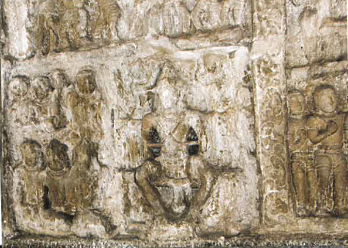
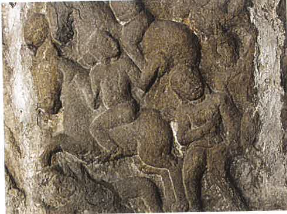
The other inscription found in the same place (no. 131 of SII IV) is also somewhat damaged, and its date and the ruling king is not available. It is a Tamiḻ poem and obviously refers to the same gift. This record says, a certain Pallava ruler Abhimāna Siddhi gifted one thousand gold (poṉ) to the God of Parameśvara Vinṇṇgar. He also gave a golden plate for the Śrībali rite and an image (golden image) for use in that rite. From the mention of the golden image and the golden Śrībali plate made of one thousand poṉ (gold), it is clear that it was an enormous gift. This gift was obviously given at the time of the consecration of the temple. The temple was referred to as Parameśvara Viṣṇugraham. The third Pallava inscription is precisely dated in the reign Dantivarman Pallava, the son and successor of Nandivarman II, in his 17th regnal year - 812 CE. The record mentions the gift of ten thousand gold kaḻañjus for a golden vessel made by the King Dantivarman himself. In addition, a chief named Avanicandra gifted three thousand kaḻañju gold.
This was received by four responsible worshipping persons including the priest, Nārāyaṇan-kuṭṭi, an officer of Tantra Cettuttali, and probably Avanicandra. The fourth name is damaged and lost. The Mahā-nagarattār, and Irayānallūr Kiḻavar who were entrusted with the responsibility of administering the temple. The rest of the record is lost. The village is probably Irayūr mentioned in Kulottuṅga inscription (133 of SII IV) in the same temple. Thus, we find that the temple has received royal patronage after its construction in the time of Nandivarman’s son and successor Dantivarman.

4.17. Kulōttuṅga Cōḻa’s Inscription

A long inscription found on the base of the main vimāna in Tamiḻ script is dated to the 46th year of Kulōttuṅga Cōḻa I, 1116 CE. It records that the great village assembly (mahāsabai) of Kulōttuṅga-caturvedi-maṅgalam met in their village temple of “Vāṉamādeviśvarm-udaiyār” and resolved to sell a village named Cirupālār, which was a western hamlet of their village. This hamlet had been lying uncultivated for a long time due to a tank breach when the lands were flooded. They sold this village to a dancing girl of the temple of Kulōttuṅga-cōḻa-viṇṇagar Āḻvār in Kāñcipuram town, to be endowed as charity land, Maṭhappuram, for feeding Śrī Vaiṣṇava pilgrims who came to witness festivals.
The lady paid the price for the village, and the village assembly sold the village, which is mentioned in the record as “Kulottuṅga-cōḻa-caturvedi-maṅgalam,” as a Brāhmaṇā settlement. However, as the land was gifted to the Vaikuṇṭa Perumāḷ temple of Kāñcipuram, this record is inscribed on its walls. This shows that the Vaikuṇṭa Perumāḷ temple, which was called Parmeśvara-viṇṇagar, was renamed Kulottuṅga-cōḻa-viṇṇagaram during the reign of Kulōttuṅga I. This inscription is important from another angle. It gives the names of all the members of the village assembly who were party to the resolution. Thus, we know who the inhabitants were at that time.
fig. 4.125: Viṣṇu seated with a tall crown.
fig. 4.126: An attendant deity.
All of the assembly members were Vedic schoḻars, and most of them were kramavitta. Some were somayaji, and some were exponents of śāstras as Bhaṭṭars. The names seen in the records include Rudra-deva, Śiva-deva, and Soma-deva in Sanskrit, and Tiru-ciṟṟambalam-udayāṉ, Tillai-nāyakaṉ, and Sikāli-piḷḷai in Tamiḻ, showing their Śaiva leanings. Names like Dāmodara, Keśava, Puruṣothama, and Nārāyaṇa in Sanskrit, and Tiru-venkaṭam-uḍaiyāṉ and Malaikkiniya-ninṟāṉ in Tamil, show Vaiṣṇava leanings. The population of the Brahmin village of Kulōttuṅga-cōḻa-caturvedi-maṅgalam followed an all-embracing tradition similar to Smārtha Brahmins and were neither exclusively Vaiṣṇava nor Śaiva in faith. A land that belonged commonly to this village was sold with the consent of all parties as mahāsabha to the Viṣṇu temple. This indicates that religious extremism as Vaiṣṇavas or Śaivas was not prevalent at the time of Kulōttuṅga I.
This inscription and also the other inscription dated in the reign of Kulōttuṅga I, are important for more than one reason. The temple which was called Parameśvara-viṣṇugṛaham earlier, is mentioned in bot the the records as Kulōttuṅga-cōḻa-viṇṇagaram. As the record is inscribed on the base of the Vaikuṇṭa Perumāḷ temple, there is no doubt that the records are related to and mentions this temple. It is evident that this temple has undergone some major additions in the time of Kulōttuṅga I and was renamed Kulōttuṅga-cōḻa-viṇṇagaram. It may be mentioned that the Sundara Varadaperumāḷ temple at Uttaramērūr, which was called Śrī-vēli Viṣṇugṛha was renamed Rājendra-cōḻa-viṇṇagaram when a great renovation was undertaken by Rājendra Cōḻa I in early 11th century. I have already shown the Uttaramērūr was closely related to Kāñcipuram. The main sabhā-maṇḍapa at Uttaramērūr, underwent alteration and the superstructure which was originally of brick in Pallava times was rebuilt of stone by Kulōttuṅga I and renamed as Cōḻa-nārāyaṇa-viṇṇagar.
So, the renamed Vaikuṇṭa Perumāḷ temple (originally called Parameśvara Viṇṇagar) was now called Kulottuṅga-cōḻa-viṇṇagar.
fig. 4.127: An image of Viṣṇu.
fig. 4.128: A face of a devotee in the panel on the sanctum wall, north side.

4.18. A Dancing Girl’s Gift

The village “Utcirupālār,” which was a western hamlet of this village, Kulōttuṅga-cōḻa-caturvedi-maṅgalam, was sold as maṭhappuram for feeding Śrī Vaiṣṇavas who came to witness special festivals when the deity of this temple, Kulōttuṅga-cōḻa-viṇṇagar, was brought to the maṭha.
The money for purchasing this hamlet was donated by a dancing girl, Dēvaradiyār, of this temple, who had the title “Tiru Araṅgamāṇikkam.” The village assembly of the above-said Kulōttuṅga-cōḻa-caturvedi-maṅgalam sold the hamlet as tax-free land to this temple. The record also says the land remained uncultivated for nearly 40 years, from the sixth year of this king to his 45th year, due to a breach of the tank bund and flooding. It remained without assessment of fertility (taram) and proper survey (parapper). There is damage to the inscription at this place, but it is seen from the subsequent record that the tank was the “Mummuḍi-cōḻa-pērēri.” We also learn that the dancing girls were given a special title, “Māṇikkam,” during this time. The inscription, which begins with the Prasasti - (pukaḻ mādu ***). Kulōttuṅga I is dated 1116 CE (46th year ). It calls Kāñcipuram, as a Nagaram, in Eḻir Koṭṭam.

4.19. Another Dancing Girl

The other inscription of Kulōttuṅga I is dated two years later (48th regnal year) - 1118 CE and also relates to the sale of land by the same village, Kulōttuṅga-cōḻa-caturvedi-maṅgalam. This time, another dancing girl of this temple, who was called Puravuvari Māṇikkam alias Eṭangai-toḻi, gifted five kāsu to buy the land as maṭhappuram for feeding those who did service in the temple and Śrī Vaiṣṇavas for ten days (festivals). It is mentioned in this record that this cultivable land was also lying fallow without cultivation for long. The temple priest and the superintendents of the Śrī Vaiṣṇavas agreed to receive the money, purchase the lands, cultivate the land, and fulfill the endowment. Thus, lands were purchased especially for feeding the Vaiṣṇavas and various temple servants of this temple in the time of Kulōttuṅga I.
It is also seen that the maṭha was named “puravuvari-māṇickam,” obviously established by this dancing girl. This record also shows that maṭhas were established for the specific purposes of feeding temple servants and Śrī Vaiṣṇava pilgrims on festive days. We have already seen that the temple has undergone some renovation in the reign of Kulōttuṅga I and was renamed Kulōttuṅga-cōḻa-viṇṇagar. The original temple had the main temple and its enclosure with the historical sculptures with a small gopura at the entrance of the first prākāra. In front of this inner gopura a front maṇḍapa is seen. It is possible it was rebuilt in the time of Kulōttuṅga . Probably, the outer gopura was also built during this reign. In front of this pillared maṇḍapa is another maṇḍapa, preceded by a bali-pīṭha and dhvaja-sthambha. This is preceded by an outer gopura, which was built up to the ceiling only; the superstructure was not completed (fig. 4.133).
At the entrance to the gopura, the stone base shows a sanyasin standing on one leg, with his other leg folded, doing penance. His hands are raised, suggesting that he is in penance. By his side are a book stand, a kamaṇḍalu, and a staff with a rag tied on top. In a number of temples of Kāñci, the same figure is carved at the entrance, showing that the Saint was responsible for renovating most of the temples in the Kaccippēḍu region. The portrait of this same figure is seen on the outer gopura of Kāmākṣi ammaṉ temple and gives his name. His portrait is also seen in the Kailāsanātha temple of Kāñci in the maṇḍapa built in front of the sanctum, in the time of Vijayanagara times. He was obviously a saint who built a number of maṇḍapas and entrance structures in many temples of Kāñci, irrespective of religions denominations as Viṣṇu temples, Śiva temples, and Sakti temples and was an Advaita exponent.
fig. 4.129: A closeup of an Emperor.
fig. 4.130: Another view Emperor's face.
fig. 4.131: A closeup of another ruler.
fig. 4.132: A rampant lion motif.

4.20. Parameśvara Viṇṇagaram in Prabandam

The Vaikuṇṭa Perumāḷ temple, originally called Parameśvara Viṇṇakaram, has been sung by Thirumaṅgai Āḻvār in ten verses, of his Divyaprabandam. It is included among the 108 divya-dēśas of Vaiṣṇava school. In these ten verses, Thirumaṅgai, not only praises the Lord of Parameśvara Viṇṇagaram, but also greatly extolls the Pallava ruler, and gives more historical data that leaves no doubt about the identity of the Pallava ruler as Nandivarman II.
In all the ten verses, the Āḻvār Thirumaṅgai, mentions Kāñci as “beautiful Kacci” (aḻakiya kacci). There is an ancient saying in Sanskrit that “Kāñci was the most beautiful Nagara” in the world, “Nagareṣu Kāñci”. The Āḻvār certainly recalls this saying when he sings Kāñcipuram. The city was full of great fortifications (māmadil sūḻ aḻakāya kacci). The city abounded with beautiful gem like palaces with multistories. They were great and bright with sparkling effects. The Āḻvār speaks of Kāñcipuram as the abode of Kṛṣṇa and Viṣṇu in his various manifestations. First, he says that Kāñci was the abode of Brahmā, Viṣṇu, and Śiva. Viṣṇu as Anantasāyi, created this universe out of the lotus from his navel. As an animal he entered the sea and bestowed grace (as Varāha); as Kṛṣṇa he swallowed the entire universe with the eight directions and water, fire, wind and the earth. He rescued Gajendra from the mouth of the crocodile and also jumped into the river (Yamunā) and danced on the head of the snake Kālīya.
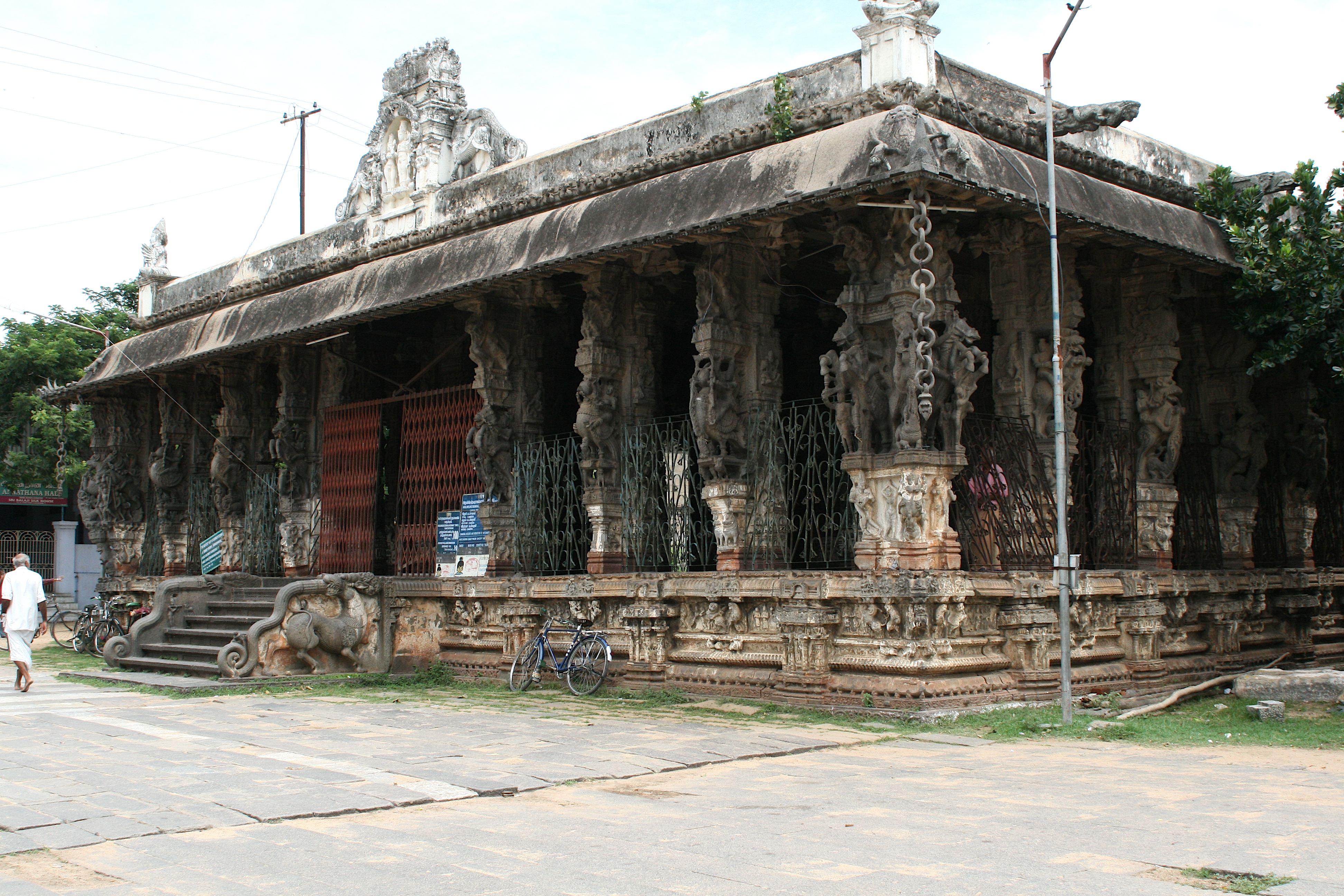
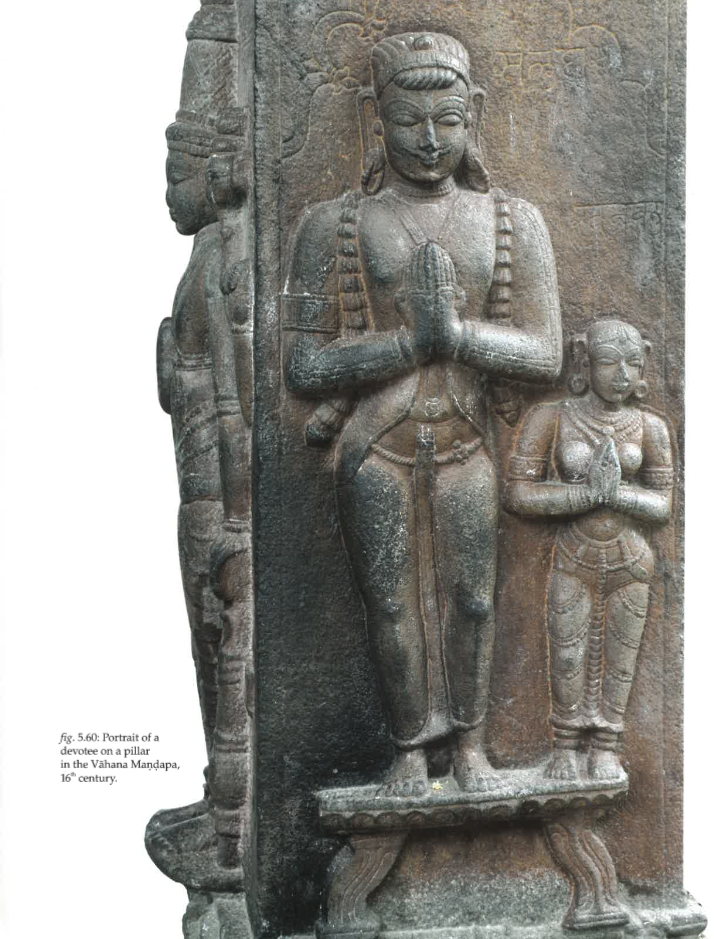
He manifested as the terrible Narasiṁha and tore the heart of Hiraṇya; He approached as a Brahmacāri in the Vedic sacrifice performed by Mahābali, and obtained both the land and water (world), as Rāmā he constructed a dam across the ocean with the help of monkeys (at Rāmāsetu), and He subdued seven bulls. The Āḻvār sings that the beautiful Kāñcipuram is the abode of all these manifestations, recalling all the important Viṣṇu temples like Thiruvehhā, Pāṭakam, Ūraham, Kārahbam, Kārvānam2, etc., besides Parameśvara-viṇṇagaram. The following historical events connected with the Pallava mentioned by the Āḻvār deserves mention. Though he does not mention the name of the Pallava as Nandi, he mentions in several verses “pallavar kōṉ” – (Periya Tirumoḻī 1128 - 1137:2,3,4,5,6,7,8,9, and10). The Pallava is referred to as “the Pallava king of ancient fame in the world (1).” The Pallava was also adored by various kings as villava, and so on. The Pallava is also called the king of Mallai (Māmallapuram).
Under his rule, the righteous sceptre (seṅkōl) ensured dharma under the white umbrella. His victorious flag had the bull as its sign - (viṭai vel koṭi,6) and also had a powerful army carrying spears. The Pallavas were also called cultured kings (pāṇpuḍai pallavar,8).
The Āḻvār mentions in many verses, the wars waged by this Pallava with the Pāṇḍya at different batterfields (ulaku uṭai maṉṉavaṉ teṉṉavaṉai). The Pāṇḍya was known for his strong chariots but this king shattered the strength of the Tennavaṉ (Pāṇḍya). He defeated the Pāṇḍya at Maṇṇaikkuḍi, Neḍuvāyil and at Karūr encircled by fortifications where many battalions of the, Pāṇḍya were destroyed. He also defeated the Cēra at Nenmeli says the Āḻvār. Many copper plates of the Pallavas, especially of Nandivarman and also the copper plates of the Pāṇḍyas, refer to these battles of Nandivarman and the Pāṇḍya. Therefore, there is no doubt that the king mentioned by the Āḻvār was Nandivarman II Pallavamalla. As the date of accession of Nandi is known through other inscriptions and copper plates, schoḻars are able to determine the date of the Vaiṣṇava Āḻvār Thirumaṅgai.
The inscriptions and prabandham say Nandivarman served the Parameśvara Viṇṇagaram and was devoted to this temple. It is possible that the Āḻvār was alive and a witness to the constructions of the temple and as such he sings that Nandi adored the temple (pallavar-kōṉ paṇinda parameśvara viṇṇagaram atuve). Whatever the case be, that Nandivarman has been sung by this Ālvār deserves attention.
fig. 4.133: An unfinished gopura, Vaikuṇṭa Perumāḷ Temple.

4.21. Endnotes and References

1. Nagaswamy, R. Facets of South Indian Art and Architecture (Two Volumes). New Delhi: Aryan Books International, 2003. “Erection of temples to dead heroes is also mentioned in Jīvakacintāmaṇi, a Tamiḻ classic of 9th century C.E. Jīvaka, the hero had a close friend named Sutanjanan who helped him win a war but died in the battle, securing victory for his master. Jīvaka built a temple to this dead hero, made his portrait in gold and had it consecrated in the temple. Jīvaka also arranged for regular worship and festivals. Besides, he composed a dance drama on the life of Sutanjana and had it performed regularly on festive occasions.”
2. Thirumaṅgai Ālvār, திரு நெடுந்தாண்டகம் - tiru neḍuntāṇḍakam. நீரகத்தாய்! நெடுவரையின் உச்சி மேலாய்! நிலாத் திங்கள் துண்டத்தாய்! நிறைந்த கச்சி ஊரகத்தாய்! ஒண்துறைநீர் வெஃகா உள்ளாய்! உள்ளுவார் உள்ளத்தாய்! உலகம் ஏத்தும் காரகத்தாய்! கார்வானத் துள்ளாய்! கள்வா! காமருபூங் காவிரியின் தென்பால் மன்னு பேரகத்தாய்! பேராதுஎன் நெஞ்சின் உள்ளாய் பெருமான்! உன் திருவடியே பேணி னேனே
nīrakattāy! neṭuvaraiyiṉ ucci mēlāy! nilāt tiṅkaḷ tuṇṭattāy! niṟainta kacci ūrakattāy! oṇṭuṟainīr veḥkā uḷḷāy! uḷḷuvār uḷḷattāy! ulakam ēttum kārakattāy! kārvāṉat tuḷḷāy! Kaḷvā! kāmarupūṅ kāviriyiṉ teṉpāl maṉṉu pērakattāy! pērātu'eṉ neñciṉ uḷḷāy perumāṉ! uṉ tiruvaṭiyē pēṇi ṉēṉē - (2059) 3. Thirumaṅgai Ālvār, Periya Tirumoḻī, 1128.
சொல்லு வன் சொல் பொருள் தான் அவை ஆய் சுவை ஊறு ஒலி நாற்றமும் தோற்றமும் ஆய் நல் அரன் நாரணன் நான்முகனுக்கு இடம்-தான்-தடம் சூழ்ந்து அழகு ஆய கச்சி பல்லவன் வில்லவன் என்று உலகில் பலராய்ப் பல வேந்தர் வணங்கு கழல் பல்லவன் மல்லையர்-கோன் பணிந்த பரமேச்சுரவிண்ணகரம்-அதுவே
collu vaṉ col poruḷ tāṉ avai āy cuvai ūṟu oli nāṟṟamum tōṟṟamum āy nal araṉ nāraṇaṉ nāṉmukaṉukku iṭam-tāṉ-taṭam cūḻntu aḻaku āya kacci pallavaṉ villavaṉ eṉṟu ulakil palarāyp pala vēntar vaṇaṅku kaḻal pallavaṉ mallaiyar-kōṉ paṇinta paramēccuraviṇṇakaram-atuvē (1128.0) 4. Thirumaṅgai Ālvār, Periya Tirumoḻī, 1129.
கார் மன்னு நீள் விசும்பும் கடலும் சுடரும் நிலனும் மலையும் தன் உந்தித் தார் மன்னு தாமரைக்கண்ணன் இடம்- தடம் மா மதிள் சூழ்ந்து அழகு ஆய கச்சி தேர் மன்னு தென்னவனை முனையில் செருவில் திறல் வாட்டிய திண் சிலையோன் பார் மன்னு பல்லவர்-கோன் பணிந்த பரமேச்சுரவிண்ணகரம்-அதுவே
kār maṉṉu nīḷ vicumpum kaṭalum cuṭarum nilaṉum malaiyum taṉ untit tār maṉṉu tāmaraikkaṇṇaṉ iṭam- taṭam mā matiḷ cūḻntu aḻaku āya kacci tēr maṉṉu teṉṉavaṉai muṉaiyil ceruvil tiṟal vāṭṭiya tiṇ cilaiyōṉ pār maṉṉu pallavar-kōṉ paṇinta paramēccuraviṇṇakaram-atuvē (1129.0) 5. Thirumaṅgai Ālvār, Periya Tirumoḻī, 1130.
உரம் தரு மெல் அணைப் பள்ளி கொண்டான் ஒருகால் முன்னம் மா உருவாய்க் கடலுள் வரம் தரு மா மணிவண்ணன் இடம் -மணி மாடங்கள் சூழ்ந்து அழகு ஆய கச்சி நிரந்தவர் மண்ணையில் புண் நுகர் வேல் நெடு வாயில் உக செருவில் முன நாள் பரந்தவன் பல்லவர்-கோன் பணிந்த பரமேச்சுரவிண்ணகரம்-அதுவே
uram taru mēl aṇaip paḷḷi koṇṭāṉ orukāl muṉṉam mā uruvāyk kaṭaluḷ varam taru mā maṇivaṇṇaṉ iṭam -maṇi māṭaṅkaḷ cūḻntu aḻaku aiya kacci nirantavar maṇṇil puṇ nukar vēl neṭu vāyil uka ceruvil muṉa nāḷ parantavaṉ pallavar-kōṉ paṇinta paramēccuraviṇṇakaram-atuvē (1130.0) 6. Thirumaṅgai Ālvār, Periya Tirumoḻī, 1131.
அண்டமும் எண் திசையும் நிலனும் அலை நீரொடு வான் எரி கால் முதலா உண்டவன் எந்தை பிரானது இடம் -ஒளி மாடங்கள் சூழ்ந்து அழகு ஆய கச்சி விண்டவர் இண்டைக் குழாமுடனே விரைந்தார் இரிய செருவில் முனிந்து பண்டு ஒருகால் வளைத்தான் பணிந்த பரமேச்சுரவிண்ணகரம்-அதுவே
aṇṭamum enta ticaiyum nilaṉum alai nīroṭu vāṉ eri kāl mutalā uṇṭavaṉ enta pirāṉatu iṭam -oḷi māṭaṅkaḷ cūḻntu aḻaku aiya kacci viṇṭavar iṇṭaik kuḻāmuṭaṉē viraintār iriya ceruvil muṉaintu paṇṭu orukāl vaḷaittāṉ paṇinta paramēccuraviṇṇakaram-atuvē (1131.0) 7. Thirumaṅgai Ālvār, Periya Tirumoḻī, 1132.
தூம்பு உடைத் திண் கை வன் தாள் களிற்றின் துயர் தீர்த்து அரவம் வெருவ முன நாள் பூம் புனல் பொய்கை புக்கான்-அவனுக்கு இடம்-தான்-தடம் சூழ்ந்து அழகு ஆய கச்சி தேம் பொழில் குன்று எயில் தென்னவனைத் திசைப்ப செருமேல் வியந்து அன்று சென்ற பாம்பு உடைப் பல்லவர்-கோன் பணிந்த பரமேச்சுரவிண்ணகரம்-அதுவே
tūmpu uṭait tiṇ kai van tāḷ kaḷiṟṟiṉ tuyar tīrttu aravam veruva muṉa nāḷ pūm puṉal poykai pukkāṉ-avaṉukku iṭam-tāṉ-taṭam cūḻntu aḻaku āya kacci tēm poḻil kuṉṟu eyil teṉṉavaṉait ticaippa cerumēl viyantu aṉṟu ceṉṟa pāmpu uṭaip pallavar-kōṉ paṇinta paramēccuraviṇṇakaram-atuvē (1132.0) 8. Thirumaṅgai Ālvār, Periya Tirumoḻī, 1133.
திண் படைக் கோளரியின் உரு ஆய் திறலோன் அகலம் செருவில் முன நாள் புண் படப் போழ்ந்த பிரானது இடம்- பொரு மாடங்கள் சூழ்ந்து அழகு ஆய கச்சி வெண் குடை நீழல் செங்கோல் நடப்ப விடை வெல் கொடி வேல்-படை முன் உயர்த்த பண்பு உடைப் பல்லவர்-கோன் பணிந்த பரமேச்சுரவிண்ணகரம்-அதுவே
Tiṇ paṭaik kōḷariyiṉ uru āy tiṟalōṉ akalam ceruvil muṉa nāḷ puṇ paṭap pōḻnta pirāṉatu iṭam- poru māṭaṅkaḷ cūḻntu aḻaku aiya kacci veṇ kuṭai nīḻal ceṅkōl naṭappa viṭai vel koṭi vēl-paṭai muṉ uyartta paṇpu uṭaip pallavar-kōṉ paṇinta paramēccuraviṇṇakaram-atuvē (1133.0) 9. Thirumaṅgai Ālvār, Periya Tirumoḻī, 1134.
இலகிய நீள் முடி மாவலி-தன் பெரு வேள்வியில் மாண் உரு ஆய் முன நாள் சலமொடு மா நிலம் கொண்டவனுக்கு இடம்-தான்-தடம் சூழ்ந்து அழகு ஆய கச்சி உலகு உடை மன்னவன் தென்னவனைக் கன்னி மா மதிள் சூழ் கருவூர் வெருவ பல படை சாய வென்றான் பணிந்த பரமேச்சுரவிண்ணகரம்-அதுவே
ilakiya nīḷ muṭi māvali-taṉ peru vēḷviyil māṇ uru āy muṉa nāḷ calamoṭu mā nilam koṇṭavaṉukku iṭam-tāṉ-taṭam cūḻntu aḻaku aiya kacci ulaku uṭai maṉṉavaṉ teṉṉavaṉaik kaṉṉi mā matiḷ cūḻ karuvūr veruva pala paṭai cāya veṉṟāṉ paṇinta paramēccuraviṇṇakaram-atuvē (1134.0) 10. Thirumaṅgai Ālvār, Periya Tirumoḻī, 1135.
குடைத் திறல் மன்னவன் ஆய் ஒருகால் குரங்கைப் படையா மலையால் கடலை அடைத்தவன் எந்தை பிரானது இடம்- அணி மாடங்கள் சூழ்ந்து அழகு ஆய கச்சி விடைத் திறல் வில்லவன் நென்மெலியில் வெருவ செரு வேல் வலங் கைப் பிடித்த படைத் திறல் பல்லவர்-கோன் பணிந்த பரமேச்சுரவிண்ணகரம்-அதுவே
kuṭait tiṟal maṉṉavaṉ āy orukāl kuraṅkaip paṭaiyā malaiyāl kaṭalai aṭaittavaṉ entai pirāṉatu iṭam- aṇi māṭaṅkaḷ cūḻntu aḻaku aiya kacci viṭait tiṟal villavaṉ neñceliyil veruva ceru vēl valaṅ kaip piṭitta paṭait tiṟal pallavar-kōṉ paṇinta paramēccuraviṇṇakaram-atuvē (1135.0) 11. Thirumaṅgai Ālvār, Periya Tirumoḻī, 1136.
பிறை உடை வாள் நுதல் பின்னைதிறத்து முன்னே ஒருகால் செருவில் உருமின் மறை உடை மால் விடை ஏழ் அடர்த்தாற்கு இடம்-தான்-தடம் சூழ்ந்து அழகு ஆய கச்சி கறை உடை வாள் மற மன்னர் கெட கடல்போல முழங்கும் குரல் கடுவாய்ப் பறை உடைப் பல்லவர்-கோன் பணிந்த பரமேச்சுரவிண்ணகரம்-அதுவே
piṟai uṭai vāḷ nutal piṉṉaitiṟattu muṉṉē orukāl ceruvil urumiṉ maṟai uṭai māl viṭai ēḻ aṭarttāṟku iṭam-tāṉ-taṭam cūḻntu aḻaku aiya kacci kaṟai uṭai vāḷ maṟa maṉṉar keṭa kaṭalpōla muḻaṅkum kural kaṭuvāyp paṟai uṭaip pallavar-kōṉ paṇinta paramēccuraviṇṇakaram-atuvē (1136.0) 12. Thirumaṅgai Ālvār, Periya Tirumoḻī, 1137.
பார் மன்னு தொல் புகழ்ப் பல்லவர்-கோன் பணிந்த பரமேச்சுரவிண்ணகர்மேல் கார் மன்னு நீள் வயல் மங்கையர்-தம் தலைவன் கலிகன்றி குன்றாது உரைத்த சீர் மன்னு செந்தமிழ் மாலை வல்லார் திரு மா மகள்-தன் அருளால் உலகில் தேர் மன்னராய் ஒலி மா கடல் சூழ் செழு நீர் உலகு ஆண்டு திகழ்வர்களே
pār maṉṉu tol pukaḻp pallavar-kōṉ paṇinta paramēccuraviṇṇakarmēl kār maṉṉu nīḷ vayal maṅkaiyar-tam talaivaṉ kalikaṉṟi kuṉṟātu uraitta cīr maṉṉu centamiḻ mālai vallār tiru mā makaḷ-taṉ aruḷāl ulakil tēr maṉṉarāy oli mā kaṭal cūḻ ceḻu nīr ulaku āṇṭu tikaḻvarkaḷē (1137.0)

5. Varadarājā Perumāḷ Temple

5.1. The Temple

fig. 5.1: Varadarājā Temple, western gopura.
The Varadarāja Perumāḷ temple, dedicated to Viṣṇu, is the most famous Vaiṣṇava temple of Kāñci, included among the 108 divya-deśa list. It has given the region where it is located the name Viṣṇu Kāñci.
The place was originally called Attiyūr, probably after the atti (fig) tree that abounded there, in the same way Kāñci was named after the Kāñci tree of the region. Interestingly, Attiyūr was only a small village outside the ancient city of Kāñci, and was an insignificant settlement. The original deity of the place was the Narasiṁha form of Viṣṇu, not the standing form of Viṣṇu as seen in modern times. Even in the time of the early Āḻvārs, it was the Narasiṁha form of Viṣṇu that received praise. However, around the 11th century, when the Cōḻa, particularly Kulōttuṅga I, built a great structure for the standing Viṣṇu, the Viṣṇu image began to assume greater importance. With the arrival of the Vijayanagara rulers and their constructions, gifts, and direct administration under the government, the temple grew in wealth, festivals, and proximity to royal power, increasing its popularity.
Another great factor that contributed to its popularity was the life of the great Vaiṣṇava Ācārya. Rāmānuja was intimately associated with it, particularly in his early years. Further, the temple houses some remarkable architectural pieces that stand out as great achievements in modern times. The temple has received great studies in the hands of schoḻars and many publications have appeared. A very commendable work on the history, art, religion and inscriptions has been published by Prof. K.V. Raman. The temple unfortunately witnessed sectarian rivalry, and is well known for its strife between the southern and northern schools of Vaiṣṇavism, it is almost very difficult to write a book on this temple without touching the susceptibilities of either sections. But Prof. Raman has given a fine balanced account basing his conclusions on the epigraphical wealth, in that book “Śrī Varadarājāswami temple – Kāñci”, published by Abhinav Publishers, New Delhi, in 1975. Here, only an outline is given, mainly on its history and art.
The original Narasiṁha temple, is built facing west with a garbha graha, mukhamaṇḍa and a preceding maṇḍapa, abutting a rocky boulder so much so it is a temple on a rock. Narasiṁha is brought under four categories as Bhoga, Yoga, Vīra and Ābhicārika Mūrtis, each one conferring respective benediction. But, generally the Vīra and Abhicarika forms are preferred by kings and warriors. In such cases they are installed away from the village settlement, preferably on hills or forests. It is likely that this Narasiṁha that has been installed on a hillock, away from the city of Kāñci was one such consecration. The earliest inscription to be found in the temple is that of Rājādhirāja Cōḻa I, the son and successor of Rājēndra I dated 1053 (KUR P.45). A gopura of moderate size is found in front of this Narasiṁha shrine, which has an inscription of Kulōttuṅga I dated in his 3rd year with an enclosure going around the hillock, the Narasiṁha temple serving as the centre. The Narasiṁha temple, gopura
and the enclosure, were obviously built around 1050 CE in the time of the Cōḻas - probably Rājēndra I, in whose time several Viṣṇu temples were rebuilt, as at Brahmadeśam, Uttaramērūr, Ulakaḷanda Perumāḷ, and so on. The nucleus of this ancient temple consisted of this Narasiṁha temple, enclosure and the gopura. This enclosure is now called malai-pradakṣiṇam (the enclosure of the mountain). The hillock in the centre, was fully visible then.
fig. 5.4: The delicate carvings of apsaras within creeper designs on the doorjamb of the Narasiṁha shrine, seems to be of western Cālukya style, 9th century, probably brought as war trophy by the Cōḻa monarch Rājādhirāja I.
Photo 3
fig. 5.9: The steps, leading to the hill temple on the northern side, Cōḻa age, 12th century.
fig. 5.10: Steps from the hill temple ending on the south side of the second enclosure, Cōḻa Age, 12th century.
fig. 5.11: The north wall of the main hill temple ground floor showing the Cōḻa phase down, and the addition of upper side by the Vijayanagara emperor Kṛṣṇadevarāya whose inscriptions are found on this wall. The portion with stripes (white and red) below, carries Cōḻa records, while the upper floor carries the Vijayanagara inscription.

5.2. Kulōttuṅga’s Contribution

The next stage in the development of this temple is encasing the hill with granite walls and setting up a shrine for the standing image of Viṣṇu on top of the hill, probably in the time of Kulōttuṅga Cōḻa around 1100 CE. This standing image of Viṣṇu was called “aruḷāḷap perumāḷ” or “pēraruḷāḷar”. In level with the summit of the hillock, a flat flooring was laid and over that was built a temple, may be with a sanctum of the present dimension. A flight of steps was provided on the south eastern part. The walls encased the hillock looked like a sanctum on top of the Narasiṁha shrine, with aruḷāḷa perumāḷ also facing west like Narasiṁha. It looked like a two storied Vimāna with Narasiṁha on the ground floor and the shrine of Aruḷāḷa on the upper floor. The shrine now encasing the hillock, was also called giri-hill. As the village was called Attiyūr, the encased rock and the God above came to be called Atti-giri-nātha.
The word atti is the Tamiḻ form also for ‘hasti’ i.e., Elephant. So, the name got transformed into Hasti-giri-nātha, i.e., the lord of elephant hill.
fig. 5.12: The inner enclosure around the hill temple, probably of the age of Kulōttuṅga I (c. CE 1100).
This temple on top of the hillock began to gain greater popularity as the Cōḻa kings showed great interest in it from the time of Kulōttuṅga I and his successors.
Inscriptions of Kulōttuṅga Cōḻa I, his son Vikrama Cōḻa, his son Kulōttuṅga II, and his son Rājarājā II are found on the south and east walls that encase the hillock, attesting to the fact that the temple was built earlier, during the reign of Kulōttuṅga I. Some inscriptions of Rājādhirāja, Virarājendra Cōḻa, Kulōttuṅga, and Vikrama Cōḻa are also found inside the Narasiṁha shrine below. Thus, the present central shrine and the enclosure were the works of the Cōḻas. With growing popularity, the Cōḻa contributions began to overflow the main enclosure. It seems the third prākāra – now called maḍap-paḷḷi prākāra, also known as yamunai-turaivan prākāra – was laid and built during the time of Vikrama Cōḻa. On the northern side of this courtyard is a small temple dedicated to Viṣṇu, called Kari-māṇikka Perumāḷ. An inscription on the temple states that Vikrama Cōḻa built it for Karimāṇikka-āḻvār in 1129 CE (KVR-46). This temple also faces west.

5.3. Temple of Balarāma

In the north of this prākāra is the shrine of is Anant-āḻvār, built in the time of Kulōttuṅga Cōḻa III, in 1212 (35th year of the king), by one Sīyagaṅga, a son of Cōḻēndra Siṁha, a chief of Gaṅga family under Kulōttuṅga. It may be mentioned that Ananta is identified with Ādiśeṣa whose sculptures are found in many Viṣṇu temples, along with the shrine of Kṛṣṇa, whose temple is some time referred to as Kari-māṇikkam. That the temple of Anantāḻvār is found in the same prākāra wherein the shrine of Kari-māṇikkam, erected in the time of Cōḻa Vikrama is also located. It is pertinent to point out that Balarāma, the elder brother of Kṛṣṇa is worshipped in his snake form as Ananta or Śeṣa. Balarāma represents bodily strength and virility and was the god of the agriculturists. Hence is shown with a plough as his emblem.
Worship of Kṛṣṇa and Balarāma was very popular in Tamiḻnāḍu in the Saṅgam age as at Aḻgarkōyil. He is praised in Tamiḻ literature as the embodiment of strength (vali ottīye vāliyoṉ is a Saṅgam Tamil usage). The presence of the serpent Ananta, points out that it represents Balarāma, but for reasons unknown, the later Vaiṣṇavas seems to have eliminated Balarāma, and the snake is identified with the bed of Lord Viṣṇu. We have seen that a similar Anantāḻvār - as five hooded snake of ancient time is still under worship in the Ulakaḷanta Perumāḷ temple. It is not unlikely that the Anantāḻvār of the Varadarājā temple was also originally Balarāma, later worshipped simply as Ananta, the snake bed of Viṣṇu. There is a subtle difference between the worship of Balarāma as Ananta and the snake bed of Viṣṇu. In the former, it is the avatāra aspect of Viṣṇu along with Kṛṣṇa, while as the snake bed, will associate him with Viṣṇu in his supreme form.
On the north eastern side of the same prākāra is the thousand pillared maṇḍapa, called ‘āyirakkāl maṇḍapa’. Though this hall has not got 1000 pillars, the large member of pillars found attest to the claim. The maṇḍapa is in two stories. This was built in 1316, by the Kākatiya king Gaṇapati who occupied Kāñci for a short period in the beginning of 14th cent.

5.4. Kulōttuṅga’s Commander - Temple kitchen

There is a temple kitchen near this maṇḍapa, which is a Cōḻa structure built by the commander Naralōkavīra, who served under both Kulōttuṅga I and his son, Vikrama Cōḻa. Naralōkavīra participated in many wars waged by Kulōttuṅga I, including his Kaliṅga war. Besides being a great commander, he contributed to many temple buildings, such as the Chidambaram Naṭarāja temple, where he built the thousand-pillared hall.
He also made several valuable gifts, including bronzes, cows, and lands for flower gardens, which form the subject matter of one hundred verses in both Sanskrit and Tamiḻ, inscribed on walls. Similarly, he made additions to the Tiruvadigai Vīraṭṭāṇa temple and other temples. The fact that this great commander of Kulōttuṅga I constructed the kitchen in the Varadarājā temple shows that the animosity attributed to Kulōttuṅga I against Śrī Vaiṣṇavas is a total lie. We should not forget that most of the Viṣṇu temples of Kāñci, Śrīraṅgam, and other places received great benefactions during the time of Kulōttuṅga, as attested by his inscriptions found everywhere. We should also remember that this was the time when Rāmānuja was alive and active. We have no hesitation in dismissing the persecution of Rāmānuja by Kulōttuṅga I as a pure and simple myth, historically untenable.
Similarly, we have seen that inscriptions of Vikrama Cōḻa and Kulōttuṅga II are also found on the main walls of the Varadarājā temple, encasing the mūlasthāna rock. Some scholars suggest that the persecutor of Rāmānuja was Kulōttuṅga II. We may note that Kulōttuṅga II came to the throne in 1133 CE. All scholars categorically assert that Rāmānuja was born in 1017 and that he lived to be 120 years old. When Kulōttuṅga II wanted to persecute Rāmānuja, he is said to have migrated to Melkote near Mysore, where he stayed for 12 years, and after the death of the Cōḻa king, he returned. This is an absurd claim, for when Kulōttuṅga II ascended the throne in 1133, Rāmānuja was already 116 years old. That is, Rāmānuja lived only for three years of Kulōttuṅga II’s rule. Where is the question of Rāmānuja escaping to Melkote at the age of 116, staying there for twelve years, and then returning to Śrīraṅgam after the death of Kulōttuṅga II, and continuing to do his service for several years?
These claims are absolutely impossible chronologically and would fail to convince even as fiction. The inscription of Kulōttuṅga II in the Varadarājā temple is sufficient to disprove this persecution myth.

5.5. The Cōḻa Phase

It is virtually the Cōḻa phase of the Varadarājā temple, up to the third enclosure. In addition to this structural phase and the gifts of the Cōḻas, we may mention in passing the gift of Vijaya Gaṇḍa-gopāla-deva, a Telugu ruler who served as the ruler of Kāñci under Rājarājā Cōḻa III. He seems to have been related to the ruling Cōḻa and served as the feudatory of the Imperial Cōḻa at Kāñci. He was a very great devotee of Aruḷāḷa-perumāḷ and instituted several special daily worships named after him as Gaṇḍa-gopāla-sandhi, as well as many festivals in different months of the year.
There is no doubt that his contributions made this temple a great center of attraction, which was responsible for the subsequent disaster it met with in the hands of Muslim invaders in 1310 and later its re-emergence. We may say that his contribution was very much active up to 1300.

5.6. Alamkāra Maṇḍapa

As we enter the third prākāra - called the maḍap-paḷḷi māḷikai, we are in a long columned maṇḍapa, where recitation of sacred hymns take place. This hall precedes a encased maṇḍapa in which alaṅkāra of the deity (dressing and beautification of the deity) takes place and hence called the alankāra maṇḍapa.

5.7. Rāma Shrine

Towards the northern wing is seen the thousand pillared maṇḍapa on a raised platform. Towards the western end of this maṇḍapa is the shrine of Rāma, which houses both the stone and bronze images of Rāma, Sīta, Lakṣmaṇa, and Hanumān. The group of stone images are certainly imposing figures, about four feet in height and are of the age of Vijayanagara, late 16th cent. So are the bronze images which are about two feet in height.
fig. 5.13: Fairly tall images of Rāma, Sīta, Lakṣmaṇa, and Hanumān, in a shrine on one end of the thousand pillared hall. The metal images of al these four deities are also found in front, Vijayanagara, 16th century.
fig. 5.14: Metal images of Rāma, Lakṣmaṇa, Sīta and Hanumān in the same place.
fig. 5.15: A part of the thousand-pillared hall, now used as Yajñasala Maṇḍapa with ornate pillars.

5.8. Anantāḻvār’s Shrine

A part of the maṇḍapa with some architectural additions is used for Vedic sacrifices and is therefore called yāga maṇḍapa. Coming down the steps of the 1000 pillared hall, one reaches the floor of the maḍap-palli maṇḍapa kitchen. A few yards in front of the 1000 pillared hall, facing west is the temple of Anantāḻvār, consisting of a sanctum and preceding ardha maṇḍapa, all built of stone, upto the ceiling. The śikhara tower above the sanctum, is built of brick and cement in recent times. The main image in this shrine is seated on a five hooded serpent couch, with four hands, holding śankha and cakra in the rear arms and abhaya and kaṭihasta in the lower arms. He resembles seated Viṣṇu, with the addition of the serpent couch. The image is called Anantāḻvār, the serpent couch of Viṣṇu.
It is clear here Ananta is also identical with Ãdiśeṣa and the human form of the God, seated on the serpent couch represents Balarāma, the elder brother of Kṛṣṇa. It is known that in northern part of India, Balarāma worship was very popular from BCE, and that in many sculptures he is shown standing or seated with a five hooded cobra, the Ananta. It is also known that Balarāma was considered an incarnation of Ãdiśeṣa. The adoration of Balarāma was equally popular in Tamilnāḍu, and he and Kṛṣṇa were praised together in many ancient poems of the Saṅgam age. There are pointed references to Balarāma’s invincible might (balā), while Kṛṣṇa was known for his fame. A Saṅgam poem in Puṟāṉanūru mentions these two well-known aspects of the Kṛṣṇa brothers. Balarāma was also called the white snake (veḷḷai nāgar), for whom temples were erected. There are also references to many temples where both brothers were worshipped together, such as at Aḻagarmalai and Iruṇḍavalam. It is also known that Balarāma was the god of cultivators and the pastoral community.
He carried the plough as his symbol and was adored by cowherds, the Yādavas. The other group of the Vaiśyas, namely the traders, were also great devotees of Balarāma, and he is shown with a money bag. We have a famous town near Kanyakumari in the south called Nāgarkōil, where the principal god is Nāgarāja - Balarāma. This temple also houses a parallel temple to Kṛṣṇa. While Balarāma was known for his might, he was also given to drinking. Perhaps due to this trait, later Vaiṣṇava orthodoxy dropped the adoration of Balarāma. In modern times, the Vaiṣṇavas of Tamilnāḍu do not admit any devotion to him. However, early temples of Kṛṣṇa or his other Avatārs, always houses the image of Balarāma - as a great snake - as at Ulakaḷanta Perumāḷ temple of Kāñci or as manifestation of Viṣṇu seated on the serpent couch, and worshipped him as Anantāḻvār - the personification of the snake-couch. There could be no doubt that the worship of Balarāma continues in many Tamiḻnāḍu temples in the form of Anantāḻvār.
In the Varadarājā temple, the image of Anantāḻvār is certainly Balarāma, as demonstrated by two interesting factors. Just a few yards in front of this Anantāḻvār shrine is another temple called Kariya-māṇikkam. This temple was built in the 12th century by the Cōḻa emperor Vikrama Cōḻa and is referred to as “Vikrama Cōḻa Viṇṇagar Āḻvār” in an inscription found on the base of the temple. Some gifts were also made in the 16th century under Vijayanagara rule. The old image, probably made of wood during the reign of Vikrama Cōḻa, was replaced by the present image, and the name Kariya-māṇikka Āḻvār became current. Kariya-māṇikkam is the name of Kṛṣṇa, sung as such by the Āḻvārs. Thus, it is a Kṛṣṇa temple. The presence of these two temples, one of Kṛṣṇa and the other of Balarāma, nearby in the same prākāra, points to the fact that the builders had Balarāma and Kṛṣṇa in mind.
The second point of interest in the temple is a pillar in the maṇḍapa preceding the Āṇḍāḷ shrine, in which the avatārs of Viṣṇu are sculptured. While all other avatārs are depicted as individual panels on the face of the pillars, when it represents Kṛṣṇa, both Balarāma and Kṛṣṇa are depicted in one panel, indicating that their adoration was together. It is a rare representation.

5.9. Kṛṣṇa Temple

The image of Kariya-māṇikka-āḻvār is shown standing with four hands, holding a śankha and cakra in the upper arms, and abhaya and kaṭi-hasta in the lower arms. Kṛṣṇa is flanked by his two consorts, now called ubhaya nāccimār, representing Rukmini and Satyabhāma. The inscription on the base states that Vikrama Cōḻa built the temple and called it Vikrama-cōḻa-vinṇgara-ālvār. There is also an inscription on the base dated to the Vijayanagar age.
The present images in the sanctum were probably replaced during that time, as they are in the 16th-century style. This temple has no śikhara at present, which might have disappeared over time. The base, the wall, and the cornice show true Cōḻa characteristics.
fig. 5.18: Vikrama Cōḻa Viṇṇagaram shrine view from east.
fig. 5.19: Figures of Kṛṣṇa and Balarāma, portrayed together on a pillar, in the Ānḍāḷ Maṇḍapa, Varadarāja Temple, Kāñcipuram. Vijayanagara period, 16th century.
fig. 5.20: Vikrama Cōḻa Viṇṇagaram Temple now called Kariya Māṇikka Ālvār Temple.
fig. 5.21: A view of the northern prākara with the well.
The prākāra named maḍap-paḷḷi-mālikā has a pillared cloister going around. A close study of the architectural details suggest that the portion at the back, that is the eastern prākāra, retains the Cōḻa embellishments, the northern and southern parts are some what of later date - may be 13th century. (An inscription suggests that this was built by Vijaya Gaṇḍa-gopāla, the Telugu Cōḻa, in the second half of the 13th century). The maḍap-paḷḷi (kitchen) seems to have been renovated in the 16th century. On the south-western corner the high steps of the Tāyār shrine open into this prākãra (fig. 5.22). The Tāyār shrine should have existed in the thirteenth-fourteenth century. Raman suggests that it was originally built in thirteenth century and later rebuilt in the Vijayanagara period. We shall discuss this further in the sequence.
fig. 5.22: Entrance to the Tāyār shrine opening to the east in the third prākãra.

5.10. Abhiṣeka Maṇḍapa

Immediately in front of the entrance gopura, is a maṇḍapa with an ornate base now caller abhiṣeka maṇḍapam. It was built by one Elambilakattu Nāyaka around 1230 CE in the region of the Cōḻa ruler Rājarājā III. It was then called Dēvamardevan. According to tradition, it was originally a shrine of Garudāḻvār, but later a portion was added in the Vijayanagara times.
An inscription dated 1282 CE, refers to the Hoysala King Vīravallala and his queen seated in the maṇḍapam on a throne called Vallāla deva and listened to the hymns of Saṭagopa (Nammāḻvār). The long pillared maṇḍapa in front and side maṇḍapas were added in the 16th century.
A point of interest, is on the base of the maṇḍapa there are two inscriptions one on the western base, there is a measuring rod with caliberation reading ‘Taccumuḻam’. It is the standard measuring rod used for structural construction like the maṇḍapa, vimāna, etc. On the southern base of the same maṇḍapa a long measuring rod inscribed with a name written at the beginning and end reading “kaṇḍara kaṇḍan kōl”. There are also some auspious symbols along with the name. This was the standard measuring rod for land survey, of streets, houses and cultivable lands etc. The whole city and its environments used these two measurements, in the 16th century. An inscription by the side is dated in the reign of Vijayanagara ruler in around 1530; and was inscribed when the front maṇḍapa was built.
fig. 5.23: Newly found inscription ni Tamiḻ script of the 9th century, mentioning a gift for worship in the month of Mārgaḻī. This is the most ancient record so far found in this temple that attests to the popularity of this temple since the 9th century.
fig. 5.24: View of the buildings in the third prākāra from the south-west corner.
fig. 5.25: The maṇḍapa preceding the alamkāra maṇḍapa.
fig. 5.26: A calibrated measuring rod, reading taccukkōl (architect’s rod) inscribed on the base of the alamkāra maṇḍapa, Varadarãja Temple, Kāñcipuram, 14th century. The rod was used for measuring the temples and royal buildings in the city of Kāñci.
fig. 5.27: An inscription by the side of a measuring rod, inscribed on the base of the alamkãāra maṇḍapa, Varadarāja Temple, used for land survey. The inscription reads kaṇḍara kaṇḍāṉ kōl 14th century.
fig. 5.28: An inscription on the base of the alamkāra maṇḍapa depicting the “land survey rod” drawn on ti and reading kaṇḍara kaṇḍāṉ kōl, 14th century.

5.11. Tāyār Shrine

The temple of Tāyār in the third prākāra was built some time in 1235 in the time of Rājarājā Cōḻa I. In 1236, a gift of 3 cows is recorded in an inscription, for the temple of Periya-Pirāṭṭiyār. A gift is also recorded in the year 1265 ot this shrine under the Telugu Cōḻa, Vijaya Gaṇḍa-gopāla. The mukha-maṇḍapa
of the shrine was built in 1259 by one Vaṅgaṉ-Kaliṅgarāyaṉ (figs. 5.29-5.30), whose portrait is also found on a pillar, with a label inscription reading ikappalūr udaiyār vaṅga kaliṅgarāyaṉ tiru maṇḍapam. Thus, the maṇḍapa was named after him. In the year 1487, the image of Perumdevi Tāyār was reconsecrated according to an inscription. It si not known whether ti refers to the rebuilding of the temple from its base, or was confined ot the image in the sanctum. The tenor of the inscription seems to suggest the work was confined to the main image of Tāyār.
fig. 5.31: An inscription in Grantha script and in Sanskrit, reading kalyāṇakōṭi vimāna of Tāyār shrine was rebuilt and gilded with gold by Kṛṣṇadevarāya in the 16th century.
fig. 5.32: A view from south-west showing a part of Kalyāṇakoṭi-vimana of Tāyār shrine, built by Kṛṣṇadevarāya in 16th century, note the bhadra projections in the middle of cardinal directions.
fig. 5.33: The base decorations of the temple of Goddess (Tāyār) built by Kṛṣṇadevarāya, in the Varadarājā Temple, 16th century.
fig. 5.34: A view of southern side of the Temple Tāyār shrine showing gomukha (water chute).
fig. 5.35: Kumbha-pañcara motif on the wall of the Tāyār shrine, a good example of Kṛṣṇadevarāya’s age.
fig. 5.36: A deva-koṣṭha (niche for deity) on the wall of the Tāyār shrine.
fig. 5.37: A metal panel covered with gold on the tower of the Goddess, Varadarājā Temple, gilded by Kṛṣṇadevarāya, 16th century.
It seems that the temple has been completely rebuilt from its base by Kṛṣṇadevarāya, as seen from some inscriptions on the walls that read Kṛṣṇa-mahārāja-kṛti. i.e., the work of Kṛṣṇa-mahārāja (figs. 5.31-5.38). While the Vimāna of Varadarājā was named Puṇyakōṭi when Kṛṣṇadevarāya rebuilt it and covered it with gold, the Vimāna of the Tāyār was called Kalyāṇakoṭi when he rebuilt it.
The inscription in fact calls it “the one conferred one hundred auspicious things on Brahmins and hence called Kalyāṇakoṭi (figs. 5.38- 5.39).”. A little later, under Achyutarāya, his officer Eṭṭūr Kumāra Tātāchārya made more gifts.
fig. 5.38: A child, looking eagerly in the enclosure of the temple of the Goddess, Varadarājā Temple.
fig. 5.39: Another view of the tower.
fig. 5.40: The contemporary portrait of the outstanding Vijayanagara emperor, Kṛṣṇadevarāya with one of his queens portrayed in metal, on the metal covering of the steps leading ot the sanctum of the Goddess, CE 1525. He is shown with his usual kullay—conical crown, made of velvet, set with precious gems, and the Royal sword tucked under his arm. He built the Tāyār shrine and gilded it with gold.
fig. 5.41: A six feet tall dvārapāla consecrated in metal in the year 1437 by one Vasantarāja of Recarla family, belonging to the Nāyaka family, Varadarājā Temple, Kāñci.
The maṇḍapa in the front “mahānavami maṇḍapa”, with a colonade of horse rider motif and an ornamental base at the eastern end is said to have been built by a temple officer (kēḷvi) Aḻagiya-maṇavāḷa-jīyar in the middle of the 16th century. His portrait is found on one of the pillars.
fig. 5.48: An image of Padmanidhi in metal, found on covering of the entrance steps to the hill tower, of the age of Kṛṣṇadevarāya, 16th century.
fig. 5.49: An image of Saṅkhanidhi in metal, found on the steps leading to the hill temple tower, of the age of Kṛṣṇadevarāya, 16th century.
fig. 5.54: An image of seated lion found on the steps leading ot the hil temple tower, of the age of Kṛṣṇadevarāya, 16th century.
We have seen that the second prākāra enclosure and the Hastigiri and a few shrines like Vikrama-cōḻa-viṇṇagar-āḻvār (Kariya-māṇikka-āḻvār)., Anantāḻvār and the second gopura and so on were the contribution of the Cōḻas and their immediate subordinates. However, we may say the 14th and 15th centuries did not witness great structural activities as the earlier Choḻa period.
This was mainly due to the plundering of the temple treasures in 1310, during the incursions of Mālik Kaffur and later by Delhi Sultans. There were a few activities and gifts, but we may say they are sporadic and witnessed an age of struggle. An important contribution in the 15th century, however deserves attention. Two dvārapālas of great height, rising to over six feet, of imposing beauty and workmanship, cast in copper, are found at the entrance to the main sanctum (figs. 5.41-5.43). A certain Vasantaraja of Reccarla, son of Anapoṭa and the younger brother Sarvajña Saṅga III, made and consecrated the two dvārapālas in the year 1437. He is said to be related to the Velama Nāyaka family. These two dvārapālas attract the attention among the metal images in the temple.

5.12. Kṛṣṇadevarāya’s Contribution

Again the revival and what may be called the golden age was 16th century, when Kṛṣṇadevarāya initiated great building activities and virtually made it a golden temple.Kṛṣṇadevarāya was an enlightened ruler, who, while enforcing his rule with great might and conquest all over the south, contributed immensely to art and literature. He was personally devoted to Viṣṇu, especially Kṛṣṇa, but like all great Hindu monarchs, worshipped Śiva with equal devotion and patronised all religions alike. The tallest gopuras built in the south were his contributions. The gopura at Thiruvaṇṇāmalai, Kālahasti, Kāñchi, and Chidambaram, all dedicated to Śiva temples, are the talest structures and are of magnificient heights that formed the outermost entrance gopuras of these great temples. So much so all outer gopuras in Tamiḻnāḍu, were called “Rāyagopuras” after him (as he was called Rāya), Kṛṣṇadeva-rāya built the Eastern gopura
in the Varadarājā temple as well. Though the city of Kāñci with its merchant streets and the ancient temples were to the west of the temple, a colony of considerable size was located in the east of the temple in his time. He also erected the huge compound around the Varadarājā temple as he did at the Ekāmranātha temple. Both in verticality and straight line, running to several hundred meters, the wall is a magnificant addition. We have already noticed his contribution to the Tāyār shrine His main contribution was the rebuilding of the main sanctum, and covering the tower with gold and constructing the top enclosure by raising the height of the walls built in the time of Kulōttuṅga Choḻa I. He now called the sanctum towers of Varadarājā, “Puṇyakoṭi Vimāna”. He visited Kāñci between 1510 and 1528 frequently and worshipped Varadarājā Perumāḷ. He made gifts for the merit of his father Narasa Nāyaka and his mother Nāgala-devi. A great visionary, his inscriptions (figs.
5.55-5.58) in the Varadarājā temple are found in four languages - Sanskrit, Tamiḻ, Telugu, and Kannada. He made many gifts of jewels and appointed his own officers to control the affairs of the temple. His contributions are written in bold characters, above the inscriptions of later Cōḻas on the northern wall of the Hastigiri built by Kulōttuṅga I. His main contributions and direct administration were greatly responsible for the popularity of the temple in modern times. His period is the golden age of Varadarājā temple as both the main temple tower and the Tāyār shrine were covered with gold, and the loftiest gopura of the temple and the magnificent enclosure wall were built in his time. He also gifted many precious jewels and the temple car.
fig. 5.55: A view of the Vāhana Maṇḍapa by the side of the bali-pīṭha in the fourth prākāra, Vijayanagara age, 16th century.
fig. 5.56a: Two horse-riders depicted on pillars in the Vāhana Maṇḍapa, Varadarājā Temple.
fig. 5.56b: Two horse-riders depicted on pillars in the Vāhana Maṇḍapa, Varadarājā Temple.
fig. 5.57: A horse-rider motif on a pillar in the Vāhana Maṇḍapa in the fourth enclosure, Varadarājā Temple, Kāñci, Vijayanagara age, 16th century.
fig. 5.58: A view of pillars with horse-riders in the Vāhana.
fig. 5.59: A sculpture of Bhūvarāha, portrayed on a pillar of the Vāhana Maṇḍapa, 16th century.
fig. 5.60: Portrait of a devotee on a pillar in the Vāhana Maṇḍapa 16th century.
The entrance step to the inner enclosure of the Tāyār shrine is covered with a cast metal work of remarkable workmanship. It carries on the front some metal images at either ends and an image of Narasiṁha in the centre. The central figure of Narasiṁha does not show the Man-lion incarnation but fully a lion with four legs facing front. It is flanked by two makaras on either side. The end sculptures represents pair of dvārapālars. In addition it carries a pair of portraits one on either side. The one on the right side standing in añjali
pose is a royal portrait with a tall conical cap resembling the inscribed royal portrait of Kṛṣṇadevarāya at Thiruppati. He has a long bladed sword with sheath tucked under his left arms. Conceptually, those who step inside through the steps do so under the survilence and protection of this king who was first and foremost devotee. The vimāna wall on the south side carries an inscription of Kumāra-tātācārya that begins with the word Kriṣṇadevarāya krite, which points out that it was built by Kriṣṇadevarāya. The portrait on the metal step casing is evidently that of Kriṣṇadevarāya. The accompanying figure is that of his queen who is also wearing a long conical cap. Correspondingly on the other side is also a royal portrait also with a high conical cap. But he is without a sword. He is also accompanied by his queen. It may be Kriṣṇadevarāya’s brother Achyutadevarāya, who succeeded him. The presence of the portrait is important as they show that such tiny metal portraits of hardly two inches in height have been cast.

5.13. Kalyāṇa Kōṭi Vimāna

We have already examined the Tayãr temple. Dr K.V. Raman considers that this was built by Ettūr Kumāra Tātāchārya of 17th century. However, the body of the Tāyār temple has many inscriptions in Grantha script and Sanskrit language (fig. 5.31), specifically mentioning that it was the work of Kṛṣṇadevarāya (Kṛṣṇakṛte). Obviously, the Tātācarya mentioned must be Tāthaya-dēsika, the earlier ācarya of that title. The temple of Tāyār built entirely anew from base to finial is a work of Kṛṣṇadevarāya in around 1525 and is one of the finest architectural work of his. It was called Kalyāṇakoṭi Vimāna just as the main temple of Varadarāja was called Puṇyakoṭi Vimana. The inscriptions mentioning the covering of gold of both the main shrine of Puṇyakoṭi Vimāna and the Kalyāṇakoṭi Vimāna of Tāyār are also found in the main inner prakara north wall (figs. 5.65-5.68). The Tāyār temple has well articulated mouldings (fig.
5.32) on the base and a fine gomukha (figs. 5.33-5.34) for the drainage of abhiṣeka liquids. The Kumbha-pañcara motif is a fine example particularly at the top above the palaka element showing the kudu (fig. 5.35).
fig. 5.65: Inscription referring to the construction of the Kalyāṇakoṭi Vimāna by Kṛṣṇadevarāya.
fig. 5.66: An inscription of Kṛṣṇadevarāya, the Vijayanagara emperor, referring to the construction of the Puṇyakoṭii Vimāna. The inscription gives the date of the construction and gold covering in Sanskrit written in Grantha script.
fig. 5.67: Inscriptions of Kṛṣṇadevarāya on the north wall which gives the star as Rohini and Candra-lagna when the Vimāna of the hill tower was covered with gold, Kanakānulepe. At the end is the Tamiḻ inscription referring to his work on Puṇyakoṭi Vimāna.
fig. 5.68: Another part of Kṛṣṇadevarāya inscription mentioning the building of Tāyār shrine and gilding it with gold. The tower of the Tāyār shrine is called Kalyāṇakoṭi Vimāna.
The devakoṣṭha (fig. 5.36) are provided with valabhis (fig. 5.35) which is a new architectural introduction. The superstructure of the vimāna was covered with metal plates and gilded with gold (fig. 5.37). The metal covering of the vimāna and a portion with gold gilding can still be seen (fig. 5.39). One remarkable piece of Lakṣmi image in metal fully covered with gold is still in situ. It is not known whether it is the work of Kṛṣṇadevarāya that has survived or maybe that of Kumara Tātācarya of the seventeenth century. Another important piece that deserves notice is that of a metal covering to the main steps leading to the Tāyār shrine. It has two portraits one on the right of the visitor as he enters the temple. It shows a king wearing long conical cap and his hands held in añjali with long-bladed sword tugged in under his left arm (fig. 5.40). The portrait has close resemblance to the great Kṛṣṇadevarāya’s metal portrait in Tirupati and the other in Chidambaram north gopura.
From the time of Kṛṣṇadevarāya we see the long conical cap worn by Vijayanagara and Nayaka kings and it is known that it was made of velvet, stitched with precious gems. There is little doubt that it represents Kṛṣṇadevarāya. That the inscriptions mention his building the Tāyār shrine would also confirm the identification. He is accompanied by one of his queens. The other side of the same metal covering shows another king Acyutarya without the sword, but having the same type of cap (fig. 5.44). He is also accompanied by one of his queens. At the extreme end are two dvārapālas fastened to the metal covering of the steps. The importance of this metal covering and the portrait of Kṛṣṇadevarāya was discovered by me recently. In the middle of this covering is a well-treated lion (figs. 5.45- 5.46) as the one found on the Narasiṁha shrine and the steps ot the main shrine on top of the hill (fig. 5.47). This also enables us to date the two Tulābhāra Maṇḍapa which are mentioned in doorjamb of the outer gopura.

5.14. Metal Covering of Steps

We have seen that Kṛṣṇadevarāya made many additions to the temple among which one interesting work was covering the steps leading to the main shrine on top. These were bronze coverings with images and portraits. Many dignitaries under the king seem to have participated in the work. Considerable number of them have disappeared but those which survived show images and portraits. At the bottom-most entrance Padmanidhi and Saṅkhanidhi are portrayed. The second step portrays dvārapāla images (figs. 5.48- 5.54) cast with the metal covering and further up is seen in one step a Siṁha with prancing Yāḻīs one on either side. There are three pairs of portraits of patrons further suggesting that every step leading to the shrine was covered with such metal portraits of patrons which show the art of Kṛṣṇadevarāya’s age.
The main step to the Tāyār shrine also carries a pair of dvārapāla’s and also the portrait of Kṛṣṇadevarāya and his queen and probably his brother Acyutarāya (see under Tāyār shrine for details). In the centre of this covering is also seen the lion motif, also on the metal covering of the main steps leading to Narasiṁha shrine — evidently all of them were made in the time of Kṛṣṇadevarāya.

5.15. Vāhana Maṇḍapa

The maṇḍapa in the fourth enclosure to the south of the bali-pitha with lofty and beautiful front pillars is known as Vahana Mandapa (fig. 5.55). The most striking aspect of this mandapa is the life-size horse- rider motif on its front part (figs. 5.56-5.59). The carvings are lovely and deserve praise for the manner in which the artists have managed the lofty pillars with appropriate rider motifs and their remarkable proportions.
No doubt, they are by the same artists who built hte Kalyana Mandapa and therefore should be assigned to the age of Krsnadevarya around CE 1515. Besides the exuberant pillars the other faces of the pillars are decorated with images of gods and also the portraits of the patrons. A Visnu image of Varaha on a pillar si a good example of god's image (fig. 5.59). There are at least three or four portraits. In some the patron figures are alone while the others are seen with their wives (figs. 5.60-5.64). In one the names of the patron and his wife are indicated by their labels inscribed in Nandinagari of Kṛṣṇadevarāya’s period.

5.18. Kalyāṇa Maṇḍapa

Kṛṣṇadevarāya was succeeded by his brother Achyutarāya, who continued the patronage and devotion to Varadarājā. One of the most significant contributions made by Achyutarāya was the Kalyāṇa Maṇḍapa, the loveliest structure in the temple.
It is built with elaborately carved pillars and attracts the attention of international tourists for its exquisite sculptures. The facade, the central bay, the raised main platform to house the deity during the kalyāṇa-mahotsava, and the elaborate hanging cornices and its proximity to the lovely tank called ananta-saras, have attracted international admiration for the past 250 years.
fig. 5.69: External view of the Kalyāṇa Maṇḍapa.
The facade facing the inner yard of the entrance and its central bay are levied with minutely carved horse rider motifs (fig. 5.70) that makes the onlooker spell bound. In addition to horses, parrots, yāḻīs are also figured, mounting which are shown soldiers and warriors and also gods and goddess like Manmatha and Rati (figs. 5.71- 5.75). Some of the soldiers are seen wearing trousers, long sleeved shirts and beards that suggest Muslim Cavaliers. It is known that there were many Muslim commanders and soldiers under the Vijayanagar rulers, and in the illfamed Talikotta war, between Vijayanagara forces and the Deccani Sultans, when the former were advancing victoriously, the Muslim commanders of Vijayanagara rulers turned against their own masters in the battlefield and massacred thousands of Vijayanagar soldiers which led to their defeat. This maṇḍapa came into existence about thirty years earlier to that disaster so there could be no doubt about their identity.
fig. 5.70: A corner pillar of the Kalyāṇa Maṇḍapa.
fig. 5.71: Another view of Kalyāṇa Maṇḍapa.
fig. 5.72. A view of the pillars with both Manmatha on a swan and Rati on a parrot in the Kalyāṇa Maṇḍapa, Varadarājā Temple, Kāñci, 16th century.
fig. 5.73. Rati on parrot on a pillar in the Kalyāṇa Maṇḍapa.
fig. 5.74. Manmatha on the swan on pillar in the Kalyāṇa Maṇḍapa.
fig. 5.75: The interior view of the Kalyāṇa Maṇḍapa with a row of horse-rider motifs on the pillars, Vijayanagara period, 16th century.
fig. 5.76: A horse-rider with beard wearing a long sleeved coat and striped trousers, depicted on a pillar in the Kalyāṇa Maṇḍapa, Varadarājā Temple, Vijayanagara period, Kāñci.
fig. 5.77: A life size horse-rider motif shown on a pillar inside the Kalyāṇa Maṇḍapa, Varadarājā Temple.
fig. 5.78: A retreating soldier being pierced by a warrior beneath a horse-rider.
fig. 5.79: Another horse-rider motif in the Kalyāṇa Maṇḍapa.
There are also some figures who are clearly foreigners, wielding muskets and wearing caps (figs. 5.76-5.78). They are probably the Portughese mercenaries in the Vijayanagar army. The portrayal of these riders in a row in animated poses holding spears and standing high and the like are remarkable achievements of the Vijayanagara art (figs. 5.79-5.80).
Almost all the pillars carry sculptures carved in relief, at the bottom, middle and top on all their four sides and there are over one hundred pillars, the whole maṇḍapa looks like a veritable sculpture gallery. The sculptures portray puranic themes, Gods and Goddesses, portraits and artistic designs. Among the scenes may be mentioned the King being received with honours (fig. 5.81) and another temple priestly figure also received with similar honours. One theme that occurs in various forms is that of Hanumān appearing in different events. In one he is shown as the embodiment of divinity with four hands, holding śankha and cakra in the upper arms, that points to the supremacy of his cult. Also seems from Rāmāyana and Bhagavata are also seen profusely illustrated. Other figures of interest are the figures of dancing girls in various poses (figs. 5.82-5.83).
I may draw attention to two sculptures of interest among dancers. One shows a Kuratti - hunter maiden, dancer drossed with a basket tucked under her arm pit and a small stick in her hand for foretelling fortunes. There is another sculpture of a male figure with birds, and net in his hand dancing. This represent Kurava hunter as a bird catcher. It is interesting to note that from around this time a popular type of dance drama called “Kuravañci Nāṭaka” became very popular and used to be enacted in temple festivals. This recitals became very popular because of a happy blend of folk and classical styles, that became charming and very popular among the masses. In the centre of the back square, is the raised dias (fig. 5.84) with a central throne in which the metal images of Varadarājā and Perumdēvi Tāyār are placed in audience for the “kalyāṇa mahotsava” (marriage festival). The dias has minutely worked mouldings that the stone artists have perfected in cuttings intricate designs.
In his hand, the hardest material like black granite stone that is like black basalt has turned into wax, that they could chisel any design with consumate skill. It is an amazing art that attracts art connoisseurs. The corner pillars carry the images Rāmā and others. The central throne is equally interesting. It has a huge turtle on which the whole throne is rested. This is called Kūrmāsana or Ādikūrma. Over that is the base in which are seen a series sculptures on all the four sides. They represent the eight directional elephants (dik-gajar), the eight serpents (dik-nagar), the eight kula-parvatas (dik-śikhars) and eight auspicious trees. On top of it is the seat on which the deity is placed.
fig. 5.80: A horse-rider in the Kalyāṇa Maṇḍapa.
fig. 5.81: A portrait of a chief on a pillar in the Kalyāṇa Maṇḍapa, Varadarājā Temple, Kāñci, 16th century.
fig. 5.82: A Kuratti dancer on a pillar in the Kalyāṇa Maṇḍapa, Varadarājā Temple, Kāñci, 16th century.
fig. 5.83: An old Kuravañci dancer in the Kalyāṇa Maṇḍapa, Varadarājā Temple, Kāñci, 16th century.
fig. 5.84: The ornate mouldings of the base of the main pīṭha of the Kalyāṇa Maṇḍapa, Varadarājā Temple, Kāñci, 16th century.
The big cornices hued out of big stone slabs are very impressive. On the corners are shown cat catching doves perched on them in a remarkably realistic manner. Also on the corners, the artists have made, a long chain hanging for about ten feet out of a single stone slab (fig. 5.85). It is another remarkable artistic skill, exhibited by the Vijayanagar artists. This maṇḍapa is the finest building in the temple complex.
fig. 5.85: Another view of the Kalyāṇa Maṇḍapa showing a long chain carved out of a single stone hanging from the cornice.
fig. 5.86: A view of the demolition and heaping stone slabs.
fig. 5.87: Another view of the demolition and heaping stone slabs.
fig. 5.88: The stable maṇḍapa is being pulled down.
Opposite this beautiful maṇḍapa, on the southern wing is another maṇḍapa called stable maṇḍapa. It consisted of several hundred pillared pavilion, formed into a square with a central maṇḍapa and an entrance from the inner court yard. It is known that Achyutarāya gifted 1008 cows to the temple and the according to tradition this was intended to be a cow shed (go-sālā-maṇḍapa). According to another version it was used for several hundred horses to be housed and served as a stable. The entrance to this maṇḍapa had a verandah on both sides and indicates that this hall served as a great hall, but with advent of the colonial rule and the diminishing, wealth of the temple, this great hall has remained unused. Unfortunately this hall is being pulled down and totally demolished to a build a new concrete structure.
Adjacent to this structure is another maṇḍapa which is now used as the Executive Office of the temple. At the south west close to the inner gopura is another maṇḍapa also of the Vijayanagara age called Vāhana-maṇḍapa. It has lovely carved pillars. There are two lofty pillars on the court yard with the “dhvaja sthambha” for the flag of the temple, to be hoisted during festivals. This is covered with copper plate and guilded with gold. The other pillar is made of stone with ‘pañcara’ like top, used for a lamp and this is a lamp post. The bali-piṭha (fig. 5.90) is required for daily temple rituals. All the three are encased at the ground level with a fine Vedi, encircling the pillars and Balipiṭha. This Vedi is embellished with a large number of Gods and Saints carved on them. By the side of this dhvaja sthambha is a fine carved mandapa with fine carvings some of which are portraits. Some of the portraits are inscribed in Telugu Kannada script giving the name of the portraits.
fig. 5.89: The two inner gopuras in the west, preceded by the dhvaja-stambha, bali-pitha, a dīpa-stambha (lamp mast) and Tulābhara Maṇḍapa in the fourth enclosure, Varadarājā Temple, Kāñci, 16th century.
fig. 5.90: The bali-pīṭha ni the 4th enclosure, western side, 16th century.
fig. 5.91: The ornate vedi going around the bali-pīṭha and dhvaja-stambha in the fourth enclosure of the Varadarājāswāmi Temple, Kāñci.
fig. 5.92: Tulābhara Maṇḍapa, in the fourth enclosure, as one enters the western gopura built in the reign of Kṛṣṇadevarāya, 16th century.
fig. 5.93: The sacred tank called ananta saras with a temple-like structure in the centre generally called mayya-maṇḍapam where the god and goddess are taken during the annual float festival. Another shrine like maṇḍapam in the front is where the original wooden image of Varadarājā remains deposited in water and is taken out ceremoniously once in forty years and after worship is redeposited under water. The original image is made of atti tree after the name attigiri.
Also, in the yard are two high maṇḍapas over 12 feet in height, with towers. These are called Tulābhara-maṇḍapas (fig. 5.92) built either for the rite of Tulābhāra of the King or in commemoration of them. Further to the north of the Kalyāṇa-maṇḍapa, is the temple tank, with neatly stone paved steps on all the four sides and with a central maṇḍapa (mayya maṇḍapa) the base of which remains submerged in waters through out the year (fig. 5.93). In another, similar maṇḍapa remains submerged at all the time, the wooden image of Viṣṇu, made of atti wood. This image remains all the time under the waters and is taken out once in forty years in a special festival. It was probably the original Varadarājā image that stood on the main hillock in Cōḻa times, and was immersed in the tank when the present stone image of Varadarājā was installed in its place during the Vijayanagara period in the time of Kṛṣṇadevarāya.
In the fourth prākāra, the shrines of Āḻvārs and Ācaryas are distributed along the periphery of the wall of the third enclosure. All these are ascribed to the 16th century, Vijayanagara period, and were probably built by Aḻagiya Maṇavāla Jīyar. One exception is that of Āṇḍāḷ, whose shrine is found in the northwest corner of the second enclosure. Nevertheless, the sculpture of Āṇḍāḷ also seems to be from the 16th century. This shrine is preceded by a pillared maṇḍapa of the 16th - 17th century. The pillars of this maṇḍapa carry square parts on which very interesting sculptures are noticed. Mention may be made of five-faced Āñjaneya (fig. 5.95), five-faced Sarabha Samhāramūrti, three-faced Sudarśana (fig. 5.97), and so on. It will be seen that the Sarabha Samhāramūrti legend and sculpture are associated with the Aṣṭabhujākara temple as well. Other sculptures of interest are Brahmā performing a sacrifice in a Vedic altar (fig. 5.98) and Viṣṇu as Varadarājā emanating from fire, with Brahmā worshipping it in an añjali pose (fig. 5.99).
The story of Brahmā performing this sacrifice, and Sarasvati, his consort, coming as the river with tremendous force to destroy the sacrifice, and Viṣṇu appearing as fire and protecting the sacrifice, are described in the sthala purāṇa of this temple. The same story is associated with almost all the Viṣṇu temples of Kāñci in a slightly modified form. Patently, this sthala purāṇa is the creation of the 16th century.
fig. 5.94: The stone image of Āṇḍāḷ with a metal image of the same in front, in the sanctum of Āṇḍāḷ shrine of Varadarājā Temple Kāñcipuram, Vijayanagara period, 16th century.
fig. 5.95: Pañcamukha Āñjaneya, with his enemy knocked down and lying under his feet, portrayed on a pillar in the Āṇḍāḷ Maṇḍapa of the Varadarājā Temple, Kāñcipuram, Vijayanagara period, 16th century.
fig. 5.96: The temple elephant bringing offerings on its back portrayed on a pillar in the Āṇḍāḷ Maṇḍapa, Varadarājā Temple, Kāñcipuram, Vijayanagara period, 16th century.
fig. 5.97: Hayagrīva with three heads, with the head of Narasiṁha on the right and Varāha on the left, on a pillar of the Āṇḍāḷ Maṇḍapa, Varadarājā Temple, Kāñcipuram, Vijayanagara period, 16th century.
fig. 5.98: Brahmā performing a Vedic sacrifice to behold Visnu as Varadaraja, portrayed on a pillar in the Āṇḍāḷ Maṇḍapa, Varadarājā Temple, Kāñcipuram, Vijayanagara period, 16th century.
fig. 5.99: Brahmā with añjali-mudra, standing, and Viṣṇu on the other face of the pillar emanating to give darśana to Brahmā, a scene from the local Tala Purāṇa on the pillar in Āṇḍāḷ Maṇḍapa, Varadarājā Temple, Kāñcipuram, Vijayanagara period, 16th century.
Three other sculptures of interest are a devotee holding a fan (fig. 5.100), another Balarāma (fig. 5.101), and the third, four sportsmen doing acrobatic dance on a pole to the accompaniment of music, the artist has portrayed the four, through one head (fig. 5.102).
fig. 5.102: A group of four acrobats shown with a single head, performing a dexterous dance on a pillar of the Āṇḍāḷ Maṇḍapa, Varadarājā Temple, Kāñcipuram, Vijayanagara period, 16th century.
fig. 5.103: The lower part of the western gopura showing the niches which originally housed images of deities, now empty.
fig. 5.104: An inscription in Grantha script in Sanskrit language mentions the "Kalyanakoti vimana for the lord of Hastigiri that remains resplendent," on the doorjamb of the western gopura of the Varadaraja Temple, 16" century.
fig. 5.105: Inscription is in Sanskrit praising Tāttaya Desika who arranged for gold and silver tulābhãra with which the Kalyāṇakoṭi was built for the lord of karisaila-śikhara (Lord of Attigiri) on top.
fig. 5.106: The inner-most gopura, view from the north-west, showing the Cōḻa phase (11th century) and the extension of the gopura, in 14th century.
Another set of sculptures represent the ten avatārs of Viṣṇu, in which Kṛṣṇa and Balarāma are shown in one panel while all the rest are found as single manifestation on separate panels. The significance of this two appearing together have been dealt with already while discussing the Anantāḻvār shrine.
Correspondingly on the other side (South) there is a shrine for Cērakula Nācciyār, whose shrine is considered a creation of the Cēra ruler Ravivarman Kulaśēkhara, who occupied Kāñcipuram for some time in the 14th century. Also, there were merchants and soldiers from Malaimaṇḍaḷam in Kāñci, who installed this deity. The shrines of Āḻvār and Ācāryas in the fourth prākāra built in 16th century, have their entrances cut through the wall of the third prākāra. It also shows that independent shrines for Āḻvārs and Ācāryas came into existence from the 16th century would suggest that their deification became more popular from that time onwards though their hymns were recited earlier and possibly their metal images were in the temple earlier. As all the Āḻvār shrines are located in the 4th prākāra it is called “Āḻvār Thirumāligai” or “Āḻvār Thiruccuṛṛu.”

5.17. Gopuras

There are four gopuras in a line, the eastern-most gopura was built by Kṛṣṇadevarāya around 1525. He also built the huge enclosure around the temple that abuts the eastern gopura in the east and the main entrance gopura in the west. The main entrance gopura in the west carries several inscriptions among which the earliest seems to be of 13th century indicating that this gopura has been built in the 13th century. The second gopura that allows entrance to the third enclosure bears an inscriptions of Kulōttuṅga Cōḻa I and was built by him in the end of 11th century. The inner most gopura that has the entrance to the second enclosure bears inscription of Vīrarājēndra Cōḻa and was probably built by Rājēndra Cōḻa, the consequeror of Gaṅgātic plain.
There is also the śala type of vimāna tower over the main sanctum which looks like a gopura, and this was built by Kṛṣṇadevarāya which was covered with gold plate in the 16th century.

5.18. Varadarãja Temple Murals

The Varadarājā temple has extensive mural paintings but most of them belong to Vijayanagara age and some later. The earlier of them disappeared even at the time of the Vijayanagara reign. The murals are found in the following buildings of the temple of Varadarājā.
  1. On the ceilings of the Narasimha shrine maṇḍapa. (figs. 5.107-5.110)
  1. On the walls of the top enclosure around the main shrine. (figs. 5.111-5.135)
  1. On the ceilings of the uñjal maṇḍapa. (figs. 5.136-5.139)
  1. On the ceilings of the maṇḍapa in front of the abhiṣeka maṇḍapa. (fig. 5.140)
  1. On the side walls and ceilings of the entrance of the second inner gopura.
  1. There are traces of paintings in a number of pillars of other maṇḍapas.

5.18.1. Narasimha Maṇḍapa Murals

The maṇḍapa in front of the Narasiṁha shrine was built in the early years of Kṛṣṇadevarāya, that shows some lovely paintings on its ceilings representing Kṛṣṇā sporting with gopis in different poses. In one, Kṛṣṇā is shown on a swan holding a bow of sugarcane and arrow of flowers. A gopi is portrayed on a parrot on another side also aiming arrows. In between are gopis sporting in different poses (figs. 5.107-5.109).
The lines of these paintings are thin but firm and the forms are classical and colours subdued. They depict an age of great aesthetic taste and are to be assigned to the beginning of Kṛṣṇadevarāya’s early period c. CE 1510. This is confirmed by the Vijayanagara emblem of “Boar, dagger, sun and mon” (fig. 5.110) found on many pillars of the mandapa.
fig. 5.107: Painting of Kṛṣṇā sporting with gopis in different forms on the ceiling of the Maṇḍapa in front of the Narasiṁha shrine. Early Kṛṣṇadevarāya period, beginning of 16th century.
fig. 5.108: Painting of Kṛṣṇā sporting with gopis in different poses on the ceiling of the Maṇḍapa in front of the Narasiṁha shrine. Early Kṛṣṇadevarāya period, beginning of 16th century.
fig. 5.109: Painting of Kṛṣṇā sporting with gopis in different poses on the ceiling of the Maṇḍapa in front of the Narasiṁha shrine. Early Kṛṣṇadevarāya period, beginning of 16th century.
fig. 5.110: Vijayanagara royal insignia on a pillar in front of Narasiṁha shrine.

5.18.2. Divyadeśa Murals

The enclosure wall going around the main shrine of Varadarājā Temple carries the portrayal of 108 divya-deśas - sacred temples — of Viṣṇu beginning from the west wall of the enclosure immediately after one enters enclosure on the north side. A visitor could see all the 108 divya-deśas as he goes around in circumambulation (clockwise direction).
As he reaches the end of the enclosure on the south side he would have acquired merits of having darśana of all the Viṣṇu-kṣetras. It may be recalled that Kṛṣṇadevarāya built the present shrine of Varadarājā and gilded it with gold calling it Puṇyakoṭi-vimāna. This would have been a spiritual journey culminating at the Varadarājā. A point of great interest is that the artists who painted these temples took great care in delineating each temple true to the form. Similarly, the form of the individual deity in the respective temples like standing, seated (fig. 5.111) or reclining (fig. 5.112) and also their characteristic costumes and jewels were carefully portrayed. In all the cases, they have shown the main deity as it appeared in their temples. In some, Viṣṇu was shown standing alone in the sanctum (fig 5.113). In some instances, he is shown with two of his consorts (fig. 5.114) and in others with one consort. Shapes of the vimānas are equally faithful to the original (figs. 5.115-5.116).
In most cases the Tāyār is shown in separate temple of her own and mostly seated (fig. 5.117). Further, the artists have clearly suggested the garbha-gṛha sanctum with black background and outer background with red colours (fig. 5.118), a distinction that helps immediate perception. The garlands as found in different temples are also carefully done (fig. 5.120). The jewellery is also indicative of hte respective tradition. The use of gold pigments show the importance attached to their work and certainly indicate a royal commission (fig. 5.119). The whole series is undoubtedly the commission of the great Kṛṣṇadevarāya who built the enclosure and the main shrine and may be assigned ot 1525.
fig. 5.111: Painting of Viṣṇu in reclining pose on Ādiśeṣa. By the side of his head is shown his consort - Tāyār, seated in her own shrine. By his leg side stands Garuda with añjali-hasta. The vimāna of this reclining god resembles a gopura, obviously the main tower of the temple.
fig. 5.112: Painting of a seated image of Viṣṇu.
fig. 5.113: Painting of standing Viṣṇu and Tāyār shown in their own temples.
fig. 5.114: Viṣṇu with his two consorts, standing.
fig. 5.115: Painting of Viṣṇu in reclining pose on Ādiśeṣa. By side of his head is shown his consort - Tāyār seated in her own shrine. By his side stands Garuda - with añjali-hasta. The vimāna of this reclining god resembles a gopura, obviously the main tower of the Temple.
fig. 5.116: Close-up view of the Tāyār of the above group.
fig. 5.117: Another close-up view of the Tāyār in her shrine.
fig. 5.118: The close-up view of Tāyār (Śrīdēvi) belonging to the temple.
fig. 5.119: A seated and standing forms of Viṣṇu, preserved below the shoulders.
fig. 5.120: Viṣṇu standing with four hands. By the side is shown the metal image of the same deity flanked by two consorts standing in between a prabha. Beneath is shown the goddess seated in her own shrine. The Vijayanagara artists have distinguished the main deity shown inside a temple structure and the processional metal images within a prabhāvali.
In a panel, which unfortunately is in a bad state of preservation, we see Kṛṣṇā standing with a sugarcane bow in his left hand and a curved stick (like a whip) in his right hand. He has a koṇḍai turned to the left and wears a long garland that goes up to his ankle (fig. 5.121).
fig. 5.121: This painting is of extraordinary interest, though in a bad state of preservation. Kṛṣṇā with two hands holding a sugarcane bow in his left hand and a curved stick on his right sa Madanagopālā. He is standing with his hair do like a bun koṇḍai usually seen in bronze image of Kṛṣṇā. By his side on the right is Āṇḍāḷ with her hair tied as a bun on the left. She is two armed and wears a big and long garland that extends to her ankle. To the left of Kṛṣṇā stands Garuda. Obviously, the picture portrayed is that of Madanagopālā of the Śrīvilliputtūr Temple.
To his right stands Āṇḍāḷ, the lovely young girl saint who sang delightful songs about Kṛṣṇā. She has her koṇḍai styled as found in modern portrayals. She also wears a fairly long and big garland to indicate her cūṭik-kuṭuta cuṭarkoṭi. To the left of Kṛṣṇā stands what seems to be Garuda. The panel clearly shows the temple depicted is that of Śrīvilliputtūr, the birthplace of Āṇḍāḷ. The panel also clearly suggests that Āṇḍāḷ’s love toward the Supreme was in his form as Kṛṣṇā, the youthful lover suggested by his sugarcane bow. The sugarcane bow evokes the memory of Manmatha, the cupid, and Kṛṣṇā was the cupid par excellence. While the name Viṣṇu brings to mind the ancient and old-aged Godhood, Kṛṣṇā recalls his attractive youth, ever engaged in love sports with gopis as the very embodiment of sports. So, the erotic outpourings in Āṇḍāḷ’s poems are truly towards Kṛṣṇā, as suggested by the sugarcane bow shown in this panel.
It is interesting to mention that the presiding deity of Śrīvilliputtūr is Kṛṣṇā as Raṅgamaṉṉār. It is also interesting to note that this series once served as pictorial documentation of all the 108 divya-deśas, especially of Tamiḻnāḍu. Unfortunately, such a magnificent documentation of 108 temples in paintings showing architecture, sculpture, main deities, costumes, jewellery (figs. 5.122-5.123), etc., which would have provided a running commentary on the temples, is in a very bad state of preservation.
fig. 5.122: A panel with most of the colour pigments fallen down due to seepage of water from outside leaving only the outline.
fig. 5.123: The enclosure walls around the upper hil temple carried paintings of the 108 divya-deśas, portraying the temple of each divya desa, the deity as found in the respective temples, including that of the two consorts probably in the time of the Kṛṣṇadevarāya, when he built the Puṇyakoṭi-vimāna. True to its name, a pilgrim going around the hill temple would have had the darsana of all the 108 divya-deśas. The great respect with which all these temples were painted with golden pigments show the importance the king attached to them. But most of the paintings are gone.
Due to seepage of water (fig. 5.124), the paintings have disappeared in many panels, leaving only the faded outlines. In other places, the pigments (fig. 5.125) have fallen off from the panels and seem to be deteriorating at a greater speed in the past few decades. Some panels have suffered due to the application of sectarian caste marks prevalent among the rival sects. Above all, total neglect of the concept and electrical wiring (fig. 5.126) and fittings have done more damage than all the natural causes put together (fig. 5.127).
fig. 5.124: The painting of Viṣṇu standing by the side is shown Viṣṇu with two consorts representing Śrīdevi and Bhūdevi Tāyār shrines, and beneath it is Śrīdevi Tayār seated within her own temple.
fig. 5.125: Viṣṇu with Śrīdevi and Bhūdevi, with three celestial goddesses standing with añjali-mudrās by the side.
fig. 5.126: Painting representing a dancing girl, Candra, a bearded sage and Garuda, the last three standing in añjali, while the dancing girl also stands but with a cauri.
fig. 5.127: Standing Viṣṇu with his two consorts, one on either side; flanking them are two dvārapālas and above them is reclining Viṣṇu on serpent couch. The painting is marred by electric wiring!
What would have been an unforgettable memory (figs. 5.129-5.135) of a visit to this gallery of paintings now bears a melancholic look and is depressing to a great extent.
fig. 5.128: Two images of Viṣṇu, one seated and another standing, both with tour hands, to the left of standing image is his consort Tāyār in a seated posture, to the right of seated Viṣṇu is a drawing of cakra. These two represent two different divya-deśas.
fig. 5.129: fig. 5.129: An image of Tāyār in her shrine, seated with four hands. By her side is Candra worshipping her.
fig. 5.130: A fairly well preserved painting of Viṣṇu standing with two consorts. Though all paintings in this series show Viṣṇu with consorts, the artist has chosen to depict the differences in form, costume, and jewellery and also in the shape of the temples. It is remarkable that such clear-cut form of the 108 Viṣṇu temples were painted which would have enabled us to understand the architecture and the Purāṇic themes which have unfortunately been lost.
fig. 5.131: An image of Tāyār, seated inside a shrine and holding lotuses in the upper arms. To her left is seen another goddess standing with four arms holding lotuses in the upper arms with an añjali in the front arms.
fig. 5.131a: Viṣṇu standing with four hands holding cakra and śaṅkha in the rear arms and having varada and katihasta poses of the left. The Tayar shrine appears by the side. The painting is lost due to seepage of water.
fig. 5.132: An image of attending deities.
fig. 5.133: Garuda standing with shown standing in añjali pose by the side of reclining Viṣṇu.
fig. 5.134: Viṣṇu accompanied by his consorts shown standing inside a makara toraṇa, obviously representing a metal image. To his right stands three women wearing high crowns. One wonders whether they represent royal queens witnessing the festival.
fig. 5.135: Brahmā and Indra are standing by the side of Viṣṇu in adoration.

5.18.3. Uñjal Maṇḍapa Murals

A fine maṇḍapa (fig. 5.136) carrying minutely carved pillars by the side of the Tāyār shrine is ascribed to Kṛṣṇadevarāya, early 16th century, where the swing festival is conducted annually. The maṇḍapa carries paintings on its ceiling (fig.
5.137) in the central square, depicting Viṣṇu standing with two of his consorts, another Viṣṇu seated with his consort, and the third with one consort. A Veṇugopāla Kṛṣṇā, a Kaliya Kṛṣṇā, and gopis vastrāpa-haraṇa are also seen. On the outside of this square, two border paintings are interesting. On one side, it shows a dancing girl (fig. 5.138-5.139) accompanied by instrumental musicians dancing between the royal emblem, “boar, dagger, sun, and moon.” The other one shows again the same emblem of boar, dagger, sun, and moon welcomed by two kinnara birds who were the celestial musicians.
fig. 5.136: A view of the Uñjal Maṇḍapa, of the age of Kṛṣṇadevarāya, CE 1525.
fig. 5.137: Faintings over the stone ceilings of the Uñjal Maṇḍapa near the Tāyār shrine of the age of Kṛṣṇadevarāya. These paintings show that stone sculptures were also once painted. They show (a) Viṣṇu seated with his two consorts, (b) standing Viṣṇu with two consorts, (c) four-handed Rāma with Sītā and Lakṣmaṇa, (d) gopis, (e) gopika-vastra-apaharaṇa with Kṛṣṇā seated on a tree and gopis.
fig. 5.138: Corner paintings in the same panel of the Uñjal Maṇḍapa showing a dance scene of a girl, accompanied by a musician playing drum and another on cymbals. In front of them are shown the royal emblem of the Vijayanagara empire, consisting of a boar, a dagger, the sun and the moon. The panel depicts the honour conferred on the royal emblem.
fig. 5.139: A similar panel showing the royal emblem and two kinnara birds welcoming it.
fig. 5.140: Extensive mural paintings shown on the ceiling of a mandapa in the mandapa in front of the Alamkãra Mandapa. The painting is completely hidden by later whitewash but clearly seen through.
These paintings are of interest on two counts. Firstly, the paintings are not on a flat surface but chiselled sculptures, showing that up to the Vijayanagara times, the stone sculptures were also painted. The second point is that the royal emblems were given great honour and were presented with dance and musical concerts.

5.18.4. Concealed Paintings

The maṇḍapa preceding the abhiṣeka-maṇḍapa was originally painted with extensive narrative paintings (fig. 5.140) probably from the Rāmāyaṇa scene. These could be seen lying beneath a coat of lime wash and seem ot have been in good condition when they were hidden behind the coat of wash. This author tried to get them cleaned but the chemist and found it difficult to remove the wash. It is hoped that one day it may still be possible ot see them in their pristine form. Judging from the line and form, they seem to date from the Vijayanagara painting of the 16th century.

5.18.5. Kṛṣṇā-Gopi Paintings

The passage through the second gopura remained painted on both side walls and its ceilings. But they remained completely whitewashed. So, I got them cleaned with the help of INTACH and as they were unveiled, it was seen they represented Kṛṣṇā and gopis sports. A number of well-preserved scenes were exposed that showed 17th century Nāyak period paintings of gopis moving through trees, etc. The costumes of the ladies were more interesting for their designs. However, some of Kṛṣṇā’s sports were vulgar and could not remain exposed as they portrayed sex. The walls on the other side showed various deities of the temple being taken out in procession during the annual festival. One panel showed the Garudotsava. However, these series were not so well preserved. On the whole, the Varadarājā temple paintings deserve more careful attention.
Unfortunately, a totally unwelcome movement has now been created by the present Commissioner of State Archaeology to get all the mural paintings repainted. With the result old mural heritage is disappearing at rapid speed. The famous paintings in the Ramalinga Vilasam Palace were repainted by him and also the Thirupparuttikkunram murals repainted by the same authority. Following his example some more ancient Jaina temples have repainted their murals and more loss is ni the offing. We hope some authorities would stop this madness.

5.19. Āḻvār Hymns

The earliest reference to this temple occurs in two hymns of Bhūtattaḻvār who lived around the sixth century. In these verses the temple is said to be in “Atthiyur” (Atthiyurāṉ) ; its connection to Kāñcipuram is not mentioned. Evidently, it was not a part of Kāñcipuram, but a small village outside the city-limits then.
Bhūtattaḻvār sings that the Lord of Attiyūr resides in his heart and head and was the Maṇivaṇṇaṉ, who tore the chest of the asura (Hiraṇya, when he appeared as Narasiṁha). The whole world praises him as the wielder of cakra. He also rides on eagle, and sleeps on the serpent couch1. He is the embodiment of Vedas of the three fires - gārhapatya2, āhvaniya3 and dakṣināgni4 (vv. 95-96). Many of the concepts and legends connected with Varadarājā in later times are found in these two hymns. For example, the earliest shrine in the Varadarājā temple is that of Narasiṁha appearing as a cave in the rock, over which the present Varadarājā sanctum is built. A number of temples in Kāñcipuram also had their bearing on these verses. The Dīpa Prakāśa temple called Viḷakkoḷi Perumāḷ, is muttī maṟai, the three fires. The Aṣṭabhujakāra temple where he appeared as the redeemer of Gajendra using his cakra to destroy the crocodile, is rooted in praise of the lord of cakra.
The reclining form of Viṣṇu on the serpent couch, etc., are found in the Stala Purāṇa of Varadarājā in which Brahmā is said ot have performed a yāga in which Viṣṇu appeared as the flaming fire, as suggested by muttī maṟaiyavan (the flames of the three Vedas) and the lord of Brahmā, as nāṉmukhaṉ tanakkum irayavaṉ, in these hymns. Thus, there is no doubt that these two verses of Bhūtattaḻvār formed the basis for subsequent development of Varadarājā cult. It must, however, be noted that none of the other early Āḻvārs have sung about this place and its lord, as no reference is found in the verses of Poigai Āḻvār, who was born near this temple, and Pey Āḻvārs and Thirumaḻisai Āḻvārs, who hailed from this region. Even other Alvārs have not sung on this temple; obviously it was a small village temple that had not attained popularity in the 16th century. Raman in his work on Varadarājā temple has made some pertinent remarks in this connection which is worth citing.
It is rather strange that Āḻvārs like Poigai, who was born in Kāñcipuram, and Thirumaḻisai, who spent considerable time in the city (particularly at Thiru-Vehhā) have not referred to the temple of Attiyūr. Nor has it been sung by Thirumaṅgai Āḻvār who composed hymns on even the smaller temples at Kāñci such as Ūraham, Pãtakam, and Thiru-Vehhã, besides Parameśvara-viṇṇagaram. One of his verses, however, is taken to refer to Śrī Varadarājā temple. The verse occurs in his hymn on Parameśvara-viṇṇagaram (Vaikunṭatha Perumāḷ). The Āḻvār describes Kāñci as the place where resides the great boon-giver and the lord of the blue colour (varam tarum māmaṇi vaṇṇaṉ idam kacchi)5. But, here again, the reference is perhaps not specific ot the deity of our temple but only ot the general attributes of Viṣṇu who resides at Parameśvara-viṇṇagaram with which the Āḻvār is immediately concerned in his hymn. However, we find Thirumaṅgai Ālvār's description echoed by a Cōḻa epigraph at Varadarãja temple dated EC 1227, which calls the deity varam tarum perumāḷ, the lord who bestows boons. The same name occurs in an epigraph dated 1373 Śaka (CE 1451). From this we can infer that there was a long persistent tradition associating Thirumaṅgai Āḻvar's verse with Lord Varadarãja.
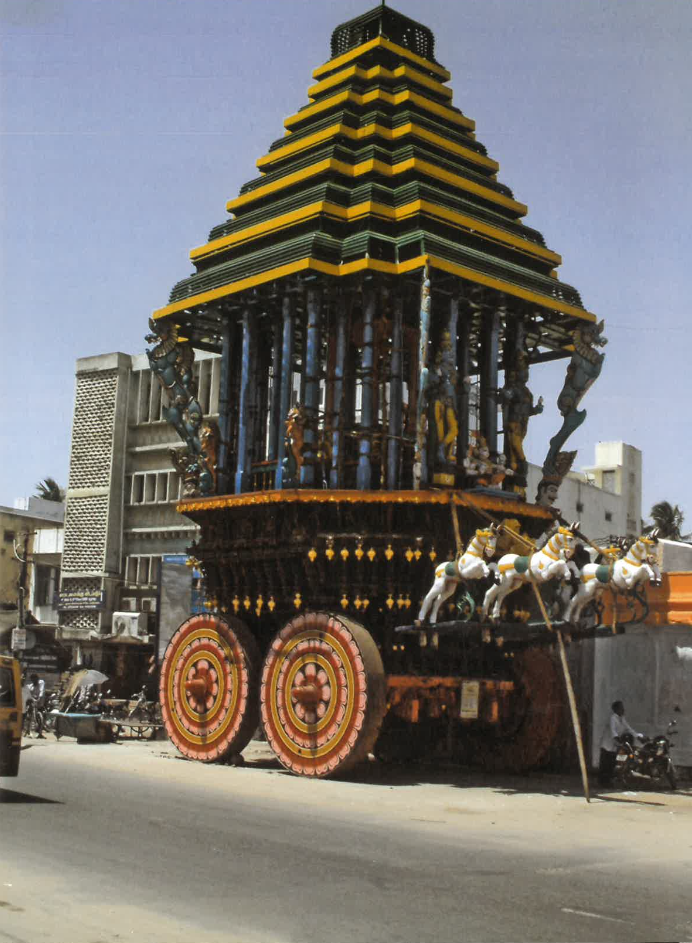
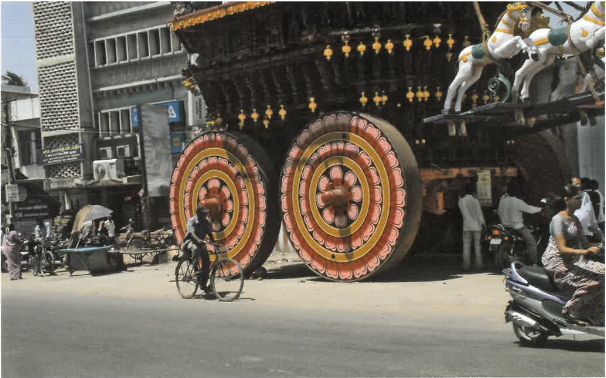
5.20. Some Select Inscriptions

CE 1186: The King Kulōttuṅga who also had the title Kodaṇḍarāman, gifted th e villages Pulippākkam, its hamlets and the village Vayalakkavūr, for a special worship to be performed ni the temple of Aruḷāḷanāthaṉ,named Kodandaraman Sandhi, and festivals. The villages were gifted tax free, which means the taxes levied from the villages were to be paid to the temple for the expenses of the Lord and the Sri Vaisnavas of Kancipuram.
CE 1194: A chief Thirukkāḷattideva Yādavarāya gifted a village Māṉanallür to meet the requirements of daily sources, food offerings, etc., to the God Aruḷāḷ-Perumāḷ, pleased ot stand at Thiru Attigiri. All taxes from this village were to be paid to the temple for the above purpose. The grant was made in the reign of the Cōḻaō emperor Kulōttuṅga I, the conqueror of Madurai, and the crown of Pāṇḍya king in his 16th regnal year (1147). There are a few points of interest in this record. The lord is pleased ot stand at Atthiyūr which indicates that in the time (1200) of Kulōttuṅga III, the village was called Atthiyūr and not as Kāñcipuram or Nagaram. Subsequently, in the time of his son Rājarāja Cōḻa III, from the beginning of the 13th century, it came ot be mentioned as Thiruatthiyūr, belonging ot Kāñcipuram. That shows Atthiyūr is integrated with Kāñcipuram by the beginning of the 13th century.
This Chief is different from the other chief Gaṇḍagopāla who was a Telugu Cōḻa, while the present donor was a Yadavarāya, a branch of Chalukki family. Another interesting point is, this chief calls himself as a great devotee of the Śiva of Kāḷahasti (Sri Kāḷahasti-deva-divya Śrī Padaradhaka) and also a great devotee of Lord Viṣṇu of Tirupati (Śrīmat Veṅkaṭanātha Pādaravinda laneana). This is just fifty years after the demise of Rāmānuja. The gift is made to Varadarājāswāmi temple of Kāñci, so closely associated with Rāmānuja. Even at that period, one could be agreat devotee of Śiva and Viṣṇu together and no exclusive devotion to one god only, was to be seen in the Varadarãja temple.
CE 1205 Aḻagiya Cōḻa Sambhuvarāyan gifted the village Siru-Narinbūr, a southern hamlet of Vikrama-cōḻa-caturvedi-maṅgalam, to meet the expenses of daily services, and repair works of Aruḷāḷ-Perumāḷ temple of Atthiyūr. Al the taxes paid by the village should be paid ot the temple, for the above purpose. The gift was made in the reign of Cōḻa ruler Kulōttuṅga I, in his 27th regnal year (CE 1205). CE 1234: The chief, who had the title Manma Siddharasan, and Madhurāntaka Poṭṭappi Cōḻaṉ, gifted the village Karaṇai, in Kacciyūr-nāḍu, north of Pālaru, for meeting the expenses of “Gaṇḍagopāla Sandhi,” “Thiru-āḍi festival,” “Puraṭṭāsi festival,” expenses for the daily services and maintenance of the God Aruḷāḷ Perumāḷ, pleased to stand in Thiru Atthiyūr. Al the taxes to be paid by this village to the royal treasury should henceforth be paid ot the temple. There were some lands in the gifted village, that were temple lands, and also gifted to Viṣṇu temple, earlier. These lands were exempted from paying any tax now to this temple.
The gift was made in the reign of Cōḻa emperor Rājarāja III, in his 18th regnal year. The record shows that the festivals of Āḍi and Puraṭṭāsi were celebrated in the temple before this date. A new pūja was instituted to be conducted daily in the temple in the name of “Gaṇḍagopāla”, the donor. There were more than three chieftains - kings with the name serving as subordinates under the Cōḻas. Their names are known as Vijaya Gaṇḍagopālaṉ, Vīra Gaṇḍagopālaṉ, and Thiruk-kāḷattidēvaṉ Gaṇḍagopālaṉ. The present gift was made by the last-mentioned. CE 1267: A chief Nalla-siddhararasan gifted 30 cows and bulls, for burning five perpetual lamps for the Perumāḷ and five for the Periya Pirāṭṭiyār, daily to the lord Aruḷāḷ-Perumāḷ pleased to stand in Thiru Atthiyūr, in the city of Kāñcipuram (nagaram kāñcipuram). Out of 330, 300 were cows and 30 were stud bulls.
These were received by the cowherds of the temple who were responsible for maintaining the lamps. They were expected to supply daily ghee for burning perpetual lamps, at the rate of two nāḻi and 1 uri. In addition, they have to supply curd for madhu-parka in daily services. They must also serve the requirements for daily food offerings and requirements of festival days. The responsibility was entrusted to Karaṇathār who entrusted the same to two groups called Thiru-viḷakku-kuḍikaḷ - subjects attached to the temple for maintaining the temple cattle. The first group who undertook to maintain five lamps was called a Kōṇ(ar) who was also called Tuvarapati Vēlaṉ (Tuvarapati is Tamiḻ form of Dvãravati, Dvāraka). This deed was entered in the register by one Thirubhuvana Cōḻa Alarmēl Aḻagiyãr, a native of Uttaramērūr.
The gift was made in the reign of Vijaya Gaṇḍagopālaṉ in his 17th regnal year (1267). He counts the year in his own regnal year, indicating he was ruling Kāñci as an independent ruler. It may be seen that Thiru Atthiyūr is fully integrated with the city of Kāñcipuramo by 1250 as it is mentioned as Thiru Atthiyūr, of Nagaram Kāñcipuram (nagaram kāñcipurattu tiru-atthiyūr). The other point of interest is, the donor calls himself a descendant of Pallava-kula, and belonging ot Bhāradvāja gotra and was the lord of Kāñcipuram (kāñcipura varadhiśvara). He also calls himself a Kāḍuveṭṭi, a title assumed by the Pallavas. He also claims he received the blessing of Kāmakōṣṭāmbā (Kāmākṣi). This chief is also said to have established 700 agrahāras. We find the great devotee of Kāmākṣi Ambāḷ making a great gift to Viṣṇu Aruḷāḷ-Perumāḷ, which shows that 10 years after Rāmānuja, there was no sectarian rivalry and no bar for a devotee of one god being a devotee of another god as well.
These records do show that the temple has grown into the present position and popularity mainly due to the munificence of kings , Chiefs, men and women who have made gifts, land, cattle, wealth, jewels, most of the structures and enormous number of daily worships, festivals and stood as devotees in perpetuity and it is necessary that history of the temple should be presented in historical perspective and not shrowded in myths and legends.

5.21. Temple Car

On the main road in front of the temple stands a beautiful temple car, magnificent for its wood carvings and majestic by its magnitude, that is used in this temple during annual festivals. Its wheels have been redone in recent times. The place where it stands was the original eastern boundary of the ancient Kāñcipuram city, and it now serves as a vertical dividing point between what si called Śiva Kāñci and Viṣṇu Kāñci (figs.
5.141-5.142) The Varadarājā temple is the most popular Viṣṇu temple in Kāñcipuram attracting pilgrims from al the neighbouring states like Andhra, besides Tamil Nadu (fig. 5.143).
fig. 5.141: This temple car-chariot of the Varadarājāsvāmi Temple was made in the time of Kṛṣṇadevarāya and repaired in later period.
fig. 5.142: The wheels of the temple chariot.
fig. 5.143: A devotee from Andhradeśa bringing flowers and offerings to lord Varadarājā, with tonsured head.

5.22. Endnotes and References

1. Bhūtattaḻvār, Second Tiruvanthāthi. என் நெஞ்சம் மேயான் என் சென்னியான் தானவனை வல் நெஞ்சம் கீண்ட மணி வண்ணன் முன்னம் சேய் ஊழியான் ஊழி பெயர்த்தான் உலகு ஏத்தும் ஆழியான் அத்தியூரான் (2275, 95) eṉ neñcam mēyāṉ eṉ ceṉṉiyāṉ tāṉavaṉai val neñcam kīṇṭa maṇi vaṇṇaṉ muṉṉam cēy ūḻiyāṉ ūḻi peyarttāṉ ulaku ēttum āḻiyāṉ attiyūrāṉ (2275, 95)
அத்தியூரான் புள்ளை ஊர்வான் அணி மணியின் துத்தி சேர் நாகத்தின்மேல் துயில்வான் முத்தீ மறை ஆவான் மா கடல் நஞ்சு உண்டான் தனக்கும் இறை ஆவான் எங்கள் பிரான் (2276, 96) attiyūrāṉ puḷḷai ūrvāṉ aṇi maṇiyiṉ tutti cēr nākattiṉmēl tuyilvāṉ muttī maṟai āvāṉ mā kaṭal nañcu uṇṭāṉ taṉakkum iṟai āvāṉ eṅkaḷ pirāṉ (2276, 96) 2. Gārhapatya (गार्हपत्य) - the householder’s fire (received from his father and transmitted to his descendants, one of the three sacred fires, being that from which sacrificial fires are lighted
3. Āhavanīyam (आहवनीय) - to be offered as an oblation, consecrated fire taken from the householder’s perpetual fire and prepared for receiving oblations especially the eastern of the three fires burning at a sacrifice, Cologne Digital Sanskrit Dictionaries: Monier-Williams Sanskrit-English Dictionary. 4. Dakṣiṇāgni (दक्षिणाग्नि) - the southern fire of the altar. 5. Periya Tirumoḻi, Tirumaṅgai Ālvār:
உரந்தரு மெல்லணைப் பள்ளி கொண்டான் ஒருகால் முன்னம் மாவுரு வாய்க்கடலுள், வரந்தரும் மாமணி வண்ணனிடம் மணிமாடங்கள் சூழ்ந்தழ காயகச்சி, நிரந்தவர் மண்ணையில் புண்ணுகர் வேல்நெடு வாயி லுகச்செரு வில்முனநாள், பரந்தவன் பல்லவர் கோன்பணிந் தபர மேச்சுர விண்ணகரமதுவே. urantaru mellaṇaip paḷḷi koṇṭāṉ orukāl muṉṉam māvuru vāykkaṭaluḷ, varantarum māmaṇi vaṇṇaṉiṭam maṇimāṭaṅkaḷ cūḻntaḻa kāyakacci, nirantavar maṇṇaiyil puṇṇukar vēlneṭu vāyilukac-ceru vilmuṉanāḷ, parantavaṉ pallavar kōṉpaṇin tapara mēccura viṇṇakaram atuvē.

6. Other Temples

6.1. Aṣṭabhujakaram: The Temple of Eight Armed Viṣṇu

Not for away from the Temple of Thiru-vehhā (Yatotkāri Temple) on the other side of the main road, is situated this temple of yore, whose presiding deity is eight armed standing Viṣṇu, who is called “The lord with eight arms”. The temple is about two kilometers east of the Varadarāja temple. This location is associated with Thirukkacchi Nambi who was venerated by Rāmānuja. There is a sacred tank in front of the temple named Gajendra-puṣhkariṇi. The legend of Viṣṇu, rescuing Gajendra-the elephant king from the clutches of a crocodile, as Gajendra Varada is localized in this temple. This episode is sung by one of the early Āḻvār, Peyāḻvār, who may be of sixth century CE.
For example, sings this episode in a general way while praising the lord of this temple with eight invincible weapons.1 The other Āḻvār, Thirumaṅgai-maṉṉaṉ, has one hymn of ten verses, and also in a general reference in his Periya Tirumaḍal, (1118-1127) –(3815 –line 128) in which he sings the Lord of eight arms. In the hymn of ten verses, he gives the weapons held by this lord as arrow, bow, gada, sankha, sword, sun, moon and shield in hands, with eight hands.2 In this form, he is said to have killed the wild elephant, by catching its tusk , thrashing it on the ground. This was the elephant sent by Kamsa to kill Kṛṣṇa. The reference to sun and moon as weapons in this verse is interesting, as these two are not represented in Tamilnadu, while are common in Kashmir region.
In the ten verses of the hymn he praises the God as a lover by a lovelorn gopi singing his exploits. There is no reference to the story of Gajendra-mokṣa, though there is a reference to the killing of an elephant sent by Kaṁsa. In the first verse of the hymn, Tirumaṅgai praises Narasimha manifestation in which he ripped open the bowels of Hiraṇya, even as Brahmā and Śiva stood by the side holding their hands in vismaya - this seems to be a good iconographic description.3
In the second verse the Āḻvār sings the sings the Trivikrama manifestation, first appearing as a dwarfish Brahmin boy. He also gives an interesting reference to Vedic Brahmanas who adore him with Vedic hymns, also singing at the same time in chaste Tamil poems (centamiḻ) as well.4 It is known that a family of Brahmins called Araiyar singing the Tamiḻ hymns hereditarily in Viṣṇu temples continue to this day preserving this tradition that is as old as Tirumaṅgai in 8th century. Mention has been made earlier of the verse in which his eight weapons are mentioned in the third verse. In the fourth verse Kṛiṣhṇa is praised as Govardhanadhāri lifting the Govardhana mountain.5 Here, the Āḻvār states that as Kṛṣṇa he protected the cows from torrential rains by lifting the hill, and also destroyed the false elephant that was sent by Kaṁsa to kill him. One group of animals sought refuge in him which he protected them, while the other tried to attack him and so was killed. At this stage the Āḻvār says he wielded a cakra
and a śankha, one a symbol of annihilation while the other was a symbol protection the Pāncajanya conch Kṛṣṇā blew at the beginning of the Mahābhāratā war as the sign of protection to the Pāndavas. The Āḻvār gives another important tradition here. He says was reciting Vedas and shone in the horizon of justice as a resplendent sun “vedam mun oduvar nīthi vānattu amcuṭar ponṟavar”. Veda and Nītti - judgment are invariable concomitance in Hindu society. The Judges in the court of justice were expected to be proficient in the Vedas in Hindu system “vedo khila dharma mūlam”. Tolkappiyam the oldest Tamiḻ grammar available is said to have been approved by Adankoṭṭu Ācān, who was a Vedic reciters and administrator of justice in the court of Pāṇḍya King. From the earliest times, Justices were Vedic scholars in Tamiḻnāḍu.
The fifth verse by the Āḻvār is equally important in which the saint says that this lord gracefully taught all arts like the Vedas, judicial texts (nīthinūl), words and meanings, (grammar and nirukta) and all other branches of knowledge to the celestial and terrestrials.6 The sixth verse suggests four colours of Viṣṇu namely black, green, red, and blue that appears in the clouds. It seems to refer to the four vyūha forms of Viṣṇu.7 The seventh verse describes the beauty of Kṛṣṇa, his garlands and his form. All are said to be beautiful lotuses painted by an expert painters. It is a tribute to artists.8. The eighth verse says, the Lord recited even as the celestials praise him always. On one side he holds a śankha and on the other he holds a cakra. He is coral in colour on one side and blue on the other which refers to his “Harihara” form, combining Śiva and Viṣṇu forms. Śiva is coral in colour as Rudra.9
The ninth verse depicts a lovelorn lady’s infatuation. The last one is equally important. It says that this Deva of eight arms is worshipped by the king of Tondainadu, who wears a high crown, and a long garland, Vaiyirameghan who protected the city of Kāñci by his sturdy arms and great fame. The Āḻvār concludes that he himself was the king of Maṅgai territory (Maṅgai Vēndaṉ) singing beautiful songs in classical Tamil and those who sing them would reach Vaikuṇṭa. Thus we find the hymn of Thirumaṅgai claims two great kings – one Vairamēgha, the king of Toṇḍaināḍu, and the other the king Maṅgai.10

6.1.1. The Temple

The temple is now a modest structure with a sanctum vimāna and a preceding maṇḍapa with some later additions. Viṣṇu is standing with eight arms wielding weapons. A sanctum with the preceding maṇḍapa
was built in the time of Kulōttuṅga Cōḻa whose inscription is found on the south wall of the sanctum tower (figs. 6.1-6.2). Possibly, the present sanctum tower was built over a base of Rājēndra’s time which is found on the base. A preceding mahā-maṇḍapa has been added in the Vijayanagara period. There are not many sculptures, but, the bronzes belong to Vijayanagara period. The base of the front maṇḍapa has Vijayanagara inscriptions. The floor on the front yard carry sand stone blocks usually found in Pallava period. The entrance gopura of the temple is found on the northern side of the temple which shows the main population was on the northern side from the Vijayanagara times. It is possible that the main route from Kaccippēḍu to the Attiyūr (Varadarāja temple) remained the same as at present time. There is no other entrance to this temple except this north gopura. The door jambs of the gopura carry the usual latā-kanyas and sculptures encircled by creeper designs.
The one on the western sides carries Balarāma and Kṛṣṇā together, while all other avatārs are shown separately in a sequence.
fig. 6.1. Aview of the main vimāna of the Aṣṭabhujakaram-svāmi Temple of Kāñci. The base contains an inscription of Rājēndra Cōḻa (11th century) and the wall, an inscription of Kulōttuṅga I, early 12th century.
fig. 6.2: The kumbha-pañcara motif flanked by pilasters, in the Aṣṭabhujakaram Temple.

6.1.2. Inscriptions

The north wall of the central shrine of the temple carries an inscription of Rājēndra Cōḻa I (1034) recording the gift of 1000 kuḻis by land and of 3600 kuḻis by purchase for 47 kaḻañju of gold gifted by the residents of Kāñcipuram in Eyir-koṭṭam, a district of Juyaṁkoṇḍa-cōḻa-maṇḍalam. The proceeds were to be utilized for conducting worship for food offerings, to god Aṣṭabhuja-swāmi and also for burning a perpetual lamp. ( ARE 6/1921).
Evidently, the present structure is to be attributed to the time of Rājēndra Cōḻa. On the south wall of the main temple are two inscriptions of Kulōttuṅga Cōḻa. The first one refers to the gift and sale of a land by the assembly of Rājasundari-caturvedi-maṅgalam, a Brahmadeya in Virpeḍu-nāḍu, a subdivision of Kīḻaiyūr-koṭṭam Jayaṁkoṇḍa choḻa maṇḍalam. The proceeds from this village was to be used for the expenses of kitchen. (ARE 8 of 1921) The second inscription of Kulōttuṅga is in continuation of the above and record tax-free gift of land to the temple for the same purpose by the same villagers of Rājasundari-caturvedi-maṅgalam. This record stipulates theat no tax should be levied for two years from the date of gift, but later not more than half a kāsu should be levied for each vēli of land. (9/1921).
The front maṇḍapa carries later inscriptions of Vijayanagar period. The one on the south base of the maṇḍapa records an agreement given by Nallamaṅgai, wife Appā-aiyangār, by the temple authorities including Tiruppaṇi Siṅgayyaṅgār, the agent of Tirumalai Tāttayyaṅgār. The agreement provides for certain offerings to the god from the proceeds of land gifted by the lady mentioned above, at Naṟṟā-nallūr alias Rāmabhadra-puram.(10/1921) The other record on the north base registers exchange of lands between the residents of Amara-maṅgalam and the residents of Naṟṟā-nallūr which were gifted to the temple through Etirāja-aiyangār, for certain offerings. (ARE 7 /1921). The legend of Sarasvati’s quarrel with Brahmā and her attempt to destroy the yajña sacrifice of Brahmā is associated with this temple as well. She is said to have first sent a group of demons which were destroyed by Viṣṇu.
Then she sent Śiva as Sarabha, a peculiar lion-bird form with eight legs and wings, but, Viṣṇu himself took a similar form and destroyed the Sarabha. It is the Vaiṣṇava version of how Viṣṇu destroyed Śiva. It seems the Vaiṣṇava’s were totally against the Goddess Sarasvati (jñāna) fighting in every Viṣṇu temple of Kāñci with her husband Brahmā who in order to save his devotees destroyed the evil designs of jñāna. The concept of prapatti i.e., total surrender to the Supreme god Vāsudeva has no use for jñāna. So, the Goddess portrayed as an antagonist of Viṣṇu. The Sarabha form of Śiva emerges into limelight from the middle of Cōḻa age, from the time of Vikrama Cōḻa, 12th century, that portrays Śiva with multiple legs, arms, a lions face and wings, pounces on Narasiṁha who is shown caught between the legs of Sarabha. According to the legends when Viṣṇu destroyed Hiraṇya demon as Narasiṁha the fight was very severe, and Viṣṇu’s anger did not abate as he started causing havoc to the world.
The Devas requested Śiva to save the world from the disasters. In response to the request Śiva took the form of Sarabha and subdued the anger of Narasiṁha. Vaiṣṇavites consider this to depict hte rivalry between Vaiṣṇavism and Saivism. But this is not the case. The Paurāṇika myth-makers used to state that when there ensued any severe fight the anger of the victor continued to overflow and needed some other force to subdue it. For example, when Kāḻi fought with the demon Tārakāsura, her ferocious anger continued and she started affecting the world. The devas requested Śiva who appeared as a child and started crying for milk. Kāli’s motherly instinct made her take the child and feed him milk with her breast. Śiva sucked her anger along with the milk. In this legend Śiva and Kāḷi belonged ot the same sect and it does not exhibit any rivalry. But, this legend, a later invention of the Vijayanagara times in the 16th century, made ti a rivalry and introduced a legend of Viṣṇu assuming the form of a monstrous bird animal and pouncing on Śiva-Sarabha in the temple of Aṣṭabhuja Viṣṇu at Kāñcipuram.
Beyond Viṣṇu’s appearance, the story has no other legendary content and certainly reflects hte Vaiṣṇava-Saiva rivalry. The temple authorities at Kāñci say that there existed an image (sculpture of Sarabha) within the Aṣṭabhuja temple till recent times which they used to associate with this legend. The mere presence of a Sarabha sculpture does not justify the legend. It is not unlikely that a loose sculpture belonging to a nearby Śiva temple might have found its way to this temple that triggered the imagination of myth-maker to create the story. Another significant aspect of this temple is the presence of a door way called the Paramapada-vāsal. According to a faith during the Vaikuṇṭa-ekādasi festival the processional deity of Viṣṇu used to be taken through this door way which is said to be the doorway to Vaikuṇṭa, the abode of Viṣṇu. The devotees believe that following the festive Viṣṇu through his way on that day will ensure the devotee to go to Vaikuṇṭha at the time of liberation.
Such a door way exists in all the temples of Viṣṇu in Tamil the one at Śrīraṅgam is the most famous of such a doorway. However, strangely no other Viṣṇu temple at Kāñcipuram has this door and so this temple is considered sacred on that account. The temple attracts considerable number of devotees at Kāñcipuram though smaller in dimension when compared to the temples of Varadarāja, Ūraham and Thiruvehhā.

6.2. Dīpa Prakāśa temple

This temple also located within the old city limits of Kañci has an added attraction (fig. 6.3). Besides being a divya-kṣetra of Viṣṇu, ti has a temple nearby which was the birthplace of the great Vaiṣṇava scholar Vedānta Desikar. This Desikar temple (fig.
6.4) has the portrait of the scholar-saint in the sanctum, surrounded by a closed enclosure, he is affectionately called Swami Desikan, as his contribution is immense both to Sanskrit and Tamiḻ Vaiṣṇava literature. The Dīpa Prakāśa, i.e., “The shining lamp” is situated in the midst of an impressive enclosure but the main temple is modest, with a covered inner enclosure. Dīpa Prakāśa is a Sanskrit rendering of the Tamiḻ term “Viḷakkoḷi Perumāḷ” — viḷakku, i.e., lamp and oḷi is light. The temple is sung by Āḻvār - Tirumalai in the eighth century, and is therefore anterior to that date. The Āḻvār sings the god as Viḷakkoḷi.
fig. 6.3: The gopura of the Dīpa Prakāśa Temple, in the ancient limit Kaccippēḍu.
fig. 6.4: The gopura of the Dīpa Prakāśa Temple, Kāñcipuram. Behind the grill gate is the temple of Vedānta Deśikar.
The legend of Sarasvati’s feud with Brahmā is repeated here. She is said ot have become furious when Indra and Brahmā declared Goddess Lakṣmi as superior to Sarasvati, as Lakṣmi confers wealth and plenty. So, Sarasvati is said to have sent a terrific fire to destroy the sacrifice of Brahmā. But, Viṣṇu reduced that fire into a small lamp and hence Viṣṇu was called Viḷakkoḷi. This legend seems ot be a manifestation of attachment of Vaiṣṇava to pleasures of wealth and plenty. Noting the weakness of this story, another story is told in this temple. The furious Goddess Sarasvati sent a thick cloud of darkness that engulfed the world, when Viṣṇu appeared as a lamp and illuminated the world and hence he is called Viḷakkoḷi (“light of a lamp”). This story is an extension of Vedic idea wherein Viḷakkoḷi stands for shining - spreading brightness and this is in tune with the nature of Viṣṇu.

6.2.1. Inscriptions

Three inscriptions are found on the walls of this temple. The earliest inscription is that of Cōḻa king Rājarāja I (1223) which records a gift of lands by the residents of Viḷakkoḍu, as directed by Madhurāntaka Poṭṭāppi Cōḻaṉ. The land was situated in the same village and was to be used to meet the expenses of offerings to Viḷakkoḷi Perumāḷ and Tiru-Vēlirukkai temple in the proportion of 2:1. The present structure of the main temple is dated around CE 1200.
Another inscription that runs on the southern and eastern bases of the main temple records a gift of a village in Eṭaip-pākkam, in Venkunṟak-kōṭṭam, for carrying out repairs to the temple of Tiruttāṅgal Viḷakkoḷi Perumāḷ. It also states that repairs were being supervised by Raṅgarāya of Elaṅkuḍi in Pāṇḍi-maṇḍalam, on behalf of the king. Evidently, the region where this temple is located was called Tiruttāṅgal in ancient times. A third record found on the left face of the entrance is in Sanskrit and states that Aḻagiya-maṇavāaḷa-jīyar constructed the prākāra and maṇḍapa in the temple. The present covered enclosure around the main shrine and the preceding maṇḍapa were probably the ones constructed by Aḻagiya-maṇavāaḷa-jīyar. Neither the architecture nor any sculpture are of great beauty in this temple but its fame and antiquity and the proximity to Vedānta Desika shrine attracts pilgrims in large numbers.

6.3. Nilāttiṅgaḷ Tuṇḍam

Another celebrated temple of Viṣṇu in Kāñcipuram, is Nilāttiṅgaḷ Tuṇḍa, celebrated by Āḻvār Tirumaṅgai, situated now within the inner enclosure of Ekāmra Nātha temple. This is the only Viṣṇu temple of the 108 divya-deśa in Kāñcipuram, where a Śaiva priest performs the worship in the shrine. It id not a separate temple but a part of the second prākāra - enclosure. The God is standing and is of imposing height. As the temple is within the enclosure of the Śiva temple, a Śaiva priest worships the deity. As it is in the Ekāmramātha temple, it is also situated within the ancient city of Kaccippēḍu.

6.4. Pavaḻavaṇṇar Temple

The temple of Pavaḻavaṇṇar at Kāñcipuram is another divya-deśa , where the deity is coral in colour, seated beneath a five hooded cobra Ananta. The temple faces west, and is located within the old city of Kacchipedu. It is said that the God assumed different colours in four different yugas, the four colours being white, coral, green, and blue. The coral colour was assumed in Treta-yuga by Viṣṇu. Tirumangai Āḻvār in one verse refers to Viṣṇu as Pavaḻavaṇṇar, which does not address this deity as located in Kāñci but says that lord is on the peak of Himālayas. However, as a reference to Ūraha of Kāñci, the Pavaḻlavaṇṇar temple is also considered as in Kacci and included in the list of 108 divya-deśa. It is likely that among the four vyūha forms of Viṣṇu each is given a particular colour mentioned above. The coral colour is ascribed to Saṁkarṣaṇa and this temple may be ascribed to him.
A legend states that the sage Bhṛgu kicked Viṣṇu on his chest as he did not receive him respectfully. Viṣṇu got up and instead of retorting angrily asked the sage whether his leg was hurt as he kicked. So, saying Kṛṣṇā started massaging the sage’s foot that brought the sage to senses. It is said that the legend illustrates the kindness of Viṣṇu-[Saulabhyatā]. As the sage found lord Viṣṇu full of sāttvika bhāva, he was declared Viṣṇu as the most-superior among the Trinity . However, as Bhṛgu kicked the Lord he wanted to atone for his sin. The Lord directed him to go to Kāñci and worship him. The temple has no pretensions to great architecture or sculpture. But the main deity seated on the couch of five hooded cobra, with four hands is majestic and attracts attention. By the side of the Pavaḻa-vaṇṇar temple there is a yāga-śala built in the 19th century. It has a Gaṇeśa on one of its pillars. This Gaṇeśa is given a large nāmam, the Vaiṣṇava caste mark, which converts the Saivite deity into a Vaiṣṇava. He is no more called Gaṇeśa (fig.
6.6), but Tumbikkai Āḻvār. The Hindu worship, be it Vaiṣṇavite or Saivite or Śakta are rooted in Vedic tradition and use Vedic hymns and yajñas, as a mode of worship. The yāga-śala of this temple preserves simple but elegant yajña kuṇḍā (sacrificial altars) made up of burnt bricks and smeared with clay (fig. 6.8). There is another sculpture seated under a five-hooded cobra, wearing a crown and holding a tri-daṇḍā, as a mark of Vaiṣṇava Sanyāsi. It represents Rāmānuja, the great Visiṣṭādvaita exponent who is considered the incarnation of Ādisesa (the cobra). As he is yatirāja, he is crowned (fig. 6.7). But modern traditions calls him Maṇavāḷa Ma-munikaḷ who is also considered an incarnation of the snake. He lived later than Rāmānuja and was the originator of the southern school of Vaisnavism. Finally, we find two devotees, a husband and wife, who do pranam like danda, a fallen pol. It is called dandam samarpital ot do obeisance. The name of the lady si given as Anda! Ammal (fig. 6.10).
The couple belonged ot merchant community whose name are inscribed in Telugu by their side.
fig. 6.5: The temple of Pavaḻa-vaṇṇar.
fig. 6.6: Gaṇeśa with Vaiṣṇava caste mark.
fig. 6.7: An image of Yatirāja Rāmānuja seated on serpent Ananta to indicate that he is the incarnation of Ādiseṣa, on a pillar.
fig. 6.8: Vedic altars in the yāga-maṇḍapa in square, circular, triangular and semi-circular forms.

6.5. The Paccai-vaṇṇar Temple

The temple of Paccai-vaṇṇar “The temple of Green God” is on the main road entering Kāñcipuram, near the Pavaḻa-vaṇṇar. It is said that this temple was originally elsewhere in the city, but, during hte Islamic invasion ti was destroyed and the present temple was erected later. As such the present structure is in a new location.
The temple has no pretension to any architectural grandeur, but, a simple modest temple with a sanctum and a preceding maṇḍapa. The main deity is standing with four arms holding conventional emblems (fig. 6.9). The Paccai-vaṇṇar and Pavaḻa-vaṇṇar are generally clubbed together by devotees in their visits.
fig. 6.9: The man deity of Paccai-vaṇṇar Temple within the ancient city limit of Kaccippēḍu.

6.6. The Temple of Narasiṁha

The temple of Narasiṁha, also called Aḻagiyasiṅgar, is located in a locality called Veḷukkai, a part of Kāñci. There are confusing accounts about this temple. According to a local tradition the deity originally was in standing posture and later the present seated Narasiṁha has been installed. The original temple was in a dilapidated condition first. As the Pārthasārathi temple of Tiruvallikkēṇi houses Kṛṣṇā and Narasiṁha, so also it is not unlikely that both the standing forms of Viṣṇu and Narasiṁha could have been in the same complex and the Viṣṇu shrine fell into ruins. One of Peyāḻvār Pāsuram (poem), refers to the God at the great town of Veḷukkai “veḷukkai nil nagarvāy”. The poem seems to suggest that the temple was situated at the mouth of the town of Veḷukkai. Also, it seems the temple had three forms of deity standing, seated and reclining [3417] . There is no reference however to the Narasiṁha temple.
However, in a verse Pillai Perumāḷ Aiyyaṅgār, who is later in point of time and who has sung verses on all the divya-deśas of Viṣṇu, sings Narasiṁha, the Lord of Veḷukkai. He does nor refer to other forms.[3417]. In another verse, Periyāḻvār sings Veḷukkai as a place with lofty turrets. (oṉ māda veḷukkai-3446). In another verse, the Āḻvār sings Veḷukkai with Vehha of Kāñci-3409. One inscription [ARE/1921], is on the base of the north wall of the Aḻagiyasiṅga Perumāḷ temple. It calls the place kacci irukkai in Kāñcipuram.The date of the inscription is not available, but, records an amount of 12 poṉ given to Saṭgopaiyyaṅgār of Tiru-nārāyaṇa-puram, from the proceeds of the village Nallā-pillai-peṟṟāḷ and that he had to provide for some offering to the deity in the name of Tāttācārya. The temple is not in good state of preservation.

6.7. Endnotes and References

1. Peyāḻvār, Third Antāti (மூன்றாம் திருவந்தாதி). தொட்ட படைஎட்டும் தோலாத வென்றியான், அட்ட புயகரத்தான் அஞ்ஞான்று - குட்டத்துக் கோள்முதலை துஞ்ச குறித்துஎறிந்த சக்கரத்தான் தாள்முதலே நங்கட்குச் சார்வு (2380-2) toṭṭa paṭai'eṭṭum tōlāta veṉṟiyāṉ, aṭṭa puyakarattāṉ aññāṉṟu - kuṭṭattuk kōḷmutalai tuñca kuṟittu'eṟinta cakkarattāṉ tāḷmutalē naṅkaṭkuc cārvu (2380-2)
உன்னிய யோகத் துறக்கத்தை, ஊரகத்துள் அன்னவனை அட்ட புயகரத்தெம் ஆனேற்றை, என்னை மனங்கவர்ந்த ஈசனை, - வானவர்த்தம் முன்னவனை மூழிக் களத்து விளக்கினை uṉṉiya yōkat tuṟakkattai, ūrakattuḷ aṉṉavaṉai aṭṭa puyakarattem āṉēṟṟai, eṉṉai maṉaṅkavarnta īcaṉai, - vāṉavarttam muṉṉavaṉai mūḻik kaḷattu viḷakkiṉai 2. Tirumaṅgai Āḻvār, Periya Tirumaḍal 1120 (பெரிய திருமொழி).
செம் பொன் இலங்கு வலங்கை வாளி திண் சிலை தண்டொடு சங்கம் ஒள் வாள் உம்பர் இரு சுடர் ஆழியோடு கேடகம் ஒண் மலர் பற்றி எற்றே வெம்பு சினத்து அடல் வேழம் வீழ வெண் மருப்பு ஒன்று பறித்து இருண்ட அம்புதம் போன்றிவர் ஆர்கொல்? என்ன- அட்டபுயகரத்தேன் என்றாரே
cem poṉ ilaṅku valaṅkai vāḷi tiṇ cilai taṇṭōṭu caṅkam oḷ vāḷ umpar iru cuṭar āḻiyōṭu kēṭakam oṇ malar paṟṟi ēṟṟē vempu ciṉattu aṭal vēḻam vīḻa veṇ maruppu oṉṟu paṟittu iruṇṭa amputam pōṉṟavar ārkol? eṉṉa- aṭṭapuyakarattēṉ eṉṟārē 3. Tirumaṅgai Āḻvār, Periya Tirumaḍal 1118 (பெரிய திருமொழி).
திரிபுரம் மூன்று எரித்தானும் மற்றை மலர்மிசைமேல் அயனும் வியப்ப முரி திரை மா கடல் போல் முழங்கி மூவுலகும் முறையால் வணங்க எரி அன கேசர வாள் எயிற்றோடு இரணியன் ஆகம் இரண்டு கூறா அரி உரு ஆம் இவர் ஆர்கொல்? என்ன- அட்டபுயகரத்தேன் என்றாரே
tiripuram mūṉṟu erittāṉum maṟṟai malarmicaimēl ayaṉum viyappa muri tirai mā kaṭal pōl muḻaṅki mauvulakum muṟaiyāl vaṇaṅka eri aṉa kēcara vāḷ eyiṟṟōṭu iraṇiyaṉ ākamam iraṇṭu kūṟā ari uru ām ivar ārkol? eṉṉa- aṭṭapuyakarattēṉ eṉṟārē 4. Tirumaṅgai Āḻvār, Periya Tirumaḍal 1190 (பெரிய திருமொழி).
வெம் திறல் வீரரில் வீரர் ஒப்பார் வேதம் உரைத்து இமையோர் வணங்கும் செந்தமிழ் பாடுவார்-தாம் வணங்கும் தேவர் இவர்கொல்? தெரிக்கமாட்டேன் வந்து குறள் உருவாய் நிமிர்ந்து மாவலி வேள்வியில் மண் அளந்த அந்தணர் போன்றிவர் ஆர்கொல்? என்ன- அட்டபுயகரத்தேன் என்றாரே
vem tiṟal vīraril vīrar oppār vētam uraittu imaiyōr vaṇaṅkum centamiḻ pāṭuvār-tām vaṇaṅkum tēvar ivarkol? Terikkamāṭṭēṉ vantu kuṟaḷ uruvāy nimirntu māvali vēḷviyil maṇ aḷanta antaṇar pōṉṟavar ārkol? eṉṉa- aṭṭapuyakarattēṉ eṉṟārē 5. Tirumaṅgai Āḻvār, Periya Tirumaḍal 1121 (பெரிய திருமொழி).
மஞ்சு உயர் மா மணிக் குன்றம் ஏந்தி மா மழை காத்து ஒரு மாய ஆனை அஞ்ச அதன் மருப்பு ஒன்று வாங்கும் ஆயர்கொல்? மாயம் அறியமாட்டேன் வெம் சுடர் ஆழியும் சங்கும் ஏந்தி வேதம் முன் ஓதுவர் நீதி வானத்து அம் சுடர் போன்றிவர் ஆர்கொல்? என்ன- அட்டபுயகரத்தேன் என்றாரே
mañcu uyar mā maṇik kuṉṟam ēnti mā maḻai kāttu oru māya āṉai añca ataṉ maruppu oṉṟu vāṅkum āyarkol? Māyam aṟiyamāṭṭēṉ vem cuṭar āḻiyum caṅkum ēnti vētam muṉ ōtuvar nīti vāṉattu am cuṭar pōṉṟavar ārkol? eṉṉa- aṭṭapuyakarattēṉ eṉṟārē 6. Tirumaṅgai Āḻvār, Periya Tirumaḍal 1122 (பெரிய திருமொழி).
கலைகளும் வேதமும் நீதி நூலும் கற்பமும் சொல் பொருள்-தானும் மற்றை நிலைகளும் வானவர்க்கும் பிறர்க்கும் நீர்மையினால் அருள்செய்து நீண்ட மலைகளும் மா மணியும் மலர்மேல் மங்கையும் சங்கமும் தங்குகின்ற அலை கடல் போன்றிவர் ஆர்கொல்? என்ன- அட்டபுயகரத்தேன் என்றாரே
kalaikaḷum vētamum nīti nūlum kaṟpamum col poruḷ-tāṉum maṟṟai nilaikaḷum vāṉavarkkum piṟarkkum nīrmaiyiṉāl aruḷceytu nīṇṭu malaikaḷum mā maṇiyum malarmēl maṅkaiyum caṅkamum taṅkukiṉṟa alai kaṭal pōṉṟavar ārkol? eṉṉa- aṭṭapuyakarattēṉ eṉṟārē 7. Tirumaṅgai Āḻvār, Periya Tirumaḍal 1123 (பெரிய திருமொழி).
எங்ஙனும் நாம் இவர் வண்ணம் எண்ணில் ஏதும் அறிகிலம் ஏந்திழையார் சங்கும் மனமும் நிறையும் எல்லாம் தம்மன ஆகப் புகுந்து தாமும் பொங்கு கருங் கடல் பூவை காயா போது அவிழ் நீலம் புனைந்த மேகம் அங்ஙனம் போன்றிவர் ஆர்கொல்? என்ன- அட்டபுயகரத்தேன் என்றாரே
eṅkaṉum nām ivar vaṇṇam eṇṇil ētum aṟikilam ēntiḻaiyār caṅkum maṉamum niṟaiyum ellām tam'maṉa ākap pukuntu tāmum poṅku karuṅ kaṭal pūvai kāyā pōtu aviḻ nīlam puṉainta mēkam aṅkaṉam pōṉṟavar ārkol? eṉṉa- aṭṭapuyakarattēṉ eṉṟārē 8. Tirumaṅgai Āḻvār, Periya Tirumaḍal 1124 (பெரிய திருமொழி).
முழுசி வண்டு ஆடிய தண் துழாயின் மொய்ம் மலர்க் கண்ணியும் மேனி அம் சாந்து இழுசிய கோலம் இருந்தவாறும் எங்ஙனம் சொல்லுகேன்? ஓவி நல்லார் எழுதிய தாமரை அன்ன கண்ணும் ஏந்து எழில் ஆகமும் தோளும் வாயும் அழகியதாம் இவர் ஆர்கொல்? என்ன- அட்டபுயகரத்தேன் என்றாரே
muḻuci vaṇṭu āṭiya taṇ tuḻāyiṉ moym malark kaṇṇiyum mēṉi am cāntu iḻuciya kōlam iruntavāṟum eṅkaṉam collukēṉ? Ōvi nallār eḻutiya tāmarai aṉṉa kaṇṇum ēntu eḻil ākamum tōḷum vāyum aḻakiyatām ivar ārkol? eṉṉa- aṭṭapuyakarattēṉ eṉṟārē 9. Tirumaṅgai Āḻvār, Periya Tirumaḍal 1125 (பெரிய திருமொழி).
மேவி எப்பாலும் விண்ணோர் வணங்க வேதம் உரைப்பர் முந்நீர் மடந்தை தேவி அப்பால் அதிர் சங்கம் இப்பால் சக்கரம் மற்று இவர் வண்ணம் எண்ணில் காவி ஒப்பார் கடலேயும் ஒப்பார் கண்ணும் வடிவும் நெடியர் ஆய் என் ஆவி ஒப்பார் இவர் ஆர்கொல்? என்ன- அட்டபுயகரத்தே என்றாரே
mēvi eppālum viṇṇōr vaṇaṅka vētam uraippar muṉnīr maṭantai tēvi appāl atir caṅkam ippāl cakkaram maṟṟu ivar vaṇṇam eṇṇil kāvi oppār kaṭalēyum oppār kaṇṇum vaṭivum neṭiyar āy eṉ āvi oppār ivar ārkol? eṉṉa- aṭṭapuyakarattē eṉṟārē 10. Tirumaṅgai Āḻvār, Periya Tirumaḍal 1126 (பெரிய திருமொழி).
மன்னவன் தொண்டையர்-கோன் வணங்கும் நீள் முடி மாலை வயிரமேகன் தன் வலி தன் புகழ் சூழ்ந்த கச்சி அட்டபுயகரத்து ஆதி-தன்னை கன்னி நல் மா மதிள் மங்கை வேந்தன் காமரு சீர்க் கலிகன்றி குன்றா இன் இசையால் சொன்ன செஞ்சொல் மாலை ஏத்த வல்லார்க்கு இடம் வைகுந்தமே
maṉṉavaṉ toṇṭaiyar-kōṉ vaṇaṅkum nīḷ muṭi mālai vayiramēkaṉ taṉ vali taṉ pukaḻ cūḻnta kacci aṭṭapuyakarattu āti-taṉṉai kaṉṉi nal mā matiḷ maṅkai vēntaṉ kāmaru cīrk kalikaṉṟi kuṉṟā icaiyāl coṉṉa ceñcōl mālai ētta vallārkku iṭam vaikuntamē

7. Bibliography

  1. Chari,T.V.R, The Gloroious Temples of Kāñci, Kamakshi Amman Devasthanam, Fourth Edition, Kāñcipuram 2001.
  1. Carman, John Braisted, The Theology of Ramanuja, Yale University Press, New haven and London, 1974,
  1. Early Inscriptions of Thiruppati, Vol.I, Ed. Subrahmanya Sastri, Thiruppati Devasthanam Epigraphical series, Thiruppati, 1931
  1. Epigrapia Indica, Govt. of India.
  1. Jagadisa Ayyar, P.V., South Indian Shrines, New Delhi: Asian Educational Services, reprint, 1982.
  1. Hopkins, Washburn, Epic Mythology, Varanasi: Indological Book House, 1968.
  1. Hudson, D. Dennis. The Body of God: An Emperor's Palace for Krishna in Eighth-Century Kanchipuram. September 25, 2008.
  1. Inscriptions of Kanchipuram District, Chennai, Tamil Nadu State Department of Archaeology, 2006.
  1. Mahalingam, T.V., Kanchipuram in Early South Indian History, Asia Publishing House. 1968.
  1. Minakshi.C.,The Historical Sculptures of the Vaikuntaperumal Temple, Kanchi, Memoirs of the Archaeological Survey of India, No 63, Delhi, 1941
  1. Muvar Ula, by Ottakkūttaṉ, ed. by Kalyanasundara Ayyar, Chennai: Pub. by Smt. Rukmini Devi, UV.. Swaminatha Ayyer Library, 2*' edn., 1957.
  1. Nagaswamy, R., Uttaramērūr, The Historic Village, Chennai, Tamil Arts Academy, 2003.
  1. -, Ramanuja, Myth and Reality, Chennai, Tamil Arts Academy, 2008
  1. Nilakanta Sastri, KA.,. A History of South India, New Delhi, Oxford University Press, 2008.
  1. Inscriptions of Kāñcipuram District, Ed. T.S.Sridhar, Tamilnadu State Department of Archaeology, Chennai, 2006
  1. Kṛṣṇa Sastri.H, South Indian Gods and Godesses, Madras Governm,ent Press, 1910
  1. Krishna Sastri, H., South Indian Images of Gods and Goddesses, Madras Government Press, 1910.
  1. Krishnaswami, Ayyangar, Koyil Olugu, 2 edition, Trichy, 1990.
  1. Arayirappadi Guruparamaparai prabavam, Ed. V.Krishnaswami Ayyangar,Srinivasa Ayyangar Trustr, Srirangam, 2nd Edition, 1978
  1. Pattu Pattu, text and commentary of Nacchinarkkiniyar, Ed.Swaminatha ayyer, U.V. Dr.U.V.Swaminatha ayyer Library, Chennai, 7th ed. 1974
  1. Ramakrishnanada swami, Life of Ramanuja, Ramakrishna math, Chennai, 1965
  1. Raman, K.V. Sri Varadarājaswāmi Temple - Kāñchi. Abhinav Publications, New Delhi, 1975
  1. Ramesh, M.S.,108 Vaishnavte Divyadesams, VolI.,Thiruppate Devasthams,Thiruppati,2000.
  1. Radhakrishnan, S., Vedanta According ot Sankara and Ramanuja, London, George Alen and Unwin, 1928.
  1. Subramanya Sastri.S, Report on the Inscriptions of the Devasthanam collection, vol.I, Thirumalai Thirupati Devasthananm, Epigraphy series, 1930
  1. Sri Nalayira Divya Prabandam, Thiruvenkatattan Thirumanram, second Edition, 1981,
  1. South Indian Inscriptions Vol.XXIV, Ed.H.K.Narasimhaswami, Inscriptions of Sri Ranganatha swami temple Srirangam, ASI, 1982
  1. South Indian Inscriptions Vol Series.
  1. Studies on Ramanuja, papers presented at the Seminar on Ramanuja, Madras: Ramanuja Research Centre, 1980.
  1. Thirumalai Thirupati Devasthanam Epigraphical series.
  1. Kancipuram Mavetta Kalvettukkal, Tamil Nadu Archeaology Department, Chennai, 2006.
  1. Varada Tatacharya, R. The Temple of Varadaraja, Kāñchi. Sri Tatadesika Tiruvamsastar Sabha, Kāñchi, 1978.
  1. Vimanarchana Kalpa of Marichi, Thirupati, Thirumala Thirupati Devasthanam, 1998.

ABOUT THE AUTHOR

Academic Background and Positions Occupied

Padma Bhushan Dr. R. Nagaswamy (b. 1930) holds an MA in Sanskrit and a Ph.D. in Indian Art History. Starting his career as the Curator of Art at the Government Museum, Madras, in 1959, he became the first Director of Archaeology of Tamil Nadu, serving from 1966 to 1988.
He also served as the first Vice-Chancellor of Kanchipuram University. Subsequently, he became the National Consultant for Multimedia Documentation of Cultural Property under the UNESCO program of the Indira Gandhi National Centre for the Arts, New Delhi. He is a scholar of international repute and an authority on Cōḻa Bronzes.

Contributions to Art and Literature

A multifaceted personality, Dr. Nagaswamy has specialized in Art, History, Archaeology, Epigraphy, Conservation, Agamic and Religious History, Ancient Law and Society, Numismatics, Classical Music, and Dance. Together with Dr. Kapila Vatsyayan, he initiated the now-famous Nātyāñjali festival at Chidambaram. With a keen interest in music and dance, he has staged historical dance dramas in several Western countries, including Germany, Sweden, the UK, Canada, and the USA, as well as at the British Museum, London. He has published several books in English, Tamil, and Sanskrit.

Honors and Accomplishments

The Government of India appointed him as the first National Guru. He is the recipient of the prestigious Padma Bhushan Award, conferred by the Honorable President of India for his services. The Tamil Nadu Government honored him with the Kalaimāmaṇi award. He has received several honors from academic and international bodies. On behalf of the Government of India, Dr. Nagaswamy appeared as an expert witness in the London Nataraja case. In his judgment, Justice Ian Kennedy of the London High Court stated, “Dr. Nagaswamy is an unparalleled expert in his subject”. Justice of the Supreme Court of India, R. Krishna Iyer, writing about his book “Ancient Tamil Law and Society”, commented that “Nagaswamy’s book has patriotic relevance”.
Dr. Nagaswamy has conducted excavations at places like the Cōḻa capital of Gangaikondacholapuram, Karūr, Aḻagankuḷam, and Koṟkai. He was the first to initiate underwater archaeological exploration at Pūmpuhār in Tamil Nadu in collaboration with the Oceanographic Survey of Goa. He is the leading authority today on South Indian Bronzes and has published over twenty-five books, including “Masterpieces of South Indian Bronzes”, “Shiva Bhakti”, “Tamil Coins”, “Tantric Cult in Tamil Nadu”, “Ancient Tamil Law and Society”, and others.. Nagaswamy was conferred the title of “Kalaimamani” by the Government of Tamil Nadu for his contribution to Art and Culture.

Op India - His contribution to the Ram Janambhoomi Case

He provided expert advice to the Allahabad High Court’s Lucknow bench, which heard the Ayodhya title suits. According to Nagaswamy, the earliest construction for which evidence was discovered dates back to the 3rd century BC. He stressed that artifacts discovered during archaeological excavations at the disputed site in Ayodhya proved that it was a sacred site rather than merely a human habitation. While the ASI was excavating on the HC’s instructions in 2003, Nagaswamy delivered a report to the court that detailed the artifacts discovered by the ASI. “The artifacts demonstrated that they belonged to a sacred site, not just any human settlement.” “The existence of a shrine was one of the most important pieces of evidence presented to the judges,” Nagaswamy explained.

Indian Primer Mininster Narendra Modi - January 2022

The coming generations will never forget the contributions of Thiru R. Nagaswamy towards popularising the vibrant culture of Tamil Nadu. His passion towards history, epigraphy and archaeology were noteworthy.

Vishnu Temples of Kanchi

Dr. R. Nagaswamy

Tamil Arts Academy

❦ Finis ❦