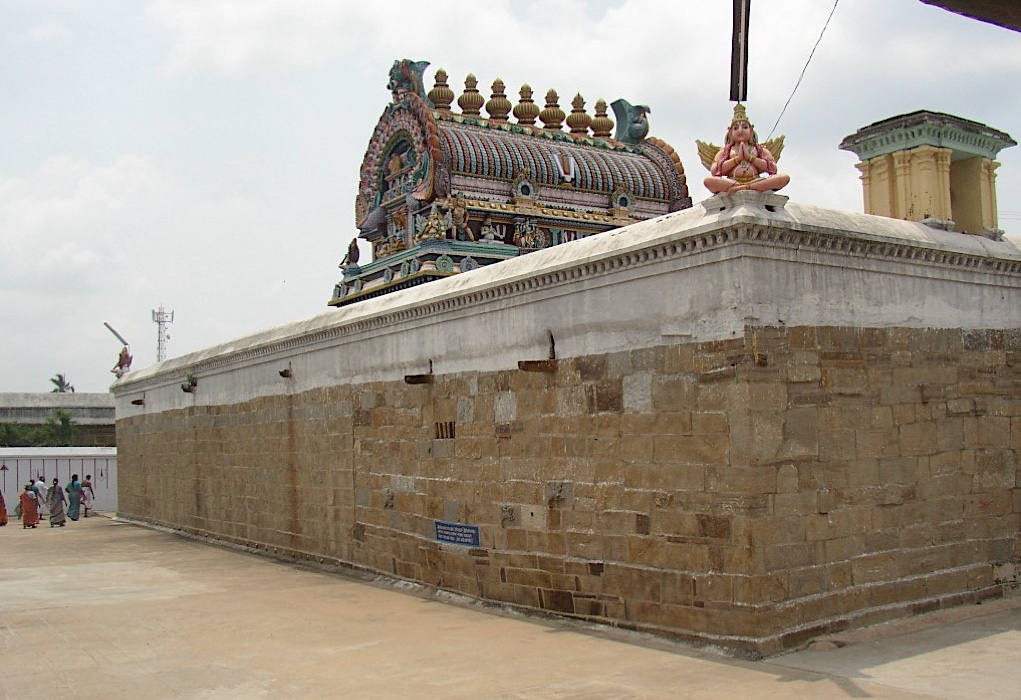
The temple of Trivikrama at Ūraham called Ulakaḷanta Perumāḷ in Kāñcipuram is a venerated Viṣṇu kṣetra in the south, included among the 108 centres called divya-deśas. The god measuring the three worlds with his lifted foot faces west in this temple. Inside the temple there are three more divya-deśas namely Nīraham, Kāraham, and Kār-vānam. A visitor to this temple can have darśan of four divya-desa in one temple complex. The area where the temple is located is called Kaccippeḍu in ancient inscriptions.
1.1. Early History
The very name Ūraham (Ūr + aham) i.e. “heart of the village” indicates that it served as the centre of Kāñci-puram. It was founded when Kāñcipuram was only a small village. It is a tradition that in any village or township, the temple of Viṣṇu should be located in the centre or somewhat west of the centre of the village layout. The name Ūraham suggests that originally the city of Kāñci was laid according to ancient traditional architectural treatise with the temple of Viṣṇu in the centre.
There are also suggestions in the hymns of Vaiṣhṇavite Āḻvārs that three forms of Viṣṇu namely seated, standing and reclining, were enshrined in separate temples at Kāñcipuram from time immemorial. The standing form refers to this Trivikrama temple (known as Ulakaḷanda Perumāḷ at Ūraham), the seated form to Pāṭakam (the Pāṇḍava-dūta-perumāḷ) and the reclining form of Viṣṇu at Tiru-Vehhā. (Conna-vaṇṇam-ceyda Perumāḷ - Yatotkāri temple). While the Ūrahap-Perumāḷ was the protector of the city, the temple of Kāmākṣi was the city's personified Devatā. While the village or city may be classified as Viṣṇu-pura, or Śiva-pura, the entire village or city is personified as the goddess Durgā Parameśvari such as Kāñci-purī devatā, Kāśi-purī devatā, Mathurā-purī devatā or Puṣhkalāvatī devatā. The form of Viṣṇu is the protective power, while the goddess is the personified Śakti of the settlement. Thus the Goddess is generally called the “Grama-devatā”. However the principal god of the village or city is also called Grama-devatā, the god of that village. One of the 12th Century inscriptions of Ūraham names Viṣṇu as the Grāma-devatā. (nam ũr grama devataiyāṉa ūrakattu ulakaḷanta perumāḷ) which would indictate that the settlers considered Viṣṇu to be the main deity of the city.
The Trivikrama image should be installed and worshipped by the settlers who desire victory in all their undertakings just as Viṣṇu conquered the three worlds in three strides. We may conclude that around these two temples, Ulakaḷanda Perumāḷ and the temple of Kāmākṣī which are close to each other in the centre of the city, where the people of the city lived for over one thousand years or more. But the city seems to have expanded encompassing the Varadarājā temple changing the character of the city later.
There is a reference to the reclining form of Viṣṇu at Kāñci in a two thousand year old Saṅgam Tamiḻ literatry work. This part of Tiru-vehhā (Yatotkāri temple) almost certainly served as the eastern boundary of the original city. The Saṅgam Tamiḻ work, Perumbāṇ-āṟṟupaḍai, sung by the poet Rudram-kaṇṇanār, mentions Tiru-Vehhā in which Viṣṇu is described as reclining on his serpent couch (pāmpaṇaip paḷḷi amarntōṉ āṅkaṇ - பாம்பணைப் பள்ளி அமர்ந்தோன் ஆங்கண் ). The early ruler of Kāñci was called Tiraiyaṉ (tirai - wave) “the gift of sea waves” and claimed to have descended from Lord Viṣṇu.
1.2. Ūraham in Āḻvār Pācurams
The earliest Vaiṣhṇava Āḻvār to sing Ulakaḷanta Perumāḷ was Tirumaḻisai Āḻvār who was a contemporary of Pallava Mahendra-varman in 7th century. He describes Viṣṇu of Ūraham as standing, the Viṣṇu of Pāṭakam as seated and the Viṣṇu of Tiru-Vehhā as reclining, and names him as the God of Gods, the Devadeva who protected his devotees1. These devotees practiced āsana, prāṇāyāma etc., and followed the path of yoga-mārga in order to achieve communion with Viṣṇu. Viṣṇu is seated in Pāṭakam that had lofty mansions like mountains. While he stood on the lofty mountain (Tiru-veṅkaṭam) and sat in Pāṭakam which are great abodes, but is it known what made him sleep on waters of the river at Tiru-Vehhā?" This is a poetic way of praising all the three temples together.
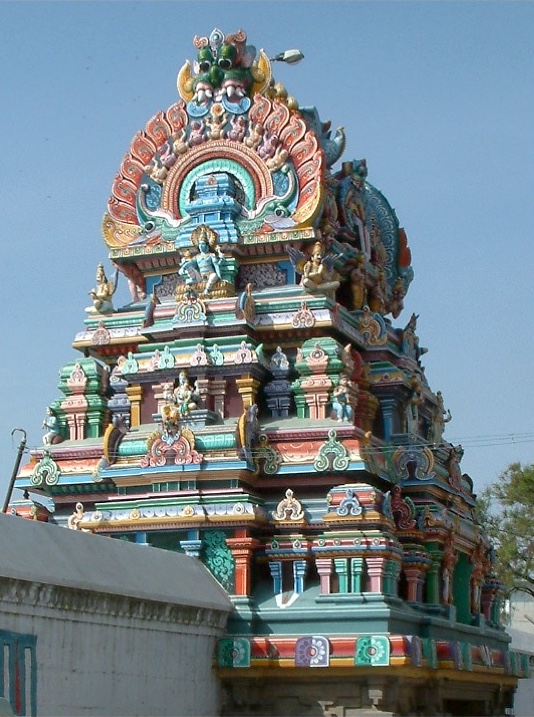
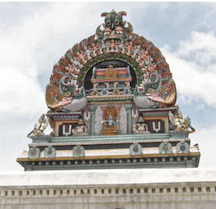
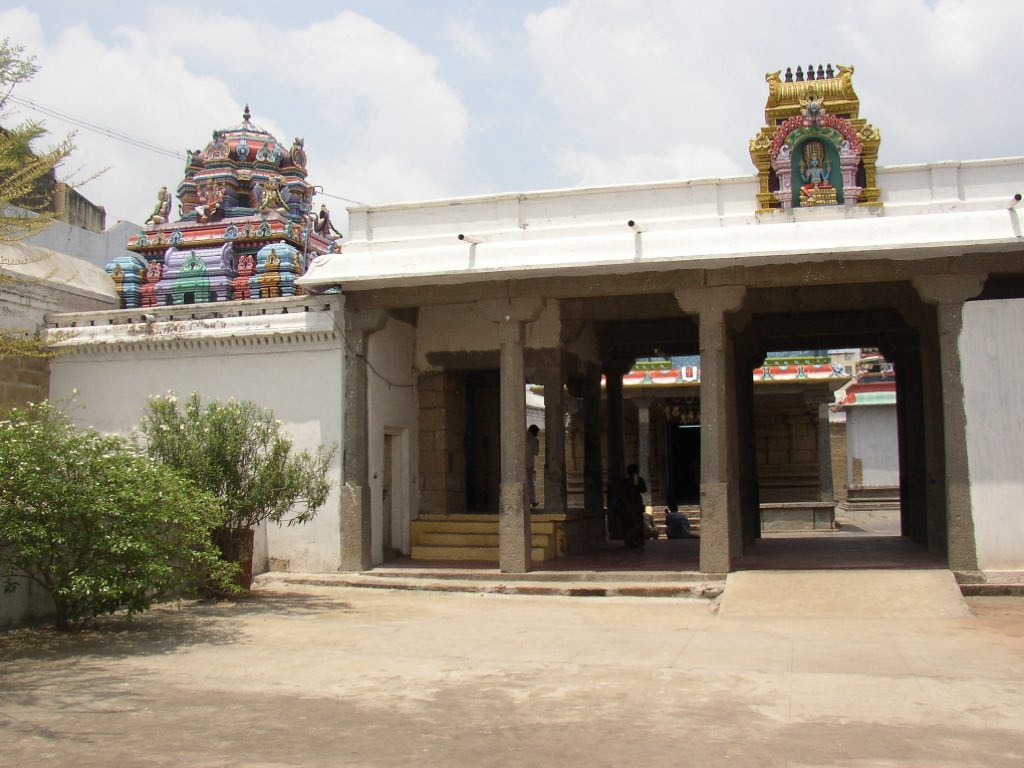
fig. 1.1: The outermost gopura in the west of the Ūraham Temple, Kāñcipuram, Cōḻa Age, 12th-13th century.
In another verse2 (815) the Āḻvār says:
“The lord stood in Ūraham, remained seated in Pāṭakam and reclined in Tiru-Vehhā. All these events took place aeons ago i.e. innumerable years earlier. The Āḻvār was not born then, but ever since his birth the lord stands, sits and sleeps in his mind. He never forgot the lord even for a moment and hence the place of the lord is his mind.”
This fine poetic expression suggests that all the three places, Ūraham, Pāṭaham and Vehhā, were always in the Āḻvār's mind. Evidently, these three places remained greatly celebrated from days of yore.
The next Āḻvār to sing of Ūraham was Tiru-maṅgai Āḻvār in the 8th century. The Āḻvār sings about a number of temples like Nīraham (one of the sub-shrines within Ūraham), the lord of Vēṅkaṭam, the lord of Nilātiṅgaḷ-tuṇḍam (now within the Ekāmranātha temple), Ūraham in the dense city of Kāñci, the lord of Tiru-Vehhā on the banks of Vegavati river, the lord of Kāraham, adored by the three worlds, the lord of Kār-vāṉam, the lord who resides on the southern side of Kaveri in the south (Tiru-araṅgam) and the lord who remains in his mind without moving out even for a fraction of a second3.
In a poem couched in erotic emotion, the Āḻvār sings as an infatuated girl, pining for union with the lord.4 The Āḻvār says,
“This girl is exhausted with tears trickling and falling on her breasts and coaches her parrot to sing the exploits of her lover. The girl asks her parrot to sing the praises of the Lord of Ūraham of Kāñci who lifted the mountain to protect the cows from the rains of stones, the lord of Ūraham in the midst of fragrant flowers of Kāñci. He married the lovely girl, Sītā by breaking the invincible bow. He who sleeps in Vehhā destroyed the wrestlers (sent by Kaṁsa) by wrestling with them. He tore the horse demon Kesi by tearing his mouth. This girl coaches her parrots to sing the glory of her lord and is virtually exhausted. She knows that he is capable of doing extraordinary exploits. For him it is not difficult to satisfy the love of this tender girl. She feels her lord is yet to arrive”.
In a long poem the Āḻvār sings about all the Vaiṣṇava-kṣetras or pilgrims centres. In this list, he sings of Ūraham as situated in Kāñci encircled by high fortification.
In another poem he includes Ūraham, Pāṭakam, and Vehhā.5 In most cases, the temples of Kāñci mainly Ūraham, Pāṭakam, and Vehhā are mentioned together showing that for the Āḻvārs these three temples were Kāñci’s great temples.
It may be mentioned that the Varadarājā temple of Kāñci was not as famous as these three temples, at that time. It is sung by only one Āḻvār, Bhutattāḻvār. In some editions of Divya-prabandham the editors say that there are seven patikams on Varadarājā, but in the original poems there is no reference to this temple except in the poems of Bhutattāḻvār. Some schoḻars hold that Attiyūr mentioned by the Āḻvār refers to the Narasiṁha shrine below the present Varadarājā shrine and not the Varadarājā. The modern Varadarājā temple mentioned as Attiyũr was then only a small village temple that sprang into prominence later.
1.3. The Temple
The Ūraham temple faces west and is situated near the Kāmākṣi amman temple. It has a puṣkariṇī (temple tank) in front. There is one outer gopura, two enclosures (prākāras), one main shrine and three other subsidiary shrines and a maṇḍapa with three shrines housing, Āṇḍāḷ, Maṇavāḷa-māmuni and Nammāḻvār.
The main temple was built of black granite in the time of Kulōttuṅga I, with a pillared enclosure that might be somewhat later. The original outer prākāra with a preceding porch at the entrance now forms the second prākāra. An outer gopura is built abutting the outer wall of the second prākāra. Inside the second prākāra are three more shrines dedicated to Nīraha Perumāḷ situated in the north, facing south, Kāraha Perumāḷ in the south (facing north) and Kārvāna Perumāḷ also known as (Veṇṇaik-kūttaṉ – Navanīta-cora) also on the southwest of the prākāra, (facing north). These three shrines are also included among the 108 divya-deśa which along with the main Ulakaḷanta Perumāḷ represent four divya-deśa’s in this temple complex. In the southwest corner of the prākāra, there is also a Tāyār shrine.
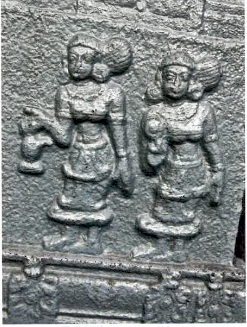
fig. 1.6: Two dancing girls bringing water and flowers portrayed on a pillar in the Kāmākṣī-ammaṉ Temple, Kāñcipuram.
The mũlasthāna of the main Ulakaḷanta Perumāḷ is rectangular in shape and the deity inside is made of stucco. It is one of the tallest mūla-mūrtis, rising to about 20 feet in height. Twice a year, the stucco figure is given tailak-kāppu (application of scented oil) as a protective coat for the stucco image. The Trivikrama form shows the right leg planted on the head of Mahābali while the left leg is lifted up. The main deity is two armed. All the bronzes of the divine images are inside the sanctum, while the images of the Āḻvārs are in the preceding maṇḍapa. An image of five hooded Ananta is seen in a subshrine facing south in the preceding maṇḍapa. It is covered with sandal powder and is called Anantāḻvāṉ. It is fairly a big image with a separate sub-shrine. It is possible that the image represents veḷḷai nāgar - “white serpent” who is identical with Balarama in ancient literature. It probably represents the early temple relic. An early temple is mentioned in the inscription of Kulōttuṅga.
It is known from the copper plate charter of Uttama Cōḻa that there were three stone inscriptions during the reigns of Vijayālaya Cōḻa, Pallava Vijaya Kampavikrama Varman (9th century), and Parāntaka Cōḻa I (10th century). These inscriptions described the approved list of expenditures for daily worship (nitya Pũjā) and the annual festival in the month of Chitra (Brahmotsava). Unfortunately, these inscriptions are no longer available. On the south side of the inner prākāra, there is an inscription from the 9th century of Pallava Teḷḷāru-eṟinda Nandi embedded into the floor.
The base of the main temple is a simple pāda-bandha variety with jagati, tripaṭṭa kumuda, and paṭṭika. There are no niches in the nearly seventy plain outer walls of the main temple. The earliest inscription on the wall is that of Kulōttuṅga I. Evidently, the temple was built in his time before his 40th year of rule (1110 CE). The style of the structure and the veneration with which the king made gifts to this temple confirm that the shrine should belong to his time.
The main temple has a number of pilasters dividing the otherwise plain walls with a preceding maṇḍapa of equal length. The vimāna superstructure is rectangular in shape. The main temple shrine on the inner side seems to have been built retaining the older outer prākāra, on the walls of which inscriptions of Rājarājā and Rājēndra are found. The original main shrine was probably made of brick, which was converted into stone during the time of Kulōttuṅga I. An inscription at the entrance to the inner prākāra on the southern side of the base of the small gopura is dated to the time of Rājarājā-Rājendra. The kumuda carries the beginning part of the first part of Rājendra’s praśasti. However, this part is missing on the northern side. It is likely that this side was used to carry the blocks of stones for building the inner shrine and maṇḍapa in the time of Kulōttuṅga I. Immediately upon entering the inner prākāra, one finds a front part built with cylindrical pillars of considerable height. One of the pillars in alignment with the sannindi carries a sculpture of Veṇugopāla Kṛṣṇa. Another pillar on the southern side shows elaborate carvings. They indicate that these pillars belonged to a maṇḍapa of the age of Rājēndra Cōḻa, later built into this position. They also seem to recall a similar maṇḍapa of Rājēndra’s time in the Sundaravarada Perumāḷ temple at nearby Uttaramērūr.
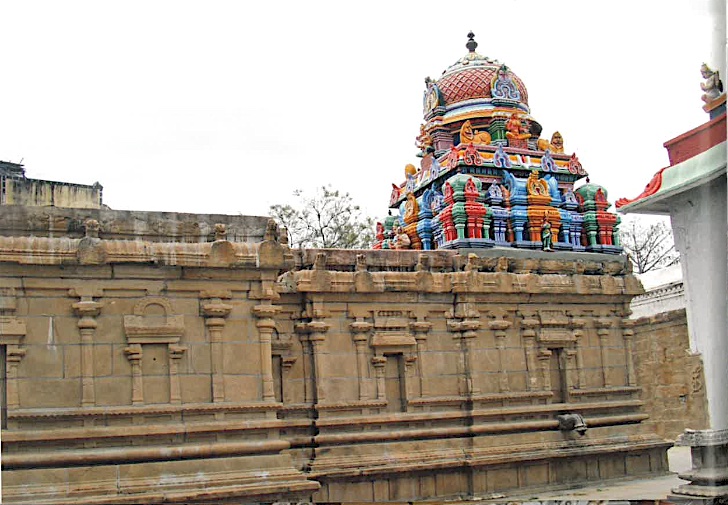
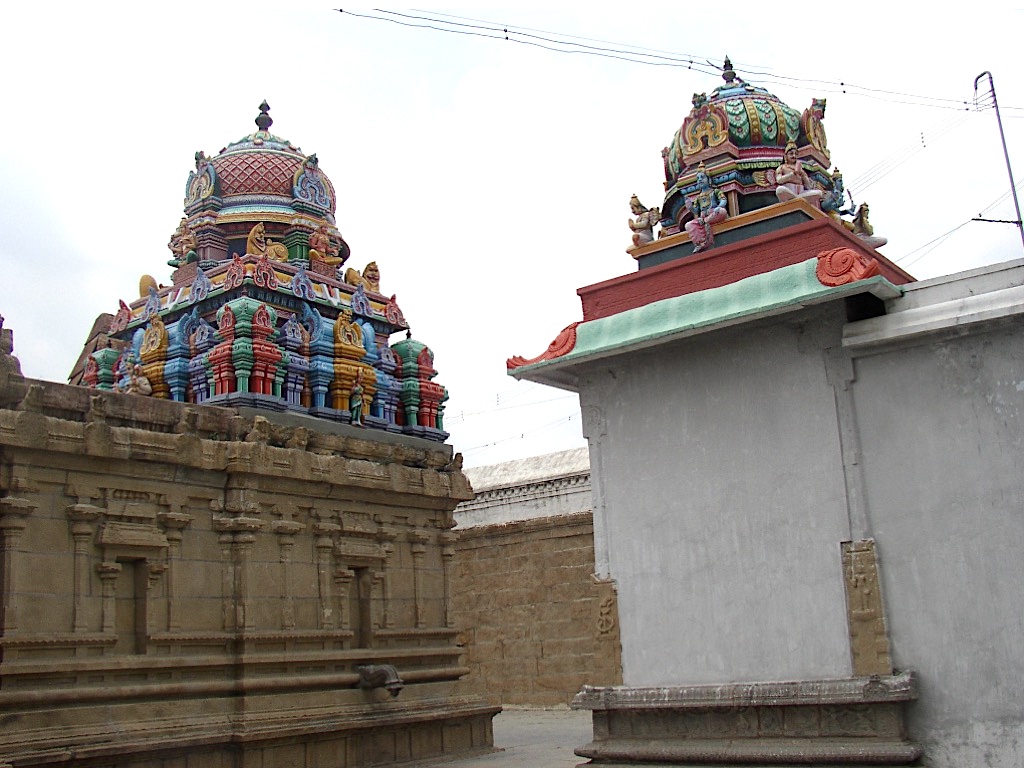
fig. 1.7: The vimāna and the enclosure of the Ūraham Temple, Kāñchipuram, Cōḻa period, 12th century.
fig.1.8. The śāla vimāna of the Ūraham Temple, (Ulakaḷanda Perumāḷ Temple) the centre of ancient Kaccippēḍu (Kāñcipuram), built of stone by Kulōttuṅga I, 12th century.
The structures of the other three divya-deśa namely the Nīraham, Kāraham and Kārvānam were all rebuilt in the beginning of 20th century and recently have been repainted. The Tāyār shrine seems to indicate an early date around 14th century but was also recently renovated and painted.
The outer gopura of the temple bears an inscription of Rājanārāyaṇa Sambhuvarāya dated in 1346 CE, recording a gift of lands and a house site for a Vedic institution to teach Vedic recitation. The gopura is certainly earlier than that date and might have been built at the end of the 13th cent. No inscriptional record is available to give a precise date.
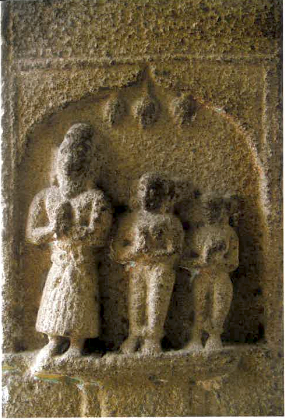
The entrance to the inner shrine through a gopura like structure did have a gopura of the age of Rājēndra Cōḻa but was rebuilt. In front of it is a pillared porch bearing a number of portraits of its builders. As there is no inscription we cannot date them with certainty, but stylistically the sculptures and pillars appear to be from the 17th cent. Some activity had gone on there in the 17th cent. Until further records are brought to light it is not possible to trace the authentic history of this portion.
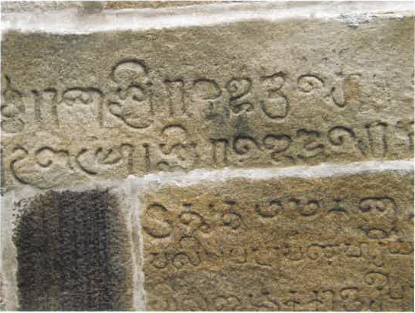
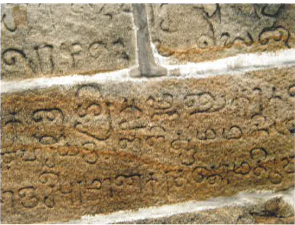
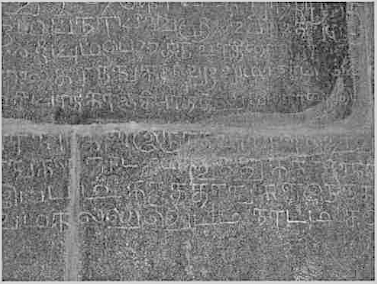
fig. 1.9. An inscription of Rājēndra Cōḻa on the wall of the second prākāra of this temple.
fig. 1.10. An inscription of Rājēndra Cōḻa referring to the temple of Kṛṣṇa and also mentioning Kāñci-māṉagaram.
Although the earliest inscription on the outer gopura is that of Veṉṟumaṇkoṇḍa Sambhuvarāyar, (18th year 1340 CE) the gopura is obviously earlier and may be from the age of the later Cōḻas – (13th century). The surrounding area in front of the temple has risen considerably due to accumulation of earth. Consequently the floor of the prākāra is at a lower level. The lower part of the gopura is of granite and the superstructure is made of brick and mortar the later has undergone renovations in subsequent periods.
The saṉṉidhi street in also in formation with the temple which received some house sites in the beginning of the 20th century. The traditional rules which could not be violated in ancient times, required that the streets should have had orderly layout. These rules have been thrown to the wind in modern times and haphazard buildings now that mar the environment’s beauty.
The tank in front is a part of the temple complex and is called Vāmana Puṣkariṇī. It seems to have existed earlier, which was dug in the year 1901 as a new foundation (nūtana śrī vāmana puṣkariṇi kaiṅkaryam) by one Munuswami Nāyudu, of Chennai (Rāyapuram – Madras) who belonged to Padma Veḷḷāḷa caste (agriculturist) but who was engaged in trading wood.
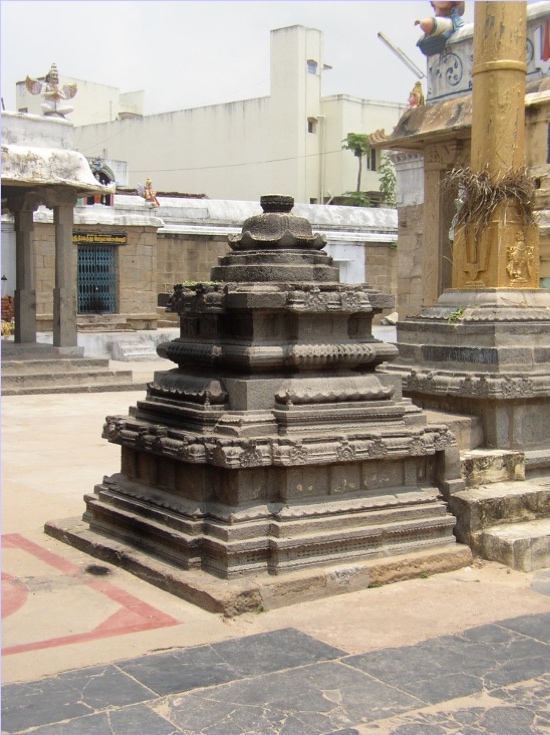
fig. 1.11: At the far end of the enclosure, behind the grill gate is the Nīraham Temple with bali-piṭha (altar) of the main temple in front.
fig. 1.12: The Kāraham Temple (sub temple) on the south side of the main temple complex of Ūraham, Kāñcipuram.
fig. 1.13: The temple of the goddess (Tāyār shrine) located on the south-west of the Ūraham Temple complex, view from the south-east, 16th century, renovated recently.
fig. 1.14: The temple of the Goddess (Tāyār shrine), in the Ūraham Temple complex, Kāñcipuram, 16th century, view from the south-east.
1.4. Kārvāṉam
The image of Kāraham (Viṣṇu in seated pose ) and Nīraham (Viṣṇu in reclining pose) and also another image of Viṣṇu in standing pose called Kārvāṉam (Kṛṣṇa) are three more divya-deśas located within the temple premises. The first two are mentioned by the Āḻvārs and are therefore venerated. The last one appears to have been a temple rebuilt in the time of Rājēndra Cōḻa in the 11th century and was included in the 108 divya-deśas list when the concept of divya-deśa came into vogue. A fragmentary inscription of Rājēndra Cōḻa found on the wall of the first enclosure outside mentions the building of a temple Veṇṇai-kūttaṉ (Navanīta Kṛṣṇa) by Rāmaṉ Kṛṣṇaṉ, the commander-in-chief of Rājēndra. He was the illustrious son of Kṛṣṇaṉ Rāmaṉ, the commander-in-chief of Rājarājā I who built the outer enclosure of the Great temple of Tanjore. It seems his son Rāmaṉ Kṛṣṇaṉ succeded his father as the commander of the Cōḻa army and built this temple in his name. A number of fragmentary inscriptions of Rājarājā and his son Rājēndra are now found on the enclosure wall written in bold characters suggesting the temple should have been of considerable size in the 11th century.
1.5. Historical Records – Stone Inscriptions
It is interesting to note that the name of the Ūraham temple occurs as the ‘God pleased to stand at Ūraham’ (ūrakattu niṉṟa perumāḷ) in Āḻvārs’ poems and the temple inscriptions. However, from the time of Vikrama Cōḻa, the son of Kulōttuṅga, it came to be known as Ulakaḷanda Perumāḷ. Kulōttuṅga paid great attention to this temple, covering it with gold and gifting a village and a large portion of land for worship. As a result, he was gratefully remembered for his contribution. During his 38th year, he carried out an extensive land survey and acquired the title Ulakaḷanda Perumāḷ. This is possibly the reason why Trivikrama in the Ūraham Temple came to be known as Ulakaḷanta Perumāḷ.
fig. 1.15: A portrait of a devotee with his consorts, probably the builders of the maṇḍapa, on a pillar in the maṇḍapa in front of the inner entrance, 17th century.
fig. 1.16:The temple of Kārvāṉam, in the Ūraham Temple complex with the temple of the Goddess at the back, Kāñcīpuram, 16th-century construction, renovated recently.
Besides the copper plates of Uttama Cōḻa, there are twenty-one stone inscriptions on the walls of this temple ranging from the 9th to the 14th centuries. These inscriptions have been copied and published, and more are yet to be published. There are also several from the 20th century. They provide great insight into the history of the temple, recording how it was sustained through the centuries and played a role in the history of Kāñcipuram. These inscriptions serve as the only verifiable evidence that sheds light on its true history. Interestingly, there are no inscriptions after the 14th century until the 20th century, suggesting that this temple, which was once the central temple of Kāñcipuram, gradually lost its prominence. This fact emerges from a study of the inscriptions, which we will discuss here.
The following kings are represented in inscriptions:
Pallava Teḷḷāṟeṟinda Nandivarman 846-870
Vijayālaya Cōḻa 850- 875
Pallava Kampavikrama varman 870- 896?
Parāntaka Cōḻa I 906 - 946
Uttama Cōḻa 970- 985 (who issued a copper plate on Ūrham temple)
Rājarājā Cōḻa I ( 985 - 1015)
Rājendra Cōḻa I (1012 - 1044)
Kulōttuṅga Cōḻa I (1070 – 1125)
Rājādhirāja I (1163-1179)
Rājarājā III (1216-1246)
Sundara Pāṇḍyaṉ (1256-1266)
Vijaya Gaṇḍa-gopāla (1250-1291)
Sambhuvarāyar (1222)
These rulers are mentioned in the copper plates as well as their stone inscriptions. However, after the last mentioned ruler, no further inscriptions are found in the temple.
1.6. Under the Pallavas
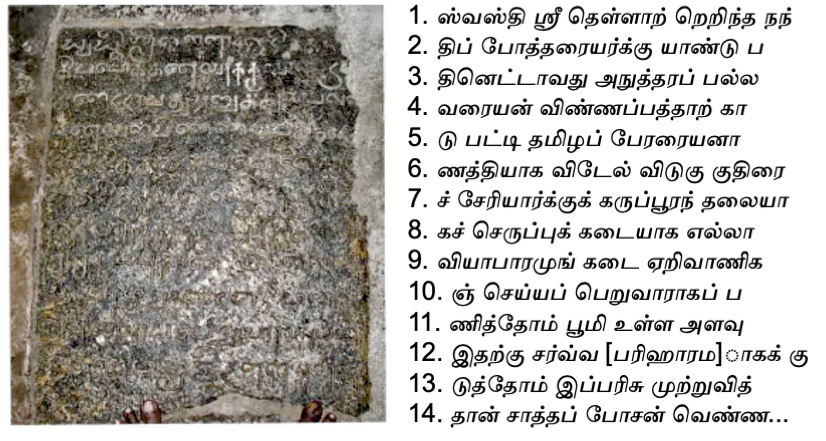
A stone inscription on a neatly polished granite stone carrying a record of the Pallava ruler Nandivarmaṉ III, the Victor at Teḷḷāṟu, dated in his 18th year (about 864 CE) is embedded in the floor on the southern side of the inner prākāra. This stone should have been a separately inscribed slab placed in front of the original brick shrine, as is the case of documents of this period. One Aṉuttara-pallavarāiyaṉ appealed to the king that the merchants of the quarters of Viṭēl-viṭuku-kutiraiccēri should be exempted from paying taxes, to the royal treasury. King Nandivarmaṉ agreed to the request and declared that the merchants of the Kutiraiccēri (quarters of Horse stables) were permitted to sell all commodities, from camphor to sandals (ceruppu - செருப்பு), without paying any tax (sarva parihāram) (kaḍai eṟi vāṇikam ceyya peruvārāka paṇittōm). The inscription is brief but suggests that the merchants were looking after the expenses of the temple. The order was executed by one Saṭṭaṭṭa-bhōjaṉ Peṇṇaṉ. The merchants’ shops were located in the quarters of Viṭēl-viṭuku-kutiraic-cēri, Viṭēl-viṭuku was a title of the Pallava and the name Kutiraic-cēri shows that the King maintained a cavalry unit which probably distinguished itself in a battle fought by the king. However, there is no mention in the record that it related to the temple, as in the case of iṟaiyili devatāṉa lands of the later Cōḻa records. The merchants would then be expected to pay amounts equal to all the taxes to the temple for its maintenance.
fig. 1.17: The inscription of Pallava ruler, Teḷḷāṟeṟinda Nandivarmaṉ granting permission ot merchants (living in the streets of Kutiraicceri - colony of cavaliers) to sell commodities.
A 9th century record found embedded on the floor records the resolution of the mahā-sabhā, (the great assembly), to renovate the temple with 1500 kāḍi of paddy received from the temple lands (deva–bhogam ) irrigated by lift irrigation. It also refers to income from a village Nallūr Iḷappākkam to be managed by the assembly. As the beginning of the record is not available, the name of the ruler in whose time the transaction took place is not known. Hoever, as the record is in 9th century characters, it may be taken as a Pallava record.
Mention has already been made about the arrangements made in the reign of Kampavarma Pallava to regulate the ex,penditure on incomes from interests deposited with some village assemblies from out of the income of the temple. For more details the next part dealing with the temple under the Cōḻas may be seen in which a comprehensive arrangement was recorded in the time of Uttama Cōḻa.
1.7. Uttama Cōḻa’s Contribution
1.7.1 King’s Order
There is an important copper plate royal charter issued by Uttama Cōḻa (970-985) preserved in the Madras Government Museum known as “Madras Museum plates of Uttama Cōḻa”. It records an important order of the King relating to the Ūraham Trivikrama temple. The copper plate was specifically meant for the Ūraham temple and issued by the king in 985, the year in which Rājarājā Cōḻa ascended the throne. It gives elaborate details about Kāñcipuram, the Ūraham temple, its worship and festivals. Incidentally, it is an early royal plate to mention the history of the temple, taking it back to the Pallava and perhaps even earlier.
These plates are fastened to a ring which carries the royal seal of Uttama Cōḻa. There are altogether five plates, but some plates from the beginning and end are missing. These plates were first noticed in 1881, nearly one hundred and twenty-five years ago.
The plates are written in both Sanskrit and Tamiḻ languages. One part of the Sanskrit portion is available only at the end, but the Tamiḻ portions are nearly fully preserved. The Sanskrit portion says that King Uttama Cōḻa himself appointed inhabitants of two cēris of Kaccippēḍu to verify the accounts of the Ūraham temple. The Tamiḻ portion states that the king ordered his officer to decide the details of the order. Obviously, the king issued the general orders while his officer was directed to draft the details of the arrangement.
The available Sanskrit part gives some interesting details not noticed in the Tamiḻ part. For example, it mentions that there were two castes among the Paṭṭasālis of Kaccippēḍu who are called tantuvāyas, i.e., weavers. It also mentions that residents of four cēris of Kaccippēḍu were engaged in weaving cloth for the royal household. These cēris were called Atimāṉap-pāḍi, Kampulāṉp-pāḍi, Eṟṟuvalac-cēṟi, and Kañcahap-pāḍi.
Another quarter, called Cōḻa Niyamam, was directed to examine the administration of the temple every month. Merchants of Kañcahap-pāḍi and Eṟṟuvalic-cēṟu were directed to examine the expenditure incurred by the temple for the festival, immediately after the festival was over. The merchants of the nagara should appoint the administrator for the temple, a watchman, and accountant to serve in the temple, and their wages and allowances should be paid from the Temple treasury.
Three other merchant quarters mentioned were Raṇajayap-pāḍiyār, Ekavīrap-pāḍiyār, and Vāmaṉac-cēriyār and were said to belong to the denomination of Saṅkarap-pāḍiyār. The Tamiḻ part gives full details, showing how thorough the Cōḻa administration was. We see the following merchants’ localities mentioned in this part of the record.
Kampuḻām-pāḍi
Eṛṛuvalac-cēri
Kañcahāp-pāḍi
Atimānap-pāḍi
Raṇjayp-pāḍi
Ekavīrap-pāḍi
Vāmaṇac-cēri
It is not known what the term Kampuḻām-cēri means but may some thing to do with kampu grains. Eṟṟuvalac-ceri may be a reference to Śiva who is called “eṟṟuvalaṉ uyariya maṇimiḍaṟṟōṉ” (ஏற்று வலன் உயரிய எரிமருள் அவிர் சடை, மாற்றருங் கணிச்சி மணிமிடற்றோன் - புறம் 56) one who has the bull standard in a Saṅgam poem (Puṟam 56). Ekamranātha temple in this locality was an ancient temple and that might have given the name. Kañcahap-pāḍi probably was named after Kṛṣṇa who killed Kaṁsa (refered to Kañca in Tamiḻ literature). The temple of Paṭakam Pāṇḍava-dūtar in located in this locality. The other four names Atimāṉa, Raṇajaya, Ekavīra, and Vāmaṇa are the well known titles of Rājasiṁha Pallava, the builder of the Kailāsanātha temple. This temple also was also located in the Kaccippēḍu area. These four Merchant streets were obviously established by Rājasimha around 700 CE and were involved in the maintenance of the Ūraham temple then.
1.7.2. Income of the Temple
Uttama Cōḻa was seated in the Chitra-maṇḍapa of his golden palace at Kāñcipuram (Kacchip-pēḍu), when his officer Muvēndavēlāṉ requested him to issue orders creating nibandhas that approved various expenditure heads for the income of the temple. His officer told the king that the temple of Ūraham derived its income mainly from three sources.
The tax levied on weighing measures and grain measures (kōl-niṟai-kūli and kāl-aḷavu-kūli) in commercial transactions.
The proceeds from the lands purchased at Kacchippēḍu and Tuṇḍunuk-kac-cēri.
A number of Village assemblies near Kāñcipuram had taken gold on loan from the temple and the interest received on these amounts.
Appropriate apportionment was ordered for various expenses related to daily worship and festivals. The king personally directed the officer to allocate funds as needed and issued an order recorded on a copper plate. Subsequently, the officer provided clear-cut specifications for various expenses and the corresponding amounts required. Thus, the copper plate delineates the nature of daily worship in the temple, including the quantity of materials needed. Additionally, it contains instructions on how to conduct the annual festival in the month of Chittirai, forming the second part of the record. Finally, administrative guidelines for overseeing the temple’s maintenance forms the final part the document.
1.7.3. Verification of Earlier Deeds
The order of Uttama Cōḻa specified that the various incomes of the temple were to be verified from the earlier deeds inscribed on stone, including deeds issued in the reign of two earlier kings: one a Cōḻa and the other Pallava. The first deed is related to the time of Kō-Parakēsarivarmaṉ in his 22nd year, identical with Vijayālaya Cōḻa, the founder of the Imperial Cōḻa dynasty and the second to the reign of the Pallava king Vijaya Kampa-vikrama-varmaṉ in his 9th year (circa 890).
The following incomes are documented in the records two villages, Kūram and Araiyaṉ-perumpākkam received 250 kaḻañju of gold on loan from the temple, on an interest of five hundred kāḍi of paddy per year, to be paid by a standard measure of their village. Another village assembly of Uḻaiyūr received fifty kaḻañju on loan from the temple in the same year of the king Parakēsarivarmaṉ and in return measoure to the temple 150 kāḍi of paddy per annum. A third village assembly at Oḻukkai-pākkam, received 24 kaḻañju of gold on loan from the temple in the 9th reign of the Pallava Vijaya Kampavarmaṉ, and was obliged to pay one kaḻañju and 4 manajāḍi of gold per year as interest.
1.8. Approved Expenditure for Daily Worship
The incomes received from the above mentioned villages the taxes on weighing and measuring commodities in Kacchippēḍu, and the proceeds from the lands purchased by the temple were to be used only for daily worship in the temple. The following were the approved expenditure. Provisions for daily food offerings to the God and payment of daily wages to temple servants and their annual clothing allowances. The servants included the priests and an assistant, nine instrumental musicians, gardeners for rearing flower gardens, watchmen, and cleaners of the premises. The provisions also included the priest’s fee (ācārya dakṣiṇā) for the special worship on Saṁkrānti days.
1.9. Two More Deities in the Same Temple
The record also mention that there were two more deities (iruvar dēvarakaḷ) in the temple in a portion called “karikāla-teṟṟi” – a verandah probably like the enclosure named after Karikāla Cōḻa. Provosions were made for the daily worship of these two additional deities – food offerings, burning lamps, and use of scented sandal paste and incense. These two additional deities were probably the “Nīraham” and “Kāraham” shrines which are now included in the 108 divya-deśas. These two deities are even now housed in the enclosure of Ūraham. Also they show that they existed in the temple from the time of the Pallavas along with the Ūrahattu-ninṟa-dēvar (Trivikrama). The fourth one in the Ūraham complex is the Kārvāṉam temple which was built in the time of Rājēndra Cōḻa I. The details of the provisions are given below.
1.10. Food Offerings
The food consisted of simple cooked rice, two vegetables, including what is called in other records as poṟikkaṟi amudu, some form of cooked vegetables kūṭṭu, ghee, curd, betel leaf and nuts. The details are as follows:-
tiru-amudu for three sandhis - paddy three kuṟuṇi and six nāḻi.
kaṟi-amudu - two per sandhi (vegetable boiled or fried), four nāḻi of paddy per day.
ney-amudu (ghee) - one uḻakku per day, five nāḻi of paddy per day.
tayir-amudu (curd) - one uri per sandhi, 3 sandhi per day one, 3 nāḻi of paddy per day.
aḍaikkā-amudu (betel leaf and nut) - three sandhis, three nāli of paddy.
1.11. Temple Servants
One Veda Brāhmaṇa priest who performs worship (ārādippāṉ), one padakku paddy per day and five kaḻañju as clothing allowance per annum.
An assistant for the priest (paricāraka-māṇi) six nāḻi of paddy per day and one kaḻañju of gold as clothing allowance.
One meykāppu (watchman) , one kuṟuṇi of paddy per day and two kaḻañju of gold per annum
Two gardeners to rear flower gardens (naṉdavaṉam uḻappāṉ) one kuṟuṇi and four nāḻi of paddy daily and one kaḻañju per annum
Cleaners (meḻugu iduvars), three nāḻi of paddy daily
Uvacchars nine persons (Instrument players)
talaip-paṟai 1person
mattalli 2 persons
karaḍikai one
tāḷam one
cekaṇḍikai one
kāḷam two
kaimaṇi one
These instrument players were allotted some lands and also 150 kāḍi of paddy, inclusive of clothing allowance.
For scented sandal paste and incense, 1/8th poṉ as (annual requirement) kaḻañju gold.
tiru-namaṇikai cloth for the deity to be worn during bathing at the rate of three namaṇikai per day
tiruparicaṯṯam cloth for wearing, 1½ kaḻañju
1.12. Income for Festivals
Similarly provisions were also made for two other deities.
The second part of the record deals with seperate provisions required for conducting a seven day annual festival in the month of Chittirai. Four quarters in Kaccippēḍu received money from the temple of Ūraham on loan as follows:-
Kampuḻāmpāḍi - 73 ½ kaḻañju of gold
Atimāṉap-pāḍi - 73 ½ kaḻañju of gold
Kañcagapāḍi - 35 kaḻañju of gold
Eṟṟuvaḻiccēri - 18 kaḻañju
1.13. Approved Expenditure for Festivals
For the 200 kaḻañju of gold taken as loan, a sum of 30 kaḻañju received as interest at the rate of one piḷavu per kaḻañju, was apportioned for the seven day festival of Chittirai. The following expenses were approved out of this interest. Oil for seven days, flowers and scented sandal paste, Devaraḍiyār conducting koṭṭi (ghoṣṭi), food and presents for those who perform ghoṣṭi, for feeding the Brāhmaṇas, palanquin bearers, for special musicians, and for miscellaneous expenditure at the following rates:
Oil -7 kaḻañju of gold
Flowers and scented sandal- 2 kaḻañjus
Ghoṣṭi devotees - 5 kaḻañjus for food and presents
Brahmin feeding -10 kaḻañju
Palanquin bearer and special musicians - total one kaḻañju
along with 5 kaḻañju which could be utilized for unforeseen expenses.
The residents of Kampuḻāmp-pāḍi, Atimāṉap-pāḍi, Kañcahap-pāḍi, and Eṟṟuvaḻic-cēri would themselves carry lamps and flags in lieu of wages that was equal to the taxes to be paid by them to Lord Viṣṇu. There was another cēri named “cōḻa-niyamam” where a group of people called Toḷāc-ceviyar, also named Ēlāk-kaiyar resided. Their number had diminished and had become poor. So, it was now ordered that they need not pay any tax or perform any service. Instead, the new immigrants to this colony would be levied one nāḻi and uḻakku of oil and two nāḻi of rice per house per month as tax. They would pay only this tax and nothing else to anyone. Those who demanded anything from them would incur sins. This apportionment had been made almost one hundred years earlier in the 18th year of Parāntaka Cōḻa I (who was the victor of Madurai and Śri Lanka - maturaiyum īḻamum koṇḍa śri kō-parakēsari) and it was decided that the same should continue.
1.14. Administrative Orders
The accountant for the temple would be paid one kuṟuṇi of paddy per day and two kaḻañju of gold per annum from the temple treasury.
The Saṅkarap-pāḍiyar of the three quarters, Raṇajayap-pāḍi, Ekavīrap-pāḍi, and Vāmaṉap-pāḍi of this township who had received 20 kaḻañju of gold on loan would burn a perpetual lamp, which they had agreed. The residents of Cōḻa-Niyamam would burn a lamp by regularly supplying oil.
The lamp bearers and flag carriers were given one tūṇi of rice for bathing the god on two special occasions in a year namely Uttarāyaṇa Sankrānti and Chittirai Viṣu. Provision was also made for chiefs of the assembly who (enters the courtyard of the temple) supervised the functions. For the person organizing the ghosṭi, one tūṇi and one padakku of rice and half a kaḻañju of gold were provided as honorarium. Other petty expenses not specifically provided for could be met from the miscellaneous fund provided.
If any dispute arose regarding the management of the temple, the Vaiṣhṇavas of the 18 nāḍus alone should supervise and settle the matter. The chief manager of the guild (Nagaram Āḷvār), the members of the Eṟṟuvaḻic-ceri, and Kañcahap-pāḍi would examine the accounts soon after the festival was celebrated every year. The residents of the above cēris alone provided for the watchman (tiru-meikāppāṉ) of the sacred images, as per the settlement deposited in the temple treasury. The merchant guild alone selected the superintendent for the sacred images, the watchman, and the accountant and they should not levy tax on them. If a fully knowledgeable priest was not available, a Vedic Brāhmaṇa alone should be appointed to do worship.
1.15. Under the Cōḻas
Besides the copper plate of Uttama Cōḻa discussed above, there are twenty one inscriptions, somewhat worn out, found on the outer side of the inner prākāra wall. The prākāra walls are built of sandstone as found in Pallava temples. In the 7th regnal year (992 CE) of Rājarāja Cōḻa, some gold was deposited as a gift for burning a perpetual lamp. The interest was to be utilized to measure 3 uri per day (of ghee). Another inscription describes a gift of gold for burning a perpetual lamp. The gold is said to be 15 kaḻañju of urumaṇi poṉ - gold like a bead. Another record in Rājarājā Cōḻa’s 3rd year, (988 CE) mentions Rājarājā as Mummuḍi Cōḻa. It refers to “Parāntaka-dēvar”. It is not clear whether it refers to Sundara Cōḻa, the father of Rājarājā, who had the title Parāntaka Cōḻa (II), or the first Parāntaka who ruled in the first half of the 10th century. In all probability it refers to Rājarājā’s father. Some gift was made in his time for offering sacred food to the Lord of Ūraham, “who was pleased to stand” i.e., Trivikrama. Another fragment of the same period refers to a land gift, the proceeds from which were to be utilized for meeting the required expenses.
In the time of Rājēndra Cōḻa I, a shrine of Kṛṣṇa is said to have been built in the temple complex by the Sēnāpati Ramaṉ Kṛṣṇaṉ. It is possible that it is the Veṇṇaik-kūttaṉ temple mentioned earlier and also recorded in later records. The praśasti of Rājēndra I is found on the base of the entrance gopura to the inner enclosure. A record of Rājēndra Cōḻa dated in his 5th year (1007) says that provisions were made for food offerings and other expenses to Veṇṇaik-kūtta-āḻvār within the temple of Ūraham by the decree of Rājēndra Cōḻa Brahmādhirajar. Thus, the Ulakaḷanda Perumāḷ temple seems to have received considerable royal attention in the time of Rājarājā and Rājēndra I.
That the Ūraham temple continued to play a central role in the city of Kāñcipuram in its transactions in the beginning of 11th century is evident from two records of the Kailāsanātha temple of Kāñci. Both the records are dated in the 3rd year of first Rājarājā’s regin. In both the cases, the village assemblies of nearby villages received from the Kaccippēṭṭu-peṟiay-tirukkaṟṟaḷi (Kailāsanātha temple of Kaccippēḍu) and agreed to pay interest of one uḻakku of oil per day for burning a perpetual lamp in lieu of the money they had borrowed and that the liquid measure used should be equal to that of the Ūraham temple. Evidently, Ūraham temple was considered the standard verifiable point for economic transactions of Kāñcipuram Township. (No 84 and 146 of SII I ). The translators have missed this stipulation. (ūraham uḍaiyār kāloḍu okkum uḻakkālē aṭṭuvom). That Ūraham was the name of the Ulakaḷanda Perumāḷ-koil is well known. Further, these inscriptions show that the Kailāsanātha temple was situated within the boundaries of Kaccippēḍu. It shows that Kaccippēḍu extended from Tiru-vehhā on the banks of Vēgavati river in the west, to the Kailāsanātha temple in the east.
Kulōttuṅga I (1070-1125) contributed immensely to the temple by building the main temple with black granite, paying personal visit to the temple, covering the finial on top of the vimāna with gold, worshipping the lord, gifting considerable landed property and even constituting a separate village and gifting it to the temple in the name of his queen by pouring water in the hands of thr main deity in the sanctum. These contributions form a golden chapter in the history of the temple. Two of his inscriptions are found on the wall of the main temple. The details on them are given below.
1.16. The Golden Age of Kulōttuṅga I
Two queens of this king, who were sisters, were great devotees of this temple God and were responsible for a great revival of the activity in the temple. Both jointly requested Kulōttuṅga to bestow gifts and revive many festivals in the temple. The first queen was named Tribhuvana-mahādevi alias Kampadevi, daughter of one Ādittaṉ and her sister was called Cōḻa-kula-valli who was also a daughter of Ādittaṉ. Kulōttuṅga came to Kāñcipuram during his 40th year (1110 CE) and was staying in the Cōḻa palace named Jayamkonḍa-cōḻa-māḷikai.
There was a golden palace in the time of Rājarājā’s father Sundara Cōḻa who died there and so was known as Poṉmāḷikai-tuñciya-dēvar. The name Jayamkoṇḍa Cōḻa was the title assumed by Rājarājā I, when he conquered Toṇḍai-maṇḍaḷam. When Rājarājā reorganized his kingdom by demarcating the various territories after a detailed survey and renamed the Toṇḍai-maṇḍaḷam as Jayaṁkoṇḍa-cōḻa-maṇḍaḷam and he built the Jayaṁkoṇḍa-cōḻa-māḷikai at Kāñci.
When Kulōttuṅga stayed in this palace, he sat in a portion of the palace named Rājādhirājaṉ, situated to the north of the main palace. The two queens requested him to gift a village tax free in the name of Tribhuvana-mahādevi to the temple for offering sacred food to the deity, after a special bath on the day of her natal star (full moon day). The proceeds should also be used for meeting expenses in connection with Pavitrarohana, in the first fortnight, 12th day (dvādasi day) in the month of Āvaṇi and during the monthly festivals of the god of Ūraham during Tirup-pūcam, the natal star of the god.
Upon their request, Kulōttuṅga gifted lands in the Brahmadeya village Ciṟṟīñcapākkam in Vēḷūr-nāḍu in the subdivision Ūṟṟukkaṭṭu-koṭṭam in Jayaṁkoṇḍa-cōḻa-maṇḍaḷam. The village measured 80 ½ vēli of land. Out of this, 13 ½ vēli was excluded as they formed the residential area. The remaining 61 ½ vēli of land produced one crop annually. Each vēli of this land was ordered to pay 30 kalam of paddy annually, totaling 1850 kalams of paddy. The remining five vēli and 6 mā of land were ordered to pay one kalam per vēli as they were dry lands. A total of 1855 kalams should be paid. Of these Brahma-deya lands, the king ordered the separation of ten vēli of land renamed it as Kampadevi-nallūr and stipulated that 30 kalams of paddy should be paid to the temple per vēli a total of 300 kalams from the 41st year to meet the expenses of the festivals mentioned above.
This order of the king issued as an oral order was drafted in detail by two officers, Kāñcik-kuṟi-uḍaiyāṉ, a mukha veṭṭi of puravu-vari tiṇaik-kaḷam (officer in charge of drafting royal order on Government taxes) and the superintending officer of the local taxes, Perunāgaṉ Kunṟaṉ-kilāṉ, another officer of Puravu scribe and Nallāṟṟūr-uḍaiyāṉ, a superintendent of the above service. The village Kampadevi-nallūr was separated from the original village and the above tax of 300 kalams of paddy were included in the treasury account of the god for meeting the expenses of the festivals and also āchārya dakṣiṇā (priest’s fees) and for worship of Śri Vaiṣṇavas, so long as the sun and the moon lasted.
The record detailing these transactions starts with the king’s praśasti: pukaḻ-mādu viḷaṅka jaya-mādu virumba. Kāñcipuram is mentioned as a nagaram (merchant town) in Eyir-koṭṭam in the Jayamkoṇḍa-cōḻa-maṇḍaḷam. The record also reveals two aspects of Royal revenue administration. When the king gifted devatāna iraiyili land, first it was to be removed from the register of royal treasury accounts and the same had to be added to the village temple-treasury accounts. The respective functions were mentioned as written draft received (eḻuttu iṭṭu vanda) and the second eḻuttu iṭṭu puhunta i.e., written draft entered. Each function was drafted by one officer and compared by the supervisor. The one who drafted the royal order was called mukha-veṭṭi and the supervisor called tiṇaik-kaḷattu-nāyakam. One such function was performed at the royal accounts at the headquarters and the other was at the village local treasury. Mukha-veṭṭi is one who commits to writing the King’s oral order, tiruvāy-keḷvi. In the inscription, the word mukham is rendered as vāy. At the end of this record there is a beautiful Tamil poem which says:
“I have provided a property for charity and made it a common property of all people. I salute the people who take up the responsibility of protecting it. It is the duty of those who are in charge at that time to protect.”
ஆக்கிவைத்தேன் அறத்தின் பொருளைஅப் பொருளை ஓக்கிவைத்தேன் உயிர்க்கெல்லாம் பொதுவாக இதனைக்காக்கலுற்றுக் கடன்பூண்டவர் தம்மடிஎன் தலைமேல்ஓக்கிவைத்தேன் அவ்வவ்காலத் துள்ளீர்உம் அடக்கிமேய்.ākkivaittēṉ aṟattiṉ poruḷai'ap poruḷai ōkkivaittēṉ uyirkkellām potuvāka itaṉaikkākkaluṟṟuk kaṭaṉpūṇṭavar tam'maṭi'eṉ talaimēlōkkivaittēṉ avvavkālat tuḷḷīr'um aṭakkimēy.
This is an excellent example of how any charity made during Cōḻa times was considered a common public property and was called public charitable trust. This inscription is on the southern wall of the front maṇḍapa and is the first inscription to be incised on the main temple.
1.17. Kulōttuṅga Covers the Temple Kalasa with Gold
The second important event in the life of Kulōttuṅga happened here and is mentioned in another inscription in the same temple. Forty days later, Kulōttuṅga was still near Kāñcipuram, but this time he was camping at Takkolam, a town near Kāñcipuram. Takkolam was also called Kulōttuṅga-cōḻapuram in the inscription. Obviously, a new township had come up in the name of Kulōttuṅga, and he was probably seated in his palace there. On the northern side of this new palace, Kulōttuṅga had a palace shrine where he performed his pūjā. He was seated on the royal seat when his queen, Tribhuvana-mahādevi, daughter of Ādittaṉ, a devotee of Ūraham Temple, along with her sister Cōḻakulavalli, daughter of the same Ādittaṉ and the other queen of Kulōttuṅga, made the following request to the King. The God of Ūraham had previously purchased some lands by paying their price to the Nagarattār of Kāñcipuram and Tuṇḍduṇukkañcēri. These lands were irrigated by waters from the sluices of Kōnērimeḍu and recorded in copper plates and stone inscriptions on the walls of the old temple. As these lands were lying fallow, the Sāliya-nagarattār of Kāñcipuram were enjoying them. The two queens now requested that these lands should be restored to the God as before, preceded by an approval announced by beating the drums. The four boundaries should be demarcated, and the lands returned to the temple to meet the required expenses of the midnight services (tiru-attacāmattukkum - ārādhana), morning awakening services (tirup-paḷḷi eḻucci), offering of sweet porridge (tiruk-kaṇṇamudu), and other needs. The king was requested to make this gift by pouring water in the hands of the God of Ūraham (tirukkaiyilē nīrvārttaruḷi - திருக்கையிலே நீர்வார்த்தருளி) and to order the gift to be incised on stone. The king readily agreed to the request of his queens, called the Sāliya-nagarattārs, and persuaded them to relinquish their rights to the lands voluntarily. He then ordered the return of the lands to the temple and issued orders to his officer Munaiyadi-araiyaṉ, the commander of Jayaṁkoṇḍa-cōḻa-maṇḍaḷam (the northern part of Tamil land).
The order repeats the circumstances and events leading to the restoration and states the order of the king returning the lands back to the temple by pouring waters. The orders were issued and committed to writing by Mārāyaṉ Pallavaraiyaṉ, who was an official holding the post of tirumandira ōlai.
The king had the pūrṇa kumbhas of the temple covered with silver and gold (silver coated with gold) entered the temple, worshipped the god by falling at his feet, and presented golden flowers as pāda puṣpa, and stood inside the sanctum with his queens. The queen Tribhuvana-mudaiyāḷ requested the king to pour water in the hands of the god declaring that he was gifting the lands back to him and also make the gift of a village in her name for regular services of the god. She took the kalasa of water and gave it to the king. Kulōttuṅga received the kalasa in his hand and poured waters in the hands of the supreme god who stood in the Ūraham saying, “I, Kulōttuṅga myself make this gift for use of the god so long as sun and moon lasted”. The king poured the waters into the hands of the temple priest, Kēsava-bhaṯṯaṉ on behalf of the god. The priest belonged to Rājēndra-cōḻa-caturvedi-maṅgalam in Kāliyūr-koṭṭam, a Vedic Brāhmaṇa, son of cītaracēri kuṇtūrppaḷḷikoṇḍāṉ bhaṭṭaṉ and who came in the family that was worshipping the God (Ulagaḷanda Perumāḷ) as per the text “pāñcarātra āgama” from time immemorial. Having made the gift, the king ordered that the same be inscribed on stone.
1.18. Connected to Uttaramērūr
The Village Rājēndra-cōḻa-caturvedi-maṅgalam from where the priest came is identical with the famous Uttaramerur which is near Kāñcipuram. The mighty Cōḻa emperor Rājēndra Cōḻa visited that village, performed mahādāna there, rebuilt the Sundarvarada Perumāḷ temple, and established a Caturvedi-maṅgalam after his name Rājēndra-cōḻa-caturvedi-maṅgalam. Besides this establishment, he also established a Vedic college where different śastras were taught. It is interesting to see that the priest of the Ulakaḷanda Perumāḷ temple came from that village for it is said to be in Kaliyūr-koṭṭam in Jayamkoṇḍa-cōḻa-maṇḍaḷam. All the Cōḻa and other inscriptions of Uttaramerur give the same revenue divisions for Uttaramērūr and there is no doubt it refers to Uttaramērūr. It is seen from the Ulakaḷanda Perumāḷ temple inscription that pāñcarātra āgama was also practiced. Uttaramērūr was a great Vaiṣhṇava settlement having more than 1200 families of Vaiṣhṇavas living there. Though it was the vaikhānasa āgama of the Vaiṣhṇava branch that was active, there seems to have been great schoḻars of pāñcarātra system also studying there.
The following were the lands so gifted:
Chitravalli peruñceṟu 1000 kuḻi
Śrī-devi 1000 kuḻi
Koraikkuḍi taḍi 916 kuḻi
kuḻi which is located east of tirukkālī-curamutaiyār tevatāṉam, south of vaṭapārkellai tevatāṉam, north of a garden pond of tenpārkkellai tiru-kañcī-curamutaiyār, west of kīḻppārkellai pond 250 kuḻi
Valaicceri kuṇḍu 250 kuḻi
Kādaṉ-ceṟu 950 kuḻi
Kal-māḍai-kuḻi 1245 kuḻi
Karumāṇikka peruñceṟu 1322 kuḻi
Lokamārāyaṉ kuṇḍu 1455 kuḻi
Rājarājāṉ ceṟu taḍi 1600 kuḻi
Poṉ-iyakki 982 kuḻi
Nakkappirāniṉ 1100 kuḻi
Siṅga-karuman-ceṟu 1200 kuḻi
... 2000 kuḻi
... 2408 kuḻi
... 2408 kuḻi
The record gives valuable information on other aspects of Kāñci while mentioning the details of these lands and their boundaries. The land measures were divided into vēli, paṭṭi, mā, and kuḻi. The basic units of measurement was one kuḻi which was measured by taḍi (kōl). One kuḻi measured one square of taḍi 16 span measure. One mā of land consisted of 500 kuḻis and 1000 kuḻis consisted of one paṭṭi. The kōl measured sixteen span and named 16 sāṇ-kōl. The feeder canal was kaṇṇāṟṟu and under it each land was divided into a number of caturams (squares) of which each caturam consisted of 8 mā of land.
Some more information of interest:
A flower garden of the Ulakaḷanta Perumāḷ was called parakula-kālaṉ.
Within the Kāñcipuram nagaram there were the following markets:
Rājarājāp-perun-teru (named after Rājarājā I)
Muḍikoṇḍa-cōḻa-perun-teru ( Also after another title of Rājarājā I)
Ravi-kulamāṇikka-perun-teru (Named after Rājarājā’s sister Kundavai)
The following temples are also mentioned:
Vānavaṉ-mādevi-īśvaram (After the name of Rājarājā’s mother)
Nagarīśvaram-uḍaiyār (Śiva temple)
Tirukkālīśvarm-uḍaiyār (Śiva temple)
Tirukkaṇḍīśvaram-uḍaiya mahādeva (Śiva temple)
Tiru-ēkampam-udaiyār-devakulam (Śiva temple)
Nakkappirāṉ (Śiva temple)
Kañcanadi-viṣṇugraham (Viṣṇu temple)
Kāma-koppuli-piḍāri (Temple of Goddess)
Vira-Rājendraṉ-turgāiyār (set up by Vira Rājendra)
Kampulāṉ-parama-māmaṇi Durgā
Poṉ-yakki (Temple of Jaina Yakṣi)
Mānakara-perumpaḷḷi (Jain temple)
Pulavar-talaivaṉ-jinālaya-perumapalli (Jain temple maintained by the nagarattār)
Amaṇ-candam (Jaina land)
Other points of interest:
Vaikāvūr-ēri (tank)
Vaiyacavūr-ēri (tank)
Vāniyaṉ-ēri (tank)
Satthuvāy-ēri (tank)
Tiraiyaṉ-ēri (tank)
Vaḷḷuvan-ciṟṟēri (small tank)
Vīrarājēndra-vāykkāl (canal)
Ulakamārāyaṉ-kuṇṭu (tank)
Teṉ-koyilāṉ-paṭṭi (tank)
Tiruvaraṅga-devaṉ-paṭṭi (tank)
Kalippakai-paṭṭi (tank)
Rājarājāṉ-peruvaḻi (Highway named after Rājarāja I)
Pakal-adaippāṉa mummuḍi-cōḻaṉ tiruvāsal (A gate named after Rājarāja which remained closed during day times.)
Suddhamali-vati - Pathway
This fascinating inscription is a classic one as it shows two ladies persuading the king to accede to their request. The procedure by which the wife authorizes the man to make the gift as per the dharma śāstra has been recorded here by the queen handing the kalaśa. The king made the gift in the hands of the deity which is conceived as a living entity. While this is symbolic, the gift was legalized by pouring water in the hands of the worshipping priest. In temple festivals many divine sports are enacted in Tamilnāḍu temples, where the priest officiates on behalf of the deity and this gives him an exalted position in the society. It also makes it incumbent on the administrators to appoint only men of character and respect to do pũjā and conduct festivals in temples. The Āgamas prescribe such a course as well. That this was the practice is brought out by this record. That the king had the right to enter the sanctum and perform the rites is also shown this record. When the king entered the temple, he is said to have worshipped the deity by falling at its feet and offering śrī-pāda-puṣpa, golden flowers. In the Great temple of Tanjore Rājarājā Cōḻa is also said to have worshipped the lord by offering golden flowers as pāda-puṣpas. Kulōttuṅga got the stūpi (finial) of the Ūraham temple made of silver and covered it with gold, which shows that he was a great devotee of Viṣṇu. In the nearby village of Uttaramērūr when the central sabhā maṇḍapa of the village probably fell into repairs, he built it as a Viṣṇu temple and named it Rājanārāyaṇa Viṇṇagar after himself. Also, Kulōttuṅga made several significant contributions at the Atti Varada temple. It was during his reign the Śrīraṅgam temple received maximum attention and he himself made many personal gifts and arrangements for worship on his birth star etc. All these would show that he was not a bigot. It also shows that accurate documents were made not only of the gift deed but also the circumstances under which such gifts were made. Another point of interest is the kings married sisters as his queens. This record is an illustrious example of early drafting of a royal act.
1.19. Under Rājādhirāja II - 12th Century
The next inscription is that of Rājādhirāja II. A certain Sālikaṉ named Attiyūr Āḻvār Nyāpālaṉ, a merchant living in the merchant street named Ravikula-māṇikka-perun-teru of Kāñcipuram gifted a land to this god. The land gifted was to be cultivated and the proceeds used for offering tiru-pōṉakam to this god. For this purpose, the merchant gifted two hundred new coins, pudukkācu. This probably refers to a series of new coin issued by Rājarāja II. The record also mentions veṇṇai-kūtta-viḷākam a piece of land gifted to Kṛṣṇa of this temple.
The four demarcated boundaries within which the paṭṭiṉam of Kāñcipuram was located is mentioned in one record. The place was called nagaram of nārpat-teṇṇāyiravar-kuḍi (48,000). The nagarattār of this paṭṭiṉam made the following arrangements for the god of the township. They set apart the following levies for the festival of Chittirai month of this god. viz nagaraṟkāraṉ vākkiyam, āyam, vari-kuḻi, nirai-kūḻi, kūḻi of kāl measure (grain measuire) etc., these were to be used for the daily expenses of worship, perpetual lamp, requirements for the three sandhis, offering of tatyotiram (curd rice), poṅgal, tiruk-kaṇṇamudu, tiru-vatsa-saram-sambāṭi, the food offerings of Tiru-anantāḻvār’s monthly expenses etc., besides the Chittirai festival. They also stipulated that the nagarattār should perform the following services in rotation for each house: carry flags (koṭi), umbrella (kuṭai), and palanquin (civikai) in the Chittirai festival. They should also do in turn the services of carrying umbrella, kalaśam, etc., on one day festivals. Also, they were bound to do manual services as required on the 8th day festival of Tiru-ēkāmram-uḍaiyār, Tiru-pañcāḍi festival, Tiru-mañjaṉam and also the age old services they were doing like Tiru-paḷḷi-civikai, the festival of feeding , Tiru-adhyāyana festival, Tiru-ūḍal festival and other festivals, the festival of flower garden and monthly festival and Sankrānti and other seasonal festivals (paṟuvaṅgaḷ). The nārpat-teṇṇāyirak-kuḍi, the palanquin bearers and other miscellaneous services of Kāraham, evening worshippers and nagarattār of this Kaccippēḍu should perform as per their turn duty.
These services should be considered as the command of Senai-mudali (Viśvaka-sēṉar). In case of any impediments the nagarattār of this Kaccippēḍu, Brahmins, Kṣattiryas, Vaisyas, Śudras and others belonging the nārpat-teṇṇāyirak-kuḍi should assemble and settle the same.
This record is a binding order on all the inhabitants of the kuḍis of Kāñcipurap-paṭṭinam living within the four boundaries, to do service in turns in festivals of the Ūraham temple. This is further made explicit in the record which says that the God is their “grama dēvatā” god of the settlement and all are obliged to serve him. It also shows that not only the nagarattār but all sections of the society living with in the four boundaries of this settlement were called nārapat-teṇṇāyiravar-kuḍi and live within the boudndaries as the subject of this lord and are bound to provide both physical and materials contribution. This inscription is an illustrious example of community service, found on the kumuda part of the base. It abruptly starts without mention of the king or date etc., and appeals to be contemporaneous with the above inscription of Rājādhirāja. The boundaries of the town of Kāñci-paṭṭanam described are as follows: To the east was the Pēraruḷāḷar temple (Varadarājā temple), river Vēgavati was the southern boundary, the eastern Kāvērippākkam was the western boundary, and Kōnerikkāl-tōppu formed the northern boundary. The record also shows that Kāvērippākkam and Kāñchipura were the twin cities existing side by side.
1.20. Under Rājādhirāja III - 13th Century
In the time of the last of the Cōḻa Kings, Rājarājā III, dated 1241, a donor (paiyūrkōṭṭattu ciruvāṉpēṭṭu māppūtaṅk-kiḻavaṉ villi-āḻvāṉ tēvā-perumāḷ) endowed two māḍai gold coins to the temple priests who received the coins and agreed to bind themselves to burn perpetual lamps. As there were no banks then, the endowed money was entrusted to the priests who were to carry out the charity, as per stipulation using their interest. The temple priests thus played a crucial role in the village economy, functioning like modern banks. As they were the priests known to all communities, strict accountability was maintained. While the money was entrusted with the priests, the right to keep watch on the utility of the endowment was vested with all devotees. Any devotee had the right to question its proper utilization, a system that worked well. The quantum of interest on the money deposited was fixed and so was the amount for each service. It was easy for the temple priests to administer the endowment since they were constantly in the temple. There are two records of this period both referring to similar donations, and in both instances we find the same priest undertaking the service, whose name is recorded as Siṅgapirāṉ-bhaṭṭaṉ, who is mentioned as the priest worshipping in this temple (ikkōyil ārādaṉai pannum siṅga pirāṉ bhaṭṭaṉ).
In the time of Sundara Pāṇḍya (13th century), the shepherds supplying ghee to the temple for lamps were exempted from paying two taxes, sāta-vari and pul-vari (tax on grass and dry grass ) to the king, instead they were directed to continue supplying ghee to the temple as they had been doing earlier. The order was issued by the Pāṇḍya king himself, who declared that the shepherds may hold this order itself as the final authorization and have it inscribed on stone and copper plates.
From the later half of the 13th century, the Telugu Cōḻas were holding sway over Kāñcipuram among whom Vijaya Gaṇḍa-gopālan was the most famous. Two of his inscriptions are found in the Ulagalanda Perumāḷ temple, on the main wall. The first one is dated in his 13th year. Three Brahmins from Kalattūr in Dāmar-koṭṭam gifted three hundred kuḻis of land to this temple for the services of sankramana. The three names of the Brahmins are given as Dāmodara Bhaṭṭan, Pārthasārathi Bhaṭṭan, and another Dāmodara Bhaṭṭan. The land was owned by them as their service share. The other record mentions the endowment of a sandhi lamp for which a merchant Perumkāda-piḷḷai gifted 15 palam guḷikaip paṇam (silver coin). The amount was entrusted in the hands of the priests of the temple who agreed to burn the lamps daily. The merchant is said to belong to Rājarājāp-perumteru of this town. The market was obviously established in the time of Rājarājā Cōḻa whose name it bears, and was active in the time of Kulottuṅga Cōḻa, and later for nearly 300 years. The proceeds of this gift should be utilized for burning an evening lamp.
It appears that the temple lost its importance gradually from the 12th century onwards when Varadarājā temple started to gain importance and wealth, endowed by Kulottunga I. When compared to the wealth of inscriptions found in the Varadarājā temple from this time onwards, it seems that the Vaiṣhṇavites of kāñci-nagaram migrated towards Varadarājā. The Ūraham temple did not receive a single Vijayanagara gift, but the temples of Kāmākṣhi, and Ekāmranātha which are nearby, got frequent grants under the Vijayanagar and Nāyak rulers. It must be attributed to the migration further west of the Vaiṣhṇavites and rich merchants, thereby diminishing the importance of this temple.
1.21. Under the Sambuvarāyars
After the Telugu Cōḻas, we find Sambhuvarāyars holding the reign of Kāñci for some time. In the reign of the Sambhuvarāyar, the king passed an interesting order. As was the practice in Cōḻamaṇḍaḷam, the Śālas or feeding houses in Kāñcipuram and Toṇḍaimaṇḍalam would stage dramas and dance in all their villages where the variyilārs (exempted from paying taxes) lived, and the order was to be inscribed on stones in all their villages. Kāñcipuram is mentioned as nagaram in Eyir-koṭṭam in Jayaṁkoṇḍa-cōḻa-maṇḍalam. The order was issued in the 17th year of the king Sambhuvarāyar. Obviously, the order was issued to the variyilārs of the śālais - feeding houses. It means that the amount paid to the king as tax need not be paid to the royal treasury, but should be paid to the śālais for feeding purposes. It also points out that such a procedure was prevalent among the feeding houses of Cōḻam-maṇḍaḷam. The śālais were free to arrange for nāṭakas and kūttus during festivals and witness the same utilizing the amount set apart for them. It is thus an interesting order for royal encouragement of dance and drama at village level in the beginning of 14th century. That is the reason why the order included permission to have it inscribed in all the villages where there was śālai. The king in whose time the order was issued is identified with Venṟumankoṇḍa Sambhuvarāyar, though the title is not found in the record. However, the astronomical details furnished in the record show that the order was issued on 18th February, 1339 which falls under his rule.
There are four inscriptions on the outer gopura all belonging to the 14th century Sambhuvarāya rulers. The earliest is that of Venṟu-maṇ-koṇḍa Sambuvarāyar found on the north wall of the entry way. It mentions that in the 18th year (June, Sunday, 1354, pūrvapakṣattu veḷḷikiḻamai daśamiyum) of this king Venṟu-maṇ-koṇḍa Sambuvarāyar, the donor from Ārpakkam, who figures in a number of inscription here, named Kāliṅganāyaṉ, alias Tirui-veṅkaṭam-uḍaiyāṉ, Perum-karuṇaiyāḷan of Ārpākkam, purchased some lands and gifted them for the maintenance of a Brahmin, for supplying drinking water regularly to the watershed he endowed. The gift also included a house site in the Sannidi Street (in front of the Ūraham temple). The land purchased was situated in Sevilmēdu, alias Naharīśvara-caturvedi-maṅgalam. Beneath the record are found the signatures of accountants of this temple Nalla Perumāḷ of Poygainallūr, and another, Sāranārāyaṉ.
When this king Venṟu-maṇ-koṇḍa Sambhuvarāyar died, his bones were carried to the Ganges by a Ahambaḍi-mudali, elumboḍu gaṅgaiyāḍi mādhavayyaṉ and consigned to the sacred river.
The other record, found on the south wall of the same entrance of the gopura is, dated to the 7th regnal year of, Rājanārāyaṇa Sambhuvarāyar, a successor of the King mentioned above. This record mentions the earlier grant for the watershed and provisions for a Brāhmaṇa supplying water to the sālai, made by the Kālingarāyaṉ of Ārappākkam in the 18th year of Venṟu-maṇ-koṇḍa Sambhuvarāyar. It also mentions, additional lands purchased by the same donor, which he endowed for a grove and watershed. This land was also situated in the same locality, Sevaṉ-mēḍu, alias Nagarīśvaramuḍaya-caturvēdi-maṅgalam.
Above this record is inscribed the preamble of the order:
fig. 1.18: An inscription of Sambuvarāyar king ordering the permission to all the villages in Toṇḍai-maṇḍalam and in the city of Kāñcipuram to arrange for dance and dramas on festivals as were prevalent in Cōḻa-maṇḍalam villages.
svasti śrī etad sakala rājanya janasekhara sekharamśrī mad jamburājasya jayadevasya sāsanam
In 1346, during the rule of Rājanārāyaṇa Sambuvaraiyar in Kāñcipuram, a certain Tiru-veṅkaṭam-uḍaiyaṉ Kālingarāyaṉ, a native of Ārpākkam near Kāñcipuram, purchased some lands in Sevaṉ-mēḍu (also known as Nagarīśvara-caturvedi-maṅgalam) and gifted them for the maintenance of a Vedic teacher in that village. He also included a house site in the central street of the village. These properties were acquired from the village assembly, which was an Agaram, and donated for the upkeep of a teacher teaching Vedic recitation (veda-vṛtti). In that village (ivvakarattile vedādhyayanam paṇṇuvikkum upādhyāya), the same donor had previously gifted a water shed. For this purpose, he purchased lands in the village and transferred them to the village assembly for supplying free drinking water. The donor's full name is given as Ārpāk-kiḻaṉ Perum-karuṇaiāḷaṉ Tiru-veṅkaṭam-uḍaiyāṉ Kāliṅgarāyaṉ.
The village Ārpakkam was situated in Eyil-nāḍu within Eyir-koṭṭam, part of the Jayaṁkoṇḍa-cōḻa-maṇḍalam. His name suggests his Vaiṣhṇava leanings. The village where the Vedic teaching was instituted was Sevaṉ-mēḍu (also known as Nagaīśvaramuḍaiya-caturvedi-maṅgalam), an Agaram and a Brahmin settlement. A sub-division of Kāliyūr-koṭṭam in this maṇḍalam is a well-known division where the famous Uttaramērūr is situated. Therefore, the gifted village was situated en route to Uttaramērūr. The donor, Kāliṅgarāyaṉ, signed the deed at the end. Several Brahmins who were signatories and mentioned as mahājanas of the Agaram (members of the village assembly) included Narasiṅga-mūrti-bhaṭṭaṉ, Siṅgappirāṉ-bhaṭṭaṉ, Śri Raṅganātha-bhaṭṭaṉ, and Tirthahara-bhaṭṭaṉ. The inscription is found on the walls of the outer gopura of Ūrahattu Ulakaḷanta Perumāḷ temple. Although it does not explicitly mention the temple or its connection, all the Mahājanas were Vaiṣhṇavas, as indicated by their names. Similarly, Tiruveṅgaḍam-uḍaiyāṉ was also a Vaiṣhṇavite, as seen from his name. Evidently, the Vedic institute functioned in relation to the Ūraham temple, likely during festivals and other occasions. The record inscribed on the walls of this temple indicates that the gopura had been constructed prior to 1300.
A number of such Vedic institutions were functioning those days in close association with temples. Such an institute was operating in the Varadarājā temple in the year 1378, during the rule of the Vijayanagara king Harihara. It was headed by a sanyasin “Vedendra sāgara Śrī pādaṅgaḷ” who was called Śrīmad-paramahaṁsa-parivrājakāchāryar mentioned as the head of the Vedic maṭha in the Aruaḷāḷap Perumāḷ temple in whose hand some lands were gifted. Vedic institutions functioning under temples were called Devatāna Brahmādeyas technically.
There is a measuring rod incised on the base of the main shrine with the name Kandara-kaṇḍaṉ inscribed by its side. The rod measures about 16 span and was used for measuring the cultivable lands under the jurisdiction of the Nagarattār of this temple. The measuring rod belongs probably to 14th century. A similar rod with the same name is found in Varadarājā temple of Kāñci.
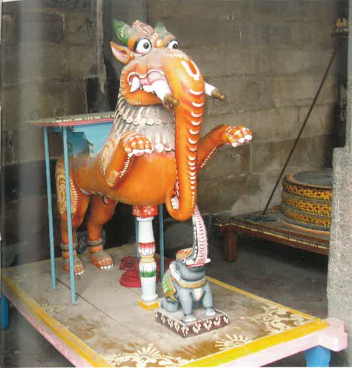
fig. 1.19: A yāḷi-vāhana made of wood covered with cloth and painted.
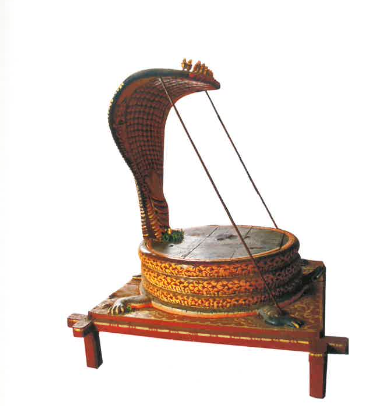
fig. 1.20: Ādiśeṣa-vāhana in the Ūraham Temple.
1.22. The Eclipse and Revival
Strangely no inscription is found for nearly six hundred years from 1350 to 1900 in this temple. It shows complete loss of popularity of this temple, which was once central to the city of Kāñcipuram. From this point on, most of the inscriptions of Viṣṇu temple are concentrated in the Varadarājā temple. It seems the merchant settlement which was originally around the Ūraham temple shifted to the Varadarājā temple, towards the east and the two great divisions of Kāñcipuram as Śiva Kāñci and Viṣṇu Kāñci were established. As Ūraham fell within the boundaries of Śiva Kāñci, the Vaiṣhṇavite concentration was lost.
1.22.1. 20th Century Revival
In the year 1899 one Venkatāchala Chetty, son of Nārāyaṇa Chettiyār of Rāsi-chattram gifted five acres of land for conducting Garuḍa-utsavam in the Vaikuṇṭa-ekādasi of Mākali month every year. The gift stipulated that the donor’s descendents, men and women, should use the income from the land after paying all tax dues, to conduct the festival without fail. In the event there was no descendent alive, the Dharmakartā of the temple should take over the land and arrange for the festival. This Chettiyar is said to have belonged to Komaṭṭi caste and Vaiṣhṇava-matam sect.
Another grant was made later in 1908 by a lady Amirtavalli Ammāḷ, wife of one Kuppuswāmi Ayyangār, a resident of sannidhi street of Ulakaḷanta Perumāḷ who built the shrines of Viṣvaksena, Āṇḍāḷ and Manavāla Māmunikaḷ and had their images consecrated and the front maṇḍapa erected.
The present temple of Kārvaṇṇattup-perumāṉ was built and the image consecrated by Śrīnivasa Aiyyangar, the Dharmakartā of the temple. He also arranged for the special worship of the god on his natal star chitra every month and also on the date of his birth in the month of Āni for which a land was gifted.
At the instance of the same Dharmakartā, Śrīnivāsa ayyangār, a certain Munuswami Naidu belonging to Vaiṣhṇava-matam and Padma-veḷḷāḷa caste got the sacred tank in front of the temple dug in the year 1901 as dedication to Āraṇavalli-sameta Trivikrama-swami.
The same Ayyangar continued as trustee upto 1914. The donor Munuswami Naidu died and another devotee, Rājasikhāmani Mudaliyār, also died. The trustee received house sites on the south bank of the tank Pushkarini as a gift. The wife of Munuswami Naidu gave some money and the trustee had the six houses built at the sites and stipulated that from the rent received from the houses, the expenses connected with repairs and maintenance of the houses should be attended to first. The rest of the revenue should be used for meeting the expenses of elephant vāhana in the great annual festival, the first floating festival and during adhyayana day of Naidu, special curd rice food offerings should be arranged. No one had the right to alienate the property and the proceeds should be used only for the purpose of those services. The record is dated 14th Janiuary, 1914.
1.23. Processional Images
The Following bronzes are under worship in the temple.
MahaViṣṇu with Śrī devi and Bhūdevi
Āṇḍāḷ
Narttana Kṛṣṇa
Śri Rama Lakshmana, Hanumān, and Sītā
Nammāḻvār
Manavāla māmunikaḷ
Uḍaiyavar
Tirukkacchi nambi
Pillai Lokāchārya
Periyāḻvār
Tirumangai mannan
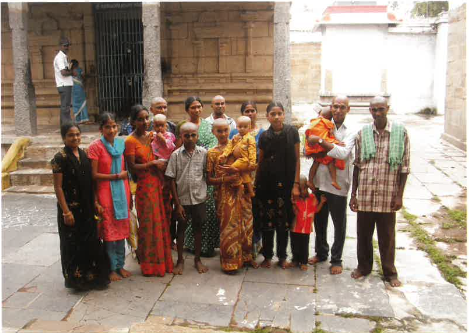
fig. 1.21: A group of pilgrims from Āndhra-deśa with tonsured heads as an offering at the Ūraham Temple.